
What a Pool Shell Inspection Should Catch Before Refinishing
A pool shell inspection before refinishing can uncover problems a new surface won't fix. It helps separate worn finish from damage that may affect the shell, plumbing, or pool structure.
That distinction matters because refinishing can improve appearance and comfort, but it can't correct every cause of cracking, water loss, or movement. A sound project starts by identifying what needs repair before finish work begins.
Why inspect the shell before refinishing?
The pool's surface is only one part of a renovation assessment. The shell, coping, tile, deck, plumbing, and equipment all affect how the pool performs and how renovation work should be planned. A pool condition inspection before renovation helps sort finish choices from repairs that need to happen first.
Before choosing a new finish, an inspector should look across the pool floor, walls, steps, benches, corners, skimmers, returns, and light niches. The bond beam and the area where the deck meets the shell also deserve attention. Defects can appear at transitions or fittings, not just across broad, easy-to-see surfaces.
In Southwest Florida, sun, pool chemistry, storms, and ground movement can all contribute to wear. Those factors don't diagnose a defect by themselves. Instead, the inspection looks at the pattern and location of damage, then determines whether it appears limited to the finish or may involve the shell.
Separate finish wear from shell damage
A worn finish may be rough, stained, faded, or discolored. These conditions can affect comfort and appearance without showing that the shell itself has failed. However, surface symptoms should be examined closely before anyone covers them with new material.
Surface deterioration and cosmetic defects
On a gunite pool, visible clues include rough plaster, exposed aggregate, staining, patchy repairs, and uneven discoloration. Some areas may simply need finish replacement. Others may have deteriorated enough to expose or affect the substrate beneath.
A gunite pool inspection checklist can help homeowners recognize conditions to document. Note where each defect appears, whether it clusters around a fitting or joint, and whether nearby tile or coping has shifted. A single stain or hairline mark doesn't tell the whole story.
Cracks, hollow spots, and delamination
Cracks need assessment in context. A fine line confined to the finish differs from one that continues into the shell. Repeated cracks, a changing crack pattern, or cracking near the bond beam or a fitting deserves closer review.
An inspector may also listen for hollow-sounding areas where a finish layer has separated from what lies beneath. Delamination can leave areas that sound or feel different from the surrounding surface. It needs attention before a new finish goes on, since a fresh layer won't bond reliably to a loose or unstable one.
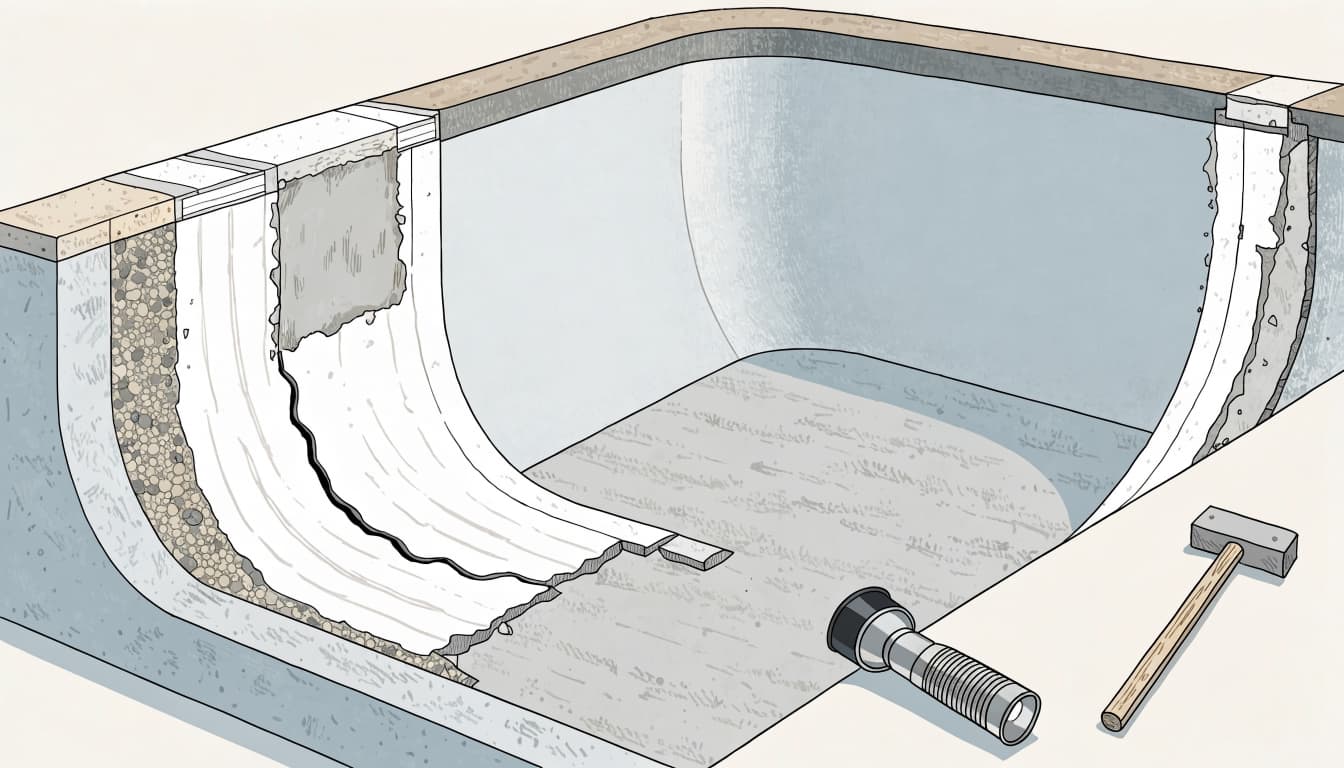
The goal is to determine whether a defect is limited to the finish or reaches the shell. A crack alone doesn't prove structural failure. For more on distinguishing shell repairs from finish repairs, the scope of the damage is the deciding factor.
Look for signs of movement around the pool
Movement may show up beyond the interior surface. Loose or separated waterline tile, shifting coping, open joints, an uneven pool edge, or a deck that has moved away from the shell can point to changes around the structure. These signs don't establish a cause on their own, but they should be assessed together.
Look closely at corners, steps, raised spas, and transitions between shallow and deep areas. A crack that appears in several connected locations may deserve more attention than an isolated finish mark. Likewise, a visible change in elevation or a gap that appears to be widening is more significant than a stable cosmetic flaw.
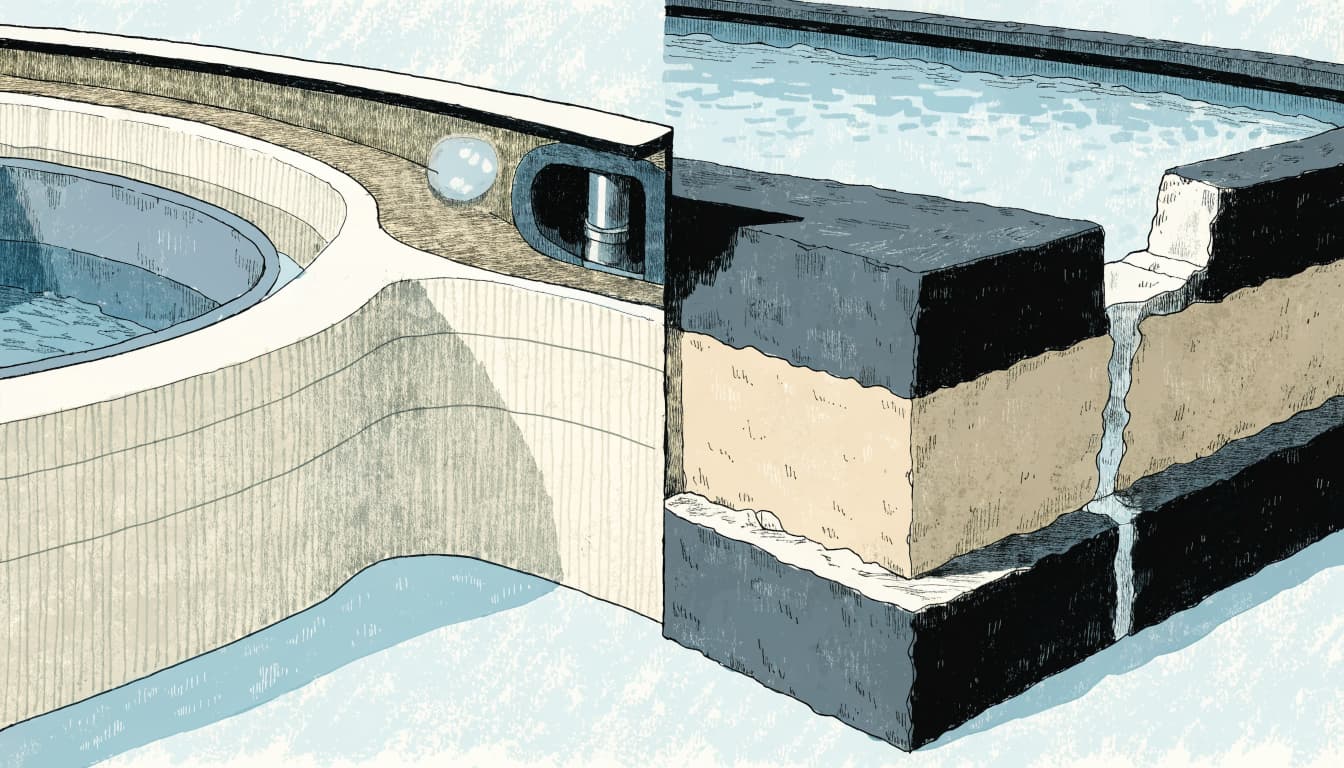
The deck-to-shell joint matters because the deck and pool can move separately. When its sealant has pulled away, water and debris may collect in the gap. The inspection should also note whether coping feels loose or tile has separated nearby.
If the pattern suggests shell movement or structural damage, the project may need further evaluation before finish selection. Some conditions may warrant assessment by a qualified pool professional and, when appropriate, a structural engineer.
Trace water intrusion and unexplained water loss
Moisture around the shell can damage materials and complicate a new finish. Inspect for damp areas, water staining, efflorescence, blistering, or spots where the surface appears to have lifted. Pay attention to the areas around skimmers, returns, light niches, and other penetrations through the shell.
Water loss also needs a cause, not a cover-up. A pool may lose water through evaporation, plumbing, fittings, a feature line, or the shell. If water loss has been recurring, resurfacing alone won't identify or fix the source.
The pool's plumbing and fittings belong in the same pre-refinishing assessment as the shell. A damaged skimmer or compromised plumbing line can remain a problem after the interior looks new. Findings may call for a separate repair plan before finish work begins.
Account for the pool shell material
The same symptom can mean different things depending on how the pool was built. Repair methods suitable for a concrete shell may not suit a fiberglass shell, so the material should guide both the inspection and the repair plan.
Gunite and concrete pools
A gunite pool has a reinforced concrete shell. Structural inspection may include the concrete, steel reinforcement, and bond beam. Surface wear and shell damage can look similar from above, so cracks, hollow areas, and exposed aggregate need to be assessed in context.
A finish can be renewed when deterioration is limited to the surface. If a crack reaches the structural shell, the work may need to address that damage first. The inspection should also account for tile, coping, and the deck joint, since related movement can offer additional clues.
Fiberglass pools
Fiberglass pools have composite shells, so inspection findings and repairs differ from those for gunite. Look for surface blisters, cracks, discoloration, or areas that appear separated. A defect's location and extent matter, particularly around fittings and transitions.
Fiberglass repair should suit the shell's composite layers. Concrete-pool methods don't automatically apply. The inspection needs to identify whether the concern is limited to the finish or involves the shell itself, then guide the appropriate work.
Put repairs ahead of the new finish
The repair sequence protects the value of the finish work. First, assess the shell and plumbing. Next, complete necessary repairs and allow repair materials to cure as required. Then proceed with the new surface, tile, or other finish work.
For delamination, the loose area needs attention before a new surface is applied. This guide to pool shell repairs before applying a new finish covers why repair planning and sequencing matter.
Resurfacing can address many surface-level problems, but it doesn't repair structural settlement, bulging walls, major beam cracks, damaged skimmers, or compromised plumbing. If inspection findings point to these conditions, the project scope may need to expand beyond finish replacement. See more on pool structural problems resurfacing cannot fix.
Key takeaways
- Look at the shell, fittings, tile, coping, deck joint, and plumbing before choosing a finish.
- Roughness, stains, and fading may be cosmetic, while cracks, hollow spots, or delamination need closer assessment.
- Movement, tile separation, uneven edges, and recurring water loss call for attention before refinishing.
- Repair methods vary by shell material, and refinishing alone won't solve structural problems.
Frequently asked questions
Does every pool crack need structural repair?
No. A crack may be limited to the finish, but its appearance alone can't establish the cause. Its location, pattern, and relationship to other signs of movement or separation matter.
Can refinishing fix hollow spots?
Refinishing alone won't correct delamination. A hollow or separated area needs assessment and appropriate repair before a new finish is applied.
Should plumbing be inspected before resurfacing?
Yes. A shell inspection should include plumbing and fittings, especially when the pool has lost water repeatedly or shows moisture near a penetration. A new surface won't repair a plumbing problem.
Does a fiberglass shell use the same repair approach as gunite?
No. Fiberglass and gunite have different shell materials, so findings and repair methods can vary. The inspection should identify the material and the affected layer.
A sound shell comes before a new surface
A careful pool shell inspection helps separate worn finish from damage that needs repair. Cracks, hollow areas, water intrusion, and signs of movement deserve attention before crews apply a new surface.
When the shell and related systems are assessed first, the renovation can address the actual condition of the pool. A fresh finish should follow sound repairs, not conceal problems beneath it.