
Gunite Pool Inspection Checklist for Southwest Florida Buyers
An older pool can make a Southwest Florida home feel complete, but it can also hide expensive work behind clear water and fresh patio furniture. A thorough gunite pool inspection gives you a better view of the shell, equipment, safety features, drainage, and repair history before you commit to the purchase.
In Cape Coral, Fort Myers, Bonita Springs, and nearby communities, pools face intense ultraviolet exposure, wet-season rain, hurricanes, high humidity, and salt-laden air. Those conditions leave clues if you know where to look.
Use the home inspection period to document what you can see, request records, and bring in qualified professionals for anything that needs testing.
Key Takeaways for Older Pool Buyers
- Start with permits, maintenance invoices, equipment manuals, storm-repair records, and prior inspection reports before relying on appearances.
- Treat cracks, loose tile, recurring water loss, standing water, rust, and loud equipment as findings that need follow-up, not instant diagnoses.
- Check the pool area after rain if possible. Southwest Florida drainage issues often stay hidden during a dry, sunny showing.
- Ask qualified pool, structural, plumbing, and electrical professionals to assess concerns within their specialties.
- Keep dated photos and written notes. Clear documentation helps you decide whether to request repairs, a credit, a price adjustment, or more time for due diligence.
Start the Gunite Pool Inspection With Records
A walk around the pool is useful, but paperwork often explains what you are seeing. A resurfaced interior, new pump, or repaired deck may be a good sign when records show who completed the work and when.
Request the pool's construction and permit history
Ask the seller for the original pool permit, final inspection approval, and paperwork for later changes. Depending on the work and local requirements, records may involve the screen enclosure, decking, electrical work, plumbing changes, replacement equipment, resurfacing, or structural repairs.
Use this document checklist during due diligence:
- Request the current and original permitted drawings, particularly any structural notes and later renovation plans.
- Review pool service invoices, water chemistry logs, equipment warranties, manuals, and purchase dates.
- Ask for receipts related to leak detection, replastering, tile work, deck settlement, pump replacement, heater repair, or salt-system service.
- Check for open, expired, failed, or corrected permits through the applicable city or county building department.
- Review hurricane claim records and storm-repair invoices for the pool, enclosure, deck, and equipment pad.
A permit does not prove the pool is in good condition today. However, it can show when work occurred and identify changes that deserve professional review.
Separate observations from professional testing
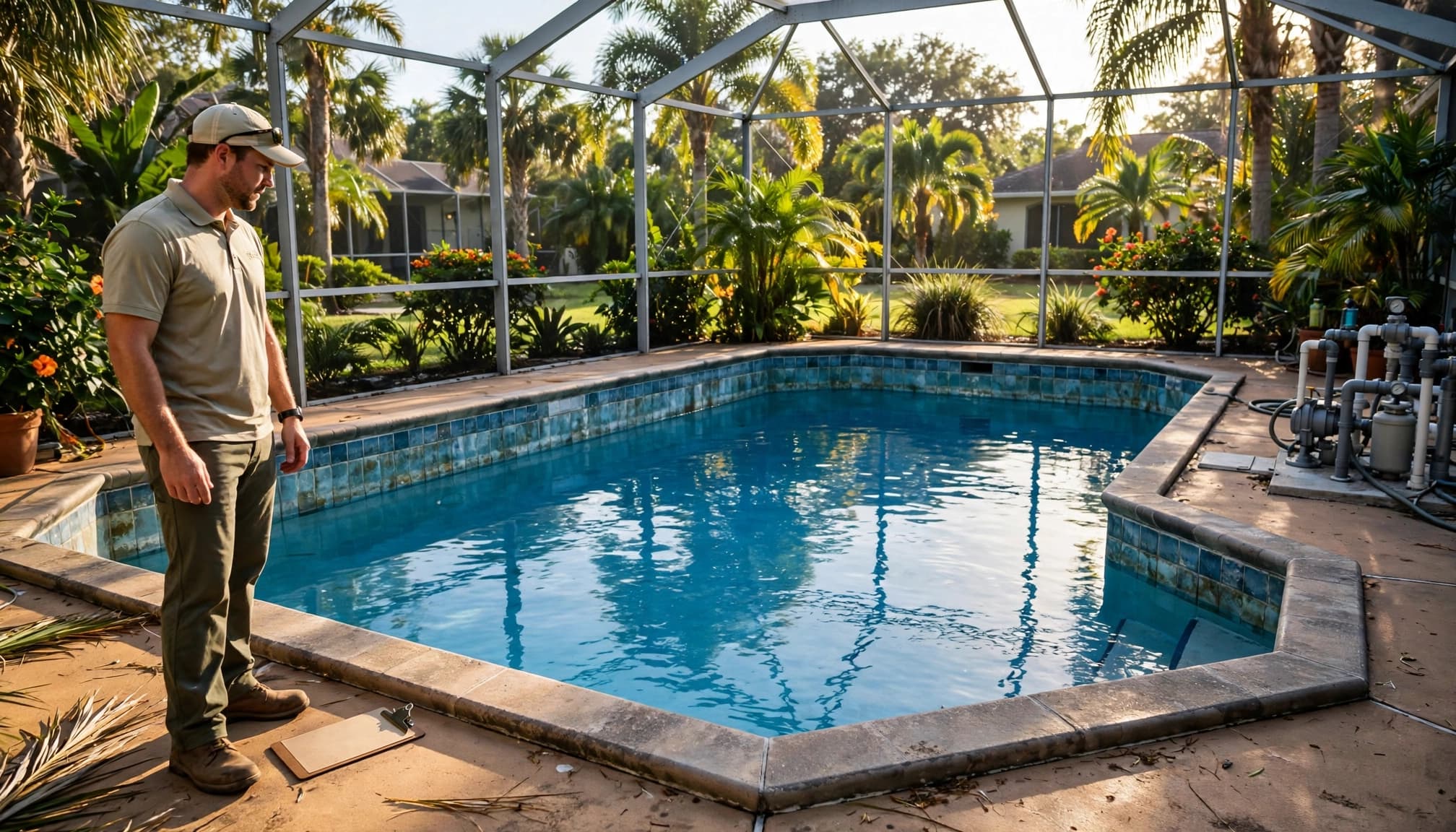
Take photos in daylight before anyone cleans, paints, drains, or moves equipment. Photograph the entire pool, then capture close views of cracks, stains, loose pavers, corroded hardware, damp soil, and equipment labels.
Write down the location of each finding. For example, note whether a crack runs along a skimmer, near steps, beside the spa, or where the deck meets the coping.
A visible symptom is not a confirmed cause. Water loss, cracks, or stained plaster can each have several explanations, so testing matters before negotiations begin.
Check Barrier Safety and Pool Access
Safety issues deserve attention before cosmetic items. An older enclosure or fence may have worked for years, yet corrosion, storm damage, settling, and worn latches can change how it performs.
Inspect gates, screens, and climbable conditions
Florida Statutes Section 515.29 establishes a statewide baseline for residential pool barriers. The barrier must generally stand at least 4 feet high on the outside, and gates must open outward, self-close, and self-latch.
Walk the full perimeter and check for torn screen mesh, loose enclosure doors, sagging gates, damaged fasteners, and gaps at the bottom of gates or panels. Also look for furniture, grills, planters, storage bins, or landscaping that makes the barrier easier to climb.
If the home itself forms part of the pool barrier, inspect the access doors, alarms, and other approved safety measures shown in the permit documents.
Review covers and local requirements
A safety cover may help protect the pool area, but it should not be assumed to replace other required safety measures. Some approved covers follow ASTM F1346, yet the property's permitted plans and local enforcement determine what applies.
Florida pool requirements can change, and 2026 legislative proposals have addressed safety features for transferred homes. Confirm current rules with the local building department rather than relying on an old listing description or a seller's recollection.
A pool inspector can flag visible conditions. For barrier compliance questions, ask the permitting authority or a qualified local professional to review the property and its records.
Examine the Gunite Shell, Finish, Tile, and Coping
Gunite pools can last for decades, but their finish materials and surrounding surfaces wear at different rates. Sun, chemical balance, movement, and storm exposure can all leave marks that deserve a closer look.
Document cracks and finish deterioration
Walk the pool with the water clear enough to see the floor, walls, steps, benches, skimmers, returns, and light niches. Note hairline cracks, wider cracks, exposed aggregate, rough plaster, hollow-sounding areas, patchy repairs, staining, and areas where the finish feels unusually worn.
Inspect the waterline tile and grout for missing pieces, cracks, separation, or recurring calcium buildup. Look closely at the bond beam area, corners, step edges, raised spas, and transitions between shallow and deep sections.
A crack alone does not confirm structural failure. Still, repeated cracking, movement, tile separation, or an uneven surface warrants assessment by a qualified pool professional and, when appropriate, a structural engineer.
Check coping and the deck-to-shell joint
Coping should sit securely along the pool edge. Look for loose pieces, open joints, chipped sections, shifting pavers, or sealant that has pulled away where the deck meets the pool shell.
The deck joint matters because it allows adjacent materials to move separately. Failed sealant can let water and debris collect where they do not belong. It can also hide changes in deck elevation.
Fresh paint, new caulk, or recently placed outdoor rugs may be harmless. Photograph them anyway, then ask what condition or repair they cover.
Run the Pool and Review Its Equipment
A clean pool can still have aging equipment or poor circulation. Ask the seller to operate the system during the inspection period, and allow enough time to observe normal function.
Watch circulation, filtration, and heating
Look at the pump, filter, heater, chlorinator, valves, timer, automation controls, and plumbing connections. Check for active drips, mineral deposits, corrosion, cracked housings, brittle plastic, vibration, unusual noise, or a pad that has shifted or settled.
Confirm that water moves through the skimmers and returns when the circulation system runs. If the pool includes a spa, water features, deck jets, bubblers, or a sun shelf, operate each feature if conditions allow.
Ask for the age and service history of major equipment. A variable-speed pump, cartridge filter, heater, or salt chlorination system may work today while nearing a maintenance decision.
Compare visible equipment with the records
The installed equipment should match the seller's description and available invoices. Check whether manuals, warranty transfers, replacement dates, and repair receipts identify the same brands and models you see on the pad.
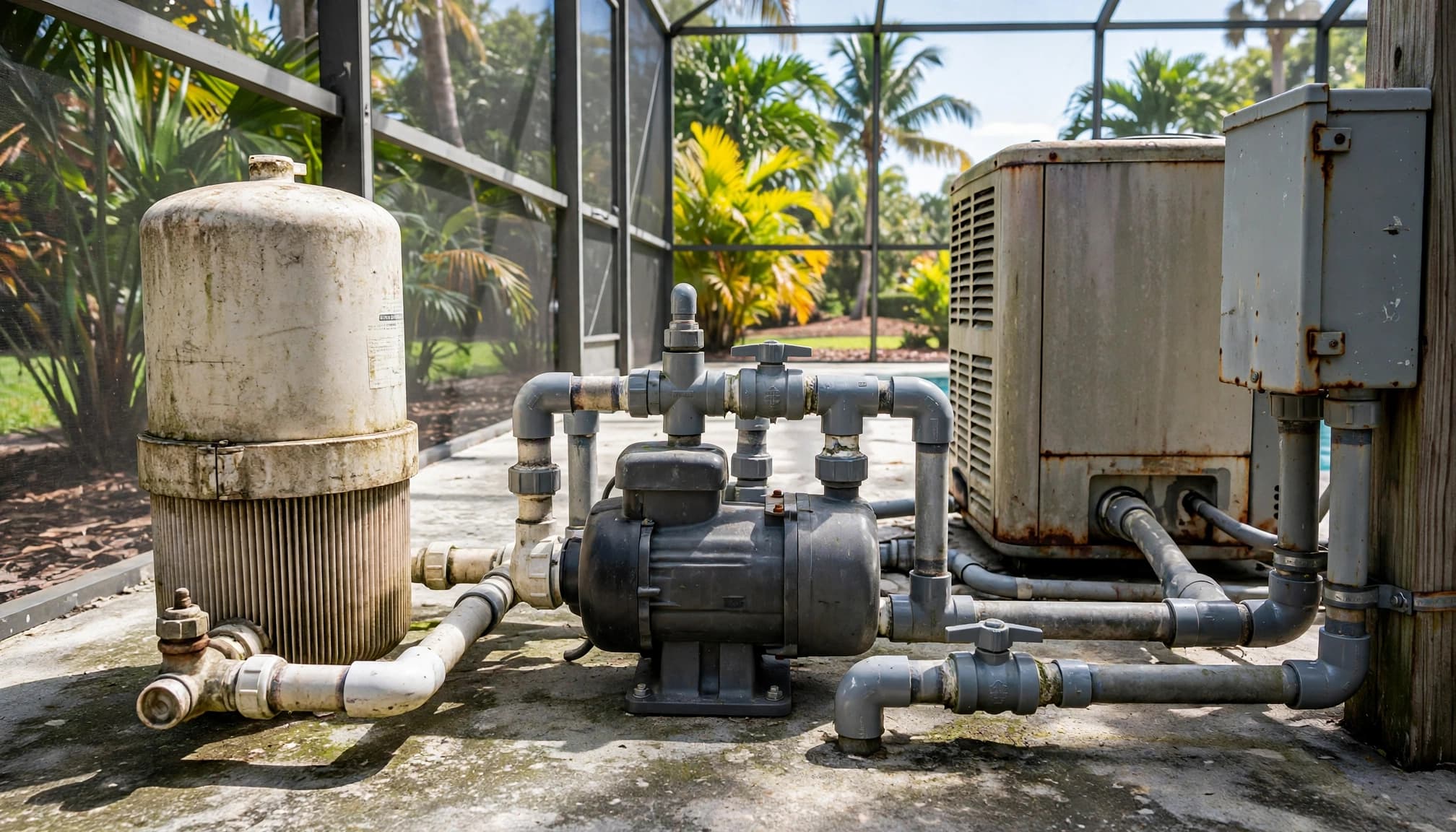
Pay attention to incompatible-looking plumbing changes, abandoned pipes, capped lines, disconnected controls, or equipment that cannot be safely operated. A pool professional can assess whether the system is correctly sized and whether upgrades make sense as part of a larger renovation.
For homes where the pool needs substantial work, pool remodeling services in Southwest Florida can help turn documented findings into a defined scope of improvements.
Inspect Plumbing, Electrical, and Bonding
Some of the most important pool systems sit behind finishes, underground, or inside equipment. Visual checks help, but they cannot replace professional evaluation.
Look for plumbing warning signs
Check around skimmers, return fittings, suction lines, valves, the pump lid, filter, heater, and equipment pad. Damp soil, recurring algae in one area, air bubbles in the pump basket, fluctuating water levels, or equipment that loses prime may justify a leak evaluation.
Water level changes can also result from evaporation, splash-out, rainfall, or normal use. Do not assume a leak based on one observation. Instead, request prior leak-detection reports and arrange pressure testing or other testing when a qualified professional recommends it.
Inspect nearby irrigation heads too. Sprinkler overspray can stain surfaces, saturate soil, and speed corrosion around pool equipment.
Have an electrician review electrical safety
Pool electrical work requires care because water, metal, and electricity meet in the same space. Never open panels, disconnect wiring, or touch damaged equipment during a buyer walkthrough.
A qualified electrician should evaluate questionable wiring, GFCI protection, lighting, junction boxes, conduit, bonding, and grounding. Florida Building Code guidance addresses bonding connections, including specified pool components and perimeter bonding. Those details may be concealed in an older installation, so a visual review alone cannot confirm compliance.
Rusty metal components, damaged light fixtures, loose conduit, or post-storm electrical repairs deserve prompt professional attention. Keep people out of the water if equipment or wiring appears damaged.
Evaluate Deck Drainage, Soil Movement, and Site Conditions
The pool does not sit apart from the property. Grading, groundwater, drainage paths, roof runoff, and landscape changes can all affect the deck, enclosure, equipment pad, and surrounding soil.
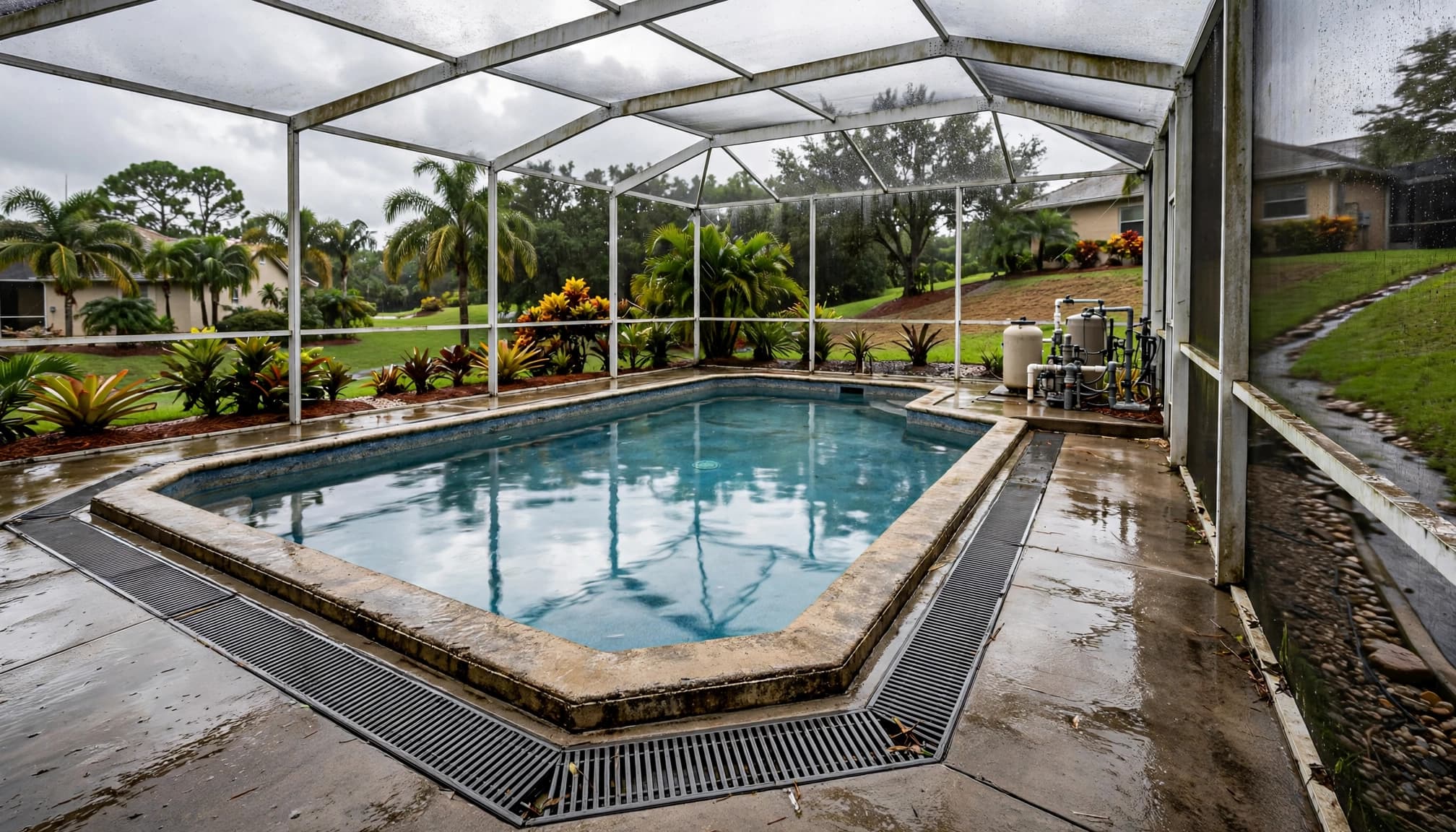
Look for water paths after rain
Southwest Florida's rainy season generally runs from May through October. A dry showing may hide ponding that becomes obvious after repeated summer storms.
Check deck drains, swales, catch basins, gutter discharge points, yard edges, and the equipment area. Look for erosion, washed mulch, exposed gravel, algae growth, efflorescence, persistent wet spots, or soil that has pulled away from deck edges and screen footings.
If practical and permitted by the seller, a gentle hose test can reveal obvious surface flow. Avoid flooding the area or forcing water into joints and equipment.
Inspect pavers, concrete, and enclosure footings
Walk slowly across the deck. Note rocking pavers, trip edges, settled sections, cracked concrete, open joints, and areas where the deck slopes toward the home or pool equipment.
High groundwater and sandy soils can complicate repairs. Repeated settlement, significant deck cracking, or movement near the shell should be reviewed by a pool contractor or structural engineer before you rely on a quick cosmetic patch.
Factor in Hurricane, Humidity, Sun, and Salt Exposure
An older pool in Southwest Florida has likely been through years of heat, wind, rain, and humidity. Waterfront and canal-adjacent homes may face additional salt-air exposure.
Inspect storm-related wear
Ask whether the home experienced hurricane damage and what repairs followed. Bent enclosure members, torn mesh, loose anchors, distorted doors, missing fasteners, and shifted pavers can all stem from wind or water exposure, but a professional should determine the current condition.
Floodwater can also contaminate pool water and damage submerged equipment. If the pool area flooded, ask for photos, insurance correspondence, invoices, and documentation of equipment inspection or replacement.
Check corrosion and ultraviolet damage
Humidity and salt can corrode fasteners, ladder anchors, rails, heater components, enclosure hardware, and electrical connections. Strong sun also fades plastics, weakens some seals, and shortens the life of exposed equipment covers.
Pay close attention to rusty screws, peeling finishes, pitted metal, brittle valve handles, cloudy light lenses, and corroded handrails. Early surface corrosion may be manageable, while widespread deterioration calls for a qualified assessment.
Use Findings During Due Diligence
A good gunite pool inspection turns observations into an organized decision. Separate routine maintenance from conditions that could affect safety, performance, permitting, or the home's value.
Build a written issue log
Create a simple record with the item, location, photo number, date observed, supporting records, and the professional needed for follow-up. This makes it easier to compare opinions and avoids vague repair requests.
For example, group a worn interior finish, loose waterline tile, and aging equipment under potential renovation work. Keep a suspected plumbing leak, questionable bonding condition, major deck movement, or compromised barrier in separate categories because each may need a different specialist.
Review completed Cape Coral pool renovation projects to see how resurfacing, equipment replacement, tile, coping, pavers, and updated features can work together after a buyer understands the pool's condition.
Negotiate with written scopes, not guesses
Share the inspection report and specialist evaluations with your real estate professional during the contingency period. Ask for repairs, a credit, or a price adjustment only after you understand the proposed work and documentation needed.
If the seller agrees to repairs, request itemized invoices, permits when required, final inspection records, warranties, and clear photos of completed work. Do not accept a verbal promise that a concern has been resolved.
Frequently Asked Questions
Should I drain an older gunite pool before buying the home?
Do not drain the pool as part of a casual inspection. Draining can create risks, particularly where groundwater is high, and it may prevent you from observing how the system performs with water in it. A qualified pool professional should decide whether draining is appropriate and explain the safe procedure.
Are cracks in a gunite pool always a major problem?
No. Some cracks may involve finish materials or surface movement, while others need closer structural review. Their location, pattern, width, history, and relationship to tile, coping, plumbing, or deck movement all matter. Document the condition and ask a qualified professional to evaluate it.
What records matter most for an older Southwest Florida pool?
Start with original permits and final approvals, then request records for resurfacing, equipment replacement, leak detection, electrical work, screen enclosure repairs, deck work, and hurricane repairs. Service invoices and water chemistry logs can also show how consistently the seller maintained the pool.
Can I rely on a standard home inspection for the pool?
A home inspection can identify visible concerns, but it may not include pressure testing, electrical bonding review, equipment diagnostics, structural assessment, or permit research. Use its findings to decide which pool, plumbing, electrical, or structural professionals should inspect further.
Make the Pool Part of the Purchase Decision
The strongest purchase decision comes from a clear record, a careful visual review, and qualified testing where symptoms point to a larger concern. An older pool may need routine updates, or it may need more detailed evaluation before closing.
Keep the focus on documented condition , not assumptions. When the pool's history, safety features, drainage, shell, and equipment are understood, you can negotiate with far more confidence.