
Pool Resurfacing or Rebuilding in Southwest Florida?
A rough pool finish can make an otherwise inviting backyard feel tired. Yet peeling plaster, stains, and small surface cracks don't always mean you need to tear out the pool.
For many homeowners, pool resurfacing Southwest Florida projects restore comfort and appearance without changing the pool's structure. The right choice depends on what is happening beneath the finish, how the pool has aged, and what you want your backyard to become.
Start With the Condition of the Pool
Resurfacing and rebuilding solve different problems. A qualified local pool professional should inspect the shell, plumbing, fittings, coping, deck, and equipment before recommending either option.
The interior finish is the waterproof, visible layer inside a concrete pool. Over time, Southwest Florida sun, heat, rain, and chemical exposure can wear it down. A new finish can correct many surface-level issues.
A rebuild goes further. It may involve structural repairs, shell modifications, plumbing replacement, a new deck, redesigned steps, or a different pool shape.
| If your pool has... | A resurfacing project may fit | Rebuilding may be needed |
|---|---|---|
| Etching, mottling, or persistent staining | Yes, if the shell is sound | Only if other failures exist |
| A worn or rough interior finish | Yes | No, unless the scope changes |
| Active cracks or signs of movement | No | Possibly, after evaluation |
| Repeated water loss | Only after finding the cause | Often, if plumbing or shell repairs are extensive |
| A dated layout or inaccessible steps | Limited improvement | Yes, if you want major layout changes |
| Deck heaving or failed coping | Usually not by itself | Often part of a broader renovation |
A fresh surface can make water look brighter and feel smoother. It cannot stabilize a moving shell or repair a failing underground line.
Surface flaws may be cosmetic, but cracks that widen, return after repair, or coincide with water loss need structural investigation before any new finish goes on.
When Pool Resurfacing Southwest Florida Homes Need Is Enough
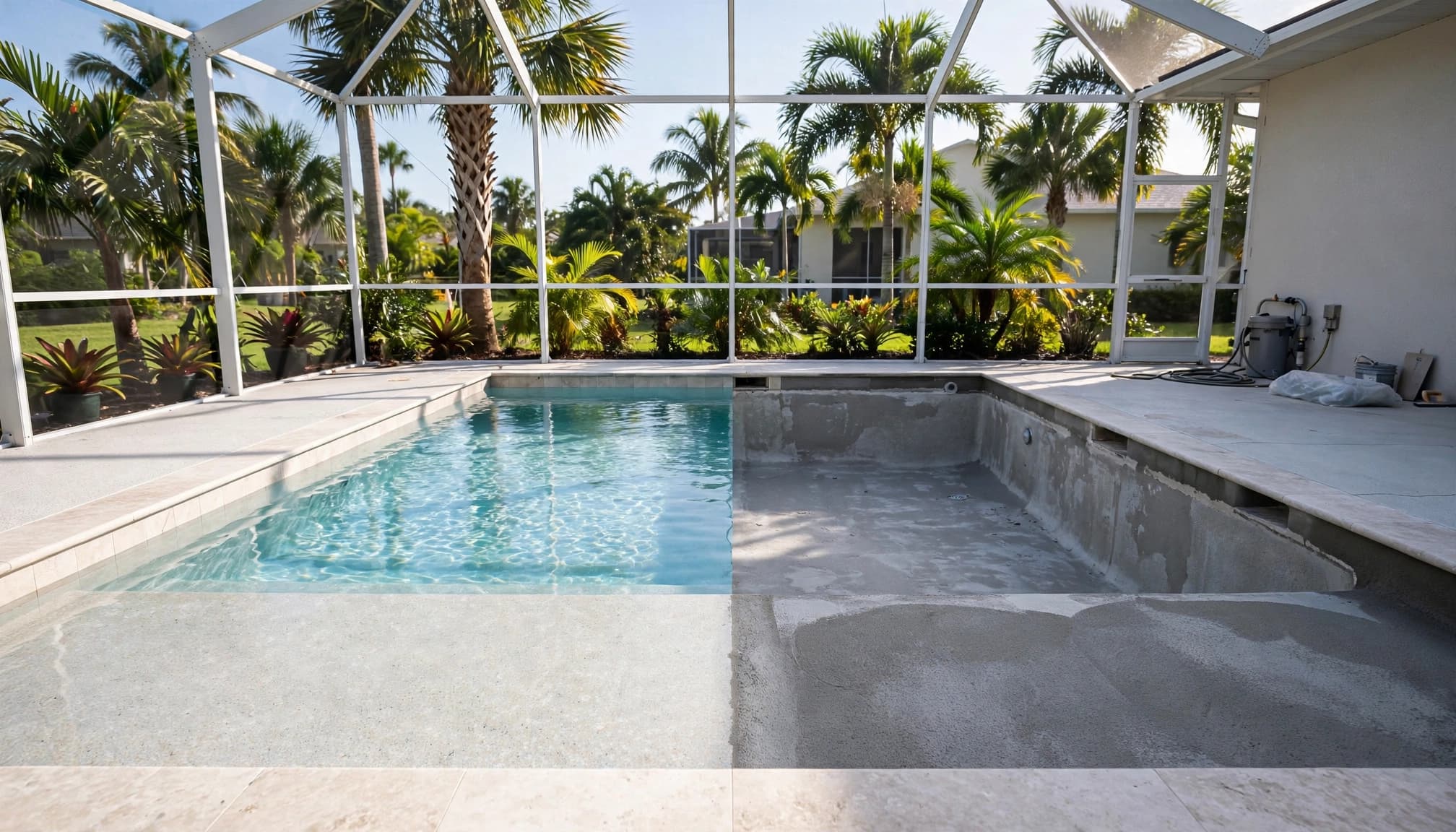
Pool resurfacing replaces the interior finish after professionals prepare the existing surface. Depending on the project, the work can also include new waterline tile, updated fittings, minor patching, and equipment adjustments.
Signs the finish is at the end of its life
A finish often needs attention when it feels abrasive underfoot, shows widespread discoloration, flakes away, or develops visible etching. Some pale lines are superficial craze cracking in the finish itself. Those still deserve an inspection, but they aren't automatically shell cracks.
Stains can also become stubborn after years of metals, organic debris, or water imbalance. In many cases, resurfacing gives the pool a clean reset after the underlying cause is corrected.
Southwest Florida's high UV exposure and warm water place steady stress on pool finishes. Heavy summer rain can also dilute water chemistry quickly. That makes routine testing and proper post-renovation startup care part of protecting the investment.
What resurfacing does not repair
Resurfacing doesn't repair structural settlement, bulging walls, major beam cracks, damaged skimmers, or compromised plumbing. It also won't fix deck slabs that have shifted away from the pool or coping that has loosened because of movement.
If the pool loses water repeatedly, don't cover the symptom with a new finish. A contractor should determine whether evaporation, plumbing, fittings, the shell, or a feature line is responsible.
Homeowners considering a broader update can review pool remodeling and renovation services to see how interior finishes, tile, decks, and features may fit into one coordinated project.
Choose a Finish for Florida Conditions
The finish affects the pool's color, texture, maintenance needs, and expected wear. Material selection should match your design preferences, water chemistry habits, and how your household uses the pool.
Traditional plaster and quartz finishes
White plaster has a classic, smooth appearance. It is often a practical choice for a straightforward refresh, although it can show staining, etching, and mottling sooner than aggregate finishes in demanding conditions.
Quartz finishes blend plaster with quartz aggregate. They offer greater durability than standard plaster while retaining a relatively smooth feel. They work well for homeowners who want a refined surface without the stronger texture of pebble.
Both options still need disciplined care. During the startup period, contractors may provide brushing and water-balance instructions that protect the curing finish.
Pebble and tile interiors
Pebble and other exposed aggregate finishes have a more textured feel. They are popular in Southwest Florida because they generally wear well, resist staining better, and create richer water colors.
Tile interiors provide a premium look and lasting color, but they require more labor and detailed installation. Many renovations use tile at the waterline with quartz or pebble across the pool interior.
Saltwater pools need the same attention to balanced water as traditionally chlorinated pools. Salt systems generate chlorine, and poor chemistry can still etch finishes or contribute to corrosion at metal components. The salt system itself should guide material discussions, not force a single finish choice.
When a Full Pool Rebuild Makes More Sense
A rebuild is appropriate when the pool has problems beyond its visible finish or when your family wants a substantially different backyard. The work can range from targeted structural restoration to a full demolition and replacement.
Structural and system problems that require more work
Active cracking is a warning sign, especially if cracks return after repair or appear near deck separation. Settlement, shell movement, displaced fittings, recurring leaks, and damaged plumbing also deserve a deeper review.
A licensed pool contractor may recommend engineering when you plan to alter the shell, change depths, enlarge the pool, or correct structural damage. In Cape Coral, the City's pool renovation guidance lists engineering and manufacturer documentation as conditional requirements when the project scope calls for them.
Full rebuilding can also make sense after storm damage affects the shell, deck, enclosure connections, or buried lines. Every property has different soil, drainage, and storm exposure, so an on-site assessment matters.
Redesign opportunities during a rebuild
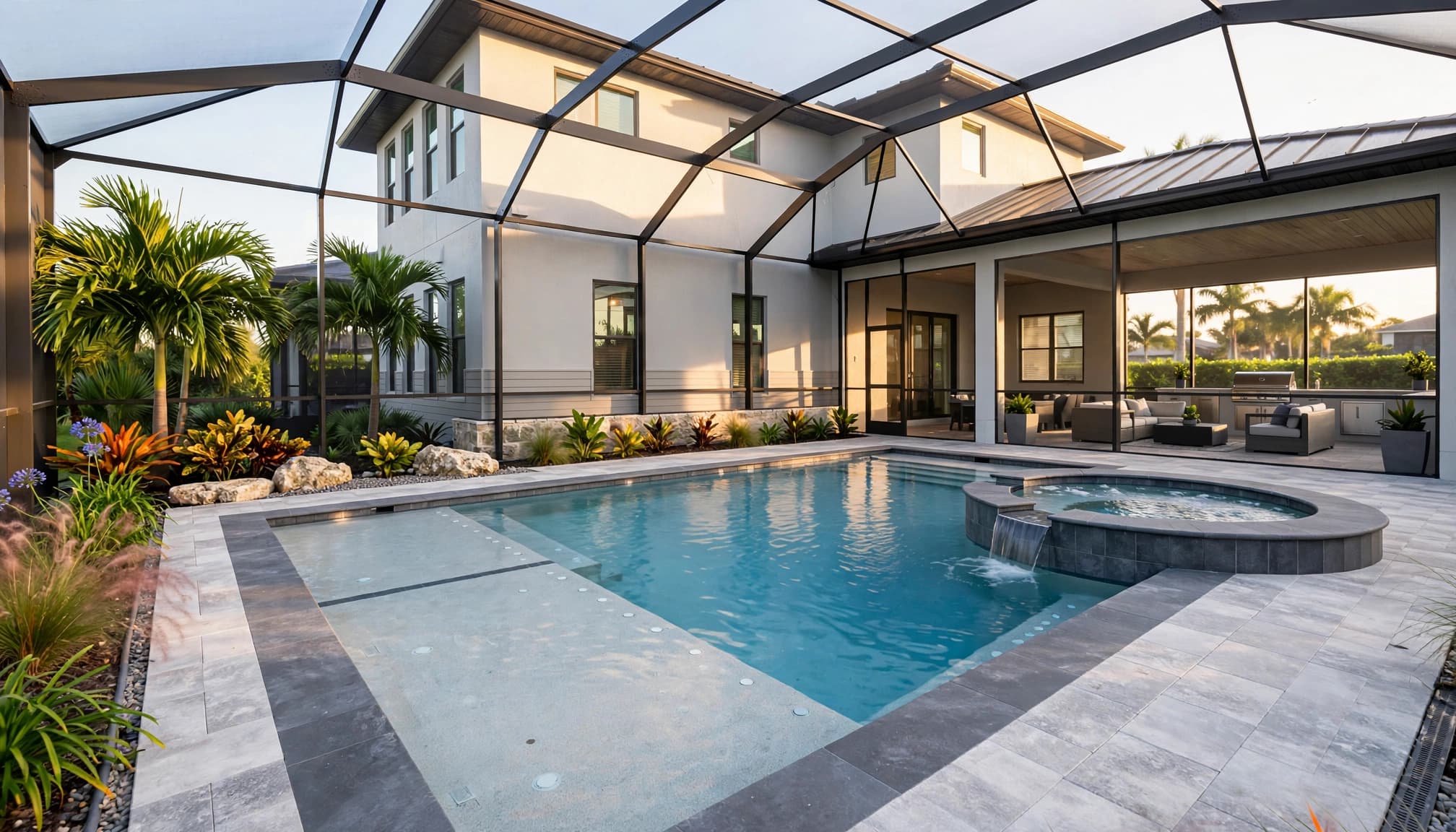
A major renovation gives you the chance to fix a layout that no longer suits your home. You might widen entry steps, add a sunshelf, connect a spa, update the depth profile, or replace a narrow deck with a more useful outdoor living area.
Water features, deck jets, bubblers, fire bowls, and updated lighting are easier to plan when the project already includes new plumbing or deck work. Review a pool renovation project gallery for examples of how finishes, tile, coping, and features can change the feel of a backyard.
Plan for Permits, Inspections, and Realistic Timing
A finish-only project usually moves faster than a reconstruction. Still, no two schedules are identical. Demolition conditions, weather, material availability, inspections, and the added scope all affect the completion date.
Permit rules depend on the municipality
Cape Coral's current guidance generally treats resurfacing alone differently from larger renovation work. Changes involving structural repairs, plumbing, electrical work, equipment relocation, deck additions, depth changes, or shell modifications can require permits and inspections.
Cape Coral's January 2026 pool renovation guideline includes items such as a renovation application, scope of work, site plan, and pool layout. It also identifies review and inspection paths for broader projects.
Fort Myers, Bonita Springs, Estero, Punta Gorda, Port Charlotte, Lehigh Acres, and unincorporated Lee County each have their own procedures. Never assume a permit rule in one jurisdiction applies across Southwest Florida.
Weather shapes the work calendar
Rain can interrupt surface preparation and curing. High humidity and summer storm patterns can also limit the timing of certain steps. A reputable contractor will explain how weather affects the schedule instead of promising a date that ignores Florida conditions.
For a rebuild, allow additional time for design decisions, permits, engineering when needed, excavation, plumbing, concrete work, decking, and inspections. A careful plan prevents expensive changes after work begins.
Compare the Scope, Not Only the Initial Estimate
Homeowners often focus first on price, but the useful comparison is the complete scope of work. A lower estimate may cover only finish application, while another proposal includes leak testing, tile replacement, coping repairs, plumbing updates, and startup support.
Ask each contractor to separate the work clearly. You should know what they found during the inspection, which repairs are included, which conditions may require a change order, and who handles permits.
For pool resurfacing Southwest Florida homeowners should also ask about the recommended finish, water chemistry expectations, warranty details, and the treatment of saltwater equipment. A clear proposal protects both the new surface and your budget.
Questions to Ask Before You Commit
A good consultation should leave you with answers, not vague promises. Bring these questions to the site visit:
- Is the pool shell structurally sound, or do the cracks indicate movement?
- Has the contractor tested for leaks before recommending a new finish?
- Which finish is best for my water chemistry, sun exposure, and desired texture?
- Does the scope include tile, coping, fittings, drains, lights, or deck repairs?
- Will the project require a permit, engineering review, inspections, or a notice of commencement?
- How will storms, rain, and material lead times affect the schedule?
- What startup and brushing instructions apply after the pool is refilled?
- Is the contractor licensed and insured for the work proposed?
A licensed local professional can distinguish a worn surface from a pool that needs structural repair. That distinction can save you from paying twice for work that should have been addressed before resurfacing.
Make the Backyard Decision With Confidence
A worn finish often calls for resurfacing, especially when the pool shell, plumbing, and deck remain sound. A rebuild is the smarter route when structural movement, persistent leaks, failed systems, or a major design change are part of the picture.
Southwest Florida pools face intense weather and demanding water conditions, so material choice and careful maintenance matter after either project. The strongest result begins with an honest inspection and a scope built around the pool's real condition.
For a professional assessment of your options, request a pool renovation estimate before choosing a finish-only update or a larger rebuild.