
Pool Plumbing Replacement During a Gunite Renovation: How to Decide
Deciding on pool plumbing replacement during a gunite renovation comes down to the condition of the lines, not the age of the pool alone. A renovation gives you a useful chance to inspect and test buried plumbing, but sound lines don't need replacing simply because the pool is getting a new finish.
Leaks, old repairs, pipe material, and access all matter. A qualified pool professional can assess those factors and compare the cost of work now with the disruption of opening the deck later.
Key Takeaways
- Keep existing plumbing when testing and inspection support its condition and there's no pattern of leaks or failed repairs.
- Consider replacement when testing reveals a leak or damage, or when repairs point to broader line problems.
- A pressure test provides evidence about a line's integrity, but it doesn't locate every leak or guarantee future performance.
- Replacing lines during renovation can reduce the chance of cutting into finished decking later.
- Decide with a qualified pool professional, using test results and a clear scope of work.
Understand What the Pool Plumbing Connects
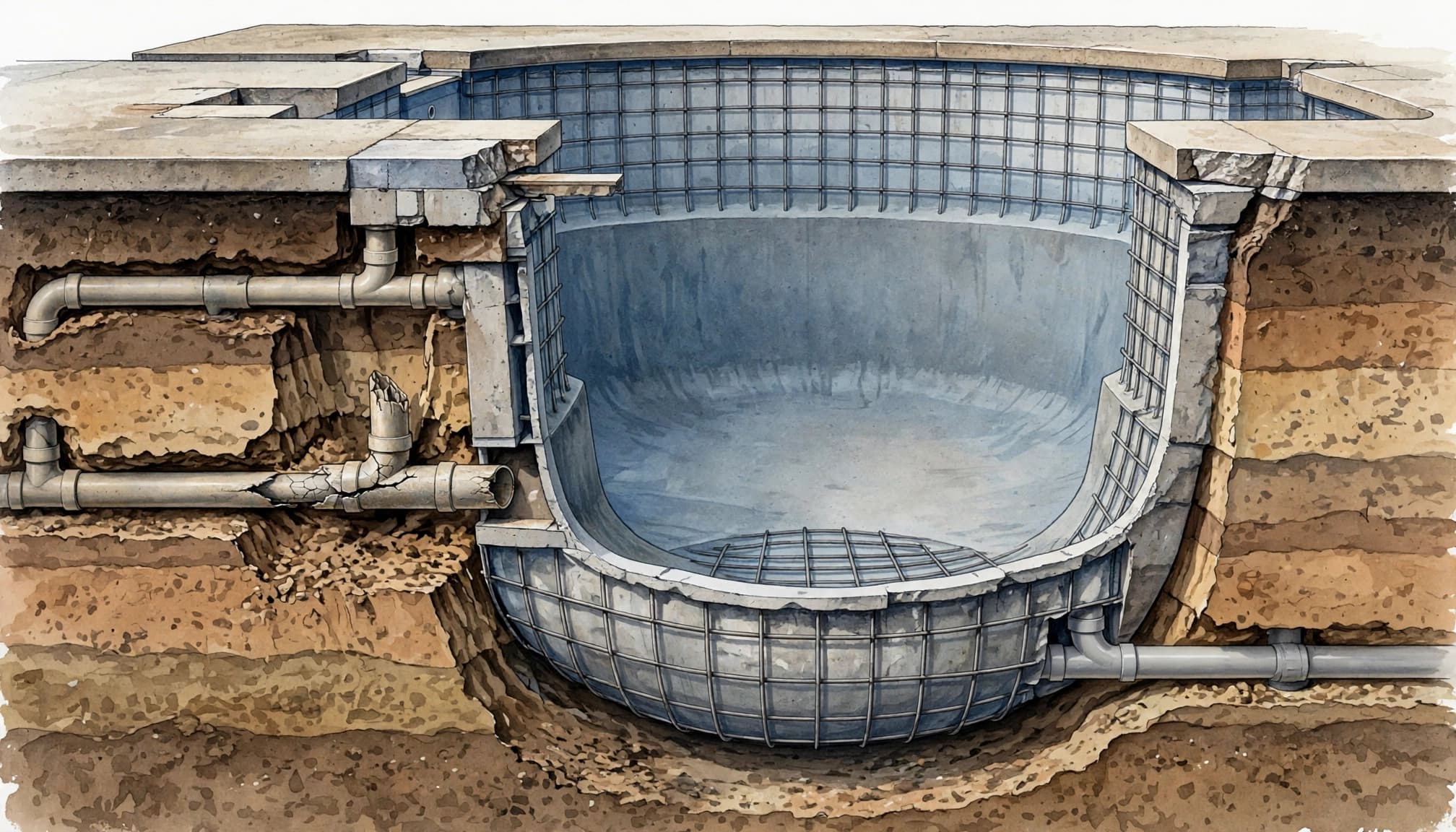
Pool plumbing is a network of lines and fittings that moves water between the pool and equipment. During a renovation, some parts may be visible while much of the system remains buried beneath the deck or around the shell.
Different lines have different jobs
A gunite pool may have skimmer and main-drain suction lines, return lines, cleaner lines, and connections for spa jets or water features. The equipment pad connects to the system, but the pipes often continue underground toward the pool.
Those lines don't all have the same repair history or exposure. A leak in one circuit doesn't automatically mean every line has failed. A professional can identify which lines are involved and consider them separately.
Age and material are clues, not a verdict
The pipe material, visible condition, connections, and previous repairs can help assess risk. Age matters, but it doesn't tell you whether a particular line is leaking or whether it can continue to serve the pool.
A professional should note any material changes, exposed deterioration, patched sections, and signs of movement or damage. For more on how these lines work, read our guide to gunite pool plumbing basics.
When Reusing Existing Pool Plumbing Makes Sense
Reuse can be a sound choice when the lines test well, show no evidence of recurring problems, and fit the renovation plan. Keeping them avoids unnecessary excavation and lets the project focus on the components that need work.
The lines have a clean history
If the pool hasn't had persistent water loss, recurring plumbing repairs, or signs of leakage around the equipment, there may be no reason to replace working lines. A pool professional should still inspect visible connections and test the separate plumbing circuits before the renovation covers or limits access.
A clean history isn't proof that every buried pipe is perfect. It is one piece of evidence to consider alongside test results, pipe condition, and the scope of the work.
Testing and inspection support reuse
A line that holds during an appropriate pressure test may be a reasonable candidate for reuse, especially if the rest of the system shows no related warning signs. The assessment should account for each circuit, rather than treating the plumbing as one undivided system.
The decision also depends on what the renovation changes. If the project keeps the pool layout and equipment connections largely intact, existing lines may remain suitable. A broader redesign may require plumbing changes regardless of condition.
When Pool Plumbing Replacement Is Justified
Replacement becomes more compelling when the evidence points to active damage or a pattern of problems. The goal is to address the line or lines that create risk, not to replace everything automatically.
A test identifies a failing line
A pressure test can reveal that a plumbing circuit isn't holding pressure as expected. The result gives the professional a reason to investigate that circuit, isolate the affected section where possible, and decide whether repair or replacement makes sense.
The test result alone doesn't identify the exact leak location or prove that every other line has a problem. A targeted repair may be appropriate when the damaged section is accessible and the surrounding system is in good condition. Broader replacement may be worth considering if multiple lines show faults or previous repairs have failed.
Repairs and visible symptoms point to a pattern
Repeated leaks, patched sections, damaged pipe, or persistent water loss deserve closer attention. Other clues can include wet soil near the equipment pad, standing water outside the pool, or air entering the pump system. These signs don't confirm a plumbing leak, since water loss can also involve fittings, the skimmer, the shell, or other components.
A renovation inspection should consider the pool shell and plumbing together. That helps distinguish a line problem from a separate issue before the work scope is set.
What a Pressure Test Can Tell You
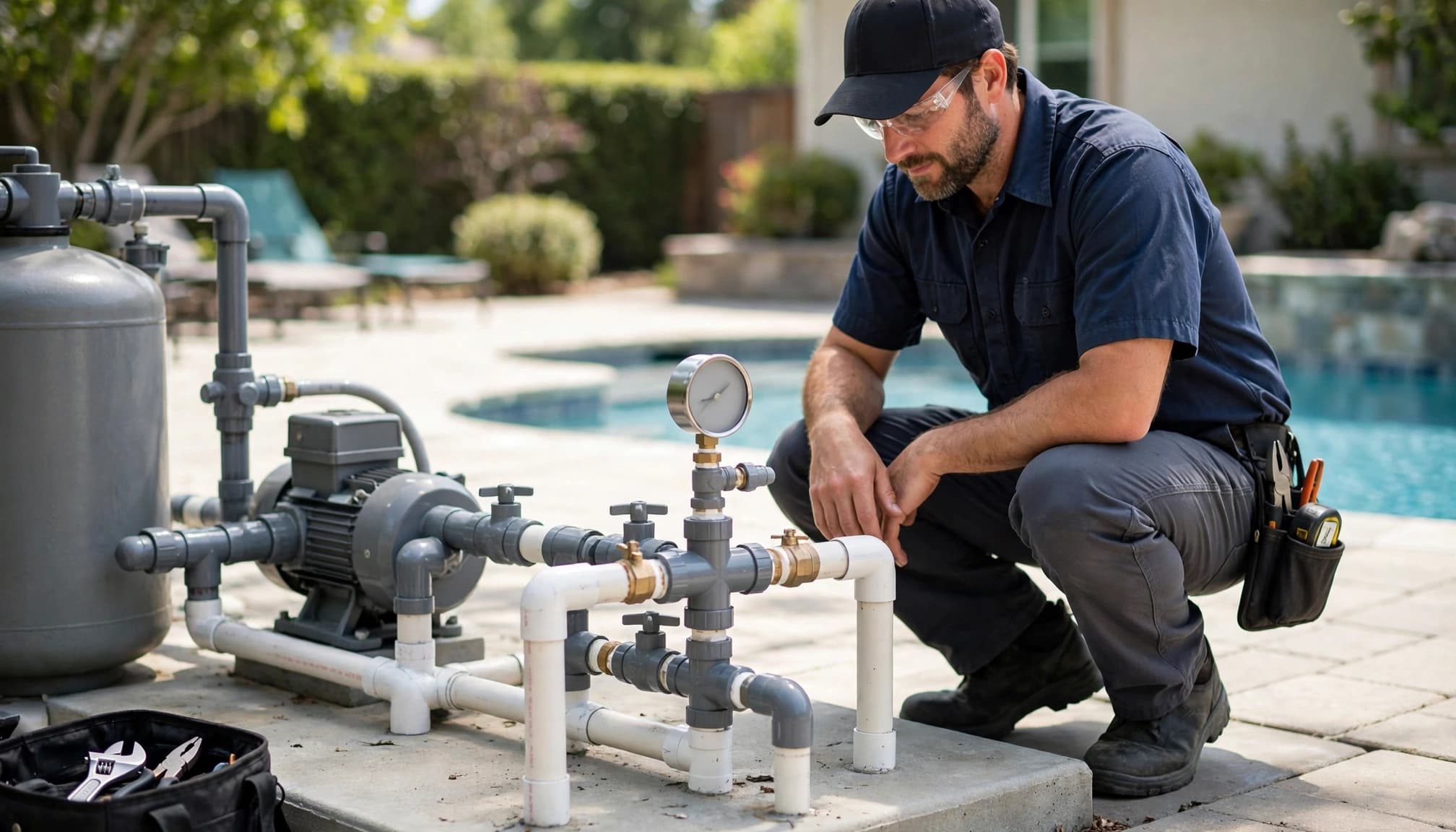
Pressure testing is an important step before finishes and deck work reduce access to plumbing. It can show whether a circuit holds under test conditions, helping the pool professional decide whether to reuse, repair, or replace it.
Test the lines as distinct circuits
A pool may have several separate circuits, so results should be tied to the line being tested. Skimmers, returns, drains, spa jets, cleaner lines, and water features may need individual attention depending on the renovation scope.
A test should happen before relevant pipes are covered by concrete, backfill, or new deck materials. Our practical pool renovation sequence explains how plumbing work fits before later finish stages.
A passing test has limits
A passing test is useful evidence, but it doesn't guarantee that a line will never develop a leak. It reflects the line's condition during the test, not every possible future stress or hidden weakness.
Likewise, a failed test doesn't automatically mean the entire pool's plumbing needs replacement. The professional needs to interpret the result with the line's location, access, history, and any other symptoms. That's why a pressure test is one part of the decision, not the whole decision.
Consider Access and the Cost of Delaying Work
Buried lines can be difficult to reach once the pool, coping, and deck are finished. If a line fails later, repairs may involve opening areas that were recently completed, then restoring them after the plumbing work.
Renovation can be the easier time to reach a problem
If the renovation already includes deck removal or work near the affected line, replacement may be less disruptive now than after the area is finished. That doesn't make replacement necessary by itself. It changes the practical comparison when testing or other evidence already points to a problem.
A professional can explain which areas would need to be opened, what the repair or replacement includes, and how the work affects the renovation schedule. In Southwest Florida, our pool renovation and remodeling services can include related improvements, but the plumbing scope should still be based on the pool's condition.
Compare the whole scope, not just today's work
A lower initial scope may leave a known plumbing concern in place. A larger scope may cost more now but avoid repeating deck or finish work if that line fails later. The right comparison is based on the specific line, access conditions, and the consequences of reopening the area.
A comprehensive gunite renovation in Southwest Florida often falls in the $30,000 to $50,000 range, but that figure describes broad renovation work, not a standalone plumbing replacement price. Plumbing costs depend on the lines and access involved, so the estimate should separate those items rather than folding them into a vague allowance. See our overview of gunite pool renovation costs.
Make the Decision With a Qualified Pool Professional
A useful recommendation should connect test results and observed conditions to a specific scope. Ask which lines were tested, what each result showed, whether past repairs affect the assessment, and what access would involve if replacement is needed.
The professional should also explain whether the project changes any plumbing connections for features, equipment, or the pool layout. Those changes may affect the work plan and local requirements. For more detail, see our guide to pool renovation permit requirements.
Request a line-by-line scope
A clear proposal can distinguish lines recommended for reuse, repair, or replacement. It should identify the reason for each recommendation and show whether deck opening, backfill, or restoration is part of the work.
That detail helps you compare proposals fairly. It also prevents an assumption that a pressure-test failure in one circuit means every line must be replaced.
Keep the decision tied to evidence
For a pool with no history of leaks and lines that pass inspection and testing, reuse may be appropriate. When tests indicate failure or repairs reveal broader damage, replacement may be the more practical choice, especially if access is already available.
A qualified pool professional should explain the tradeoffs plainly. The renovation itself is a chance to make an informed decision, not a reason to replace plumbing without evidence.
Pool Plumbing Renovation FAQs
Should old pool plumbing always be replaced during a renovation?
No. Age alone doesn't prove a line has failed. A decision should account for pipe material and condition, leak history, prior repairs, pressure-test results, access, and the renovation scope.
Does a new pool finish fix a plumbing leak?
No. A new interior finish addresses the pool's surface, while a plumbing leak may involve a buried line, fitting, skimmer, or another component. A professional should identify the source before the renovation is complete.
Conclusion
Pool plumbing replacement makes sense when the evidence supports it, not simply because a gunite pool is being renovated. Pressure-test results, line condition, repair history, and access together provide a clearer basis for the decision.
Sound lines may be reused, while damaged or repeatedly repaired lines may call for targeted replacement. A line-by-line assessment helps protect the renovation investment without adding unnecessary work.