
Pool Renovation Permits in Southwest Florida: What Homeowners Should Know
A pool renovation can look cosmetic while still involving structural, electrical, plumbing, or safety work. That is why pool renovation permits depend on the property's jurisdiction and the exact scope, not only on the project's appearance.
As of September 2026, Southwest Florida has different requirements across counties and municipalities. Lee County, Collier County, Cape Coral, Fort Myers, and Bonita Springs do not all treat resurfacing and alterations the same way. Confirm the plan with the local building department and a licensed pool or construction professional before work begins.
How pool renovation permits are decided
Permit decisions usually depend on three details: where the property is located, what part of the pool will change, and whether the work affects regulated systems.
Jurisdiction matters more than the project label
"Pool renovation" can describe several different projects. Replastering, replacing tile, changing coping, installing a tanning ledge, moving plumbing, replacing a pump, rebuilding a deck, and adding a fire feature may fall under different review categories.
A homeowner in Cape Coral may receive a different answer than a homeowner in unincorporated Lee County. A project in Collier County may also require a different application package. Even nearby cities can have separate forms, plan requirements, and inspection procedures.
A permit answer for one Southwest Florida address should not be treated as a rule for every nearby community.
Start with the local building department
Before signing a renovation contract, identify the agency responsible for the property. Ask whether the planned work is classified as a pool alteration, structural renovation, electrical work, plumbing work, gas work, or a combination.
Give the department a written scope that lists every change. Include the pool finish, tile, coping, deck, equipment, lighting, screen enclosure, water features, spa work, and any changes to the pool shell. A complete description helps prevent a simple-looking project from being reviewed in stages.
San Juan Custom Pools & Spas provides pool renovation and remodeling services, including resurfacing, tile and coping replacement, deck renovations, equipment updates, and custom additions. The contractor still needs to verify the applicable permit requirements for the property.
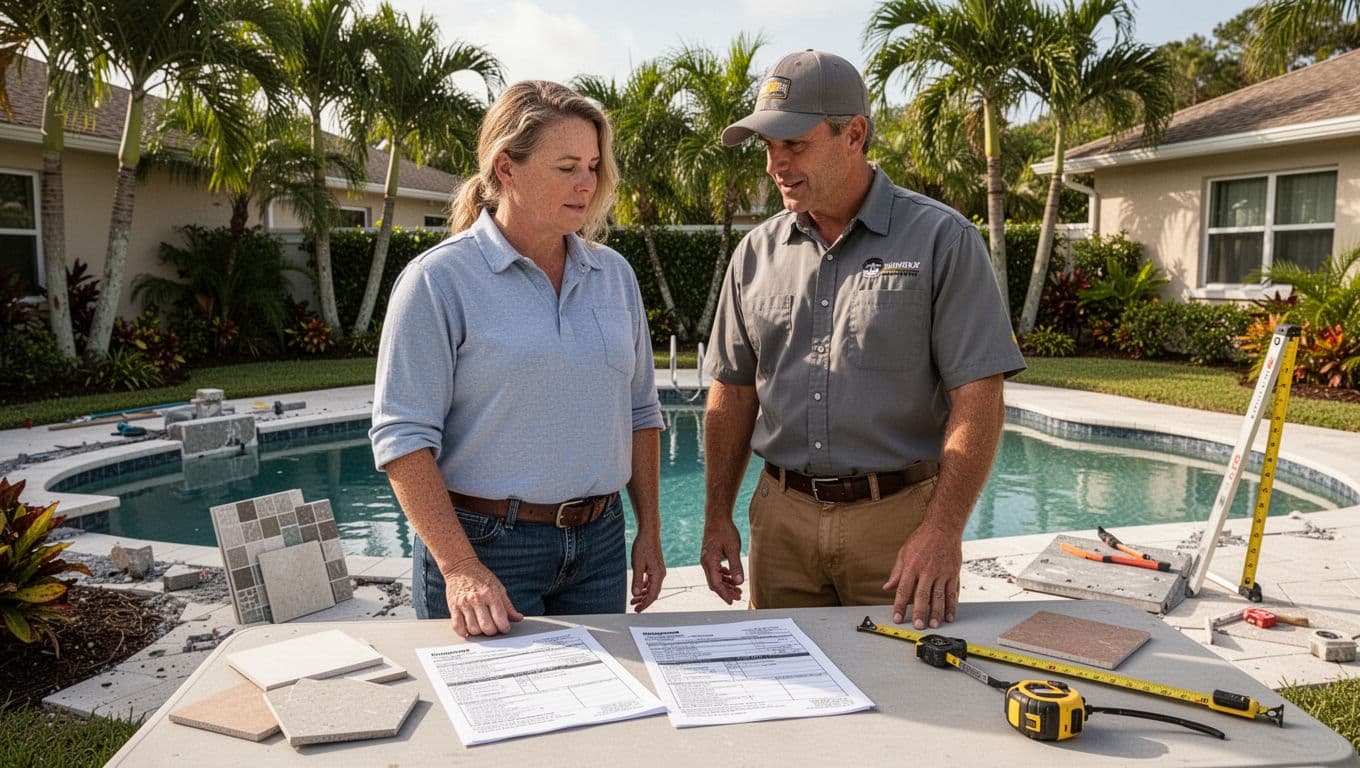
Lee County, Collier County, and Cape Coral rules
The clearest way to understand Southwest Florida permitting is to compare the jurisdictions with documented guidance.
| Jurisdiction | Documented information |
|---|---|
| Lee County | A Residential Pool permit is required for construction or renovation of in-ground pools and above-ground pools with water depths of 24 inches or more intended for swimming or recreation. |
| Collier County | The pool application workflow includes "Resurfacing Pool" as a selectable work item and provides requirements for pool applications. |
| Cape Coral | The city's in-ground pool guideline states that no permit is needed for pool resurfacing. |
These differences show why homeowners should avoid relying on general contractor advice, online summaries, or rules from a neighboring city.
Lee County permit triggers
Lee County Development Services states that a Residential Pool permit is required for construction or renovation of all in-ground pools. It also covers above-ground pools with water depths of at least 24 inches when intended for swimming or recreation.
The Lee County pool application includes a notice that an NOC, or Notice of Commencement, is required when the project exceeds $5,000. That threshold comes from the county application and should not be treated as a universal Florida rule.
Lee County records also show a 2026 renovation described as "Resurfacing of pool and spa." That record supports checking whether a resurfacing project falls within the county's pool renovation process.
Collier County resurfacing requirements
Collier County's pool application workflow lists "Resurfacing Pool" as a work item. The same system includes categories such as above-ground pools, above-ground pools with decks, pools, and public commercial pools.
Collier's application materials identify permit type PRSPL and include a Florida Department of Health resurfacing notification form. The county also asks for a site planning document and construction plans. Pump manufacturer information and a GFCI receptacle for the pump are included in the listed requirements.
That does not mean every pool project has identical requirements. The exact plans and forms can depend on the work being performed.
Cape Coral's resurfacing exception
Cape Coral's official in-ground pool guideline states, "No permit is needed for pool resurfacing." This is a specific city guideline, not a rule for all of Lee County or Southwest Florida.
The same Cape Coral material lists detailed requirements for permitted pool work, including a site plan, pool floor plan, engineered drawings, pump and filter specifications, drain-cover information, and hydraulic-flow or total dynamic head calculations. It references the 2020 Florida Building Code and the 2017 National Electrical Code.
Because resurfacing rules conflict across nearby jurisdictions, describe the full project to Cape Coral's building department before assuming the exemption applies. New plumbing, structural changes, equipment work, or other additions may create separate review questions.
Renovation work that may involve additional review
The finish on the pool is only one part of a renovation. Other components can introduce electrical, structural, plumbing, gas, or property-related requirements.
Electrical, plumbing, and pump equipment
Replacing equipment with the same type and connection may receive different treatment than relocating equipment or changing the system design. New pumps, heaters, salt systems, automation, lighting, outlets, bonding, and underground wiring can involve electrical or plumbing review.
Pool equipment also relates to safety requirements. In Collier County, the application materials identify pump information and a GFCI receptacle requirement. A licensed professional should confirm whether the proposed equipment matches the existing circuits, plumbing, bonding, and approved design.
Avoid assuming that an equipment replacement is permit-free. Ask the local department whether the work is considered maintenance, replacement, alteration, or a new installation.
Decks, structural changes, and water features
Replacing a surface finish on an existing deck may be treated differently from expanding the deck, changing its elevation, adding a retaining structure, or altering drainage. A new sunshelf, spa, bench, raised bond beam, waterfall, fountain, bubbler, or deck jet can also affect the pool structure and plumbing.
A fire bowl or other gas feature may involve separate gas, electrical, or construction questions. The answer depends on the fuel source, location, supply line, support structure, and local rules.
San Juan's pool design and construction process includes engineering and permits before major construction stages. That planning approach helps identify related scopes before demolition or installation begins.
Screen enclosures, gas work, and demolition
A screen enclosure replacement, expansion, or structural repair may fall under a separate building review. Gas lines and fire features may require additional approvals. Demolition can also raise questions about debris, structural removal, utility disconnection, and site conditions.
The retrieved jurisdictional materials do not establish one universal rule for these categories across Fort Myers, Bonita Springs, Estero, Punta Gorda, Port Charlotte, Lehigh Acres, and nearby communities. Treat each scope as a question for the authority having jurisdiction.
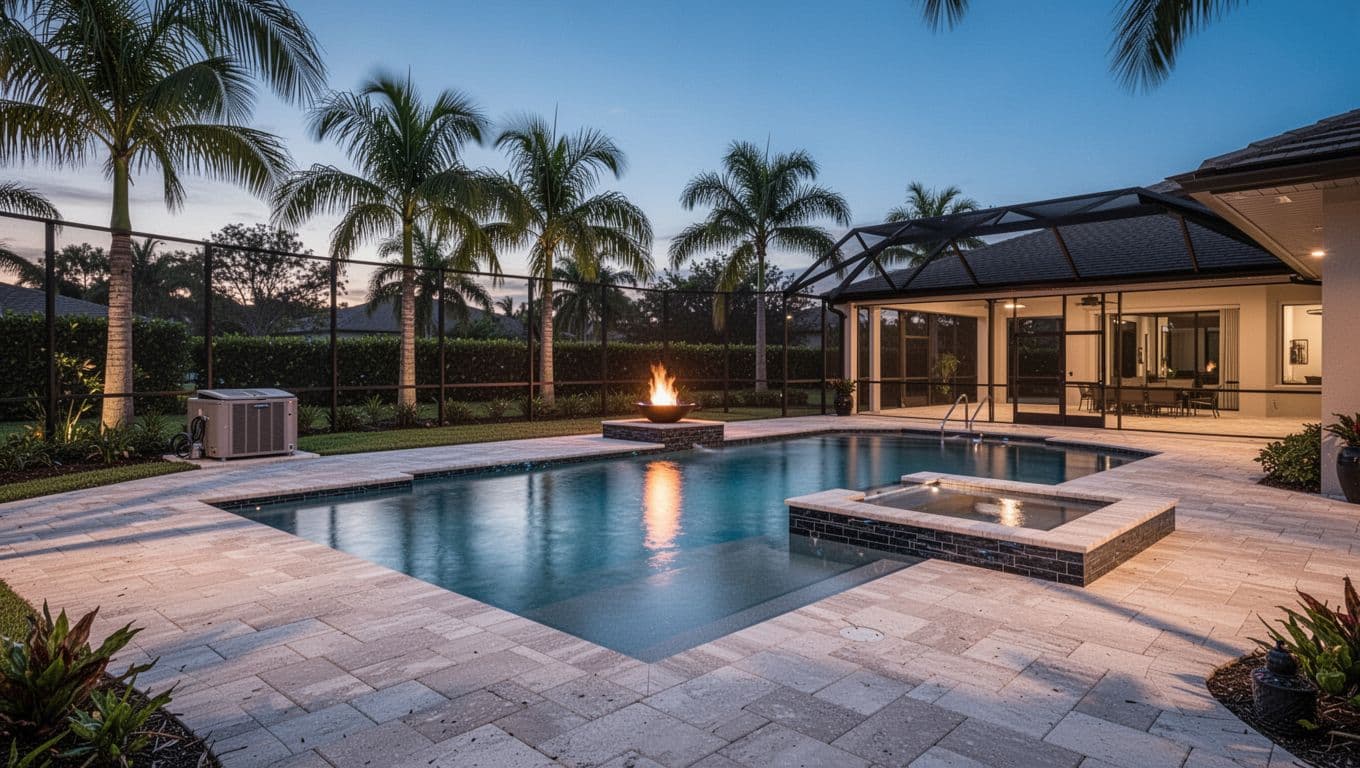
Fort Myers and Bonita Springs permitting
Both cities maintain pool-related permit materials, but homeowners should still confirm which forms apply to an alteration rather than a new pool.
Fort Myers pool, spa, and fountain work
The City of Fort Myers provides a Pool/Spa Application and a Pool/Spa/Fountain: New-Addition-Alteration checklist. The checklist is relevant when a project changes an existing pool, spa, or fountain.
The Fort Myers Building, Permitting & Inspections office is located at 1825 Hendry Street, Suite 101, Fort Myers, Florida 33901. The listed phone number is (239) 321-7925, and the permitting email is permits@fortmyers.gov.
Ask whether the proposed work needs a pool alteration permit, separate trade permits, revised plans, or inspections. Provide drawings when the project changes dimensions, plumbing, equipment, electrical systems, or attached features.
Bonita Springs residential pool permits
The City of Bonita Springs Community Development Department maintains a residential pool permit application. Its office is at 9220 Bonita Beach Road, Suite 111, Bonita Springs, Florida 34135. The listed phone number is (239) 444-6150, and the permitting email is permitting@cityofbonitaspringscd.org.
The application confirms that the city has a formal pool permitting process. It does not by itself answer every question about resurfacing, deck work, equipment replacement, or water features. Submit the actual renovation scope for a current determination.
What remains unverified in other Southwest Florida communities
Official materials reviewed for this article did not verify specific rules for every renovation category in Estero, Punta Gorda, Port Charlotte, or Lehigh Acres. The same caution applies to work that only replaces equipment, screen components, decking, gas features, or decorative water features.
Confirm the governing authority
First, identify the city or county department that handles the address. Then ask whether the property has special conditions, such as a homeowners association review, drainage limitation, easement, flood-related requirement, or existing code issue.
For a property near a municipal boundary, verify the address rather than relying on the community name used in a listing or contractor advertisement. A small boundary difference can change the application process.
Provide a complete renovation description
Use a written checklist that answers these questions:
- Will the pool shell, bond beam, shape, depth, or elevation change?
- Will plumbing, drains, lights, pumps, heaters, or electrical circuits move?
- Will the project add a spa, sunshelf, waterfall, fountain, bubbler, deck jet, or fire feature?
- Will the deck, screen enclosure, gas supply, or drainage change?
- Will any existing structure be removed or demolished?
A licensed pool or construction professional can help prepare plans, but the local building department makes the final determination.
Pool renovation permit checklist for homeowners
Use this checklist before demolition or ordering materials:
- Confirm the property's city or county jurisdiction.
- Write the full scope, including cosmetic finishes and equipment changes.
- Ask whether the work needs a pool permit, building permit, or trade permits.
- Confirm whether engineered drawings, site plans, equipment specifications, or hydraulic calculations are required.
- Ask about inspections, Notice of Commencement requirements, and permit expiration dates.
- Verify that the contractor and subcontractors hold the licenses required for their work.
- Keep approved plans, permit records, inspection results, and final approvals with the property documents.
A permit question should be resolved before work starts. If the scope changes during construction, contact the building department and contractor before adding the new feature.
Key takeaways
- Southwest Florida does not have one blanket rule for pool renovations.
- Lee County requires a Residential Pool permit for documented pool construction and renovation categories.
- Collier County lists pool resurfacing within its pool application workflow.
- Cape Coral's guideline says pool resurfacing does not need a permit, but that exemption should not be applied outside Cape Coral.
- Equipment, decks, water features, screen enclosures, gas work, and demolition need project-specific confirmation.
- The local building department and licensed professionals should review the complete scope before construction.
FAQ about pool renovation permits
Does pool resurfacing always require a permit in Southwest Florida?
No. The answer varies by jurisdiction. Cape Coral's official guideline says no permit is needed for pool resurfacing, while Lee County and Collier County materials show resurfacing or pool renovation handled through documented permit processes. Confirm the address and full scope before work begins.
Do I need a permit to replace a pool pump or filter?
The available materials do not establish one universal rule for equipment-only replacement. A same-location replacement may receive different treatment from a relocation or system upgrade. Ask whether the work changes electrical connections, plumbing, bonding, gas, equipment pads, or approved system design.
Can I add a tanning ledge, waterfall, or fire bowl during renovation?
These additions may affect the pool structure, plumbing, electrical system, gas supply, or deck. They may require additional review, but the applicable requirement depends on the jurisdiction and design. Include every feature in the original permit question and construction plans.
Who should I contact before renovating?
Contact the building department governing the property and speak with a licensed pool or construction professional. Give both parties a written description of the work, including resurfacing, tile, coping, deck changes, equipment, lighting, screen work, water features, and gas features.
Conclusion
Pool renovation permits in Southwest Florida depend on the address and the details behind the renovation label. Lee County, Collier County, and Cape Coral demonstrate why a neighboring city's rule may not apply to your property.
Confirm the requirements before demolition, especially when the project changes structure, plumbing, electrical systems, equipment, decks, enclosures, or fire features. For a project-specific conversation, homeowners can request a pool renovation estimate and review the scope with a qualified local professional.