
Planning an Automatic Pool Cover for a Cape Coral Pool
An automatic pool cover affects your pool's shape, coping, drainage, and electrical layout before anyone shoots the gunite. If you're building in Cape Coral, choosing it early gives your builder room to integrate the system into the backyard design.
The goal is early coordination , especially where sun shelves, raised spas, summer downpours, and waterfront conditions complicate the layout. A cover also needs its own operating and maintenance routine.
Start with the cover system and its installation drawings, then build the pool plan around those requirements.
Key Takeaways
- Choose the cover before engineering and gunite construction so the team can coordinate tracks, storage space, and coping.
- Plan separately for rainwater removal, equipment access, and manufacturer-directed storm preparation.
- An automatic pool cover isn't a substitute for required barriers or adult supervision. Confirm the approved safety arrangement with Cape Coral for your specific permit.
Plan the Automatic Pool Cover Before Construction
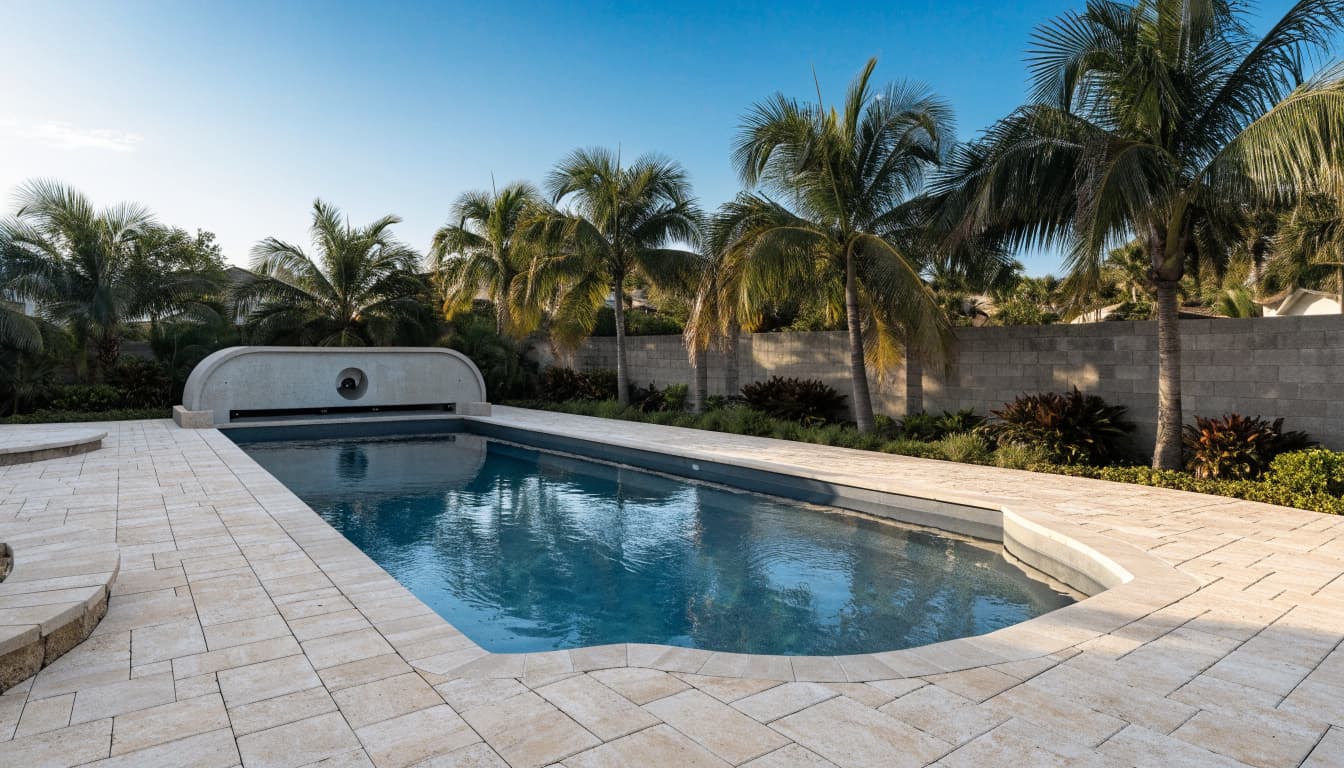
Select a system before final engineering
Gunite gives you considerable freedom over pool shape and depth. However, an automatic cover adds dimensional requirements that the shell designer needs before construction.
Ask for project-specific drawings identifying the track locations, cover travel, mechanism space, and electrical connections. A general brochure won't resolve how the system fits your particular pool.
The custom pool construction process places design, engineering, and permits ahead of excavation and concrete work. That's the right window for resolving cover details. Adding them after the shell is built can mean changing finished work.
Give the builder and installer one coordinated plan
Your pool builder, cover installer, and electrician need matching drawings. Otherwise, each trade can leave space that doesn't match the next trade's requirements.
Confirm who supplies the system, constructs its housing, installs the tracks, and handles startup. Also identify who checks dimensions before gunite placement and before coping installation.
Ask about future servicing while access is easy to design. The mechanism shouldn't require removing permanent landscaping or dismantling unrelated pool features for routine repairs.
Match the Pool Shape and Features to Cover Travel
Resolve curves, shelves, and raised spas
A rectangular pool generally offers a straightforward cover layout. Freeform gunite pools need closer review because the cover usually travels along straight, parallel tracks.
Ask the installer to show the actual covered area on the plan. Don't assume the fabric will follow every curve in the pool outline.
Sun shelves require attention to water depth and the selected system's support requirements. Meanwhile, bubblers, handrails, and other projecting features must remain clear of the cover's path.
A raised spa or spillway can interrupt that path. Decide whether the spa needs a separate covering arrangement and have the installer confirm how the pool cover passes nearby features.
Check the surrounding site
The cover housing occupies space beyond the swimming area. That space can compete with deck seating, circulation routes, screen-enclosure components, or landscaping.
Use the survey to coordinate the pool, housing, and equipment rather than squeezing the mechanism into leftover space.
For canal-front properties, planning beside a seawall involves broader structural and access questions. Similarly, planning around underground utilities helps identify constraints before the cover layout becomes fixed.
Neither the cover installer nor the pool designer should assume that an apparently empty strip of yard is available for excavation.
Design Tracks, Housing, and Coping Together
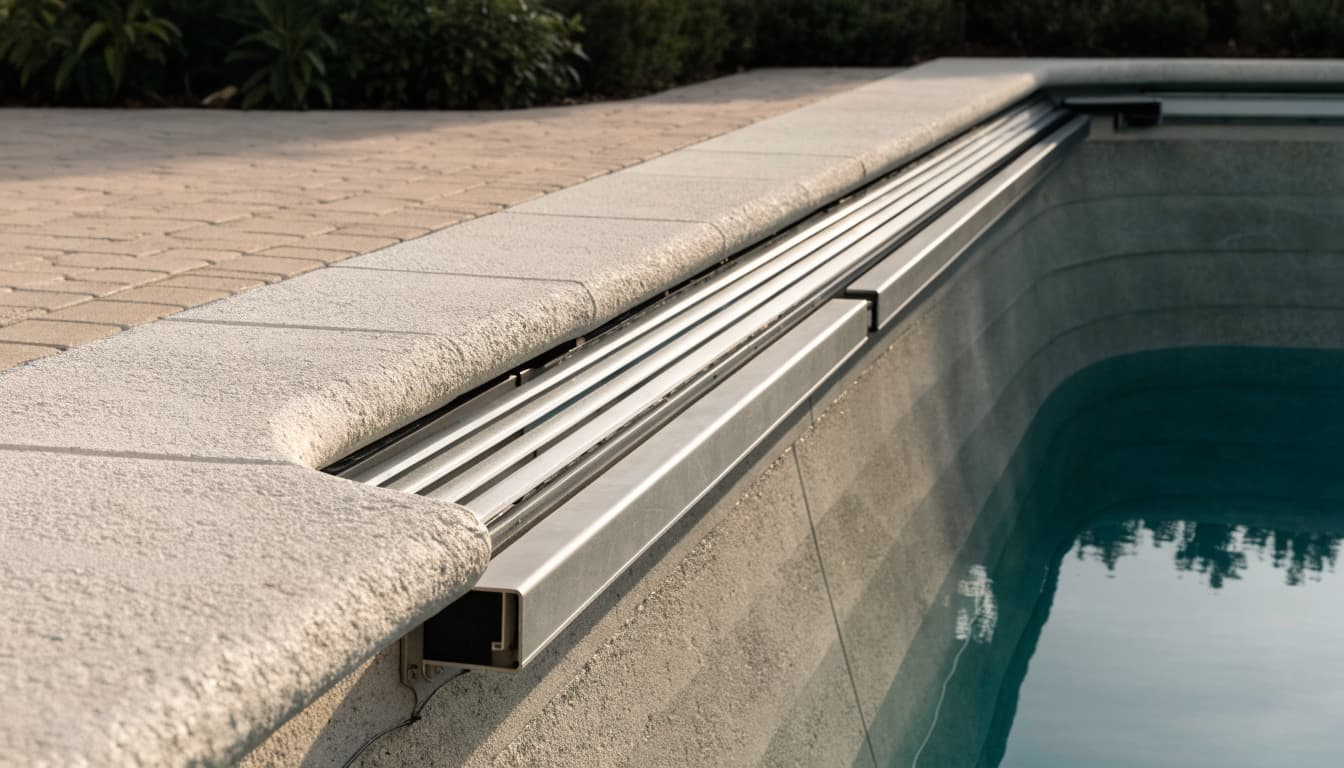
Use dimensions for the selected model
A recessed housing can keep the mechanism out of sight, but it requires planned dimensions and service access.
For example, a Coverstar/Fluidra pre-installation guide lists a 14-by-14-inch internal pit for pools up to 40 feet. It lists larger pits for longer pools. Those are guide-specific dimensions , not a universal specification for every automatic pool cover.
Have the installer supply the selected system's current drawings. The builder should use those drawings to coordinate the housing with the engineered shell, deck, and coping.
Also review the housing lid's finish and access method. An attractive lid still needs to open as required for servicing.
Coordinate drainage and electrical work
The cover housing needs a drainage plan suited to the site. Discuss groundwater and drainage conditions with the builder rather than assuming a gravel-filled pit will stay dry.
Keep housing drainage separate in your discussions from pumping rainwater off the cover. They address different places where water collects.
Electrical planning should identify the motor connection, control location, and cover-pump power supply. Have the electrician coordinate protection, bonding, and other applicable requirements with the permitted design.
Finally, choose a control position that gives the operator a clear view of the entire pool surface, consistent with the manufacturer's instructions.
Separate Safety Planning From Permit Requirements
Understand what ASTM F1346 means
An automatic mechanism alone doesn't make a cover an approved safety cover. Ask for documentation showing that the selected product complies with ASTM F1346 and confirm the installation requirements attached to that compliance.
The 2023 Florida Building Code, Residential, includes a pool-barrier exception for an approved safety cover complying with ASTM F1346. That provision doesn't establish Cape Coral's acceptance of a particular installation.
Your builder should confirm how the exception applies to your permit. Keep the product documentation with the approved plans and inspection records.
Confirm the Cape Coral safety arrangement
Cape Coral publishes pool permit guidance through its Permit Document Center. Ask the Building Division what documentation it requires for your new in-ground pool and proposed cover.
Also ask whether a separate barrier applies to your project. Don't transfer fence instructions from an above-ground-pool handout to a gunite pool without confirmation.
A state-code exception is not a project approval. Keep required barriers in the plan unless Cape Coral approves a different compliant arrangement.
Regardless of permit acceptance, supervise children whenever the pool is accessible. Keep controls secured, inspect the cover, and close it according to the manufacturer's instructions.
Prepare for Cape Coral Rain, Heat, and Storms
Manage summer rain and retained heat
Cape Coral's summer downpours make rainwater removal an everyday operating concern. Water collecting on the fabric creates a hazard and needs prompt attention.
Plan for the manufacturer's recommended cover pump, including its discharge route and power source. Ask what to do if the pump stops during heavy rain. Never open the cover with standing water on it unless the manufacturer expressly directs that procedure.
A cover also limits evaporation and retains heat. That can help when heating the pool, but Cape Coral's hot weather may call for a different operating schedule.
Discuss warm-weather operation with the installer and pool-service professional. Continue testing water chemistry rather than treating a closed cover as a maintenance shortcut.
Follow product-specific storm instructions
An automatic cover isn't a hurricane-protection system. Don't assume that closing it protects the pool or that opening it is always the correct storm procedure.
Ask for written instructions covering high winds, heavy rainfall, power loss, and post-storm inspection. Follow the selected manufacturer's guidance rather than advice intended for a different cover type.
If your pool uses salt chlorination, confirm that the cover system's materials and maintenance instructions suit that environment. Coastal exposure also deserves discussion, especially on waterfront lots.
Remove debris and inspect the system before restarting it after a storm. If fabric, tracks, or the mechanism show damage, arrange service instead of forcing the cover to move.
Compare Complete Quotes and Assign Responsibilities
A useful cover quote includes more than the fabric and motor. Compare the same scope across proposals so omitted construction work doesn't look like a lower price.
Ask each proposal to identify the following:
- Include the model, fabric, tracks, housing arrangement, controls, and installation.
- State who pays for housing construction, drainage, coping changes, and electrical work.
- Identify the cover pump, startup demonstration, warranty terms, and exclusions.
- Explain future fabric replacement, service availability, and responsibility for repairs.
Don't rely on a generic price allowance before the installer reviews your pool dimensions and layout. A recessed installation and a retrofit involve different work, even when they use similar equipment.
Bring the coordinated drawings and written scope to the pool pre-construction design review. Confirm inspection checkpoints before work conceals the housing, electrical routes, or track interfaces.
Finally, clarify warranty contacts. You should know whether a problem belongs with the pool builder, cover installer, electrician, or manufacturer.
Build Maintenance Into the Handoff
Before accepting the installation, watch a complete opening and closing cycle. Ask the installer to demonstrate the pump, controls, and manufacturer-approved procedure for a power interruption.
Keep the manual and warranty paperwork accessible. Record the model and installer contact information so future service doesn't start with identifying the system.
Coverstar Arizona's published maintenance guidance recommends washing fabric every three to six months, flushing tracks roughly monthly or as needed, and annual service. These are provider recommendations, not universal intervals. Follow the manual for your installed system.
In Cape Coral, inspect for sand, leaves, and other debris that can interfere with movement. Also check the pump after rain and keep the housing's access area clear.
Stop operation if the cover moves unevenly, makes unusual noises, or shows damaged fabric. Addressing a small issue early can prevent additional damage.
Frequently Asked Questions
Can I add a cover after building the gunite pool?
Sometimes, but the existing shape, coping, deck, and equipment layout determine the options. A retrofit may require visible tracks or deck modifications. Have an installer inspect the pool before you commit to a system.
Will one cover protect the pool and raised spa?
Don't assume so. A raised spa and spillway can prevent one cover from traveling across both water surfaces. Ask the installer to show exactly what the proposed system covers and how the remaining water area will meet the approved safety arrangement.
Can children walk on a safety cover?
Keep children and pets off it. Safety-cover certification doesn't make the fabric a play surface or walking deck. Standing water adds another hazard, so maintain the pump and supervise access even when the pool is closed.
Plan the Cover as Part of the Pool
A well-planned automatic pool cover starts with coordinated drawings, a workable pool layout, and clear responsibility for installation. Cape Coral's rain and heat also make drainage and operating instructions part of the decision.
Resolve the construction details before gunite placement, and confirm the approved safety arrangement with the city. Your finished backyard will then have a cover designed for the pool you built, with a maintenance routine your family understands.