
Fort Myers Pool Construction Pre-Start Meeting: What to Expect
A pool project starts to feel real when the plans become a jobsite plan. Your pool construction pre-start meeting puts the design, property conditions, access needs, and construction sequence into one practical conversation before work begins.
For Fort Myers homeowners, this meeting is the time to raise concerns early, especially about summer rain, drainage, pets, gates, and daily access to the yard. It creates a clear starting point, although weather, inspections, material availability, and site conditions can still affect the schedule.
Your Pool Construction Pre-Start Meeting Sets the Jobsite Plan
The pre-start meeting usually takes place at your home with your pool builder or project representative. You will review the approved pool plan and walk the property together. Bring up anything that has changed since the original design meeting, including new landscaping, fencing, outdoor furniture, or planned home projects.
A good meeting connects the drawing to the actual yard. The proposed pool may look simple on paper, yet a narrow side yard, utility line, or low spot can change how the crew approaches the work.
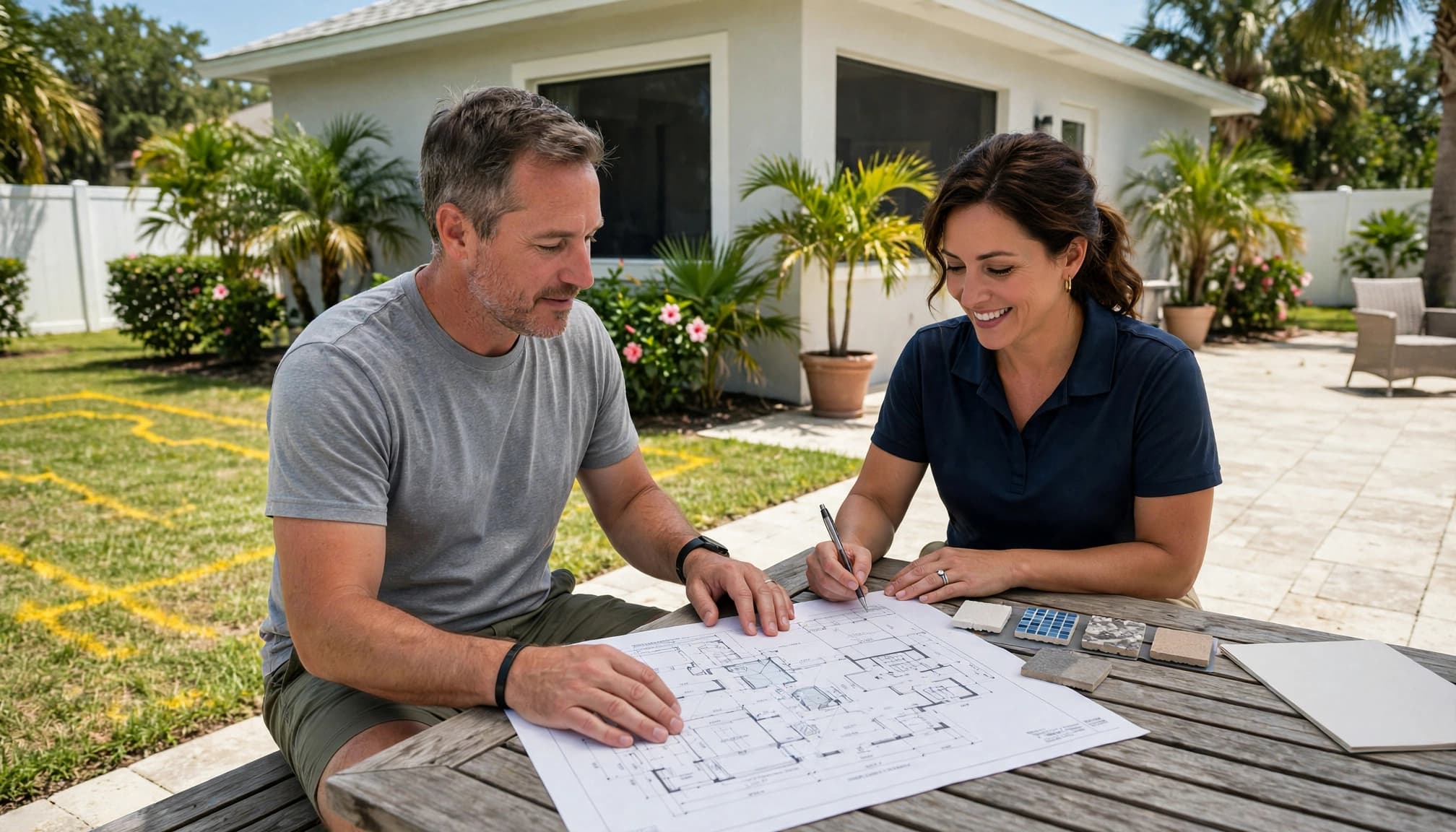
Confirm the pool design and selected features
Review the pool's shape, depth, entry steps, sunshelf, spa, waterline tile, coping, deck finish, and equipment location. If you selected additions such as bubblers, deck jets, a waterfall, or fire bowls, confirm where each feature will sit.
This is also the right time to discuss how your family will use the space. A shallow lounging ledge works differently from a play area, and a spa's location can affect privacy, views, and equipment routing.
For a broader view of the work ahead, review the custom pool construction process before your meeting. Knowing the usual order of construction helps you ask more useful questions.
Walk the access route and protection areas
Your builder will identify where crews and equipment can enter the property. That route may run through a side gate, a removed fence panel, or another agreed-upon opening.
Discuss which areas need protection, such as mature trees, irrigation heads, outdoor kitchens, pavers, and screen enclosures. Construction creates noise, dust, and temporary disruption. Clear expectations help you prepare your household and protect the parts of the yard that will remain.
A pool plan shows the finished backyard. The pre-start meeting focuses on how crews can build it safely within the space available.
Fort Myers Site Conditions Need a Close Look
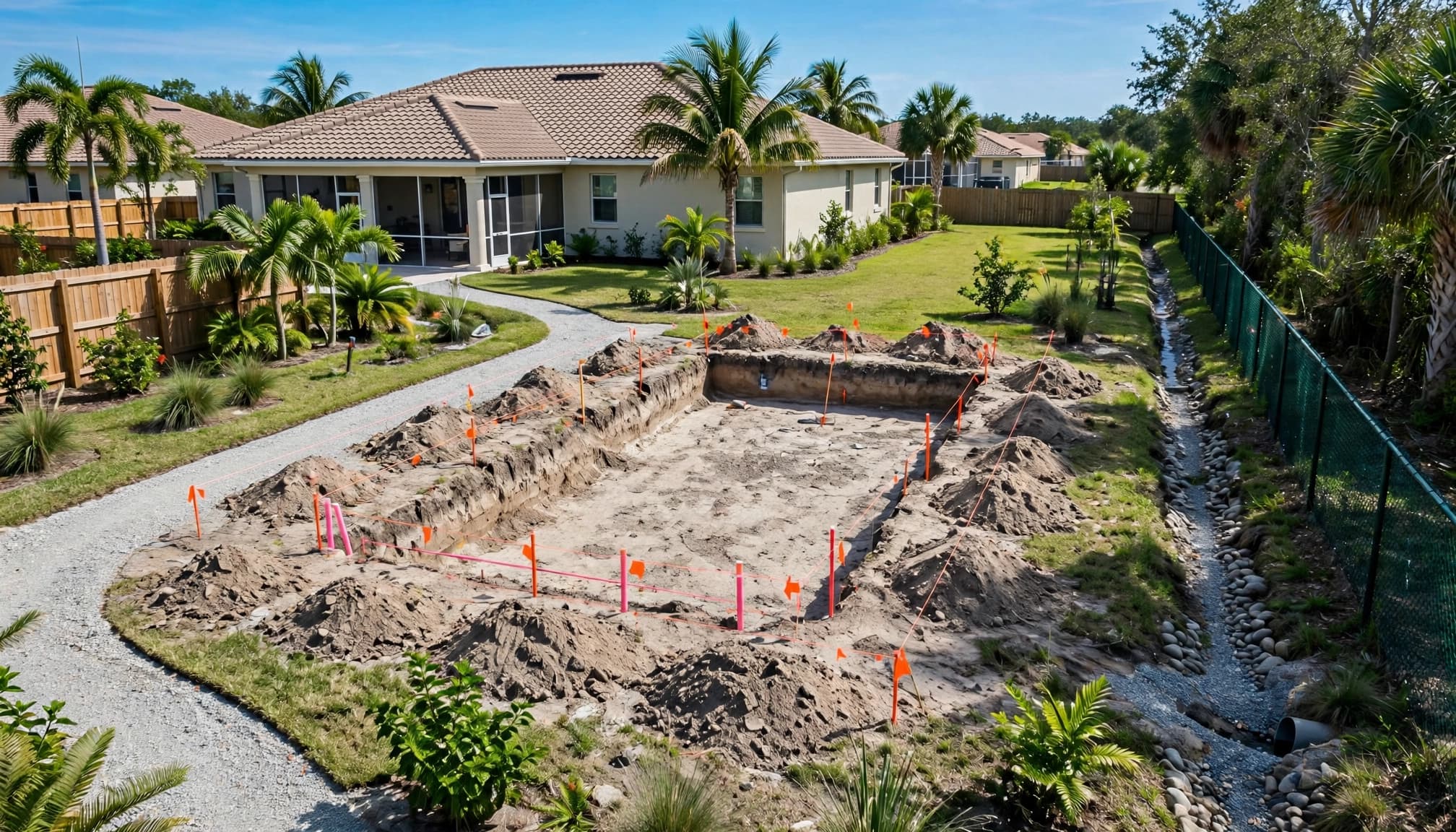
Southwest Florida yards bring practical conditions that deserve attention before excavation. Soil, water movement, rainfall, and lot layout vary widely, even between neighboring homes.
Drainage and Florida weather
Fort Myers afternoon storms can bring heavy rain in a short time. During the meeting, point out standing-water areas, swales, downspouts, sump discharge, and any spot where your yard drains toward the home or a neighbor's property.
Your builder can discuss how the proposed pool and deck relate to existing grades. Final drainage details depend on the property, approved plans, and local requirements, so don't assume a solution used on another lot will apply to yours.
Wet weather can also pause excavation, concrete work, deck installation, or inspections. Ask how you will receive schedule updates when rain changes the work plan.
Utilities, setbacks, and access limitations
Show the team visible utility equipment, well components, septic features, irrigation controls, exterior electrical panels, air-conditioning units, and propane tanks. Some utilities may require locating before digging, while others may affect equipment placement.
Setbacks, easements, deed restrictions, and permitting rules can influence pool placement. Requirements differ among Fort Myers, Lee County, communities with HOAs, and other jurisdictions. Your builder can explain the project-specific path, but property records and approvals still matter.
Bring Documents and Questions That Prevent Delays
You don't need a binder full of paperwork, but a few useful items can keep the pool construction pre-start meeting focused. Gather what you have before the appointment, then send requested documents ahead of time if your builder asks.
Bring or have access to:
- Your final pool contract, selected upgrades, and any approved plan set you received.
- HOA approval documents, if your community requires them.
- A recent survey, site plan, or information about easements and known property lines.
- Gate codes, pet instructions, and contact details for the person who can make decisions during construction.
- Notes about irrigation, septic systems, wells, utilities, drainage concerns, or prior work in the yard.
Ask questions that match your property
Focus on decisions that affect daily life during construction. Ask where materials may be stored, which gates need to stay unlocked, and whether you should move vehicles or patio furniture.
Also ask who will be your main point of contact, how change requests are handled, and when you should expect notice before major phases. If your home has a tight side yard or a shared drainage area, ask how that condition affects access and scheduling.
Know What Happens After the Meeting
After the site review, the builder can finalize jobsite details and coordinate the next construction steps. Depending on the project's status, that may include permit activity, utility locating, site preparation, excavation scheduling, or material coordination.
Avoid treating the meeting as a promise of an exact completion date. Pool construction follows a sequence, yet rain, inspections, subcontractor availability, and conditions uncovered during excavation can shift individual dates.
Keep your phone available, maintain clear access when crews are scheduled, and report changes quickly. A newly installed fence, landscaping project, or driveway repair can affect the plan if the builder does not know about it.
Final Thoughts
A well-prepared pool construction pre-start meeting gives your builder a clear picture of your property and gives you a realistic view of the work ahead. Confirm the design, identify site constraints, and discuss how construction will affect your routine.
The best preparation is simple: bring accurate documents, point out concerns in the yard, and ask direct questions before the first machine arrives.