
Gunite Pool Finish Colors: A Cape Coral Color Guide
A pool finish that looks blue on a sample board can look quite different beneath several feet of water. When you compare gunite pool finish colors for your Cape Coral home, treat each sample as a starting point.
The finish influences water appearance, but sunlight, depth, surrounding materials, and water clarity also shape what you see. Your most useful target is a color range you'll enjoy throughout the day.
Start with how the interior finish interacts with water, then compare your options against your backyard's conditions.
How gunite pool finish colors affect water appearance
Gunite forms the pool's concrete shell. The interior finish covers that shell and provides the visible surface beneath the water. Plaster, quartz aggregate, and pebble finishes each have their own background color and surface variation.
Water changes how you perceive that surface. It absorbs longer wavelengths of visible light more readily, which helps explain its blue appearance at greater depths. Meanwhile, the finish reflects light back through the water.
A white interior often supports a bright, light-blue impression. Darker interiors can produce a deeper, more reflective appearance. However, neither description guarantees a particular shade in your backyard.
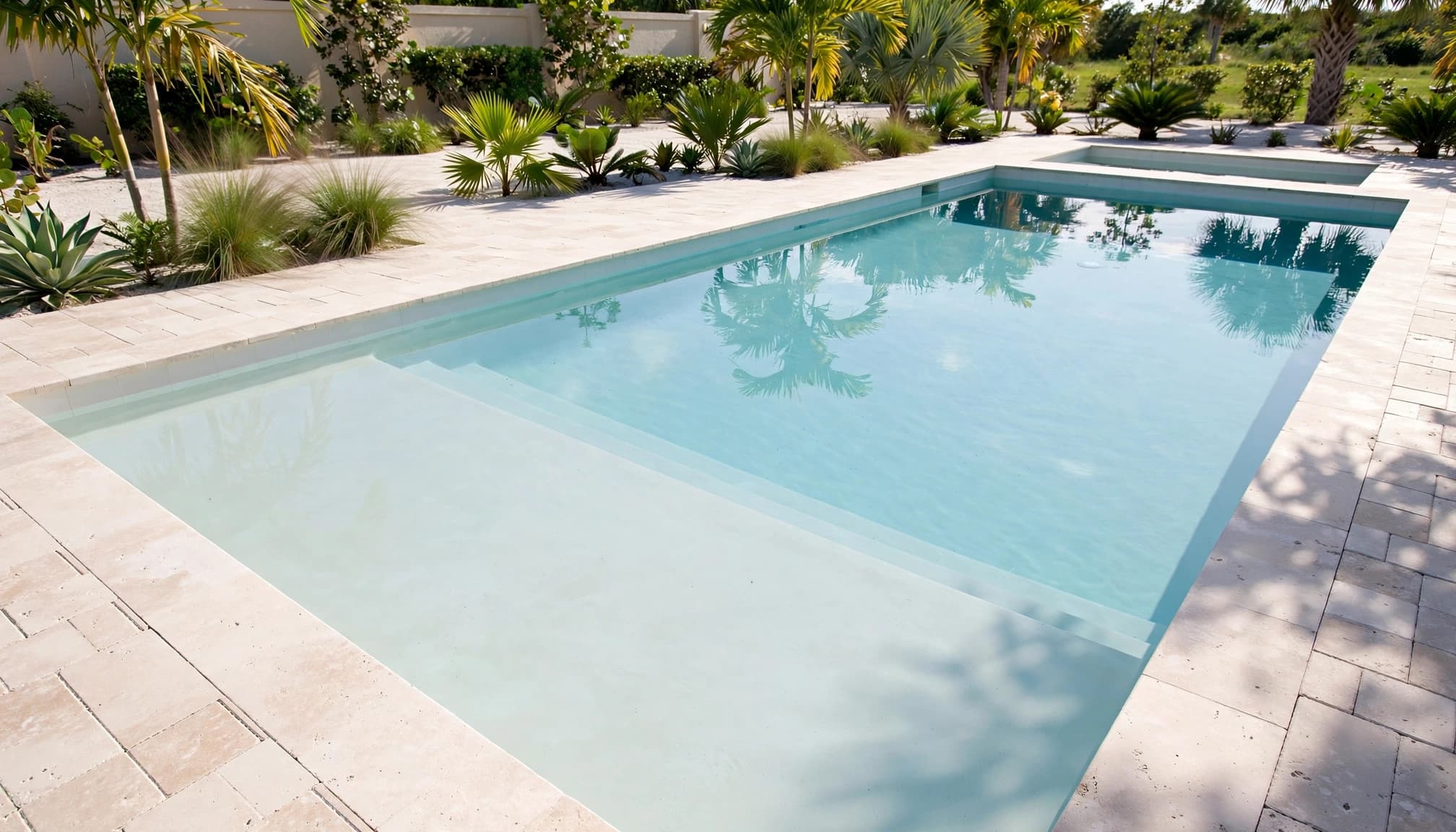
Aggregate finishes introduce another variable. Individual stones or quartz particles may differ from the surrounding cement color. Up close, you notice those details. Across the patio, your eye combines them into an overall impression.
That means a finish's dry sample color and its appearance underwater answer different questions. You'll want to review both before making a selection.
Common finish colors and their visual trade-offs
Most color decisions fall into a few broad families. Manufacturer names vary, so compare the actual finish blend rather than relying on labels such as "ocean" or "lagoon."
These are general visual tendencies, not promised water colors.
| Finish color family | Possible water impression | Visual trade-off |
|---|---|---|
| White or off-white | Bright, pale blue or aqua | Creates a light background, but contrasting stains can stand out. |
| Light blue | Soft blue with a brighter shallow area | Supports a blue palette, though shade can mute it. |
| Medium blue | More saturated blue | Can make depth differences more noticeable. |
| Gray or blue-gray | Muted blue, sometimes blue-green | Fits neutral surroundings, but can look darker under shade. |
| Tan or sandy beige | Aqua or green-blue | Complements warm stone, while reflections can shift the impression. |
| Charcoal or near-black | Deep blue-green or a dark reflective surface | Creates strong reflections and less contrast with the bottom. |
The right choice depends partly on how you want the pool to sit within the yard. A pale interior usually feels visually lighter beside a broad deck. A darker finish can make reflections more prominent, especially when the surface is calm.
Also consider everyday visibility. Dark leaves may stand out against a pale bottom, while light mineral deposits may show more clearly against dark material.
No finish color eliminates cleaning. Choose the appearance you prefer, then evaluate its maintenance requirements separately.
Cape Coral sunlight changes the same finish
Your Cape Coral pool will look different under direct sun, passing clouds, and afternoon shade. Compare finishes across those conditions, especially where your family will spend time.
Direct sunlight versus shade
Bright sun increases illumination and can make the interior easier to see through clear water. Ripples also create moving highlights, so the surface may look brighter than the shaded side.
However, a shaded area receives less direct light. That can make the same finish appear darker or less saturated. Rooflines, palms, and neighboring structures may create uneven shade across the pool.
Before choosing a finish, observe your proposed pool location in the morning and afternoon. A color selected for its bright midday appearance may feel different during your usual evening swim.
Screen enclosures and nighttime lighting
A screen enclosure changes the light reaching the water, although the effect depends on the screen and surrounding shade. Compare enclosed pools with other enclosed pools whenever possible.
At night, underwater lights become a major part of the appearance. White light reveals the finish differently than colored LEDs. Blue or green lighting can overwhelm subtle differences between interior colors.
Review daytime finish choices separately from nighttime lighting preferences. Also ask how light placement will illuminate steps, benches, and the deeper swimming area.
Pool depth creates different shades
Even with one finish throughout, your sun shelf, steps, and deeper floor won't necessarily look identical. The amount of water above each surface changes how light travels.
On a shallow shelf, you often see more of the finish itself. As depth increases, water's influence becomes stronger. The deeper area may therefore appear richer or darker than the shelf.
This matters when you're choosing a pool with a large lounging area. A finish that looks richly blue in a deep-end photograph may look much paler on your shelf.
Similarly, a raised spa can differ visually from the adjoining pool even when both receive the same interior finish. Its depth, wall shadows, and moving water all affect the view.
A finish photograph is most useful when you also know the pool's depth and whether you're looking at sunlit or shaded water.
Ask your builder to discuss the planned depth profile alongside gunite pool finish colors. Otherwise, you may choose based on an appearance that belongs mainly to a different pool shape or depth.
Landscaping and hardscape change the view
Your pool reflects its surroundings and sits beside colors that affect visual contrast. Both deserve attention during finish selection.
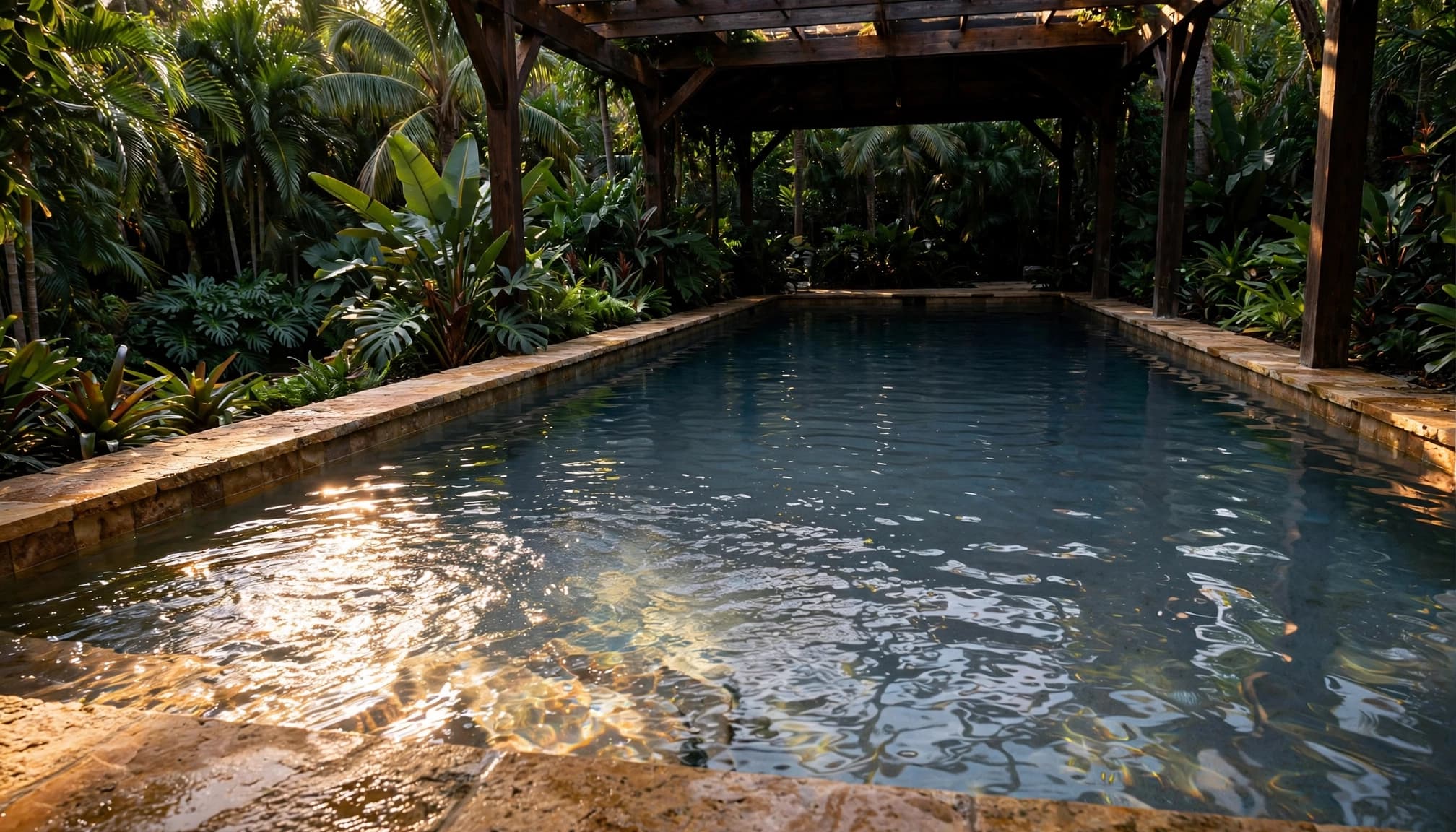
Plants and sky add reflections
Palms, hedges, and other landscaping can add green reflections to the surface. Meanwhile, open sky contributes blue reflections. Their visibility depends on your viewing angle and the water's movement.
A calm pool may show clear reflections of nearby trees. Bubblers, fountains, and swimmers break up those reflections, which changes the overall appearance again.
Consider the view from your living room or covered lanai as well as the pool edge. Each position can show a different balance of surface reflections and visible interior finish.
Decking and coping create contrast
Light pavers can make darker water feel more pronounced. Warm beige stone may complement a sandy finish, while gray decking can support a cooler palette.
However, the deck doesn't dye the water. Its color influences the surrounding visual context, and nearby surfaces may also contribute reflected light.
Place finish samples beside your planned coping, waterline tile, and deck material. Comparing these together makes mismatched undertones easier to spot before installation.
Clear water keeps finish comparisons honest
Water clarity determines how well you can see the interior. Cloudiness scatters light and can make a finish appear dull, pale, or difficult to read.
Green-looking water also deserves investigation before you blame the finish. Algae, dissolved metals, and reflections can produce different kinds of color changes. Appearance alone doesn't identify the cause.
For an existing pool, assess filtration and water chemistry before deciding the interior color needs replacing. If the surface is worn or stained, San Juan Custom Pools & Spas offers pool renovation and resurfacing, including pebble, premium aggregate, and custom color selections.
New finishes also need the correct startup care. Follow the selected product's instructions for filling, brushing, water chemistry, and equipment operation. Don't judge the finished appearance while the water is cloudy or startup conditions are unsettled.
Balanced water helps protect the surface as well as its appearance. Over time, scale, staining, or surface deterioration can change how the finish reflects light.
A darker interior won't correct poor water clarity. Likewise, choosing white won't prevent algae or mineral deposits. Maintenance remains a separate responsibility whichever color you select.
How to choose a finish for your Cape Coral pool
Narrowing your choices works best when you compare the color, material, and backyard setting together.
Compare samples with completed pools
Start with actual material samples, then ask for photographs of the same named finish underwater. Wet samples can help, but they still lack the depth and reflections of a full pool.
San Juan's completed pool and spa gallery offers local design references. Ask which finish appears in a project you like rather than identifying it by photograph alone.
Whenever possible, view a completed installation in person. Look at its shelf and deeper area, then check the appearance in shade. Phone cameras, editing, and screen settings can all alter color, so an image shouldn't decide the purchase by itself.
Choose the finish material alongside its color
Standard plaster is generally the lower-cost finish choice. Quartz aggregate adds color variation, while pebble finishes introduce visible stone and texture. Your choice affects how the surface looks up close and feels underfoot.
San Juan's guide to pool resurfacing costs and finishes explains the material differences that influence a renovation budget.
Request a quote for the exact product and color you're considering. Also ask about texture, care instructions, and the appearance of steps and benches.
Before approving the selection, confirm the manufacturer, finish line, and color name in writing. A general description such as "medium blue pebble" leaves too much room for different blends.
Key takeaways for finish selection
Gunite pool finish colors establish the underwater background, but your backyard determines much of the final impression.
- Compare shallow and deep areas because one finish can produce noticeably different appearances.
- Review the finish beside your actual tile, coping, and decking, preferably under outdoor light.
- Use clear-water examples of the exact product, and treat photographs as references rather than color guarantees.
The strongest comparison combines a material sample, a completed installation, and your planned pool design.
Choose a color range you'll enjoy every day
Your Cape Coral pool will change appearance as sunlight, reflections, and water movement change. A comfortable color range is a more dependable goal than one exact shade.
Choose the finish with your pool's depth and surrounding materials in mind. Then confirm the specific product and its care requirements with your builder.
That gives you a clear basis for your decision, without expecting the water to match a sample board all day.