Gunite Pool Backfill: What Happens After the Shell Is Built
A gunite pool shell is a major construction milestone, but the work around it still matters. Backfill fills the space around the shell and prepares the area for later stages, while careful placement helps protect the pool structure and its plumbing.
The order and timing depend on the site, soil, pool design, and local requirements. Here's what homeowners can expect, and why your pool contractor's instructions matter throughout the process.
Key Takeaways
- Backfill fills the excavation around the pool shell and helps prepare the surrounding area for subsequent construction.
- The order of plumbing, shell work, and backfill can differ by project. There isn't one universal sequence.
- Crews need to place and compact fill carefully to avoid stressing the shell or damaging pipes.
- Site conditions and local requirements affect the materials, method, and timing.
- Keep people, vehicles, and stored materials away from the construction area unless your contractor says otherwise.
What gunite pool backfill accomplishes
After excavation, the pool shell occupies only part of the space cut into the ground. Backfill goes into the remaining space around the shell. It closes that gap and helps create a stable working area for the construction stages that follow.
The shell is a reinforced concrete structure, while the material around it is placed and compacted in stages. That distinction matters: backfill does not replace the shell or turn the pool into a finished structure. Its placement still needs care, because uneven fill or poor compaction can affect the area around the pool and complicate later work.
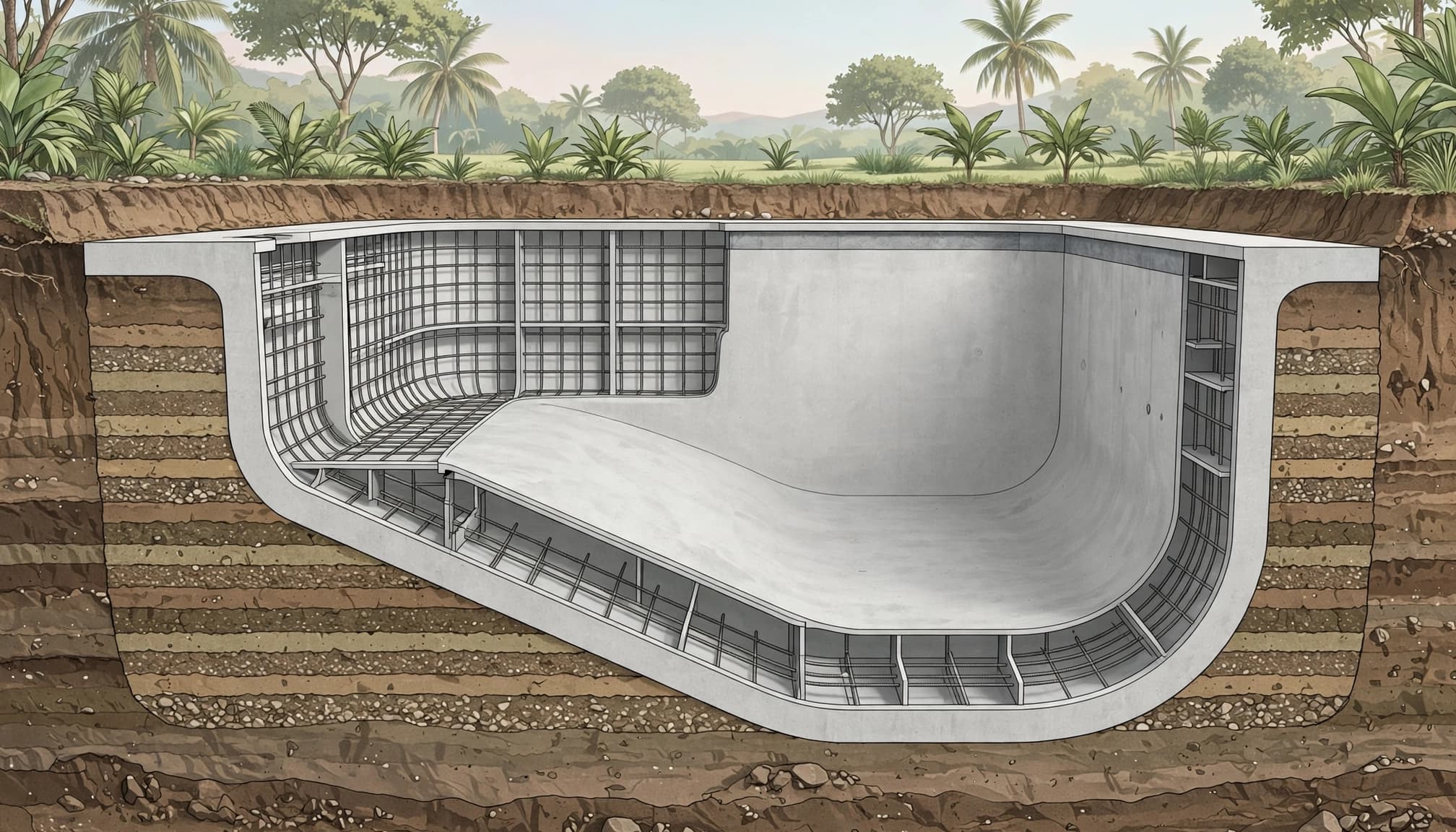
Backfill also creates the base around the pool where later construction can proceed. Decking, tile, coping, drainage, and equipment work may follow, depending on the plan. For a broader view of the gunite pool construction process, see how backfill fits among the other stages.
How the shell, plumbing, and backfill fit together
The project sequence can look different from one pool to another. A contractor may divide the work into separate shell, plumbing, and backfill stages, or schedule some tasks in a different order.
Why the order can vary
San Juan Pools & Spas lists "Shoot Concrete," "Pre-Backfill," and "Plumbing & Backfill" as distinct steps. Other construction descriptions place plumbing and pressure testing before the backfill and gunite application. These sequences show why it's unwise to assume that every pool is backfilled at the same point.
The right order depends on the approved pool design, site conditions, and the contractor's construction plan. For homeowners, the useful question is not whether another project followed the same schedule. It's whether your contractor has explained how shell work, plumbing checks, and backfill will be coordinated on your site.
What typically happens around this stage
Before crews close access to underground lines, plumbing needs to be installed and checked according to the project plan. The pool may then move through backfill, shell-related work, or other scheduled tasks. The exact order is a construction decision, not a homeowner-directed sequence.
Our pool excavation and installation process explains how excavation leads into steel, plumbing, and shell construction. Ask your contractor what stage comes next at your home and what areas must remain accessible.
How backfill is placed and compacted
Crews generally work around the shell in planned stages rather than dumping all the material into the excavation at once. Placement and compaction need to account for the pool's shape, nearby plumbing, and access constraints. The method can vary with the site and project.
Why crews work in lifts
A lift is a layer of fill placed before the next layer is added. Compacting in lifts helps crews manage the material progressively, rather than trying to compact a deep mass from the surface. The thickness of each lift and the equipment used depend on the contractor's plan and site conditions.
At San Juan Pools & Spas, our published process describes compacting dirt in 1-foot lifts with a jumping jack and compactor. That is our stated method, not a rule for every pool or every site. A contractor may choose a different approach based on soil, access, design, or local requirements.
Why compaction needs care
Compaction helps reduce loose or uneven areas around the pool. However, crews must control where equipment operates and how force is applied, especially close to the shell and plumbing. The goal is to build up the surrounding area without striking the structure or shifting lines.
Homeowners should avoid walking or driving over newly placed fill unless the contractor has approved it. Heavy or untimely traffic can disturb work and make it harder to protect the site as construction continues.
Protecting plumbing, the shell, and equipment
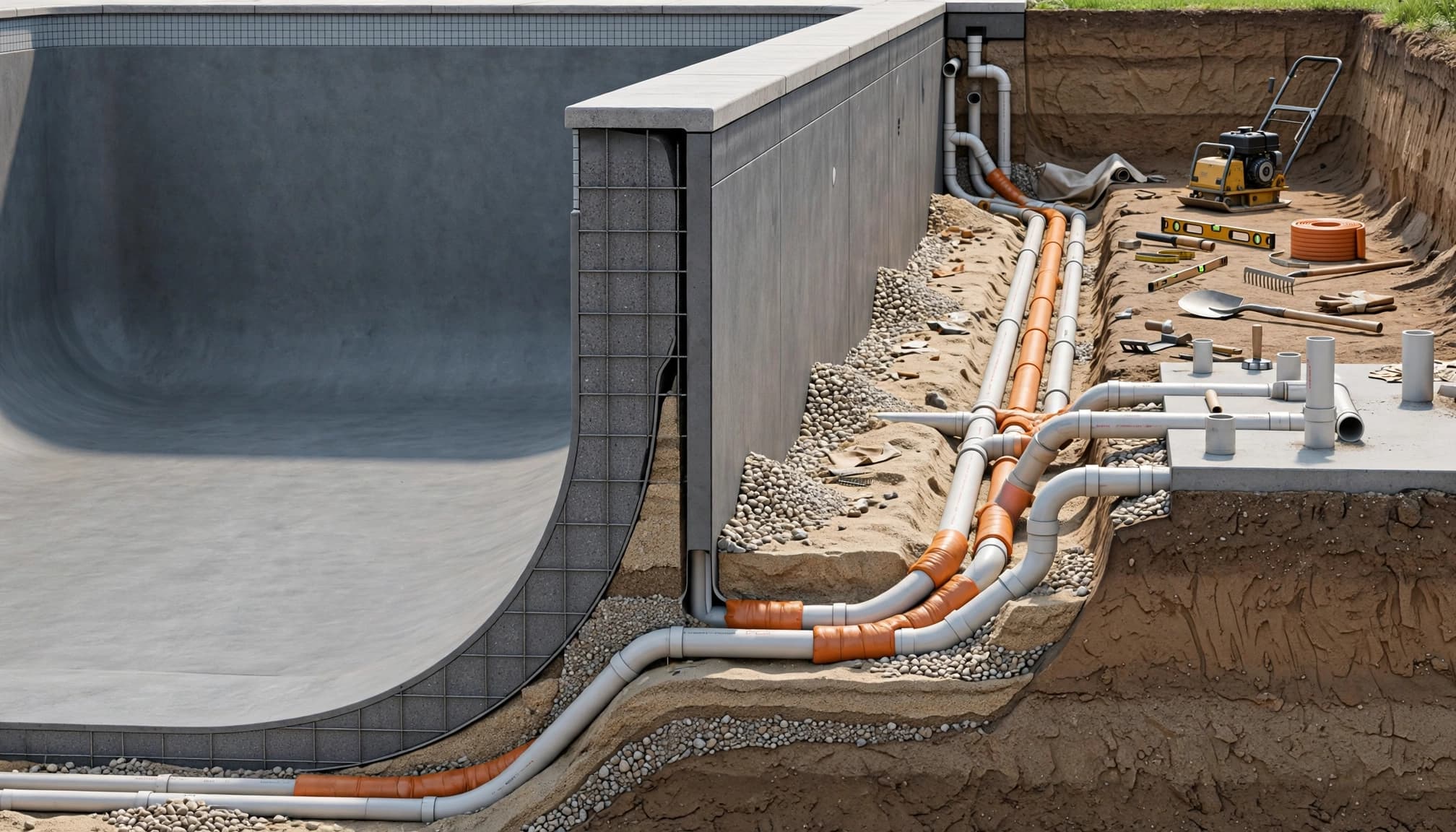
Pool plumbing connects the shell to skimmers, drains, returns, and any planned specialty features. Backfill can conceal those lines, so careful handling and coordination matter before and during placement.
Plumbing checks before lines are covered
Lines should be supported and protected as the crew works around them. Pressure testing while pipes are accessible can help identify leaks, damage, or loose connections before the area is closed off. Your contractor coordinates the checks and construction sequence for the pool.
If your design includes features such as a spa, water feature, or additional returns, the piping layout may be more involved. Our article on gunite pool plumbing basics covers how the lines connect and why protection matters during construction.
Keep the work zone clear
The shell can be vulnerable to impacts from tools, machinery, and materials moved around the excavation. Equipment and loose supplies also need to stay clear of pipes and areas the crew has marked as off limits.
Keep children, pets, and visitors away from the excavation and equipment. Don't move protective covers, stakes, or barriers, and don't store materials against the pool shell. If you're unsure which areas are safe to access, follow the instructions from your pool contractor.
Site conditions shape the backfill plan
Backfill methods and timing vary with the ground, the pool's shape, the project layout, and local requirements. A narrow access route, nearby structures, or a complex pool design can also affect how crews move material and equipment.
Soil, drainage, and the approved plan
The site plan matters beyond the pool's footprint. Excavation and new fill can affect how water moves around the property, so drainage and deck grades need to fit the approved design and site conditions. Avoid assuming that extra soil can be placed wherever it is convenient.
Permitting and construction requirements can also shape the plan. Our pool permits and construction requirements page discusses why site layout and drainage belong in early project planning.
Weather and access can affect scheduling
Rain, wet ground, inspections, equipment access, and other project work can shift the schedule. Backfill may also need to wait until a specific inspection, test, or construction task is complete. These changes don't necessarily mean the project is off track; they can reflect the conditions crews encounter on site.
The best guide is the schedule and direction from your pool contractor. Ask before changing access, moving materials, or arranging landscaping near the excavation. A small change to the work area can interfere with the planned sequence.
What homeowners should expect after backfill
Once backfill is complete, crews can move toward other construction stages, but the pool is still unfinished. Tile, coping, decking, drainage work, equipment installation, electrical work, interior finish, and filling may remain, depending on the project plan.
Backfill does not set the curing schedule
Shell curing and construction sequencing are related, but they are not the same thing. San Juan Pools & Spas lists a minimum of 28 days for shell curing in its process. That figure does not mean every task must wait until day 28, or that backfill always happens after that period.
Follow the schedule and shell-care instructions provided for your pool. Our page on the gunite pool shell curing process explains why curing time shouldn't be confused with the full construction timetable.
The pool still needs several steps before startup
Backfill is one phase in a longer project. At San Juan Pools & Spas, interior finish and filling appear later in our construction sequence, after work such as deck construction and equipment installation. A pool that looks close to complete may still need inspections or other planned work before it's ready to fill.
For context on how those later steps fit together, see the gunite pool construction timeline. Until your contractor says the site is ready, keep the work area clear and avoid using or entering the pool.
A careful transition to the next stage
Backfill fills the space around a gunite pool shell and prepares the site for the work ahead. Because methods and timing depend on the project, your contractor's sequence is the one to follow.
Protecting the shell, plumbing, and equipment takes cooperation throughout construction. Keep the area clear, follow site instructions, and let the crew complete each stage in its planned order.