
Why Pool Tile Pops Loose Before a Renovation
Pool tile popping loose usually points to a failed bond between the tile and the surface beneath it. In some cases, movement, moisture, or an installation problem has weakened that bond over time.
If you're planning a renovation, replacing the missing pieces without identifying the cause can leave new tile exposed to the same problem. The pattern of damage and the condition of nearby coping and finishes can help determine where to look first.
What Happens When the Tile Bond Fails
Pool tile relies on a setting material to hold it to a prepared surface. When that bond weakens, a tile can shift, sound hollow, or come away entirely. The failure can occur at more than one point in the assembly.
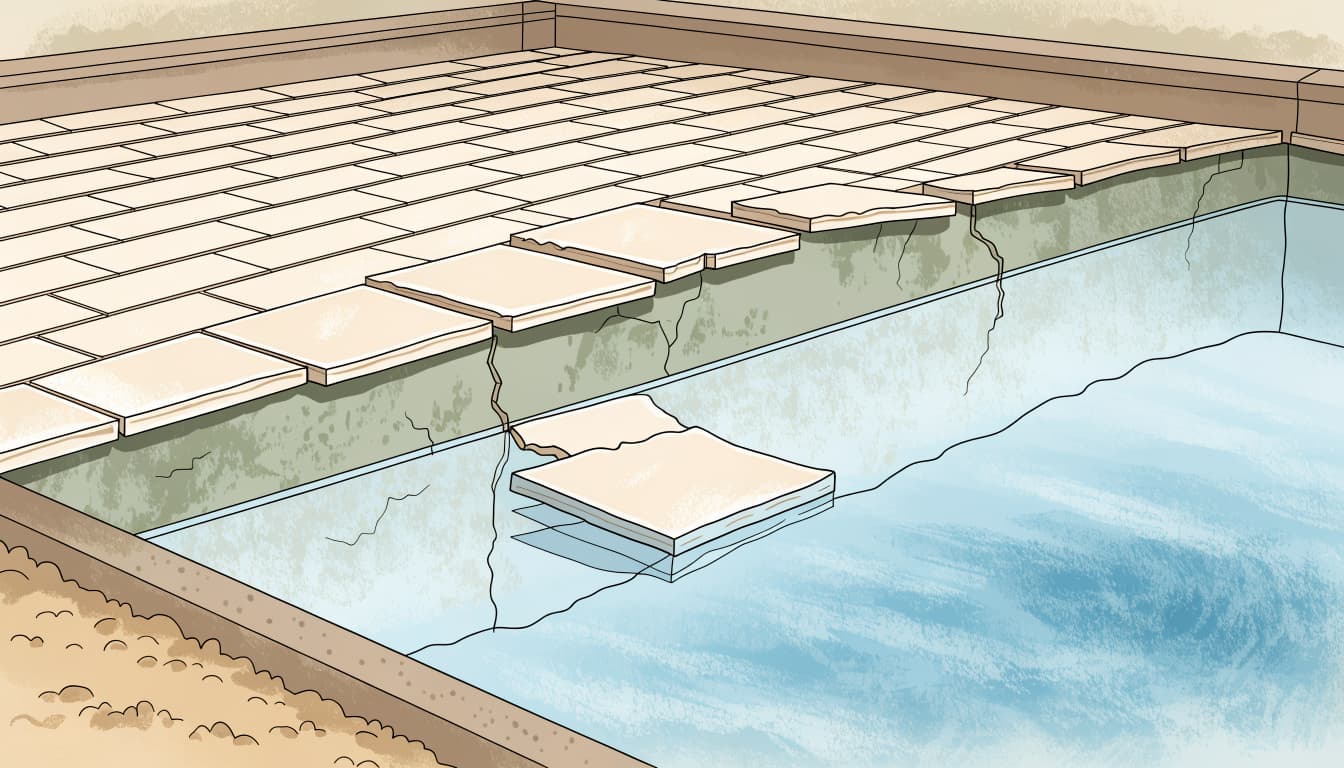
The setting material loses its grip
The material behind a tile may deteriorate, or moisture may reach an area where it shouldn't. Once the connection weakens, normal use can expose the problem. A tile may loosen gradually before it falls into the pool.
The back of a fallen tile and the exposed wall can offer clues. If most of the setting material remains on one surface, a contractor can examine where separation occurred. That observation helps direct the investigation, although it doesn't establish the cause by itself.
The surface behind the tile breaks down
Sometimes the tile and setting material remain attached to each other while the material underneath becomes weak or damaged. In that case, putting the same tile back over the unstable area won't address the failed surface.
A renovation gives the contractor access to areas that may have been hidden for years. Removing loose material and examining the substrate helps determine whether the repair is limited to one spot or needs a broader scope.
How Movement Can Loosen Pool Tile
Tile is a hard finish attached to a pool and surrounded by other materials. Movement in the supporting surface or nearby construction can place stress on it, especially where components meet.
The bond beam and shell
The bond beam is the reinforced upper portion of a gunite pool shell, beneath the coping and near the tile line. If the beam or shell moves, tile can crack or detach along the affected area.
A widening crack, displaced tile, or loose coping deserves professional attention. These signs don't prove the shell has a structural problem, but they give a contractor reason to look beyond the finish. Our guide to pool bond beam damage covers what an inspection may involve.
Coping, decks, and joints
The deck and pool shell don't necessarily move together. A movement joint between the deck and coping accommodates movement at that transition. If a joint fails or a gap keeps reopening, nearby finishes may come under stress.
Cracks in a deck don't automatically mean the pool shell has moved. A professional can assess the coping, joint, deck, and tile together before deciding which components need repair. That distinction matters when you're budgeting for a renovation.
Installation Problems That May Show Up Later
Tile can look good when it's first installed and still have a weak bond beneath the surface. Problems with preparation or material selection may become visible only after the pool has been in use.
Inadequate surface preparation
Setting material needs a sound, properly prepared surface. Loose material or contamination can interfere with adhesion, leaving areas where the bond doesn't hold as intended.
Coverage matters, too. If contact behind a tile is incomplete, the installation may have weak spots. A contractor can look at the exposed surface and backs of removed tiles for clues, rather than assuming every loose piece failed for the same reason.
Materials and installation conditions
Pool installations need tile, grout, and setting materials suited to the intended exposure. Products that work on a dry interior wall aren't automatically suitable for a waterline or submerged application.
The installation process also matters. Preparation, application, and curing need to follow the requirements of the selected materials. During a renovation, the written scope should describe the proposed tile system and the preparation work, rather than listing only the tile color.
For design considerations, our guide to choosing tile for a gunite pool covers layout, maintenance, and how tile relates to the surrounding finishes.
Waterline and Weather Conditions
Waterline tile sits where pool water, air, sunlight, and routine cleaning meet. That location can make a weak area more noticeable, but deposits or discoloration alone don't explain why a tile has loosened.
Moisture, deposits, and cleaning
Gaps, deteriorated grout, or failed joints can allow water into places where it shouldn't be. A contractor needs to identify the entry point and condition of the materials behind the tile before recommending a repair.
Scale and residue also collect at the waterline. If deposits keep returning, water chemistry may be part of the maintenance issue. Use cleaning products approved for pool tile, and avoid aggressive cleaning methods without professional guidance because abrasive tools can damage tile or grout.
Saltwater pools still need regular water testing and maintenance. A salt system generates chlorine; it doesn't eliminate the need to care for the pool's surfaces.
Freeze-thaw cycles and Florida pools
In colder regions, freeze-thaw cycles are a condition to consider when investigating tile damage. Southwest Florida generally avoids severe freeze-thaw cycles, so repeated freezing is less likely to explain a loose tile here.
For a Cape Coral or Fort Myers pool, the inspection can instead focus on the visible damage, the bond, nearby joints, and possible moisture entry. The location gives useful context, but the condition of the individual pool guides the repair.
Signs That Loose Tile May Be Part of a Larger Problem
One loose tile can be a localized repair. A longer section of loose tile, repeated failures, or damage across several connected surfaces calls for a broader look.
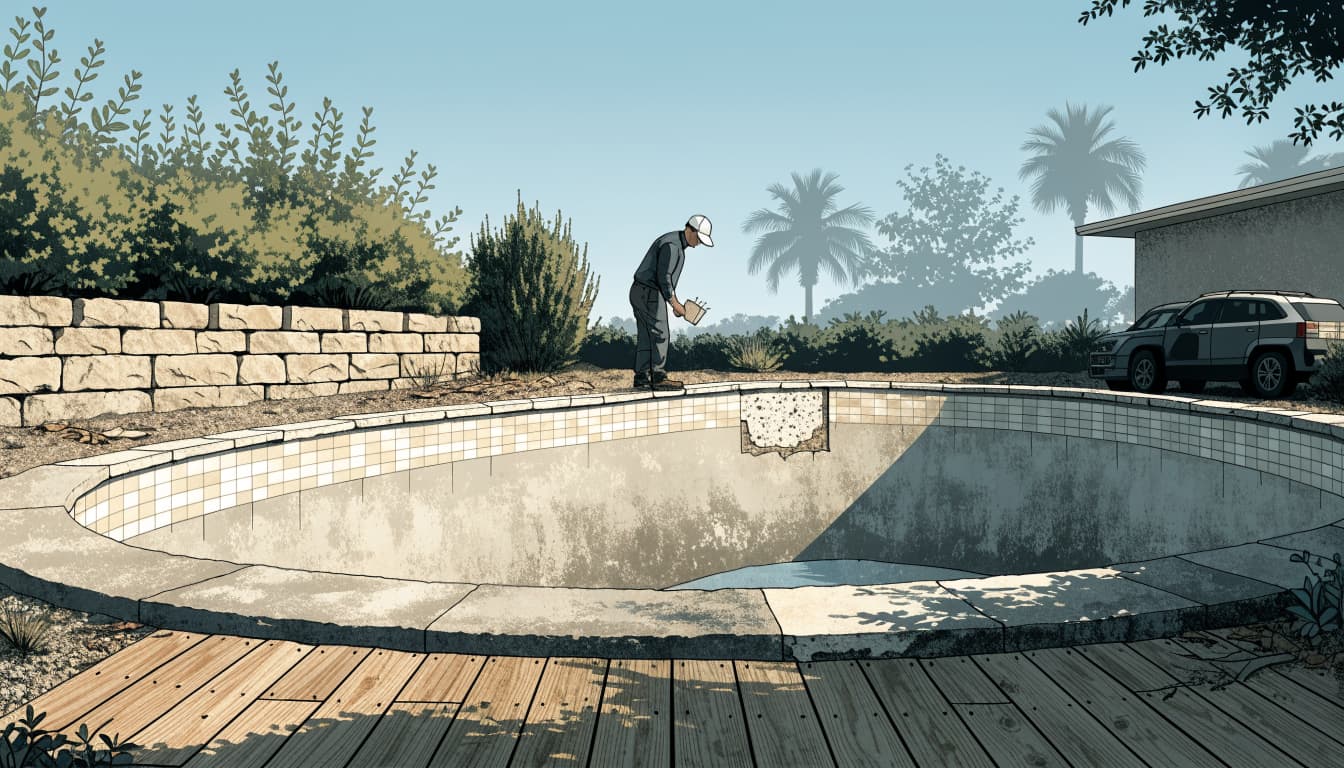
Pay attention to the pattern. Tile coming loose along a continuous stretch may warrant a different assessment than a single damaged piece. Cracked grout, a recurring gap, or tile that has shifted out of alignment can also help show where the problem extends.
Look at the surfaces around the tile line. Loose or cracked coping, a widening crack, and separation between the coping and deck are useful details to share with your contractor. A rough or damaged interior finish may also affect the renovation plan.
If you're adding water more often, mention that as well. Water loss can have several causes, including evaporation, plumbing, fittings, or a shell-related concern. Loose tile alone doesn't prove a leak or identify its source.
Our overview of pool renovation warning signs explains how tile and coping issues fit into a wider assessment.
What a Pool Renovation Inspection Should Address
A good assessment starts with the visible damage and follows the evidence. The goal is to determine what has separated, what remains sound, and whether another part of the pool needs attention before finishes go back on.
Document the pattern and surrounding conditions
Take photos of the loose areas and note when you first saw them. Earlier photos can help show whether a crack or gap has changed over time. Keep any fallen pieces if it's safe to do so, since the back of a tile may provide useful information.
Share the pool's repair history, including prior tile replacement and any recurring water loss. A contractor can then inspect the tile line, coping, deck joint, interior finish, and other relevant areas.
Examine what the finish concealed
Some conditions become clear only after loose tile or surrounding material is removed. If the exposed substrate is damaged, the repair scope may need to expand before new tile is installed.
Where symptoms point beyond the finish, the contractor may recommend leak testing, a plumbing evaluation, or structural review. Our pool crack repair guide describes why a crack's location and changes over time matter.
An inspection can narrow the likely cause, but it won't always reveal every hidden condition before work starts. A written proposal should explain how newly exposed damage will be handled.
Plan the Repair Before Choosing Replacement Tile
The right repair depends on what the inspection finds. A small, isolated failure on a sound surface may need a targeted repair. Widespread separation or damage behind the tile can require more removal and preparation.
Match the repair to the cause
For a localized problem, the work may include removing loose material, preparing the surface, and installing compatible replacement tile and grout. If a joint or coping detail is contributing to the damage, that area needs attention too.
When the shell or bond beam may have moved, the contractor may need to remove parts of the coping, tile, deck, or interior finish to reach the affected area. The final method depends on the condition exposed. New tile can improve the appearance of the pool, but it can't correct movement underneath it.
Coordinate tile with the rest of the renovation
Tile work often meets coping above and the interior finish below. If you're also resurfacing the pool or changing the coping, plan those jobs together. That helps the contractor coordinate preparation and transitions between materials.
Matching an older finish can be difficult because tile batches and surrounding materials may have changed over time. View samples beside the planned coping and interior finish in both sun and shade before making a selection.
Our pool renovation and remodeling services can bring these decisions into one project scope.
What to Do While You Wait for Renovation
Keep swimmers away from areas with loose, broken, or sharp tile. If a piece falls into the pool, remove it only when you can do so safely. Avoid pulling at neighboring tiles or trying to force them back into place.
Don't drain an in-ground pool yourself to expose the tile line. Improper drainage can create serious pressure-related risks when groundwater conditions are unknown. A pool professional can plan any necessary draining as part of the work.
Before the assessment, gather photos and records of previous repairs. Also note whether nearby cracks or gaps have changed. Those details can help the contractor distinguish an older, stable condition from one that needs prompt attention.
Start With the Cause, Then Restore the Finish
Pool tile popping loose is a reason to look beneath the surface before a renovation begins. The issue may be confined to the tile bond, or it may involve a nearby joint, coping, or substrate.
A repair based on the actual condition gives new tile a better foundation. It also helps you decide which work belongs in the renovation instead of covering a problem that may return.
If you're planning a pool renovation in Southwest Florida, contact our team for a free estimate and an assessment of the affected areas.