
Gunite Pool Bond Beam Basics for Cape Coral Homes
A pool's beauty rests on work that disappears beneath the coping and deck. The gunite pool bond beam is one of those hidden parts, yet it affects how the pool shell, tile, coping, and surrounding hardscape work together for years.
For Cape Coral homeowners planning a new pool or evaluating an older one, understanding this reinforced concrete ring makes project conversations much clearer. Start with the beam's role, then ask how its design fits your pool, yard, and finish selections.
What a Gunite Pool Bond Beam Does
The gunite pool bond beam is a reinforced section of concrete at the top of the pool shell. It runs around the pool's perimeter, tying the upper walls together into a continuous structural ring.
Pool crews form the shell with steel reinforcement, often called rebar, then apply gunite, a dry concrete mix combined with water at the nozzle. The bond beam becomes part of that shell rather than a separate strip added after construction.
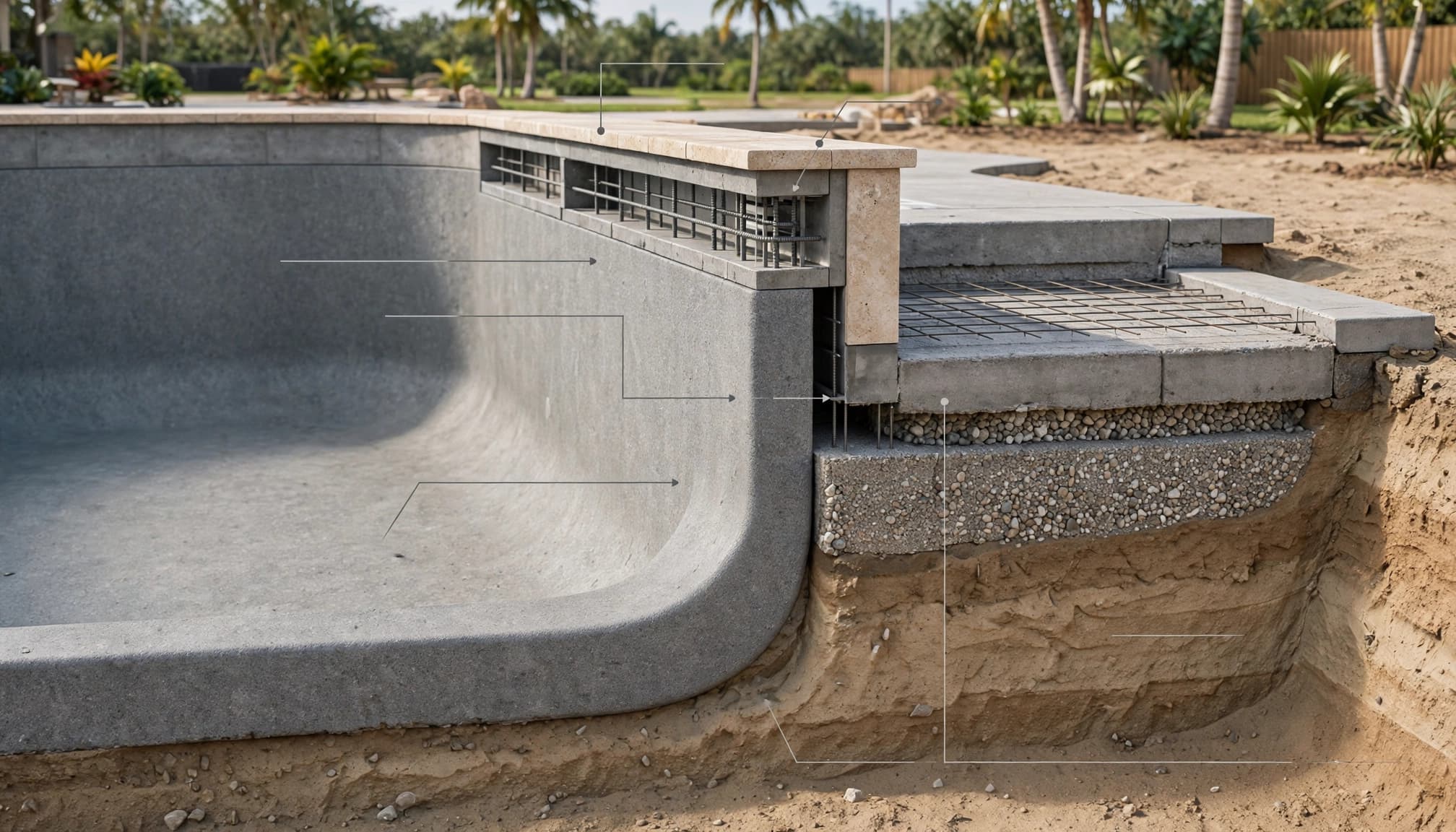
A reinforced ring at the pool's upper edge
The pool wall has to handle soil pressure outside the shell and water pressure inside it. At the top, the bond beam helps hold the wall system together and creates a stable area for the finish materials above it.
It also gives the builder a firm structural base for waterline tile and coping. Coping is the cap around the pool edge, often made from natural stone, concrete pavers, porcelain, or precast concrete. Since it is highly visible, homeowners sometimes focus on coping first. However, its long-term appearance depends heavily on the structure below.
A foundation for the pool's finished edge
The beam does not replace the deck, and the deck does not replace the beam. Each has a different job. The pool shell holds water, the bond beam reinforces the shell's top edge, coping finishes that edge, and the deck provides the walkable surface around it.
That distinction matters when a crack appears near the pool. A crack in a deck slab may have a different cause and repair path than a crack in the coping, tile line, or underlying shell.
How the Bond Beam Takes Shape During Construction
A quality bond beam begins long before gunite is applied. The design team considers the pool's shape, depth transitions, raised features, attached spa, and edge details. Then the crew prepares excavation, steel, plumbing, and forms before the concrete phase begins.
The sequence matters because later work can hide areas that need careful placement and inspection early on.
Steel reinforcement follows the shell design
Rebar is steel reinforcement arranged throughout the pool shell. At the top of the walls, the steel layout supports the bond beam and connects its strength to the rest of the structure.
The size, spacing, placement, and overlap of reinforcing steel are not one-size-fits-all choices. They vary with pool geometry, engineering requirements, and site conditions. Curved freeform pools, straight-edged geometric designs, raised spas, and vanishing-edge features can all call for different details.
Steel should be properly supported before gunite placement. If it shifts during construction, concrete cover and structural alignment can suffer. A builder should also protect steel from exposure once the shell is complete.
Gunite placement creates a continuous shell
During application, a skilled crew builds up the walls, floor, steps, benches, and beam as a connected concrete shell. The process is not simply spraying material into a hole. The nozzle operator controls placement while the crew trims, shapes, and removes rebound, which is material that does not properly bond during application.
After gunite, the shell needs a proper curing plan. Concrete gains strength over time, and moisture management helps support that process. Details may differ by weather, schedule, and the builder's methods.
Homeowners can see how excavation, steel, gunite, tile, coping, deck work, and finish work fit together in a Cape Coral pool construction process.
Bond Beam Design Must Fit the Pool and the Yard
There is no universal bond-beam dimension that works for every backyard. Its design depends on the pool's plan, the selected materials, structural needs, and the conditions found at the site.
A compact plunge pool with simple coping does not place the same demands on an upper shell edge as a large pool with a raised spa, heavy stone coping, outdoor kitchen, or integrated water features.
Shape and features add structural demands
Corners, tight radiuses, raised walls, spillways, and tanning ledges require careful coordination. For example, a raised spa adds weight and creates a transition between structures. Water features may add plumbing penetrations, stonework, or equipment loads near the pool edge.
A designer also has to plan for the waterline tile thickness and the coping profile. If these materials are treated as afterthoughts, the finished elevation can look awkward or create drainage concerns around the pool.
The best time to discuss these choices is during design. Changes after the shell is built may limit material options or add avoidable work.
Cape Coral conditions belong in the conversation
Southwest Florida brings strong sun, seasonal rain, high humidity, and soils that can vary across neighborhoods and even within one property. Nearby drainage patterns, existing trees, filled areas, and the location of a home or lanai can also affect planning.
These conditions do not predict a problem by themselves. Still, they are factors to discuss with a qualified pool professional before construction starts. A site-specific review is more useful than copying a detail from another home's pool.
The visible coping is only the finished cap. Its fit, support, and movement joints must be planned with the pool shell and deck as separate but connected systems.
How Coping, Tile, and Decks Meet the Pool
The bond beam supports the finished pool edge, but it should not lock the deck and shell into a rigid mass without proper planning. Concrete, stone, pavers, and soils can move differently with temperature, moisture, and settlement.
A well-planned interface lets the pool edge look clean while allowing each component to do its job.
Movement joints help protect finished surfaces
A movement joint is a planned gap filled with flexible material between two surfaces. Around a pool, it commonly separates coping or the pool structure from the deck. The exact layout and material depend on the selected deck system and the project's design.
Without a properly maintained joint, debris and water can collect where they should not. Rigid patch material can also crack when adjacent surfaces move at different rates.
The tile line deserves equal care. Tile hides the transition between the interior finish and coping, but it cannot correct a structural issue below. It is a finish material, not a repair for movement in the shell.
Drainage should stay away from the pool edge
Deck slope and drainage details direct rainwater away from the house and pool perimeter where appropriate. Standing water at the coping or a failed joint can create maintenance issues, especially during South Florida's wet season.
Before choosing travertine, porcelain pavers, stamped concrete, or another deck finish, discuss how it meets the coping and where water will go. Material selection is about more than color and texture.
Cracks Near the Pool: What Deserves Attention
A crack does not automatically mean a structural failure. Surface materials can develop small cracks from normal shrinkage, aging, minor movement, or wear. Yet homeowners should not dismiss every crack as cosmetic.
Location, width, direction, change over time, and nearby symptoms all help a professional assess what may be happening. The gunite pool bond beam is below several finished layers, so an inspection often needs more than a quick look from the deck.
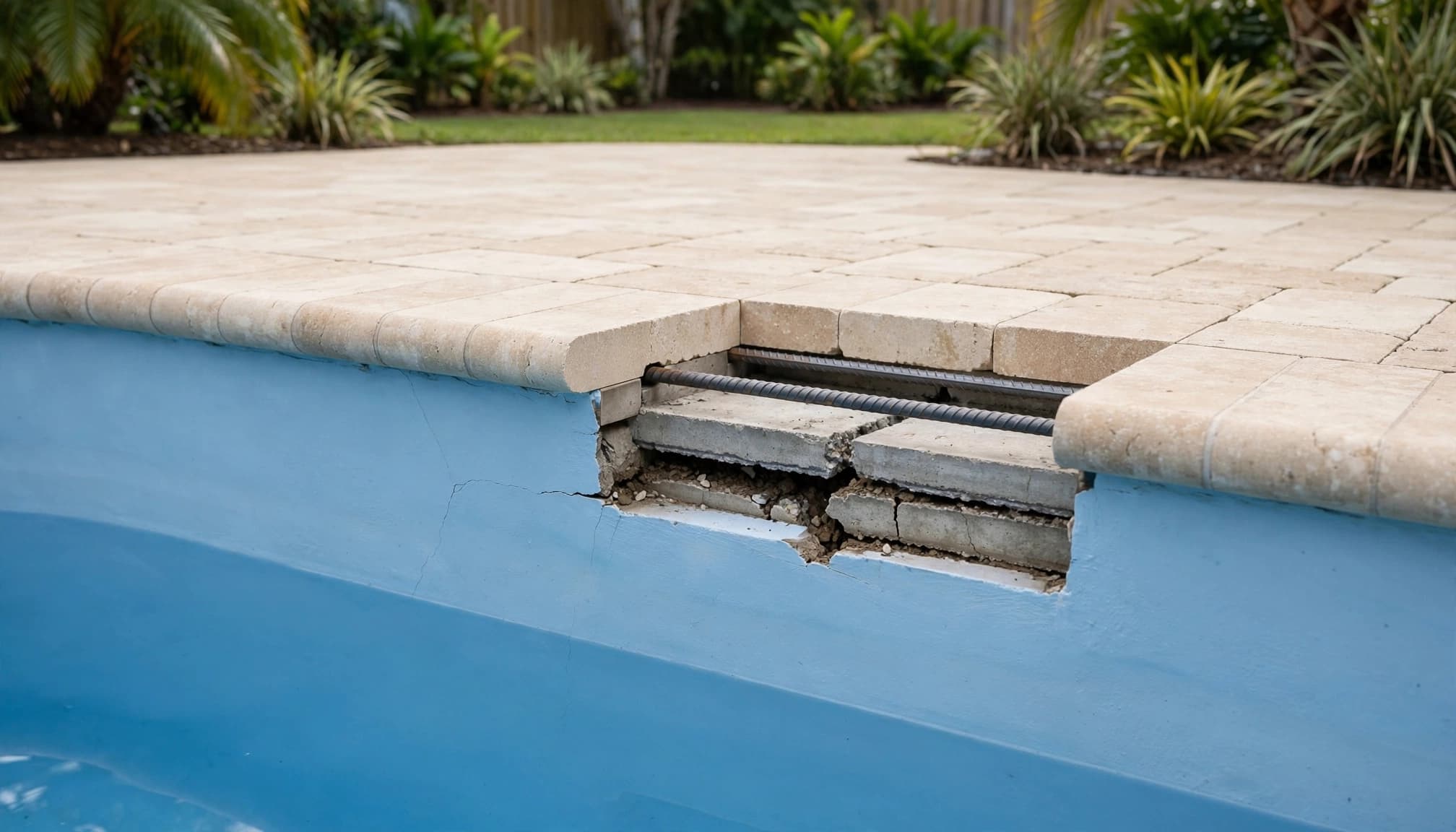
Surface cracks may be limited to finishes
Hairline cracking in a deck coating, grout, plaster, or a small area of coping can be cosmetic. For instance, a thin crack in a concrete deck's surface may involve the deck finish rather than the pool shell.
Even then, watch for change. Take clear photos with dates, note the crack's location, and record whether it grows, shifts, or returns after a patch. Those details help a contractor evaluate the pattern.
Do not fill a crack with random sealant before documenting it. A temporary cosmetic patch can hide evidence that helps determine the appropriate repair.
Signs that call for a professional inspection
Arrange a qualified inspection when you see significant cracks, visible movement, exposed steel, water intrusion, or separation between coping and deck. A widening crack, displaced tile, loose coping, or a gap that keeps reopening also deserves prompt attention.
Pool water loss can have many causes, including plumbing, fittings, evaporation, and shell-related concerns. Avoid assuming the bond beam is responsible based on one symptom.
A professional may review the shell, deck joint, coping support, tile, equipment plumbing, and surrounding area before recommending work. That process helps separate a finish repair from a condition that may require structural evaluation.
Repair Methods Depend on the Actual Condition
Repairing a bond-beam area is not a single service with a standard price or method. A contractor first needs to identify which component has failed or moved. The visible crack may be only the final sign of an issue elsewhere.
Minor finish repairs can sometimes involve replacing grout, resetting a loose tile, repairing coping, or resealing a movement joint. Those repairs may restore appearance and reduce water entry when the underlying structure is sound.
Structural concerns need a broader scope
When inspection points to movement in the shell or beam area, a repair may require selective removal of coping, tile, deck material, or interior finish to access the affected zone. The scope depends on what the inspection finds and how the original pool was built.
Repairs may include concrete restoration, reinforcement work, waterproofing measures, or reconstruction of finished surfaces. The right approach should address the cause identified by the professional, not simply cover the crack.
Avoid accepting a repair recommendation that skips the inspection step. A clean-looking patch is not proof that movement has stopped.
Plan repairs around finish matching
Tile batches, stone coping, pavers, and plaster colors can change over time. Therefore, a repair plan should address how the restored area will blend with surrounding finishes.
An experienced pool remodeling team can help weigh targeted repairs against larger updates when several aged components need attention. Reviewing completed pool renovations in Cape Coral can also help homeowners compare edge details, coping styles, and deck finishes before making selections.
Questions to Ask Before Building or Repairing
Clear questions lead to clearer decisions. During a new-pool consultation or repair visit, ask the contractor to explain the structure in plain language and connect it to your specific design.
- Ask how the pool shape, spa, water features, and coping choice affect the bond beam and upper shell details.
- Request an explanation of where the pool shell ends, where the coping begins, and how the deck will separate from the pool structure.
- Discuss site drainage, soil observations, and any existing cracks or settlement around the proposed pool area.
- If repairing an older pool, ask what evidence points to a cosmetic issue versus a concern that needs structural review.
- Get the repair scope in writing, including which finishes will be removed, restored, or replaced.
A good conversation should leave you with more than a material list. You should understand how the completed pool edge is meant to perform and what maintenance it will need.
A Strong Pool Edge Starts Below the Surface
The bond beam rarely gets attention once the pool is finished, yet it supports the details homeowners see and use every day. Proper design, reinforcement, concrete placement, coping coordination, and deck separation give that upper edge the support it needs.
For new construction, discuss the gunite pool bond beam before finalizing the pool shape and finishes. For an existing pool, treat meaningful cracks, movement, exposed steel, water intrusion, or coping-to-deck separation as reasons to schedule a professional inspection.
A well-built pool should feel effortless to enjoy because its structural details were handled with care long before the first swim.