
Cape Coral Pool Renovation: 7 Signs You Need One
A Cape Coral pool renovation becomes easier to plan when you recognize the warning signs early. Rough finishes, recurring leaks, outdated equipment, and repeated repairs often point to more than a small cosmetic issue.
Southwest Florida weather can be demanding on pool surfaces, tile, decks, plumbing, and equipment. Sun exposure, heavy rain, tropical storms, and salt air all affect an aging backyard pool. These seven signs can help you decide when a repair is enough and when a full renovation deserves a closer look.
Key Takeaways
- Multiple visible problems often indicate that isolated repairs won't provide a lasting solution.
- Rough surfaces, persistent leaks, structural cracks, and failing equipment deserve professional evaluation.
- A renovation can combine surface, equipment, deck, lighting, and water feature updates into one planned project.
- Delaying major work may allow small defects to spread or increase future construction costs.
- A professional pool assessment is the right next step when you see more than one warning sign.
When Cape Coral Pool Renovation Makes More Sense Than Repairs
A single stained tile or worn pump lid doesn't automatically mean you need a complete remodel. Many pool problems have simple, targeted solutions. However, several aging components can make piecemeal work less practical.
For example, resurfacing the interior while leaving damaged coping and outdated circulation equipment may solve one problem but leave others behind. You could pay for separate service visits, deal with repeated downtime, and still have an unfinished-looking pool area.
A full Cape Coral pool renovation can coordinate related improvements. Depending on the pool's condition, the work might include:
- Interior resurfacing
- New waterline tile and coping
- Pool deck replacement or repair
- Plumbing and equipment upgrades
- LED lighting
- Sun shelves, fountains, waterfalls, or deck jets
- Updated drainage and surrounding hardscape
The right scope depends on an inspection, the pool's age, previous repairs, and your plans for the space. Start by watching for these signs.
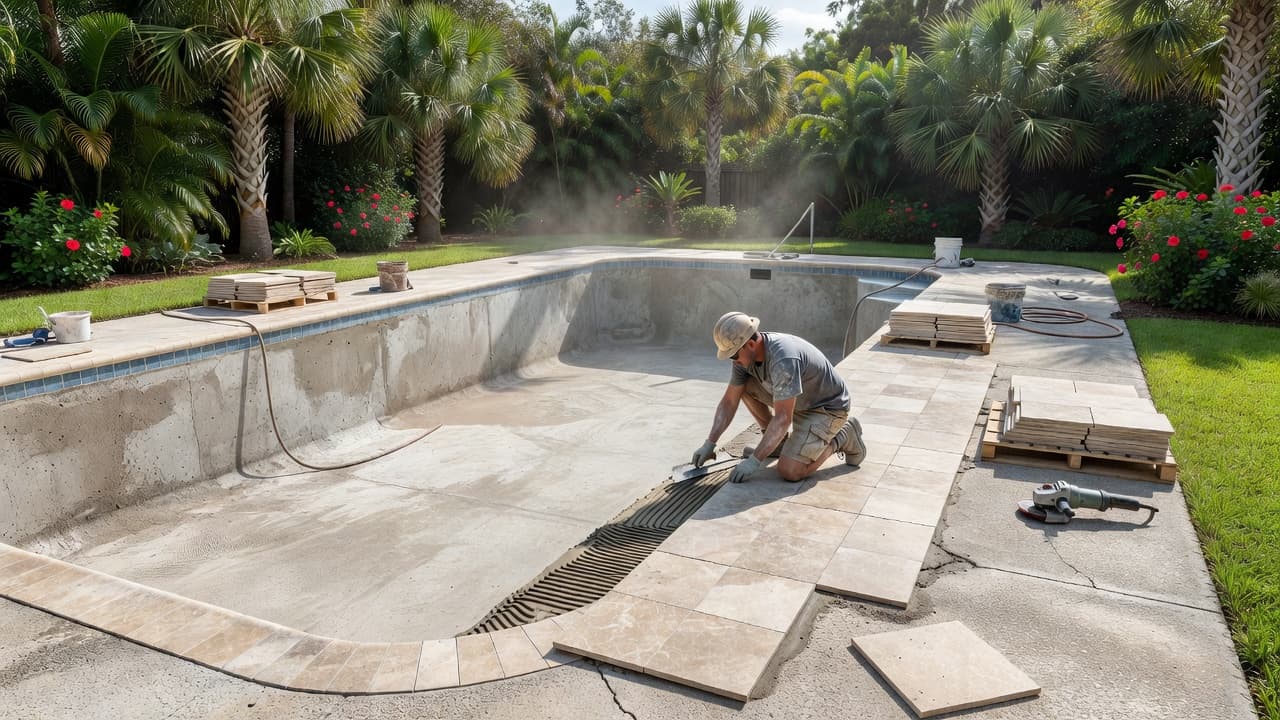
1. The Pool Surface Feels Rough, Pitted, or Flakes
A pool finish that once felt smooth may become rough under bare feet. You might notice pitting, discoloration, exposed aggregate, or small areas that shed material. These changes often appear gradually, so homeowners may overlook them until the entire interior looks worn.
Surface damage can make cleaning more difficult. Algae and debris may collect in rough areas, while stains become harder to remove. Harsh scrubbing or repeated chemical adjustments won't restore a finish that has reached the end of its service life.
Cape Coral's strong sunlight can also make fading more obvious. If the pool has widespread discoloration and roughness, a simple acid wash won't solve the underlying wear. Resurfacing may be the more sensible option, especially when the tile, coping, or waterline also needs attention.
Before selecting a finish, ask about the available materials, expected maintenance, color changes, and compatibility with your pool's structure. A professional can assess whether the problem is limited to the finish or involves deeper surface preparation.
2. You Keep Losing Water Without a Clear Explanation
Pool water naturally drops through evaporation, especially during hot weather. Splash-out, filter cleaning, and heavy use can also change the water level. However, persistent or unusual water loss deserves an inspection.
A leak may involve the shell, plumbing lines, fittings, skimmer, light niche, or other components. Adding water every few days doesn't identify the source. It can also make chemical balance harder to maintain and may hide the progression of a plumbing problem.
Look for related clues, such as wet soil near equipment, standing water outside the pool, air entering the pump system, or a water level that stops falling at a particular point. These observations can help a contractor focus the assessment, but they don't confirm the cause.
A full renovation may make sense when leak repairs overlap with old plumbing, worn fittings, and a deteriorated interior finish. In that situation, opening one area for repair could reveal other components that are near the end of their useful life. The contractor should explain what the inspection found before recommending a broad scope of work.
3. Cracks Keep Returning or Appear in More Than One Area
Small surface marks can have different causes. Some affect only the finish, while others may relate to movement, plumbing, surrounding soil, or previous construction. The location, size, pattern, and changes over time all matter.
Pay attention to cracks in the pool interior, tile line, coping, deck, or bond beam. A crack that returns after patching deserves another look. So does a group of cracks that appears across connected areas.
Cape Coral homes can have different soil and drainage conditions, so a visual inspection alone may not explain why damage developed. A pool professional can evaluate the surrounding deck, expansion joints, plumbing, and shell before suggesting repairs.
Don't assume every crack requires a complete rebuild. At the same time, repeated patching can become expensive when the same issue keeps returning. A renovation plan may address several connected areas at once, rather than hiding each mark with a separate cosmetic fix.
A recurring crack is useful information, even when it looks small. Document its location and date before the next repair.
4. Tile, Coping, or Decking Has Widespread Damage
Loose waterline tile, cracked coping, missing grout, and chipped deck surfaces affect the appearance and daily use of the pool. One loose tile may need replacement. Widespread failures usually require a broader review.
Pool tile can loosen when the setting material deteriorates or moisture reaches areas it shouldn't. Coping can crack or shift because of age, movement, impact, or drainage concerns. Pool decks may develop cracks, settling, worn coatings, or slippery areas that need professional evaluation.
The deck also affects how water moves around the pool. Poor drainage can leave standing water after heavy rain and place extra stress on nearby surfaces. A renovation gives you the chance to review the deck layout, drainage paths, coping, tile, and finish together.
Homeowners often use this stage to update an outdated design. New tile, a replacement deck, a sun shelf, or carefully placed deck jets can change how the pool works without requiring a completely new shell.
5. The Pump, Filter, Heater, or Salt System Needs Frequent Repairs
Pool equipment doesn't last forever. A noisy pump, leaking filter tank, unreliable heater, or salt system that repeatedly needs service can raise maintenance costs and reduce your pool's availability.
Older equipment may also use more energy than current options. However, an upgrade should match the pool's size, plumbing, features, and electrical setup. Installing a larger pump without reviewing the system can create new problems rather than solving old ones.
Pay attention to recurring service calls, pressure changes, weak water movement, and equipment that struggles during normal operation. Keep records of repairs and replacement parts. A pattern of repeated failures can help you and your contractor decide whether replacement makes more sense than another patch.
Equipment work may fit within a larger Cape Coral pool renovation when you are already resurfacing or changing the pool's features. Coordinating these tasks can reduce the chance of damaging a new finish later.
6. Circulation and Plumbing Problems Keep Affecting Water Quality
Cloudy water, weak return flow, air bubbles, uneven circulation, or a skimmer that doesn't pull properly can point to circulation or plumbing concerns. Water chemistry still matters, but chemical treatment can't correct every mechanical problem.
A pool's circulation system includes the pump, filter, skimmer, drains, return lines, valves, and related plumbing. If one part underperforms, the entire system may work harder. Poor circulation can also make cleaning and chemical management less predictable.
Some issues come from a clogged basket or dirty filter. Others may involve leaks, aging valves, blocked lines, or equipment that no longer matches the pool's needs. A professional assessment can separate routine maintenance from a more significant system problem.
When plumbing changes are necessary, consider whether the pool already needs a new finish or deck. Coordinating access can reduce the need to disturb recently completed surfaces. Your contractor should describe the proposed work and any testing before construction begins.
7. You Need Repairs in Several Areas at the Same Time
The clearest sign of a full renovation is a growing list of unrelated problems. You may be facing a worn surface, dated tile, noisy equipment, cracked decking, and poor lighting during the same season.
That combination doesn't always mean every component needs replacement. It does mean you should stop viewing each issue in isolation. Repairing one area without reviewing the others can leave the pool with mismatched materials, repeated construction visits, and a design that still doesn't suit your home.
A renovation also makes sense when the pool no longer supports how your family uses the backyard. Perhaps the deep end takes up space you would rather use for a sun shelf. Maybe the lighting is limited, the deck is too small for guests, or the pool lacks features that would make it more comfortable.
Review completed pool projects in Cape Coral and Fort Myers to see how renovations can combine practical repairs with design changes. The goal isn't to add features for their own sake. It is to create a pool area that fits your property, maintenance preferences, and plans for the space.
What to Expect From a Professional Pool Assessment
A qualified contractor should begin with an on-site review, not a fixed renovation package. The assessment may cover the pool shell, interior finish, tile, coping, deck, equipment pad, plumbing, drainage, lighting, and surrounding structures.
Bring a short list of problems and questions to the appointment. Include how often you add water, which repairs you've paid for, when the equipment was replaced, and whether the pool has changed since you bought the home. Photos of recurring cracks or damaged areas can also help.
Ask for a written scope that separates necessary repairs from optional upgrades. It should identify materials, equipment, construction steps, expected access needs, and whether permits may apply. For local assistance, review the available pool renovation services in Cape Coral.
A professional assessment doesn't commit you to a full remodel. It gives you information to compare repair options, renovation options, timing, and budget before work starts.
Conclusion
A pool can look usable while its surface, plumbing, deck, or equipment continues to age. Rough finishes, unexplained water loss, recurring cracks, widespread deck damage, frequent equipment repairs, circulation problems, and several issues at once all justify a closer review.
The right Cape Coral pool renovation plan should match the condition of your pool and the way you use your backyard. If you recognize more than one sign, schedule a professional pool assessment before the next repair becomes part of a longer list.