
Pool Crack Repair Cape Coral: A Homeowner's Guide
A hairline mark near the waterline can be easy to dismiss, especially when your pool still looks inviting. Yet pool crack repair Cape Coral homeowners arrange early can prevent water loss, surface damage, and larger renovation work later.
Cracks have different causes and different fixes. The right response depends on the pool's material, the crack's location, whether it leaks, and what is happening beneath or behind the shell.
Start by reading the crack's location and behavior
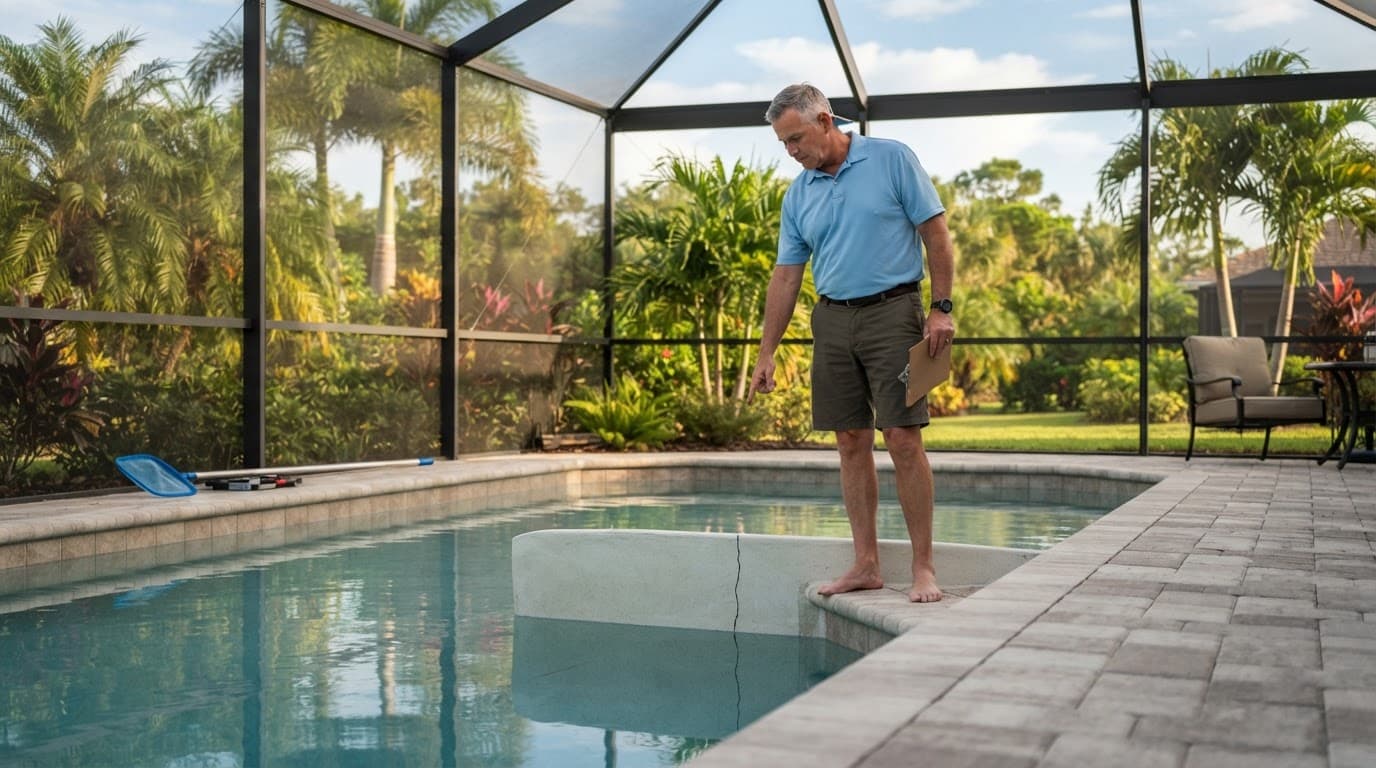
A crack is a symptom, not a diagnosis. Some marks sit only in the finish, while others may extend into the pool shell or point to movement around plumbing, coping, or the deck.
Look at the crack before brushing it off or applying a patch. Take clear photos, note its length, and watch whether it changes after heavy rain, periods of heat, or equipment operation.
Surface marks may affect the finish first
Concrete pools often develop small checks or crazing in plaster, especially as an older finish ages. These fine lines can collect dirt, algae, or calcium deposits, making them appear worse than they are.
However, appearance alone doesn't settle the question. A finish crack near a return fitting, light niche, step, or skimmer deserves closer attention because water can follow weak points behind the visible surface.
Signs that call for a prompt inspection
A widening crack, a sharp edge, or missing material around the break needs professional attention. The same is true if you notice the water level dropping faster than normal, damp soil near the pool, air bubbles returning through lines, or a new soft spot in the deck.
A crack that changes over time matters more than a crack's initial size. Movement, water loss, and location reveal far more than appearance alone.
Keep swimmers out of any area with exposed, rough, or loose finish material. Broken tile and sharp plaster can cause injuries, particularly on steps and shallow ledges.
Why Cape Coral pools develop cracks
Southwest Florida pools face strong sun, heavy seasonal rain, shifting moisture levels, and chemical exposure. Those conditions do not automatically mean a pool has structural damage, but they can reveal weak points in an aging surface or shell.
A professional inspection separates a localized finish issue from a problem that needs broader repair.
Soil movement and settlement can affect the shell
Ground movement can place stress on a pool, its deck, and the plumbing that connects the system. Settlement may show up as cracks near corners, steps, skimmers, or where the deck meets the coping.
Deck cracks and pool cracks do not always share the same cause. Still, seeing both in the same area can help a contractor understand whether the pool structure has shifted or whether the deck has moved independently.
Pressure, plumbing, and chemicals also matter
Hydrostatic pressure, water behind the shell, and poor drainage can stress an in-ground pool. Plumbing leaks may wash away supporting soil or create voids that contribute to movement.
Meanwhile, unbalanced water chemistry can etch plaster and weaken a pool finish over time. Acidic water, excessive calcium buildup, and aggressive cleaning methods can leave surfaces more prone to staining, roughness, and visible cracking.
Pool crack repair Cape Coral: matching the method to the shell
Effective pool crack repair Cape Coral projects start with identifying the construction material. Concrete, fiberglass, vinyl-lined, and other pool types need compatible repair products and preparation methods.
Applying the wrong material can create a temporary cosmetic cover while leaving the source of the problem untouched.
Concrete and gunite pools need more than a surface fill
Concrete and gunite pools have a structural shell beneath plaster, pebble, quartz, or other interior finishes. A contractor may need to evaluate whether a crack affects only the finish or reaches the shell.
For a finish-level repair, the damaged area may require careful removal, cleaning, profiling, and bonding before a compatible repair material is applied. Larger repairs can involve structural crack treatment, waterproofing steps, and localized finish blending.
Color and texture matching can be difficult on aged interiors. In some cases, a visible repair is practical. In others, resurfacing a broader area gives a more consistent result. Cape Coral pool remodeling services can also address worn plaster, coping, tile, and aging equipment during a planned renovation.
Fiberglass pool repairs require compatible resin systems
Fiberglass shells flex differently than concrete pools. A crack may involve the gelcoat, the fiberglass layers beneath it, or stress around fittings and penetrations.
Repair work often includes drying and preparing the area, rebuilding damaged laminate when needed, and applying a color-matched finish product. The repair material must bond properly with the existing shell and tolerate normal flexing.
Vinyl-lined pools need a different inspection
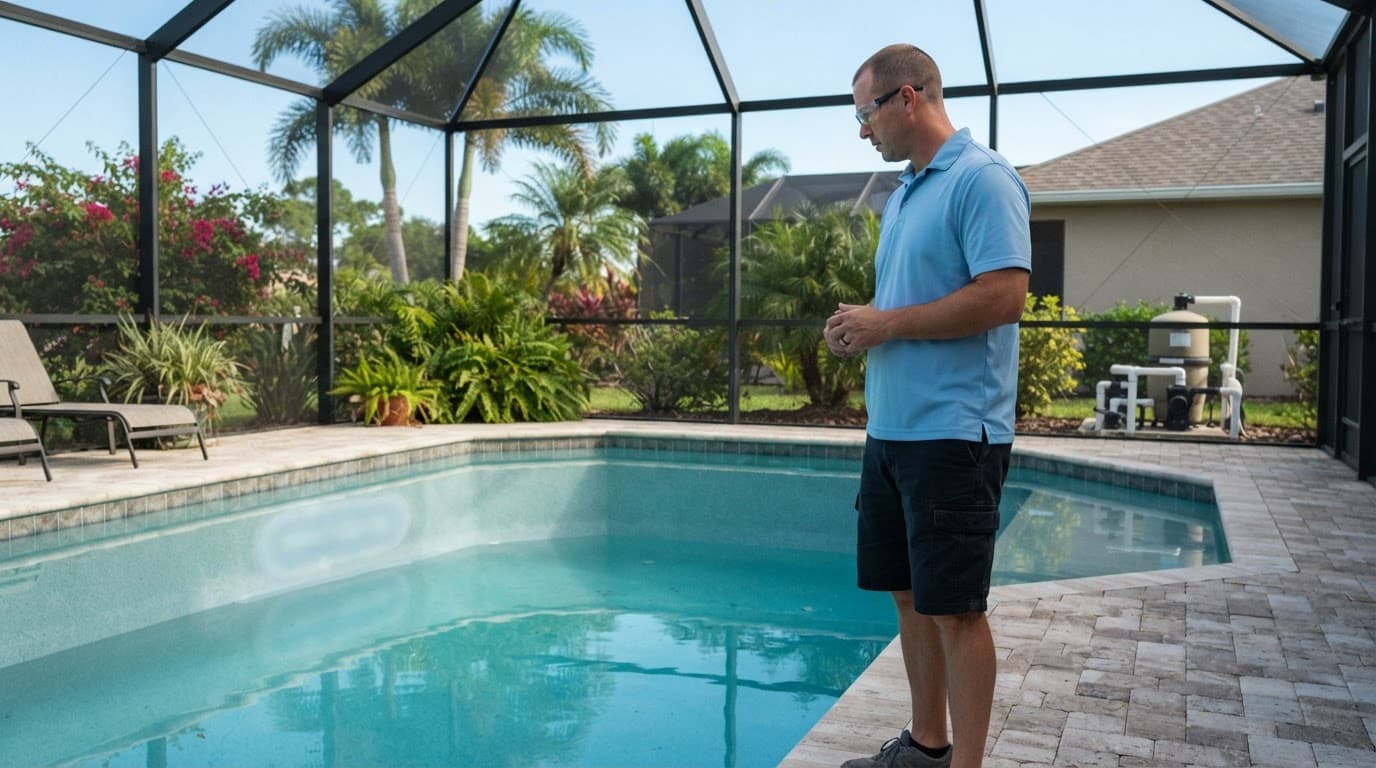
A visible tear in a vinyl liner is not the same as a crack in a rigid shell. Small punctures may be repairable, but wrinkles, seam separation, or repeated liner damage can point to liner age, water pressure changes, or issues beneath the liner.
Because the liner is part of the pool's watertight barrier, a contractor should assess water loss before choosing a repair or replacement path.
Confirm the source before starting the repair
A sound repair begins with diagnosis. Filling a crack without checking for a leak or movement can hide a problem for a short time, then send water behind the surface again.
Pool professionals may use visual inspection, pressure testing, dye testing, electronic leak detection, or other methods based on the pool type and suspected cause.
Leak detection protects the repair work
Evaporation is normal in Florida, but a persistent drop in water level may be a leak. A technician compares water loss patterns, checks accessible plumbing, and evaluates features such as skimmers, returns, lights, and suction lines.
If plumbing is the source, repairing the visible crack alone won't stop the issue. Water may continue to travel behind the shell or under the deck, where it can affect support conditions.
Surface preparation determines how well materials bond
A repair area must be stable, clean, and properly prepared. Loose finish material, mineral scale, algae, oils, and moisture can interfere with adhesion.
The contractor selects repair products that work with the existing surface and follows the manufacturer's preparation and curing requirements. This is why a quick hardware-store patch often fails on a pool surface exposed to constant immersion, chemicals, heat, and movement.
Do not drain a pool or attempt structural crack work without professional guidance. Incorrect drainage can create serious pressure-related risks for an in-ground pool, especially when groundwater conditions are unknown.
What a professional repair process usually includes
The scope should fit the cause. A small finish repair and a structural crack investigation are not interchangeable jobs, even when both begin with a visible line in the pool.
Most pool crack repair work follows a clear sequence:
- The contractor documents the crack, surrounding conditions, water level, and related damage.
- Leak testing or plumbing evaluation follows when symptoms point beyond the pool finish.
- The affected surface is opened, cleaned, and prepared only as much as the repair requires.
- Compatible materials are installed according to their curing requirements.
- The pool is inspected before normal use resumes, and the water is balanced for the restored surface.
Curing time depends on the material, temperature, humidity, and repair scope. Rushing refilling, brushing, chemical additions, or swim use can weaken a fresh repair.
Water chemistry matters after crack repair
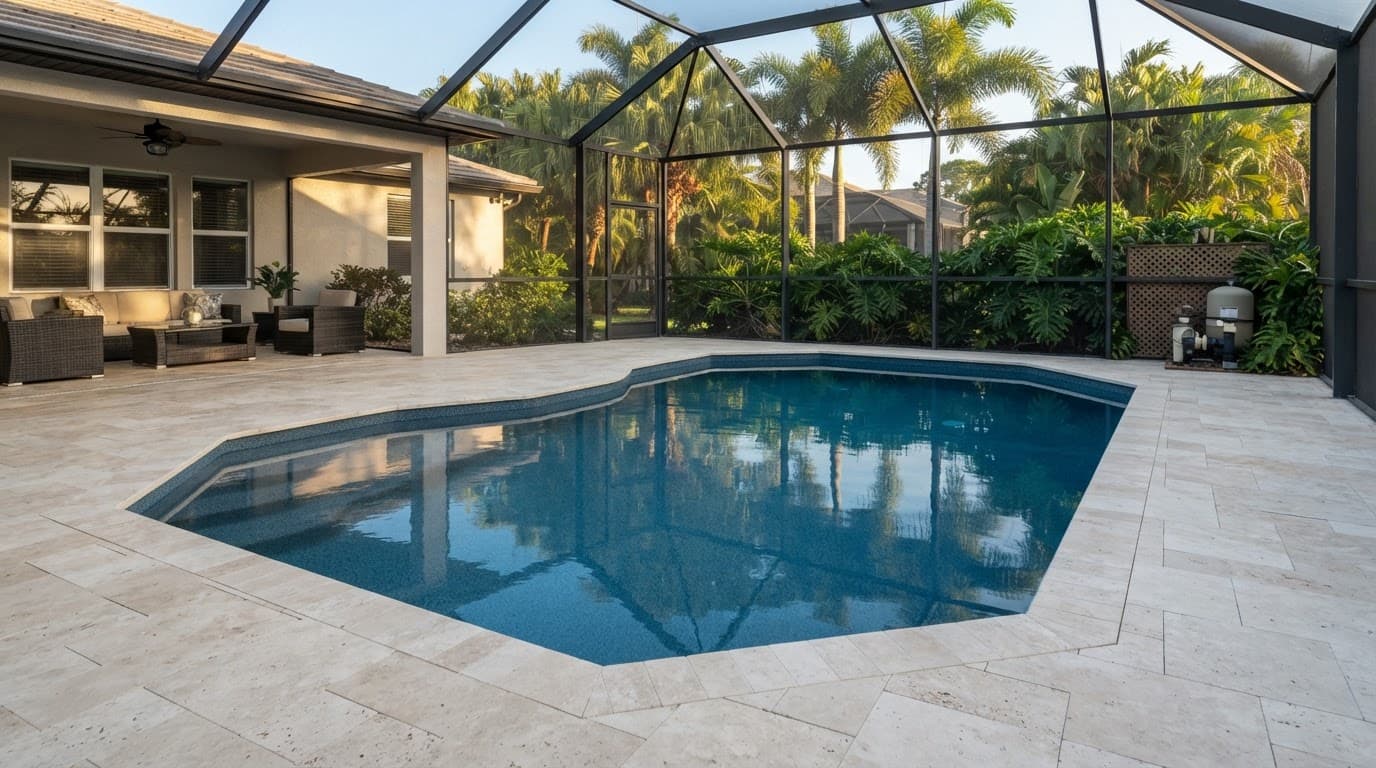
Once repair work is complete, balanced water helps protect the surface. Test pH, total alkalinity, sanitizer, and calcium hardness regularly, then make gradual adjustments rather than large chemical swings.
Avoid aggressive brushing or abrasive cleaning on a newly repaired area unless the contractor gives different care instructions. Clean circulation and balanced chemistry help the repair blend into normal pool maintenance.
Decide when a crack repair should become a renovation
Sometimes a targeted repair is the right answer. At other times, several aging surfaces point to a larger project that makes better use of labor and downtime.
For example, a pool with cracks, worn plaster, loose tile, aging coping, and an outdated deck may benefit from a coordinated renovation. Addressing these components together can create a more consistent finished look and reduce repeated disruption to your backyard.
Pair repairs with practical upgrades
A planned remodel can include a refreshed interior finish, replacement tile, safer coping, updated circulation equipment, or a redesigned deck. Homeowners may also add a sunshelf, spa, water feature, or lighting while the pool area is already under construction.
Reviewing completed pool renovation projects can help you compare interior finishes, tile styles, water features, and deck updates on established pools.
Pool crack repair in Cape Coral should always put safety and diagnosis ahead of appearance. A repair that addresses the real cause is more likely to protect both the pool and the investment around it.
A repaired pool starts with the right diagnosis
A crack doesn't always mean the pool needs a major rebuild. Still, it deserves a careful look before water loss, loose surfaces, or structural movement create more work.
The strongest repair plan matches the pool material, identifies any leak or movement, uses compatible products, and allows proper curing. With sound workmanship and balanced water, your pool crack repair Cape Coral project can help restore a safer, more enjoyable backyard.