
How to Choose Cape Coral Pool Tile for a Gunite Pool
A waterline tile choice can shape your pool's entire appearance, especially under Cape Coral's strong sun. The right Cape Coral pool tile also needs to handle regular exposure to water, pool chemicals, heat, and outdoor debris.
Color is only one part of the decision. Material, surface texture, grout, coping, interior finish, and maintenance needs all affect the final result. Here's how to choose tile that looks right and performs well around a Cape Coral gunite pool.
Start with the Pool's Design and Location
Waterline tile sits around the pool at the transition between the water and the wall. It creates a finished edge, catches light, and helps define the pool's style. Since this band stays visible even when nobody is swimming, it deserves the same attention as the deck and interior finish.
Begin with the home's exterior. A modern Cape Coral home may suit narrow glass mosaics, large-format porcelain, or a simple geometric pattern. A Mediterranean-style home often pairs well with blue, cream, or stone-look tile. The pool shouldn't look disconnected from the house, patio, screen enclosure, or landscaping.
The amount of sunlight also matters. A shaded pool may benefit from lighter tile that keeps the waterline bright. In full Florida sun, intense blue or highly reflective glass can create strong highlights. That effect may look beautiful, but it can also make color samples appear different at various times of day.
Bring samples outdoors before making a final decision. View them in direct sunlight, under the lanai, and beside the planned coping. Pool water changes the appearance of tile, too. A sample that looks gray in a showroom may appear blue once it sits beneath clear water.
The shape of the pool matters as well. A rectangular gunite pool can handle a crisp, repeating pattern. Freeform pools often look better with smaller tile because mosaics follow curves more easily. Large pieces may require more cuts around rounded corners, benches, steps, and raised walls.
If the design includes a spa spillover, tanning ledge, or raised bond beam, ask how the waterline tile will continue through each feature. Consistent alignment gives the installation a cleaner appearance.
The best tile sample is the one you inspect beside the actual coping and interior finish, not the one that looks best under showroom lights.
Compare Waterline Tile Materials
Tile materials differ in appearance, price, maintenance, and installation requirements. The most common choices for a gunite pool are glass, porcelain, and ceramic. Natural stone can work in selected designs, but it needs more careful evaluation.
| Tile material | Strengths | Trade-offs |
|---|---|---|
| Glass mosaic | Reflects sunlight, offers rich color, works well on curves | Usually costs more, and installation requires careful alignment |
| Porcelain | Durable, low water absorption, available in modern stone and concrete looks | May offer less sparkle, and dark colors can show deposits |
| Ceramic | Broad style range and often lower cost | Quality varies, so outdoor and pool-rated products matter |
| Natural stone | Adds an earthy, custom appearance | Can require sealing and may show mineral or chemical staining |
Glass tile
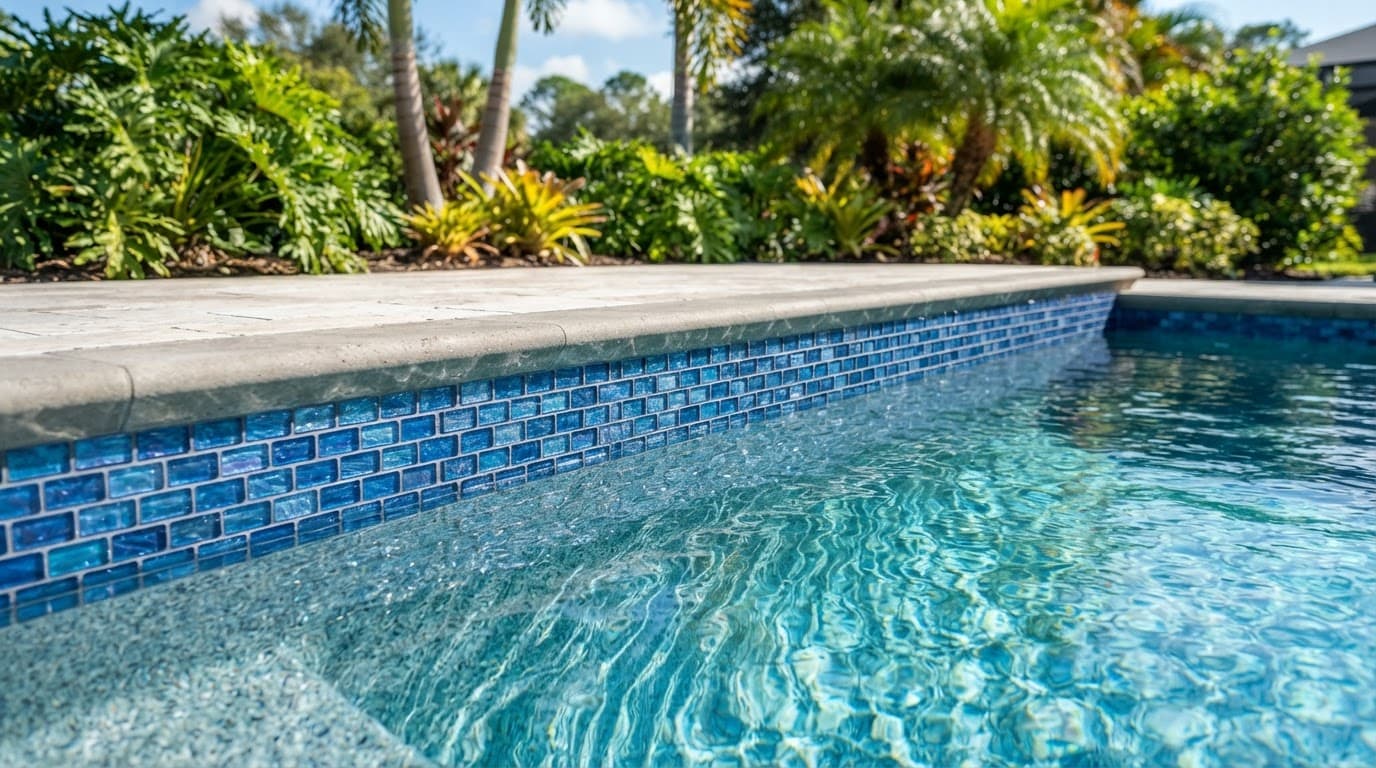
Glass is popular for homeowners who want movement and shimmer along the waterline. Small mosaics can follow curved gunite walls, spa contours, and rounded steps with fewer visual interruptions. Deep blue, aqua, and mixed-color blends can make the pool feel more layered.
The trade-off is cost and installation precision. Glass shows uneven spacing, adhesive problems, and grout discoloration more readily than a busy stone-look tile. A skilled installer should use products rated for submerged or poolside applications and follow the manufacturer's setting instructions.
Porcelain tile
Porcelain is a practical choice when you want a quieter, more architectural look. It can imitate limestone, slate, concrete, or marble without adding the same maintenance demands as some natural stone products. Large-format porcelain can reduce the number of grout joints, although smaller pieces may fit curves more naturally.
Choose a product designed for pool use, then confirm its suitability with the builder. Water absorption, edge finishing, and installation method all matter. Porcelain isn't automatically the right choice simply because it is hard.
Ceramic tile
Ceramic tile offers many colors, patterns, and price points. It can work well in a traditional pool design, especially when the selected product has a durable glaze and a clear rating for pool installation.
Avoid choosing ceramic based only on a loose indoor sample. Pool tile faces constant moisture and cleaning, so the product needs to match the environment. Ask to see a completed installation that uses the same tile.
Select Color, Size, and Pattern Carefully
Blue remains a common pool tile color because it works with the appearance of water. Still, the best color depends on the pool's interior finish. A white plaster finish may make blue tile look brighter. Gray or darker finishes can create a deeper appearance, while a light aqua tile may soften the contrast.
Neutral tile is useful when you want the pool to coordinate with several future design changes. Beige, gray, taupe, and stone-look options can pair with different pavers and furniture. However, overly neutral tile may look flat if the pool design has no other strong visual detail.
Darker tile creates contrast, but it can show calcium deposits, sunscreen residue, and waterline buildup more clearly. Lighter tile can hide some residue, though grout color and surface texture still affect cleaning.
Tile size changes the visual rhythm. Small mosaics add detail and handle curves well. Rectangular subway-style pieces create a more directional pattern. Larger tiles produce fewer grout lines and a calmer appearance, but they may need more cuts around curves and fittings.
Patterns deserve restraint. A decorative border can add character, yet a busy pattern may compete with a patterned deck or elaborate water features. Request a layout drawing or digital rendering that shows the full waterline, not only a close-up tile sample.
Also inspect corner pieces and trim. A tile may look attractive on a flat board but lose its clean appearance when the installer has to transition around corners, steps, return fittings, and raised sections.
For design inspiration, review a local pool tile work portfolio that shows complete installations rather than isolated product samples. San Juan Custom Pools & Spas shares examples of pools, renovations, water features, and tile work in its custom pool and tile gallery.
Match Tile with Coping, Grout, and the Interior Finish
Waterline tile should connect the pool's major finish decisions. Coping is especially important because it sits directly above the tile and frames the pool perimeter. Travertine, concrete, brick, porcelain coping, and other materials each create a different relationship with the tile.
A warm travertine coping may pair with cream, sand, or blue-green tile. Gray coping often works with charcoal, slate, silver, or muted blue. If the coping contains strong natural variation, a simpler tile can keep the edge from looking crowded.
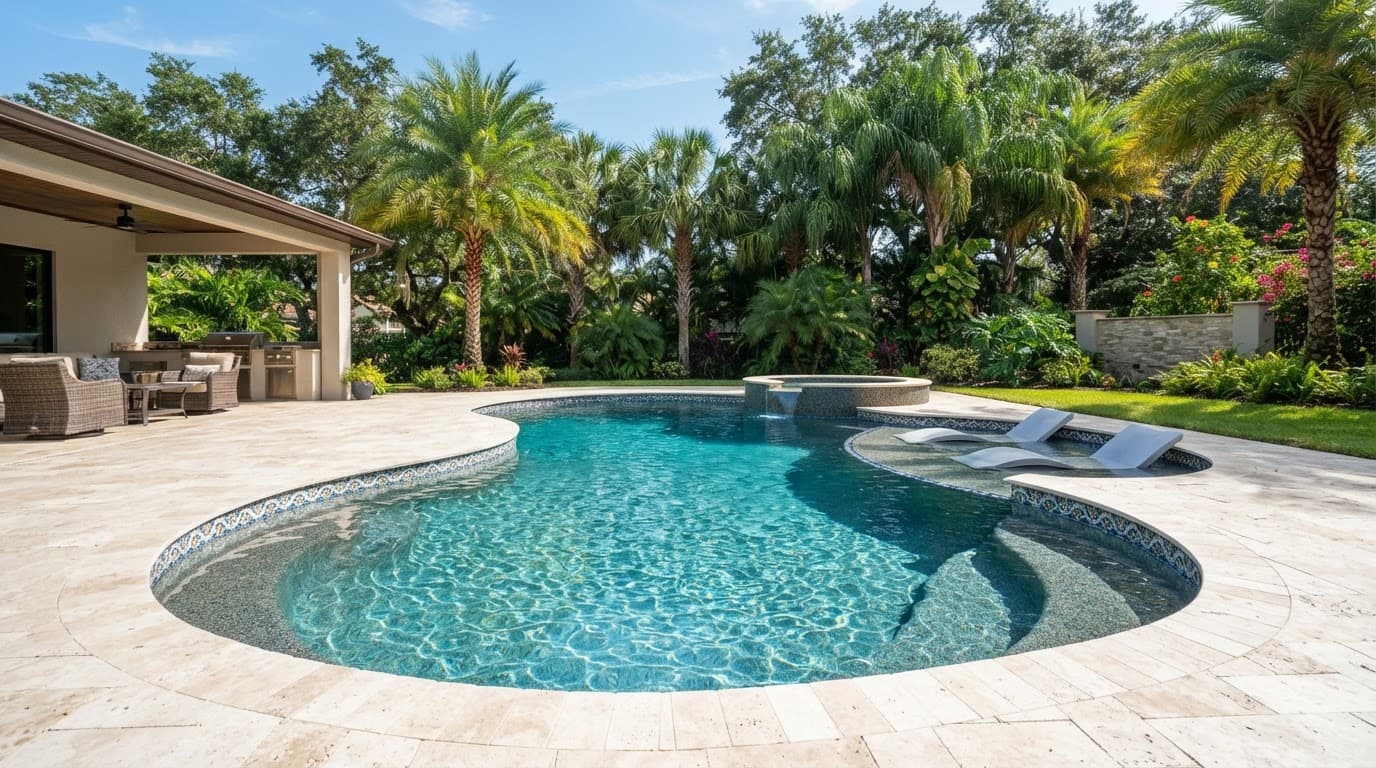
Grout color affects the pattern almost as much as the tile itself. Matching grout makes individual pieces blend together. Contrasting grout highlights every joint and creates a stronger grid. Medium gray or another practical midtone can offer a balanced appearance, but the right product depends on the tile and installation system.
Ask the builder which grout is appropriate for the planned application. Pool grout must tolerate ongoing water exposure and cleaning. Follow-up maintenance also matters because grout can collect residue, especially along the waterline.
The interior finish changes the visible water color, so view tile and finish samples together. A tile that looks perfect beside white plaster may clash with a blue-gray quartz finish. The same rule applies to tanning ledges and shallow shelves, where tile may be seen through only a few inches of water.
A well-planned design keeps these elements in the same color family without making every surface identical. For example, a gray-blue waterline tile can connect a pale quartz interior finish with gray pavers while leaving the coping as the warmer accent.
Plan for Installation and Maintenance
A gunite pool's waterline tile installation should follow the surface preparation and construction schedule. The wall must be ready for tile, and the installer needs to account for fittings, corners, steps, raised walls, and changes in elevation.
Tile alignment matters along long, straight walls. Even a small variation becomes visible when repeated around the entire pool. Curved walls require careful layout because the installer may need to adjust joints without creating an obvious wedge-shaped gap.
Ask these questions before approving the material:
- Is the product rated for pool or submerged use?
- What grout and setting materials will the installer use?
- How will the tile transition around corners, steps, and fittings?
- Will the layout center the pattern on the main viewing area?
- How will damaged or loose pieces be replaced later?
- Who handles cleaning or repairs if a problem appears after installation?
Cape Coral homeowners should also consider maintenance caused by sun, splash-out, landscaping, and normal pool chemistry. No tile eliminates cleaning. However, smooth surfaces and sensible grout choices can make routine care easier.
Keep water chemistry within the ranges recommended for your pool system. Poor chemistry can contribute to scale, discoloration, or damage to finishes. Saltwater systems still need regular testing and maintenance, even though they generate chlorine from salt.
During routine cleaning, use products approved for pool tile and avoid aggressive methods without professional guidance. Abrasive tools can scratch some surfaces or damage grout. If deposits keep returning, the cause may involve water chemistry rather than the tile itself.
For an existing pool, tile replacement may need to happen alongside re-plastering, coping work, or deck repairs. A contractor that handles the complete renovation can coordinate the sequence. Review available pool remodeling services when the tile is part of a larger update.
Use This Cape Coral Pool Tile Decision Checklist
Before you approve a tile, confirm that it meets these practical requirements:
- View a physical sample in direct sun, shade, and beside the pool's planned coping.
- Compare the sample with the interior finish, tanning ledge, spa, and water features.
- Confirm that the tile is rated for pool installation and matches the builder's setting system.
- Choose a size and shape that fit the pool's curves without excessive cuts.
- Decide whether matching or contrasting grout supports the overall design.
- Ask how the layout will handle corners, steps, fittings, and raised walls.
- Discuss cleaning, mineral deposits, replacement pieces, and long-term care.
- Review the complete price, including tile, trim, grout, labor, waste, and installation details.
The cheapest tile price doesn't always produce the lowest project cost. A difficult layout, specialized trim, or labor-intensive mosaic can change the final number. Request a clear allowance or written specification before construction begins.
Conclusion
Choosing Cape Coral pool tile requires more than picking a color from a sample board. The material must suit the pool's curves, the Florida setting, the interior finish, the coping, and the care routine you expect to follow.
Glass adds sparkle, porcelain provides a calm and durable look, and ceramic offers broad design flexibility. Once you compare those trade-offs beside the actual pool finishes, the right choice becomes much easier to see. A well-planned waterline gives your gunite pool a finished edge that continues to look intentional long after construction is complete.