
Why Pool Tile Gets White Scale in Southwest Florida
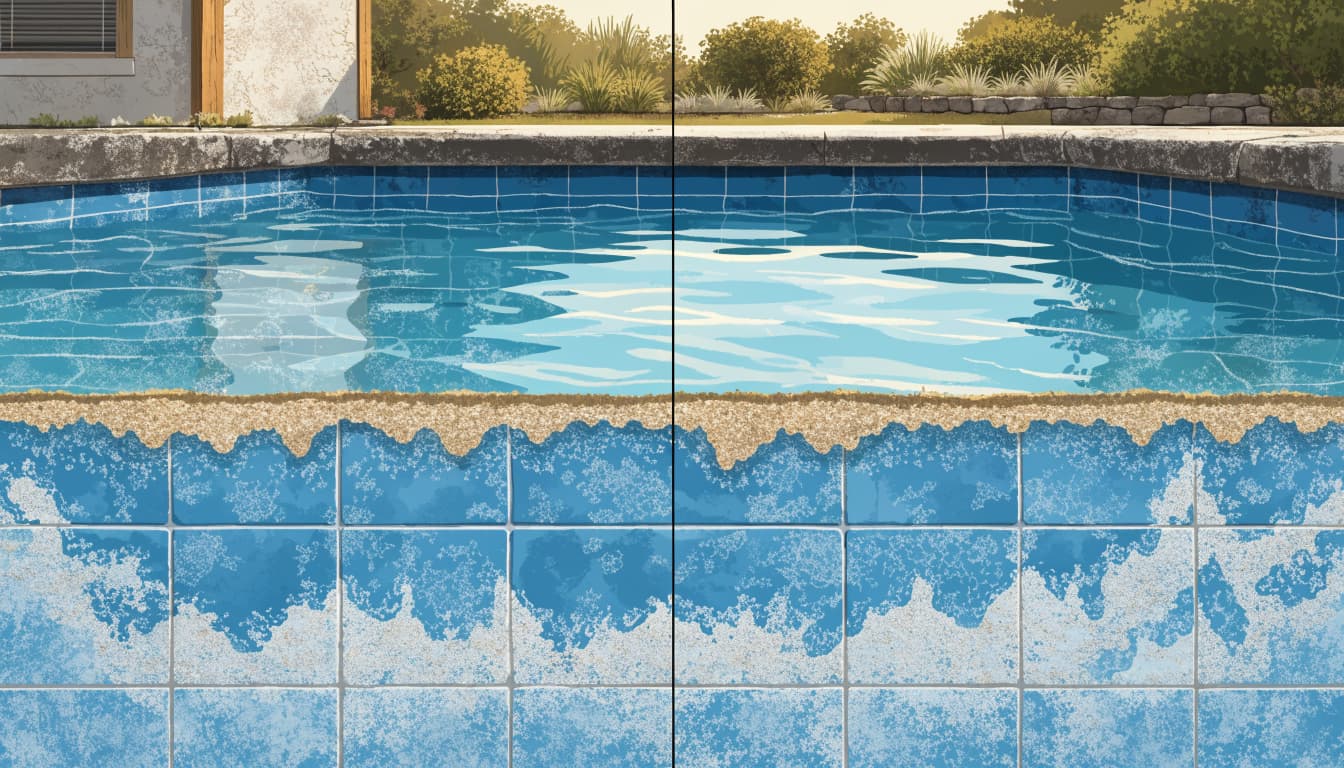
White buildup on pool tile usually develops when dissolved calcium leaves the water and hardens on the surface. In Southwest Florida, mineral-rich fill water, evaporation, and unbalanced chemistry can work together to create pool calcium scale.
Removing the crust improves appearance, but water balance determines how quickly it returns. Understanding the deposit and its cause helps you protect the tile, grout, and surrounding pool finish.
Key Takeaways
- Hard fill water adds minerals, while evaporation leaves those minerals behind and concentrates them.
- Calcium carbonate is a common cause of white scale; calcium silicate deposits resist removal more strongly.
- Gentle cleaning and balanced water help protect tile and grout. Recurring deposits, loose tile, or damaged joints deserve professional assessment.
How Pool Calcium Scale Forms in Southwest Florida
Hard fill water supplies the minerals
Southwest Florida's groundwater can pick up calcium as it moves through limestone. However, the mineral content reaching your pool depends on the water source and treatment.
Calcium dissolved in water is invisible, so a clear pool can still contain enough to support scale formation. Refilling also introduces more minerals. Over time, repeated top-offs with hard water can increase calcium hardness, especially when evaporation accounts for much of the water loss.
Hard water creates the potential for scale. The pool's chemistry determines whether those minerals remain dissolved.
Evaporation concentrates what stays behind
When pool water evaporates, dissolved calcium stays behind. Splash droplets also dry on tile, coping, and spa spillovers, leaving mineral residue on exposed surfaces.
Warm water, sunshine, and air movement support evaporation. Meanwhile, repeated wetting and drying make the waterline a common place for deposits to collect.
Heavy rain can dilute pool water and change chemical readings, but it doesn't reliably remove existing scale. A screen enclosure reduces some debris without stopping evaporation or preventing rain from affecting water balance.
Water Chemistry Controls Whether Calcium Stays Dissolved
pH, alkalinity, and calcium hardness work together
Elevated pH makes calcium carbonate more likely to come out of solution. Calcium hardness, total alkalinity, and water temperature also influence that tendency.
That means a hardness reading alone can't explain every deposit. Water with substantial dissolved calcium may remain manageable when the other factors stay balanced.
A pool professional can evaluate these measurements together using a calcium saturation index. This gives a more useful picture than treating pH or hardness as an isolated problem.
The goal is balanced water that protects both cement-based finishes and equipment, without encouraging mineral deposits.
Salt systems and heated spas need attention
Salt chlorine generators don't remove calcium or replace water testing. Their operation can contribute to rising pH, while conditions inside the cell can encourage scale formation.
Our comparison of saltwater pool chemistry and maintenance explains why both sanitation systems still need regular care.
Heated spas add another factor because warmer water increases calcium carbonate's tendency to deposit. Aerated features, including spa spillovers, can also promote carbon dioxide loss and raise pH.
As a result, a pool may develop heavier deposits around a spillover than along a quieter section of waterline.
Calcium Carbonate Versus Calcium Silicate Deposits
Calcium carbonate is a common waterline deposit
Calcium carbonate often appears as white or off-white crust, rough patches, or chalky buildup. It commonly forms where mineral-bearing water repeatedly dries.
Its thickness varies. Early residue may respond to gentle, material-compatible cleaning, while established layers can bond firmly to the surface.
Although calcium carbonate reacts with acids, that doesn't make an acid application safe for your pool. Acid can attack grout, cement-based finishes, natural stone, and some decorative surfaces.
A cleaner must suit every material it will contact, including adjacent coping and joints.
Calcium silicate is more resistant to removal
Calcium silicate deposits contain calcium and silica and can form a dense, stubborn buildup. They generally resist acid-based cleaning more strongly than calcium carbonate.
However, color and hardness alone don't establish the deposit's composition. Layered residue, weathered grout, and other mineral deposits can look similar.
A crust that survives cleaning doesn't automatically prove calcium silicate is present. The cleaning product may be unsuitable, or the deposit may simply be thick.
Professional assessment is appropriate before escalating treatment. The right removal method depends on both the deposit and the tile underneath it.
Prevent Scale Without Making the Water Aggressive
Regular testing should cover pH, total alkalinity, calcium hardness, and sanitizer levels. Follow the water-care requirements for your finish and equipment, with closer attention after substantial refilling, heavy rain, or changes in heater use.
New cement-based finishes also need their prescribed startup routine because early water chemistry can change quickly. Automation helps manage equipment, but it doesn't replace a complete testing routine.
Brush the waterline regularly with a tool approved for the surface. Removing fresh residue is easier than dealing with a thick, established crust. Keep filtration and circulation operating properly, although ordinary pool filtration doesn't remove dissolved calcium.
Lowering pH excessively to fight scale can damage cement-based finishes and grout. Prevention requires balanced water, not the lowest possible reading.
If calcium hardness keeps increasing, a professional may recommend a water-management approach suited to the source water and pool. Repeated chemical adjustments alone may not address mineral accumulation.
Our comparison of pebble and quartz pool finishes explains why either surface still depends on consistent chemistry.
Clean Pool Tile Without Damaging the Surface
Start with the least aggressive method compatible with the tile and grout. Glass, glazed ceramic, porcelain, and natural stone don't all tolerate the same tools or chemicals.
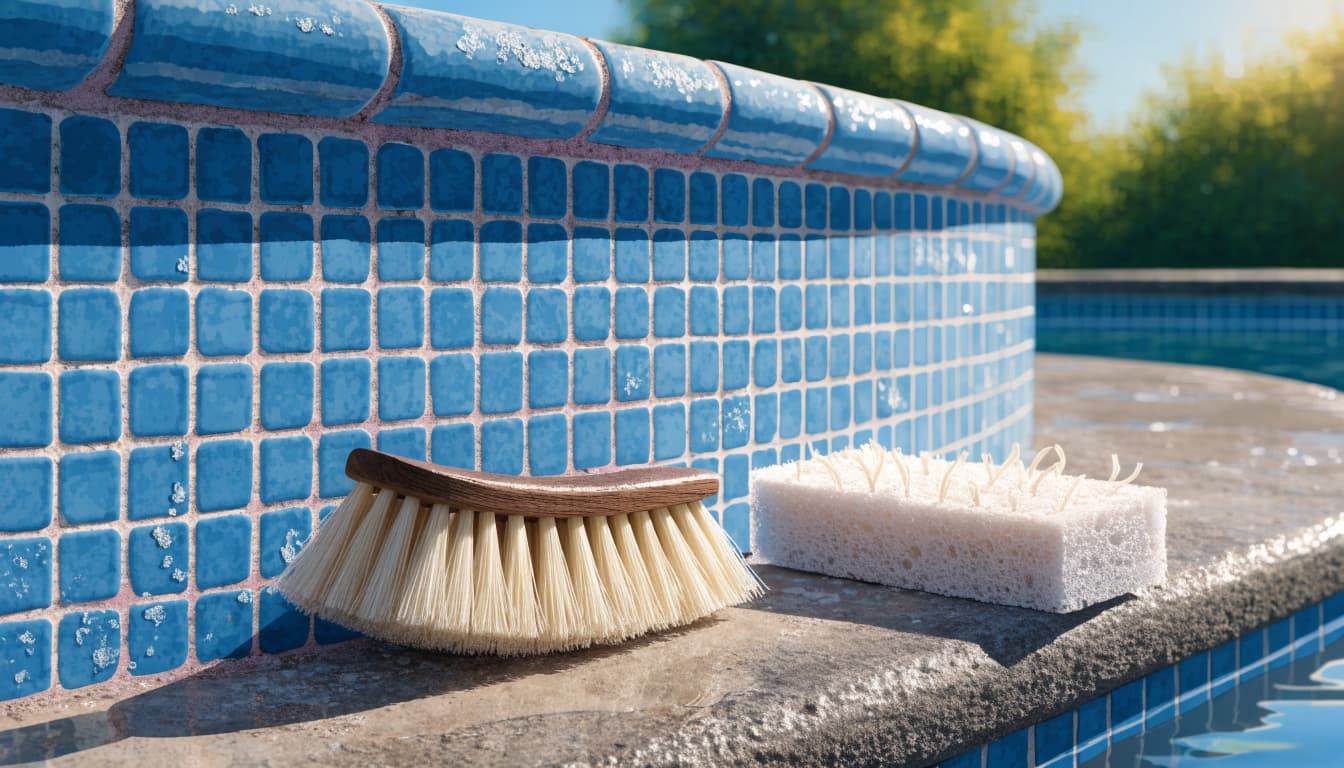
- Remove loose dirt and oily waterline residue with a surface-approved soft brush or non-abrasive sponge. This helps distinguish ordinary buildup from a firmly bonded mineral deposit.
- For remaining residue, use only a cleaner approved for the specific tile and surrounding materials. Follow its directions, including protective equipment and any spot-test instructions.
- Stop if the surface scratches, grout loosens, or the deposit requires force. A professional should assess stubborn buildup before stronger treatment begins.
Avoid metal scrapers, wire brushes, abrasive pads, and casual use of pumice stones. These can scratch surfaces or wear down grout. High-pressure washing and blasting also require material-specific professional judgment.
Household acids and improvised chemical mixtures create unnecessary risks. Never mix acidic cleaners with chlorine products because the combination can release toxic gas.
Don't drain the pool simply to reach the tile. Southwest Florida's high groundwater can create serious risks when a pool is emptied, so lowering water for repairs requires professional planning.
Once cleaning is complete, address the chemistry that supported the deposit. Otherwise, a clean waterline can develop another mineral layer.
Tile Selection and Repairs Affect Long-Term Care
Choose materials that make maintenance practical
For a new pool, select tile rated for pool use, along with compatible grout and setting materials. Smooth surfaces generally make routine wiping easier than heavily textured ones.
Darker tile often makes white residue more visible. Lighter colors may disguise some buildup, but they don't prevent it.
Our guide to choosing pool tile for a gunite pool covers material, layout, and maintenance considerations.
Also consider access around raised walls and spillovers. A feature that is difficult to reach will be harder to brush and inspect.
Recurring or localized deposits deserve assessment
Request professional assessment when scale returns quickly despite balanced readings, deposits concentrate around damaged joints, or tile becomes loose or cracked.
White residue emerging through grout may be efflorescence, which involves moisture carrying soluble salts through construction materials. That requires a different investigation than ordinary waterline scale.
Keep swimmers away from broken tile or sharp edges. Surface cleaning can't repair a failed bond or underlying movement.
When replacement overlaps with plaster, coping, or deck work, our pool renovation and remodeling services can address the larger update. Coordinating those surfaces helps avoid disturbing newly completed work later.
Frequently Asked Questions
Does white scale mean the tile needs replacement?
White scale alone doesn't mean the tile has failed. Intact, firmly bonded tile may need compatible cleaning and better water management rather than replacement.
However, cracked pieces, loose sections, deteriorated grout, or recurring deposits at the same damaged joint warrant assessment. Replacement decisions should reflect the condition beneath and around the buildup, not simply how white the surface looks. Cleaning first may reveal damage that the crust concealed.
Will switching to a saltwater pool prevent calcium scale?
Switching sanitation systems won't remove dissolved calcium or prevent evaporation. A saltwater pool can develop the same mineral deposits as a conventionally chlorinated pool.
Salt systems also need pH management and cell maintenance. Choose the sanitation system for its operation and care requirements, then manage water balance separately. Changing chlorine delivery alone doesn't solve the conditions that cause calcium to deposit on tile.
Protect the Tile by Addressing the Cause
White pool scale is often the visible result of mineral accumulation and water chemistry. Gentle cleaning protects the surface, while consistent water balance reduces the conditions that let deposits return.
For stubborn buildup or signs of tile failure, professional assessment helps separate a cleaning problem from a repair issue. Protecting the tile starts with understanding what is forming and why.