
Can You Fill a Cape Coral Gunite Pool With Well Water?
Yes, well water can be an option for a new gunite pool in Cape Coral, provided testing supports its use and the builder approves the startup plan. Filling a gunite pool with well water needs source-water testing before the hose goes in.
Clear-looking water can still contain dissolved metals or minerals that affect a fresh interior finish. Start by identifying the actual water source, then coordinate testing and treatment with the people handling your pool's startup.
Key Takeaways
- Test water from the actual outlet that will supply the pool, because nearby wells and different plumbing outlets can produce different results.
- Dissolved metals can cause discoloration or staining, while hardness, alkalinity, and pH affect how the water interacts with the new finish.
- Follow the builder's written startup instructions for filling, chemical additions, brushing, and circulation rather than applying a generic pool-care routine.
The decision depends on your water and finish. A neighbor's successful well-water fill doesn't establish that your source will behave the same way.
Identify What You're Filling and Where the Water Comes From
Gunite forms the pool's structural shell. The plaster, pebble, or other interior finish is the surface that contacts the fill water. That distinction matters because startup instructions depend on the installed finish.
Our new gunite pool construction includes interior finish and startup, when the pool is filled, balanced, and prepared for operation.
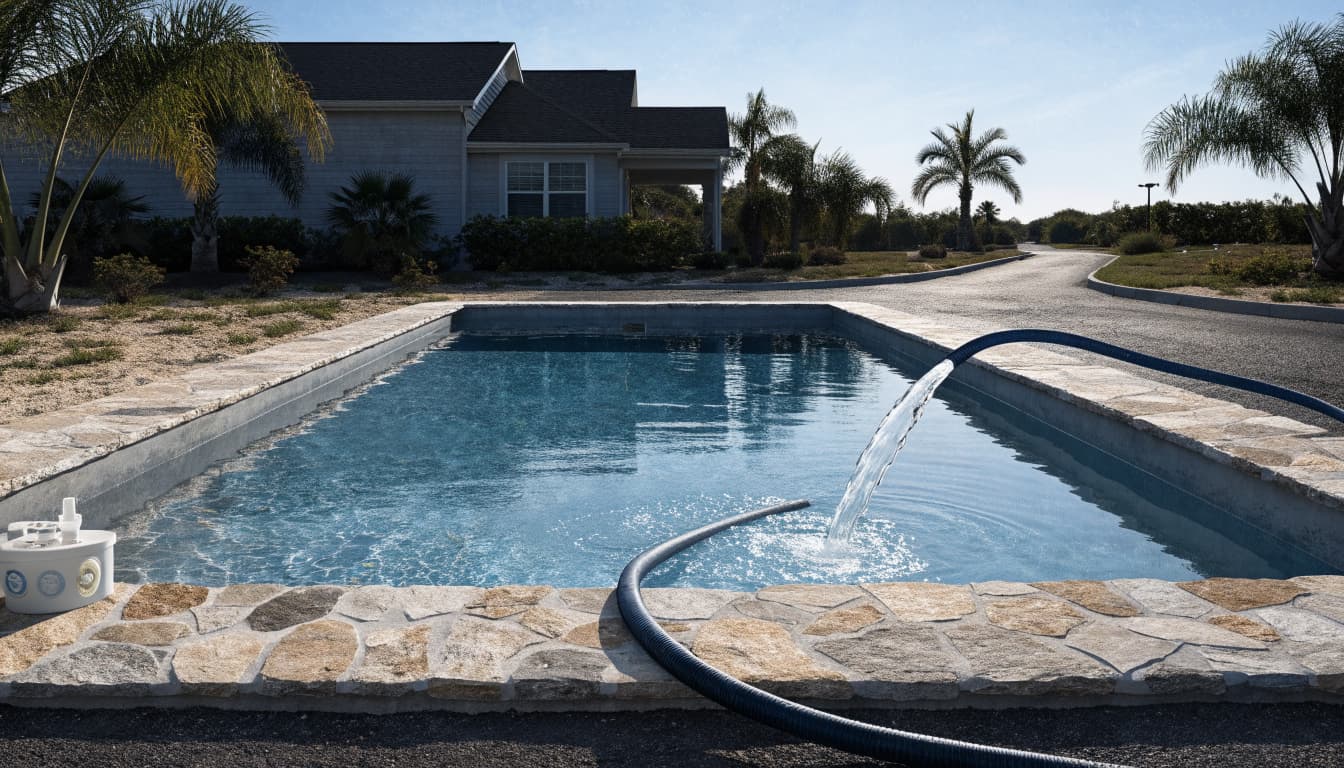
In Cape Coral, don't assume that every outdoor faucet supplies the same water. Identify whether the proposed connection carries untreated well water, treated household water, or another supply. Reclaimed irrigation water is a separate source and shouldn't be confused with well water.
Also identify any treatment equipment between the well and the outlet. A sample taken after a household treatment system won't describe water drawn from a connection that bypasses it.
This gives the startup team a useful starting point: the water entering the pool, rather than a general description of the property's plumbing.
Why Well Water Can Stain a New Pool Finish
Dissolved metals may appear after filling
Well water can contain iron, manganese, or copper, although their presence and concentrations vary by source. Water that looks clear can still contain dissolved metals.
Once water conditions change, those metals may produce visible color or deposits. Chlorine can oxidize dissolved iron, for example. Iron can leave rusty discoloration, while copper can produce blue-green staining.
A fresh finish makes these problems especially unwelcome. Treating discolored water and removing a deposit attached to the finish are different tasks.
Don't interpret every color change as the same problem. Green water, for example, doesn't establish whether metals or algae caused it.
Mineral balance also affects the surface
Hardness, alkalinity, and pH deserve attention alongside metals. Together with temperature and other measurements, they influence whether water tends to deposit calcium scale or dissolve calcium from cement-based materials.
During startup, the finish itself can also affect water chemistry. Therefore, a source-water report is the beginning of the process, not a substitute for testing the filled pool.
A clear sample doesn't rule out dissolved metals, and balanced pH alone doesn't establish that fill water is suitable.
Early testing helps separate a source-water issue from changes that develop during startup.
Test the Actual Well Water Before Filling
Arrange source-water testing before the interior finish application and fill schedule. That leaves room to choose a suitable approach without improvising while the pool is filling.
Collect the sample from the intended fill outlet using the testing laboratory's sampling directions. If treatment equipment supplies that outlet, the sample should reflect water passing through that equipment under normal operating conditions.
A useful testing panel addresses these concerns:
| Measurement | Why it matters |
|---|---|
| Iron, manganese, and copper | Identifies potential metal-related discoloration and staining |
| pH | Shows the source water's acidity or alkalinity |
| Total alkalinity | Helps guide pH management |
| Calcium hardness | Supports decisions about calcium balance and the finish |
| Total dissolved solids or conductivity | Helps characterize the water's dissolved mineral content |
The results need to work together. No single reading replaces the rest of the panel.
If salinity is a concern for the actual source, include appropriate testing rather than assuming that every Cape Coral well has the same characteristics. A coastal location doesn't establish a particular well's salt content.
Ordinary pool test strips may not measure all these items, particularly individual metals. Also, a drinking-water test and a pool-fill assessment answer different questions. Water can require attention for pool-surface compatibility even when appearance and odor seem normal.
Give the results to the builder or startup professional before selecting chemicals or committing to the source.
Understand What Treatment Can and Can't Do
Removing metals differs from controlling them
A treatment system designed for the measured water may reduce certain contaminants before they enter the pool. Its suitability depends on the water chemistry, equipment design, and operating conditions.
A metal sequestrant works differently. It can help hold certain metals in solution, but it doesn't physically remove those metals from the water. Its effectiveness also depends on product chemistry and pool conditions.
Neither approach provides a blanket promise against staining. Treatment decisions need the actual test results and compatibility with the interior finish.
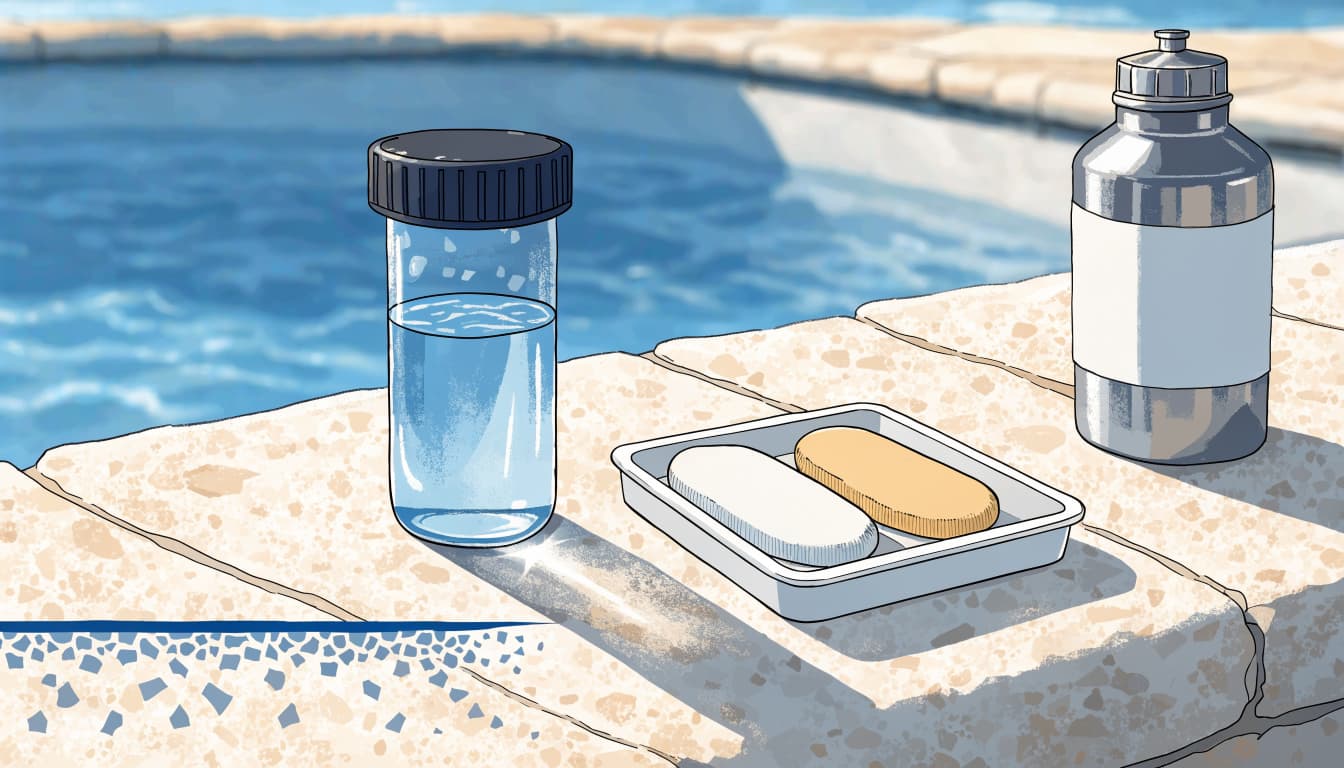
A hose attachment isn't proof of suitable water
A sediment filter can catch particles within its rated capability. Dissolved metals, however, aren't the same as visible dirt. A filter that removes sediment may leave dissolved contaminants largely unchanged.
Likewise, household treatment equipment doesn't automatically produce water suited to a new pool finish. Each system addresses particular water characteristics.
If pretreatment is part of the plan, test the treated output. That establishes what the proposed setup actually produces.
Avoid adding a stain-control product, extra chlorine, or acid on your own during the first fill. Chemical choice, dose, and timing belong in the finish-specific startup plan.
Coordinate the Fill With Your Builder's Startup Instructions
Set responsibilities before filling begins
The fill should fit into the construction schedule. Our new pool finish startup instructions address written guidance for brushing, circulation, chemistry, and equipment.
Before filling, establish who handles the initial chemical balance and who responds if the water changes color. The plan should also identify the intended water level and when the circulation system starts.
Tell the builder that well water is the proposed source early enough to review the test results. Introducing that information after filling limits the available choices.
Follow the finish contractor's instructions about hose placement and interruptions. Don't invent a different filling routine because the source is a well.
Keep monitoring after the pool is full
Source-water testing doesn't predict every change during startup. Fresh cement-based finishes can affect pH, so the filled pool needs its own testing and adjustments.
Many startup programs keep pH near 7.2 to 7.6 , but the finish and selected startup method determine the target. That range isn't permission to apply the same chemical routine to every new pool.
Follow the written brushing schedule, use the specified brush, and operate circulation as directed. Wait for finish-specific approval before using automatic cleaners, heaters, or salt-chlorine equipment.
Also follow chemical labels and the startup sequence. Never mix acid and chlorine products.
If brown, green, or black discoloration appears, involve the startup professional before adding more chemicals or attempting stain removal.
Choose the Water Source Before Finish Day
Using well water should be a planned decision. The useful question is whether the tested water can fit the finish's startup requirements with an appropriate treatment approach.
If the results reveal a concern that the proposed setup doesn't address, choose another suitable source before filling begins. Adding water first and diagnosing it later puts the new finish in contact with the problem.
Keep the source-water report with the startup instructions. Record any pretreatment and the initial pool-water readings so everyone works from the same information.
Also tell the startup team if the source changes during filling. A plan based on one supply doesn't automatically describe a second supply.
This preparation keeps the decision tied to measurable conditions rather than the water's appearance or another homeowner's experience.
Frequently Asked Questions
Can I add chlorine right away if I fill with well water?
Use the chlorine timing and dose specified for your finish's startup. Adding chlorine without considering the source-water results can create problems when dissolved metals are present.
Chlorine remains important for pool sanitation, but the first fill needs coordinated chemistry. Don't delay or increase treatment on your own to address a suspected metal issue.
Our Cape Coral pool startup timeline explains how testing and early care fit into the period after construction.
Should I drain the pool if the well water turns brown?
Don't drain a new pool on your own. Brown water can indicate iron oxidation, but color alone doesn't establish the cause or the right response.
Have the startup professional assess the water and finish before treatment. Removing water can also expose a new surface and create structural risks where groundwater conditions matter.
The response should address the identified cause while respecting the finish's care requirements. An unplanned drain-and-refill can introduce additional problems without resolving the original one.
Make the First Fill Part of the Build
Filling a new gunite pool with well water in Cape Coral can be workable when testing supports the choice. The strongest precaution is planning before filling , with the actual source-water results and finish-specific instructions together.
Coordinate treatment, filling, and startup with your builder. Your new pool's first water should suit its finish, rather than leave you solving avoidable chemistry problems afterward.