
Pebble vs Quartz Pool Finishes in Southwest Florida
A pool finish affects more than the color of your water. It changes how the surface feels, how much maintenance it needs, and how your backyard looks in bright Southwest Florida sun.
When you're resurfacing a pool in Cape Coral, Fort Myers, or nearby communities, pebble and quartz finishes are two popular choices. Neither option works best for every homeowner. Your budget, design style, comfort preferences, water chemistry, and installation quality all matter.
Key Takeaways
- Quartz finishes offer a smoother feel and a clean, bright appearance at a lower typical cost than pebble.
- Pebble finishes provide a natural, textured look with strong surface performance when installed and maintained correctly.
- Southwest Florida's rain, heat, evaporation, and mineral-heavy water can affect either finish.
- Proper startup care and ongoing water chemistry materially affect the finish's appearance and service life.
- Professional surface preparation and installation are as important as the aggregate material you choose.
What Separates Pebble and Quartz Pool Finishes?
Both finishes use cement-based material mixed with decorative aggregate. The difference comes from the type, size, and amount of aggregate exposed at the pool surface.
Quartz finishes contain small pieces of quartz aggregate. They usually create a more uniform appearance with a fine texture underfoot. Depending on the color blend, quartz can produce a bright white, soft blue, gray, or darker pool interior.
Pebble finishes use rounded natural stone or manufactured pebble aggregate. The exposed stones create more variation in color and texture. Mini-pebble products feel more refined than larger pebble surfaces, while polished pebble finishes can provide a smoother feel than standard exposed pebble.
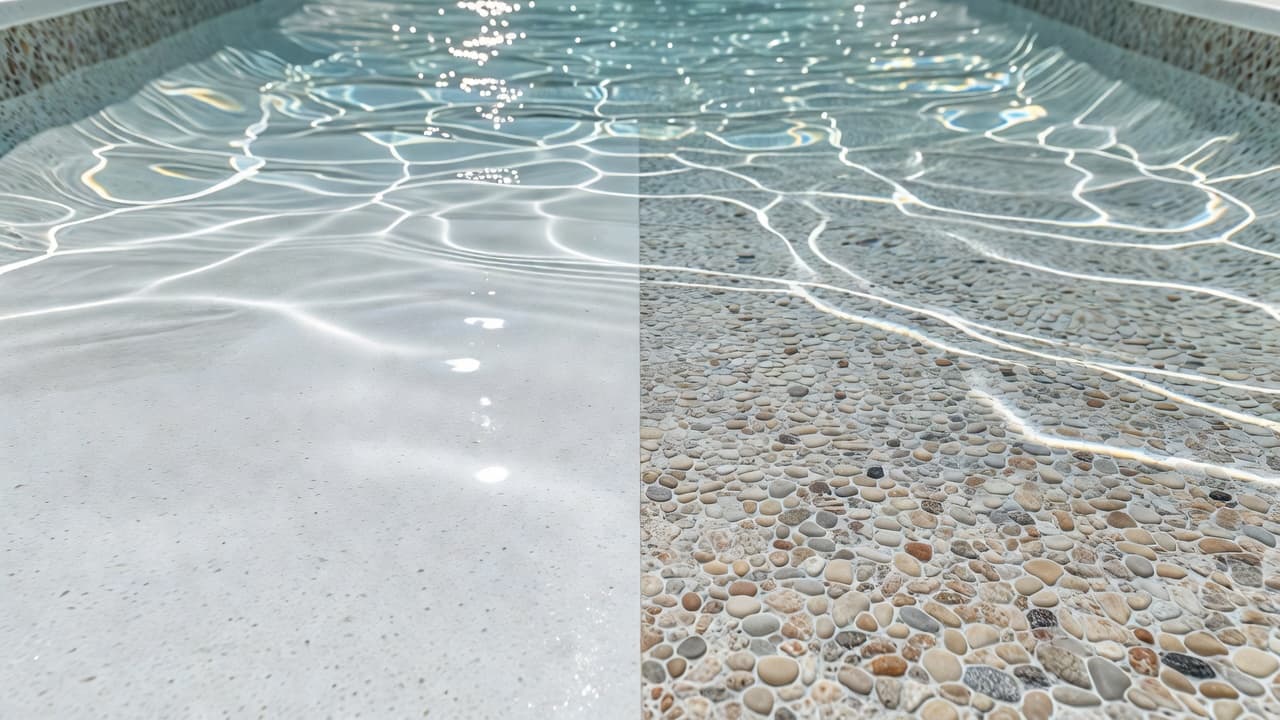
Quartz often suits homeowners who want a clean, consistent surface. Pebble appeals to those who prefer a natural lagoon appearance, especially when the pool includes rock features, waterfalls, or tropical landscaping.
The surface isn't the only factor that affects comfort. Aggregate size, installation technique, water balance, and normal wear all influence how the finish feels when you walk across a sun shelf or sit on a submerged bench.
Before choosing a color, view physical samples in outdoor light. Water depth, sunlight, screen enclosures, tile, coping, and surrounding pavers can make the same finish look different from a showroom sample.
Pebble vs Quartz: A Practical Comparison
This side-by-side comparison shows how the two materials typically differ in a residential pool project.
| Factor | Quartz finish | Pebble finish |
|---|---|---|
| Appearance | Consistent, refined, and bright | Natural, varied, and stone-like |
| Surface feel | Generally smoother | More textured, depending on aggregate |
| Design range | Broad color blends | Broad natural and custom color blends |
| Typical cost | Often more budget-friendly | Usually carries a higher material and labor cost |
| Style match | Modern, clean, classic pools | Resort, natural, tropical, and feature-rich pools |
| Maintenance | Requires balanced water chemistry | Requires balanced water chemistry |
| Best use | Smooth visual finish and everyday comfort | Natural character and a more rugged surface |
Quartz is often the practical choice when you want a polished appearance without the added cost of a larger aggregate finish. It can work well in a simple rectangular pool, a family pool with a sun shelf, or a renovation where the existing tile and deck already have strong visual detail.
Pebble may justify its higher price when the pool design centers on natural stone, a waterfall, grotto, raised spa, or lush planting. The finish can tie those features together more naturally than a uniform quartz surface.
These are general comparisons, not guarantees. Product formulas vary by manufacturer, and the final result depends on surface preparation, application, water chemistry, and care.
How Southwest Florida Conditions Affect Pool Finishes
Southwest Florida pools face conditions that make water management especially important. Hot weather supports a long swimming season, while evaporation concentrates minerals in the water. Heavy rain can dilute chemicals and add organic debris. Homes in Cape Coral, Fort Myers, Naples, and surrounding areas may also have different source water and filtration setups.
Hard water or high calcium levels can contribute to cloudy water and calcium deposits. When the water becomes unbalanced, deposits may collect along the waterline or on rougher areas of the finish. Low calcium or aggressive water can also affect cement-based surfaces over time.
Pool owners should monitor pH, total alkalinity, calcium hardness, and sanitizer levels according to the finish manufacturer's recommendations. Salt chlorine systems still require regular testing. Salt does not replace water balance, and automatic equipment cannot correct every chemistry problem.
Rain and evaporation can make chemical readings change quickly. A screened enclosure reduces some debris, but it doesn't prevent heat, evaporation, or rainwater from affecting the pool. Regular testing helps you spot changes before they become visible surface problems.
A high-quality finish can still develop stains, scale, or surface damage when water chemistry stays out of range.
Quartz and pebble both contain cementitious material, so neither finish is maintenance-free. Pebble's texture can make some deposits more noticeable or harder to remove from individual stones. Quartz may show discoloration clearly because of its more uniform surface. In both cases, aggressive brushing, improper acid treatment, or harsh cleaning can create additional problems.
Ask your pool professional how the recommended finish responds to your water source, salt system, automation equipment, and planned maintenance routine. Local knowledge helps, but the manufacturer's care instructions should guide the final plan.
When Quartz May Be the Better Choice
Quartz can be a strong fit for homeowners who want comfort and a clean visual style. Its smaller aggregate usually creates a finer surface, which many families prefer when children spend time on the steps, tanning ledge, or shallow end.
The material also works well when the finish needs to complement modern tile, geometric coping, or a simple deck. A light quartz blend can make the pool appear bright and open. Medium blue and gray blends can create more visual depth without the stronger stone pattern of pebble.
Budget is another consideration. Quartz commonly costs less than pebble, although the final price depends on pool size, demolition, access, repairs, finish color, and other renovation work. A quartz finish may leave room in the project budget for a new sun shelf, waterline tile, lighting, or deck improvements.
Quartz makes sense when the homeowner values:
- A smoother feel for frequent family use
- A consistent color pattern
- A refined appearance without a heavy natural-stone look
- A lower typical finish cost
- Easy coordination with existing tile and coping
The finish still needs professional installation. Uneven application, poor surface preparation, or inconsistent exposure can affect the color and texture. Ask to see completed projects rather than relying only on a small sample.
When Pebble May Be the Better Choice
Pebble is often the better match for a pool designed around natural materials. Its variation can complement stone coping, rock waterfalls, fire features, tropical landscaping, and freeform pool shapes.
A pebble interior can also give the water a richer, more natural appearance. Darker blends may create a deeper visual tone, while lighter blends can keep the pool bright. The final water color depends on more than the finish, including water depth, sunlight, tile, and the surrounding environment.
Many homeowners choose pebble for its surface character and strong wear performance. However, comfort varies by product. Standard pebble can feel rougher on bare feet, especially on steps and benches. Mini-pebble or polished options may offer a more comfortable compromise.
Pebble may fit your project when you want:
- A natural pool interior with visible stone variation
- A finish that supports waterfalls or rock features
- A distinctive appearance that becomes part of the design
- A choice of aggregate sizes and color blends
- A surface with more texture than standard quartz
The higher price may reflect the material, application process, and labor involved. Review the exact product, aggregate size, texture, color, warranty terms, and maintenance requirements before approving the proposal.
For homeowners planning a full renovation, explore professional pool renovation services to compare finish work with related upgrades such as tile, coping, decks, water features, and equipment improvements.
Installation and Water Chemistry Matter as Much as Material
A finish can only perform as well as the surface beneath it and the process used to install it. During resurfacing, the contractor may need to remove the existing finish, inspect the shell, repair damaged areas, prepare the surface, and apply the new material evenly.
The crew must also expose the aggregate correctly. Overexposure can change the intended texture and color. Underexposure can leave the surface looking inconsistent. Poor preparation may cause bonding or appearance problems that have nothing to do with whether you selected pebble or quartz.
Ask the contractor these questions before work begins:
- What exact finish product and color blend are included?
- How will the existing surface be prepared?
- Are shell repairs, tile work, or coping repairs included in the estimate?
- What startup procedure should I follow after filling the pool?
- Who will test the water during the initial curing period?
- What care instructions and warranty documents will I receive?
The initial startup period deserves close attention. New finishes need the right water balance, circulation, brushing, and testing schedule while they cure. Follow the contractor's and manufacturer's instructions rather than adding chemicals based on guesswork.
After startup, keep a consistent testing routine. Record readings, clean the filter as needed, maintain circulation, and address scaling or staining early. Professional installation and proper chemistry materially affect both pebble and quartz performance, so selecting the material is only one part of the decision.
You can also view completed pool renovation projects to compare finish colors, surrounding materials, and feature combinations in real Southwest Florida settings.
Conclusion
The better choice in the pebble vs quartz pool finishes comparison depends on how you use the pool and the look you want around it. Quartz offers a smoother, more uniform surface with a lower typical cost, while pebble provides natural variation, texture, and strong design presence.
Southwest Florida's heat, rain, evaporation, and mineral levels make water care important for either option. Choose the finish that fits your comfort and design goals, then protect that investment with skilled installation and consistent chemistry.