
Why a Pool Pump Loses Prime Overnight
When a pool pump loses prime overnight, air may be entering the suction plumbing, the water level may be too low, or a valve or seal may need attention. The pump needs water in its housing and a clear path from the pool to start moving water reliably.
The cause isn't always visible as a puddle. A small opening near the pump can admit air, while a low pool level can allow the skimmer to draw it in.
Start with the water level and accessible equipment before considering a larger plumbing repair.
What it means when a pool pump loses prime
A primed pump has the water it needs in its housing to establish suction and move water through the circulation system. Water enters through suction lines, passes through the pump and filter, and returns to the pool.
When the pump loses prime, you may see a low water level in the pump basket, air bubbles under the lid, or weak flow at the return fittings. The pump may sound different as well. These observations help narrow the problem, but none identifies a particular failed part on its own.
A small amount of air during startup can clear as circulation begins. Persistent air or a pump that repeatedly struggles to establish flow deserves attention. Don't let the pump run dry , and don't keep restarting it when it won't prime.
Your normal filter pressure is useful here. Record the reading once the system is operating properly so you have a reference if circulation changes later. Our guide to gunite pool plumbing basics explains how the pump, suction lines, and returns fit together.
Check the pool's water level and skimmer
Low water is one of the first conditions to rule out because it's visible and can affect skimmer flow.
Look at the waterline
The water must be high enough for the skimmer to draw water rather than air. The correct level depends on the skimmer and pool design, so use the level identified for your system.
If the water sits too low, restore it to the intended level before attempting circulation. Keep the fill hose above the pool water rather than leaving it submerged. If the level repeatedly falls below the operating range, adding water addresses the immediate shortage but doesn't explain the repeated loss.
Inspect the skimmer basket
Leaves and other debris can restrict water reaching the pump. With the equipment off, remove debris from the skimmer basket and make sure the basket sits correctly when you replace it.
If your pool has an automatic fill system, watch whether it maintains the intended level. A stuck float, sensor problem, or supply issue may require attention. Our guide to pool autofill maintenance covers the components homeowners can observe.
Look for suction-side air leaks
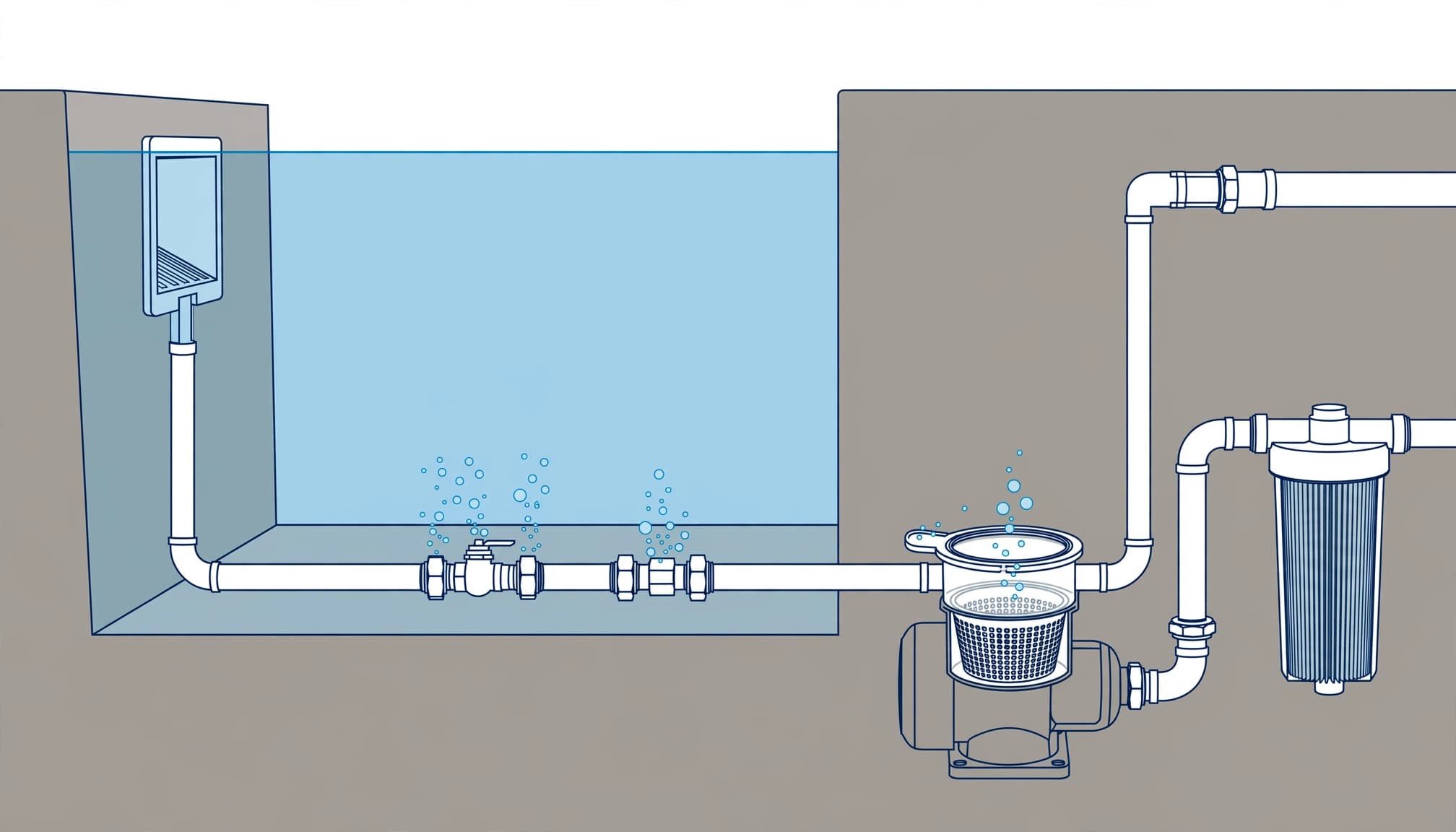
The suction side carries water from the pool to the pump. A loose connection or damaged seal along that path can admit air, even when you don't see water leaking from it.
Start at the pump lid and O-ring
The clear lid above the pump basket needs a clean, properly seated seal. Dirt on the sealing surface, a twisted O-ring, or a cracked lid can prevent a good seal.
With the pump off and the system safely depressurized, inspect the lid and gasket if you're familiar with opening the housing. Remove debris from the sealing surfaces and look for wear. Use only a lubricant suitable for the seal and approved for the equipment. A damaged gasket or lid needs the correct replacement part.
The lid should sit evenly and close according to the pump manufacturer's instructions. Avoid overtightening it or using tools that could damage the housing.
Examine visible fittings and valves
Look at accessible unions, valve bodies, and pipe connections between the pool and pump. Cracks, damaged threads, or a connection that doesn't sit evenly are useful clues to report.
Air bubbles in the pump basket can support a suspicion of air entering the suction path. They don't prove which fitting is responsible. A technician can inspect the accessible parts and test the plumbing when the source isn't apparent.
Consider a dirty or faulty check valve
Some pools have check valves that allow flow in one direction. Whether your pool has one, and what it does, depends on the plumbing layout.
Debris can interfere with a valve's movement, while a worn or damaged internal component may prevent it from closing correctly. A valve problem can complicate priming in some systems, particularly when other circulation symptoms are present.
Look for visible cracks or debris if the valve has a clear housing. Don't take a valve apart while the system is running or under pressure. A pool professional can inspect and clean or replace the internal parts when needed.
A check valve isn't a substitute for a sound pump lid or sealed suction plumbing. If the pump loses prime, consider the valve alongside the water level and other possible air-entry points rather than replacing it on assumption.
Troubleshoot in a practical order
Work through the accessible clues before opening equipment or disturbing plumbing. Keep the pump off while inspecting baskets, lids, and valve settings.
Start with visible conditions
- Look at the pool water level and bring it to the intended operating level if it's low.
- Clear debris from the skimmer basket and, if you're comfortable opening it safely, the pump basket.
- Inspect the pump lid, its O-ring, and the sealing surfaces for dirt or damage.
- Look at accessible suction fittings and valves for cracks, loose connections, or obvious damage.
- Note the valve positions so the system can return to its normal circulation setting.
Don't place a hand over an active suction opening or remove a drain cover to test flow. Those fittings are part of the pool's safety system.
Record what happens during operation
Once the pump is operating under its normal settings, observe whether the basket fills, water moves from the returns, and air persists under the lid. Compare the filter pressure with the normal reading you recorded.
A pressure change is a clue, not a diagnosis. A dirty filter, restricted flow, or another equipment issue can affect the reading. Record the water level, pressure, and timing of the problem so a technician has useful information if the pump loses prime again.
How to reprime a pool pump
Repriming requires the correct pool water level, water in the pump basket, a sealed lid, and valves in their intended operating positions. The exact procedure depends on the equipment and plumbing layout.
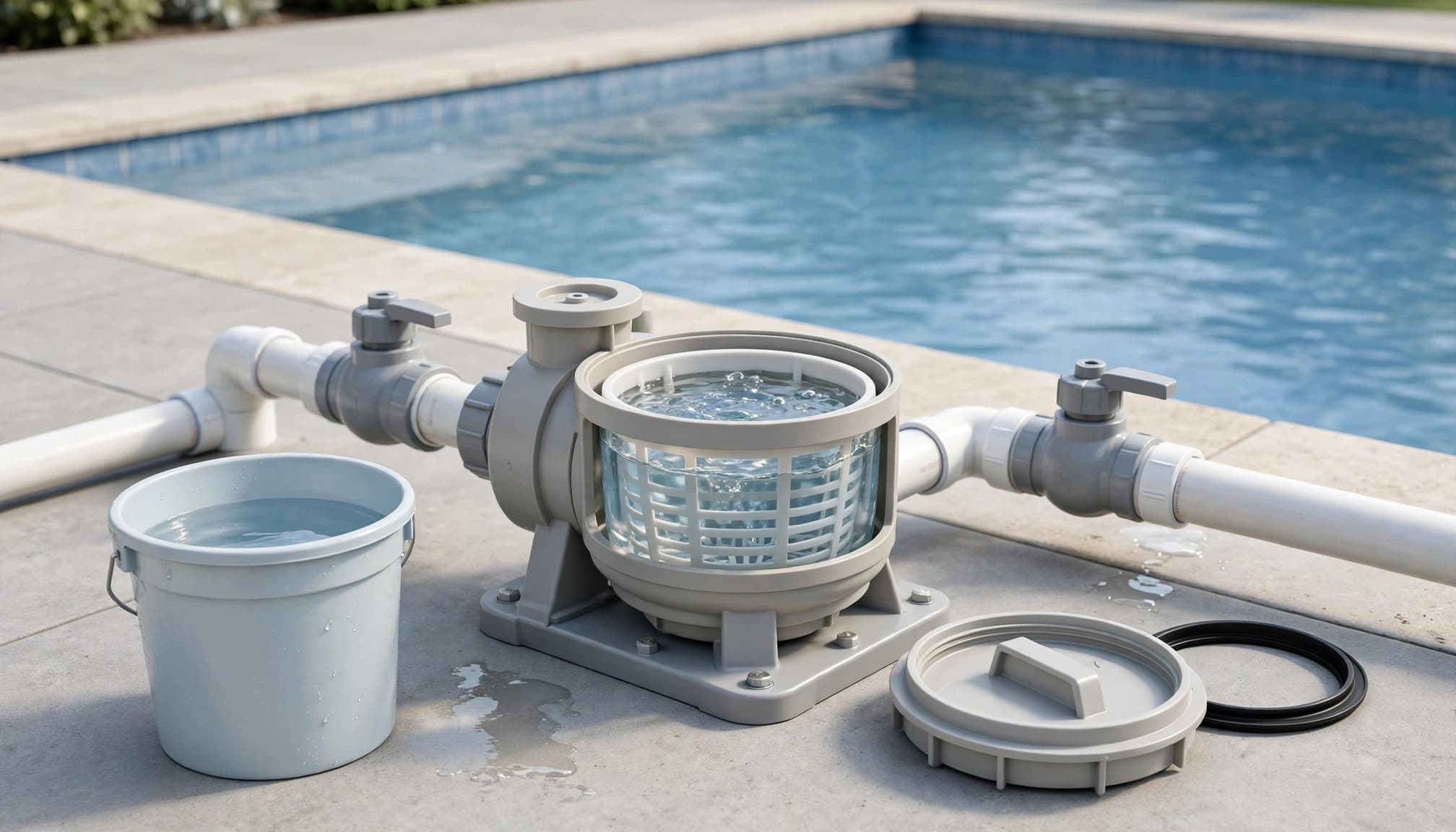
Follow the pump's instructions for preparing the basket and restarting circulation. Keep the equipment off and relieve system pressure before opening the pump housing. Never open the filter or remove the pump lid while the system is running.
After startup, the basket should fill and the returns should move water. If the pump won't establish flow or continues to draw air, shut it down and call a pool professional rather than repeating dry-start attempts.
For a new pool, the builder or startup technician should handle the initial circulation setup. Our Cape Coral pool startup guide describes the checks made as a new system begins operating.
Know when to call for help
Some problems are easy to see but difficult to diagnose without testing. Others involve pressurized equipment or plumbing that shouldn't be opened without the right training.
Persistent air or an unclear source
Call a pool professional if the pump repeatedly loses prime after you've addressed the water level and visible debris. Also report a sharp change in filter pressure, weak return flow, an equipment leak, or air that continues entering the system.
Share photos and your notes about when the issue occurs. A technician may use visual inspection, pressure testing, dye testing, or other detection methods, depending on the suspected source. Those observations help focus the inspection; they don't confirm a hidden leak by themselves.
A newly built or renovated pool
Contact your builder promptly if the pump won't prime during startup. New finishes and equipment often come with an operating schedule, so an extended interruption in circulation deserves attention.
Don't drain a new pool to investigate a suspected issue. Groundwater conditions in Southwest Florida can make draining risky, and the builder needs to assess the site and finish first.
Plan for easier equipment care
If you're building or renovating a pool, discuss circulation and service access before the equipment is installed. The pump, filter, valves, and plumbing should work together for the pool's size and intended features.
Leave room to inspect the equipment
A well-placed pump needs enough space for someone to reach the lid, remove the basket, and inspect nearby connections. Valves should be accessible and easy to identify. Clear access also helps a technician find a problem without moving landscaping or dismantling surrounding features.
Our guide to pool equipment pad planning covers space for servicing the equipment and operating the valves.
Include startup and handoff
Before a new project is complete, learn the normal valve positions, filter pressure, and appearance of return flow. Keep the equipment instructions and service contacts together.
For a pool and spa combination, ask how the controls change the circulation path in each mode. Knowing the normal settings makes an unexpected change easier to describe when you request service.
Protect the pump and find the cause
When a pool pump loses prime overnight, begin with the water level, baskets, lid seal, and visible suction connections. A check valve may also deserve inspection, depending on the system.
Keep the pump off if it won't establish flow. A careful diagnosis can prevent repeated dry starts and help identify the repair your pool needs.