Pool Equipment Pad Location: Where It Should Go
Finding the right pool equipment pad location can make maintenance easier, reduce plumbing complications, and keep unwanted noise from your pool pump and filter away from your living spaces. Modern setups featuring a variable speed pump also benefit from careful placement. The wrong spot can create poor drainage, difficult repairs, long pipe runs, or safety concerns.
Your pool equipment pad needs more than an unused corner of the yard. Planning a smart equipment pad layout helps ensure a solid base, good access, proper clearances, and enough separation from the pool and home, while leaving room for future noise reduction strategies. Start with these practical factors before construction begins.
Key Takeaways
- Place your pool equipment pad close enough to the pool to keep plumbing runs efficient, but far enough away to ensure proper maintenance access within your chosen equipment pad layout.
- Choose a well-drained area with a stable concrete slab for protection against standing water by planning for proper drainage and runoff.
- Keep filters and a quiet variable speed pump away from bedroom windows, patios, and outdoor entertaining areas while maintaining ease of access for daily checks.
- Heaters, gas lines, electrical requirements, and a saltwater system or salt chlorine generator require additional planning to keep everything functioning safely.
- Confirm local building codes and proper equipment clearance with a qualified pool professional before finalizing your installation.
Choosing the Right Pool Equipment Pad Location
Most pool equipment pads work best near the water, but "nearby" doesn't mean directly beside the pool. A shorter distance can reduce plumbing friction loss in suction and return lines while following pool plumbing best practices. However, the pad still needs enough separation to meet electrical safety rules and provide comfortable working space.
Many homeowners place the equipment along a side yard, behind the pool, or near the rear property corner. A thoughtful equipment pad layout leaves clear space for a variable speed pump, pool pump and filter, and pool automation controller while ensuring great maintenance access for technicians.
Your builder should review the complete site plan before choosing a final pool equipment pad location. Proper pipe sizing and water velocity considerations help account for the pool shell, deck, screen enclosure, property lines, easements, drainage paths, and utility routes. A location that looks empty during the design stage may become difficult to access after the deck and landscaping are installed.
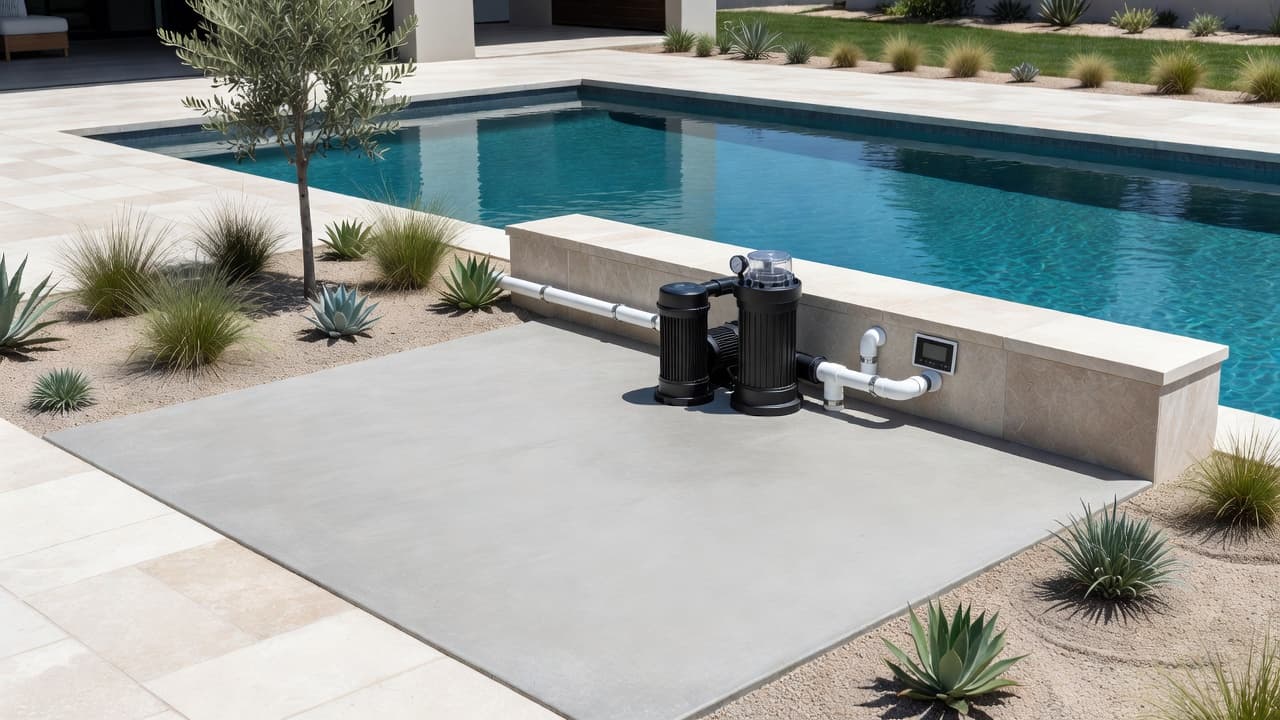
The poured concrete slab shouldn't sit in a low area where rainwater collects. In Southwest Florida, heavy rainfall can quickly expose drainage and runoff problems. Elevation, grading, and water flow routes deserve attention before any equipment pad is installed.
A professional pool builder can coordinate this decision with the rest of the project to guarantee ease of access. San Juan Custom Pools & Spas outlines its pool construction process, including plumbing, equipment installation, and electrical work, because your pool equipment pad affects several construction stages.
How Far Should Pool Equipment Be From the Pool?
There isn't one distance that fits every backyard. The correct spacing depends on local building codes, the equipment package, the pool design, and the manufacturer's installation instructions when deciding on the best pool equipment pad location.
The circulation equipment should stay close enough to the pool for practical plumbing, but the pad must not interfere with swimmers, walkways, or deck use. Keeping suction and return lines short helps minimize plumbing friction loss, but proper pipe sizing is still essential to maintain safe water velocity. Keep the setup outside areas where people may trip over pipes, valves, or electrical conduits. If the pad sits beside a walkway, your equipment pad layout should leave a clear passage and protect exposed plumbing from accidental damage.
Electrical equipment requires careful separation from the pool and spa. Pool bonding, grounding, disconnects, receptacles, and other components must follow applicable electrical requirements, including safe distances from an electrical subpanel. These rules can vary by jurisdiction and by the equipment installed, so homeowners shouldn't select a distance based on a general internet recommendation.
A heater may require more space than a pool pump and filter. Gas heaters need correct fuel line planning, combustion air, pool heater exhaust management, and adequate gas heater clearance. Electric heat pumps also need open heat pump airflow around the unit. Blocking the heat pump airflow with a wall, fence, hedge, or screen can reduce performance and cause operating problems.
The manufacturer instructions control many of the details for your variable speed pump and other devices. Hayward, Pentair, Jandy, and other manufacturers publish installation requirements that dictate the necessary equipment clearance. Your pool professional should review those documents during the equipment pad layout and confirm that the planned pool equipment pad meets each requirement while following pool plumbing best practices.
A pool equipment pad can be close to the pool and still be poorly placed if a technician can't remove the filter lid, reach the valves, or service the heater.
Plan for Noise, Access, and Appearance
Pool equipment produces sound, especially when the system runs at higher speeds. While a variable speed pump often runs more quietly at lower speeds, the setup can still disturb nearby rooms if the pool equipment pad sits beneath a bedroom window or beside a patio. Implementing smart noise reduction strategies early on makes a significant difference for backyard comfort.
When possible, position your equipment pad layout away from bedrooms, home offices, outdoor kitchens, and seating areas. A side yard may work better than the wall next to the primary bedroom. If the system must sit near the house, ask your builder about sound-conscious equipment selection and a properly designed screen or equipment enclosure. Using a specialized sound wall or custom equipment enclosure can further absorb operational sounds.
Avoid placing the pad where fences, dense shrubs, or decorative walls block ventilation and service access. Landscaping can conceal the equipment, but plants need space to grow without covering vents or restricting airflow. Leave enough room for a technician to stand beside the system and use the equipment enclosure without obstruction, ensuring proper ease of access during routine visits.
Maintenance access matters throughout the life of the pool. Filters need cleaning, your pool pump and filter may require replacement, heaters need inspection, and valves or plumbing connections can eventually need repair. A well-designed equipment pad layout should allow components to be reached without removing sections of deck or climbing through tight landscaping.
A neat equipment pad layout also improves the appearance of the backyard while protecting the system. Pipes should follow a logical route, valves should remain visible, and the unit should sit squarely on a level surface. Prioritizing ease of access and maintenance access ensures you can reach the system without relying on temporary ladders or moving furniture.
Build the Pad to Handle Water and Weather
A pool equipment pad needs a firm, level foundation. Most installations use a concrete slab sized for the selected equipment, with enough extra area for service work and future replacement. The exact dimensions should come from the equipment pad layout, not from a standard pad size, so you can easily install items like a variable speed pump without crowding the space.
The concrete slab should remain stable when the ground becomes wet. Soft soil, poor compaction, or water flowing beneath the pad can lead to settlement. That movement can place stress on plumbing joints and equipment connections, making strict adherence to pool plumbing best practices vital.
Drainage is just as important as stability. Water shouldn't sit around the pump motor, electrical components, or heater base after a storm. Proper drainage and runoff keep the area safe, and the surrounding grade should direct water away from the equipment while avoiding discharge toward the home, foundation, or neighboring property.
In coastal areas, salt air and outdoor exposure can affect metal components over time. A covered location or a well ventilated equipment enclosure may offer some protection, but any structure must respect the manufacturer equipment clearance, gas heater clearance, and heat pump airflow rules. You also need to plan for freeze protection in colder seasons, ensuring the pool heater exhaust and electrical requirements are never compromised by tight walls or low roofs.
Southwest Florida homeowners should also ask how the concrete slab fits the property's broader stormwater and elevation plan. Local building codes may affect equipment placement, anchoring, electrical work, or flood related construction details. A qualified pool contractor can coordinate those questions with the appropriate trades and permitting process.
The pool equipment pad itself should remain accessible after the screen enclosure, pavers, planting beds, and outdoor features are complete. A beautiful design loses value if you sacrifice ease of access and maintenance access, leaving the filter buried behind mature shrubs or blocking the equipment pad layout entirely.
Consider Every Piece of Pool Equipment
The standard pool pump and filter are only part of the layout. A complete pool system may include a gas heater or heat pump, a salt chlorine generator, a chemical feeder, a pool automation controller, a booster pump, valves, flow meters, and water treatment equipment.
Each component affects the final equipment pad layout. For example, a salt chlorine generator may need room in the return plumbing, while a pool automation controller requires a suitable electrical location. A booster pump for a cleaner needs access to the plumbing and power supply, and water features often require dedicated lines or additional valves.
The plumbing arrangement should also support easy operation. Valves need clear labels and enough room to turn by hand, while check valves and unions help with future equipment removal. Proper pipe sizing and careful management of water velocity will minimize plumbing friction loss across your suction and return lines.
If you plan to add a heater, water feature, or auxiliary salt chlorine generator later, discuss those possibilities before the pool equipment pad is installed. Future additions may require extra space, electrical capacity, gas planning, or freeze protection provisions. Planning your equipment pad layout ahead of time is often easier than breaking concrete or relocating plumbing later.
Homeowners sometimes ask whether the pad can go inside a garage, shed, or storage room. That decision requires careful review because ventilation, combustion gases, moisture, drainage, proximity to an electrical subpanel, and manufacturer instructions all apply. Most residential pool equipment belongs in a properly planned outdoor location unless the equipment and structure meet the required installation standards.
Practical Pool Equipment Pad Placement Checklist
Review these points with your pool designer, builder, electrician, and gas professional before approving the layout:
- Confirm the pad sits on stable, compacted ground with a properly sized concrete slab.
- Check that rainwater and irrigation drainage and runoff move away from the pad.
- Measure service space around the pool pump and filter, variable speed pump, salt chlorine generator, and pool automation controller.
- Verify every equipment clearance against the current manufacturer instructions and building codes.
- Confirm required separation from the pool, spa, home, property lines, doors, and windows, while double-checking local electrical requirements.
- Keep gas heater clearance, pool heater exhaust, and heat pump airflow open and free from walls, plants, and stored items.
- Plan electrical conduits, disconnects, bonding, grounding, an electrical subpanel, and receptacles with a qualified electrician.
- Review gas-line routing, check valves and unions, and pool plumbing best practices with a licensed gas professional when applicable.
- Keep the equipment away from bedroom windows and primary outdoor seating areas when possible.
- Make sure technicians can reach the pad for maintenance access after decking, screens, fences, and landscaping are complete.
- Leave room for equipment replacement inside your equipment enclosure without removing permanent structures.
- Ask how the installation addresses local building codes, drainage, permitting, flood, and storm requirements.
- Decide how landscaping, an equipment enclosure, or screening will hide the system without restricting airflow or freeze protection.
- Photograph or document underground utilities, pipe sizing, suction and return lines, check valves and unions, and freeze protection routes before backfilling.
Local code requirements can differ between municipalities, and equipment packages don't all use the same clearances. Treat this checklist as a planning tool, then have a qualified pool professional confirm the final design before construction.
Frequently Asked Questions
How far should the pool equipment pad be from the pool?
The pad should be close enough to the pool to keep plumbing runs efficient and minimize friction loss, but far enough away to ensure proper electrical safety and easy maintenance access. A professional can help determine the ideal distance based on your specific layout and local building codes.
Can I place my pool equipment pad inside a shed or garage?
Most pool equipment requires a dedicated outdoor location with proper ventilation, drainage, and easy access for servicing. Placing equipment indoors often creates moisture issues, restricted airflow, and safety concerns related to combustion gases or electrical components.
How can I reduce the noise from my pool pump and filter?
You can reduce noise by positioning the equipment pad away from bedroom windows, patios, and outdoor seating areas. Additionally, choosing a variable speed pump, ensuring a stable concrete slab, and using a specialized sound wall or custom enclosure can significantly dampen operating sounds.
Conclusion
The best pool equipment pad location balances plumbing efficiency, safety, drainage, ease of access, noise control, and appearance. A pad close to the pool may shorten pipe runs, but it still needs proper separation and enough room for every component on your pool equipment pad.
Choose the location before the deck, landscaping, screen enclosure, and utilities are finalized. When the site plan accounts for local building codes and manufacturer clearances, as well as a sturdy concrete slab, your equipment stays easier to maintain and less disruptive to the backyard. The right pad location is a small design decision that supports reliable pool operation for years.