Pool Autofill Systems for Cape Coral Gunite Pools
Southwest Florida heat can pull a surprising amount of water from a pool, especially when the surface is moving through a spillway, bubbler, or sun shelf. A low water line can leave skimmers gulping air and make a beautiful gunite pool feel harder to manage.
For Cape Coral gunite pool designs, pool autofill systems help keep the water at a chosen operating level between regular visits and daily use. They don't stop evaporation, fix leaks, or replace water testing, but they do remove one recurring task from pool care.
A well-planned auto-fill feature starts with the pool's shape, equipment layout, water source, and stormwater plan.
Why Cape Coral Pools Need a Steady Water Line
Cape Coral pools face long stretches of bright sun, warm air, and frequent wind. During dry weather, evaporation can lower the water line faster than many homeowners expect. A pool with a raised spa, waterfall, deck jets, or bubblers may lose water more quickly because moving water exposes more surface area.
When the level falls too low, the skimmer can pull in air instead of water. That puts extra strain on circulation and can disrupt the flow through heaters, salt cells, and water features. Keeping the level near the intended skimmer range supports normal equipment operation.
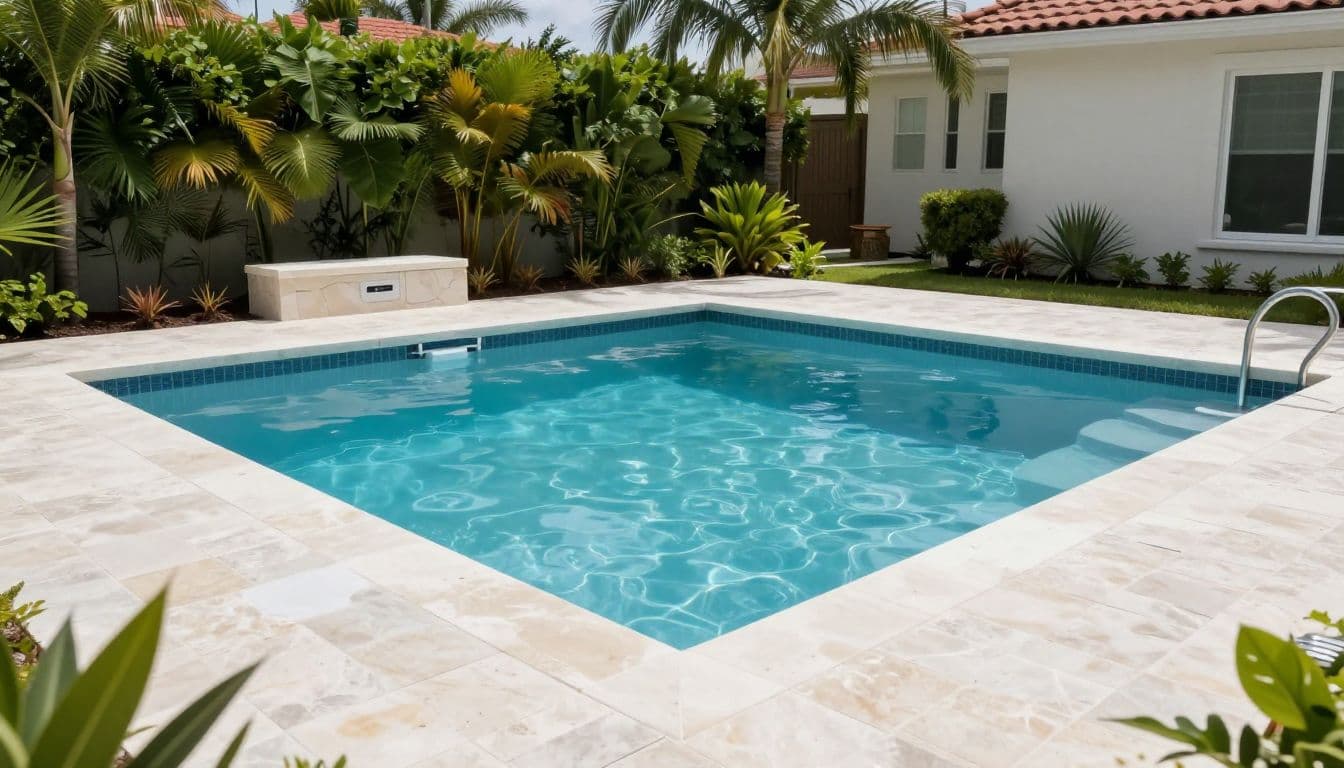
A gunite pool gives homeowners freedom with shape, depth, sun shelves, and raised features. However, those details also affect where water moves and splashes. An autofill system works best when the builder accounts for those details before the deck and finish go in.
Rain creates the opposite concern. Florida summer storms can raise the pool water level quickly, so an autofill should always be paired with a sensible overflow plan.
How Pool Autofill Systems Maintain Water Levels
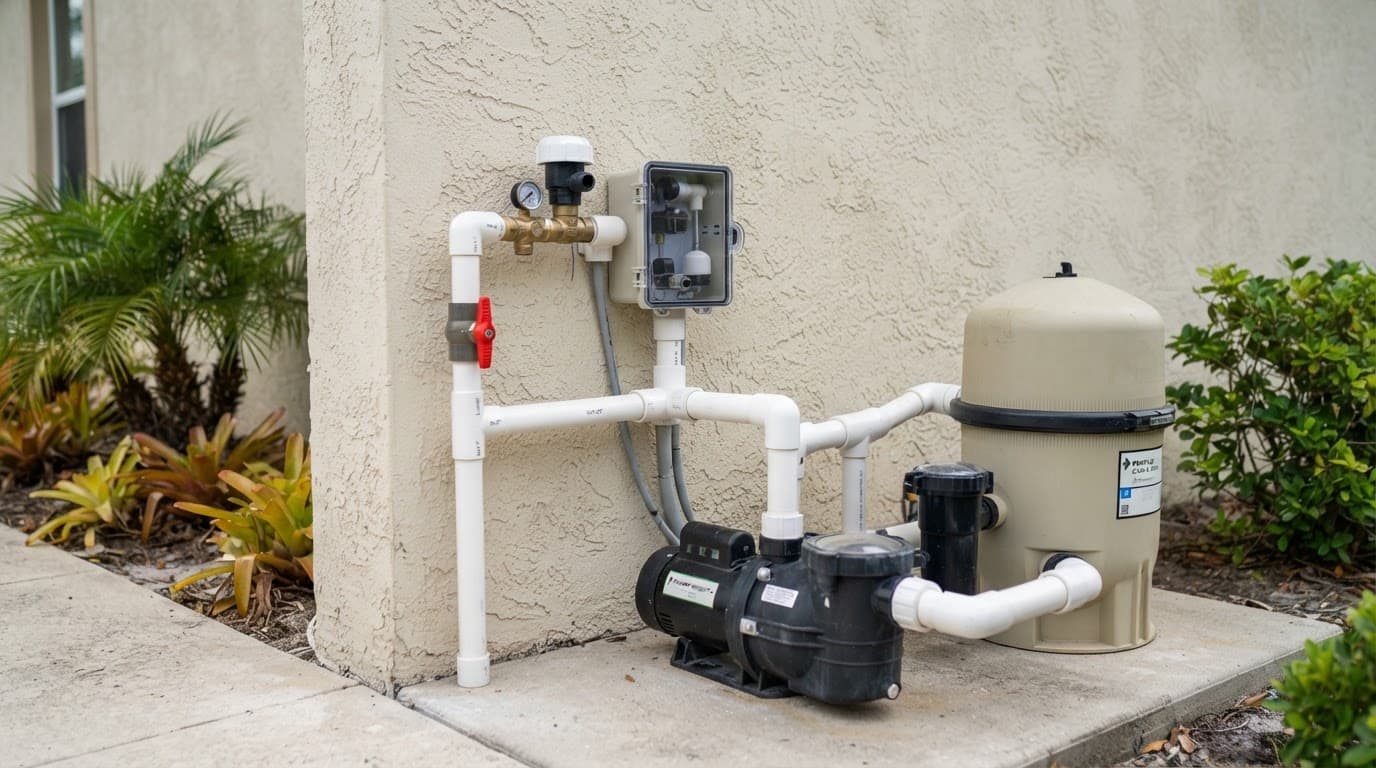
Most pool autofill systems monitor the water line and add fresh water when it drops below a preset point. The basic parts are simple: a level sensor or float, a water-supply line, a valve, and a shutoff point that allows service when needed.
The system adds only enough water to return the pool to its normal level. It doesn't run the circulation pump, balance chemicals, or remove excess rainwater.
Mechanical float assemblies
A mechanical system usually places a float inside a small canister near the pool edge. As the water level drops, the float lowers and opens a valve. When the water reaches the selected level, the valve closes.
Mechanical floats don't rely on electronic controls, which appeals to homeowners who prefer a straightforward setup. Still, leaves, insects, calcium buildup, or worn components can affect movement over time. The canister needs an accessible lid and occasional cleaning.
Electronic sensors and solenoid valves
Electronic systems use a sensor to detect the water level and a solenoid valve to admit water. Depending on the design, the sensor may sit near the pool edge or tie into a dedicated controller.
These systems can be placed with more flexibility, although they need protected wiring, a reliable power source, and service access. Ask where the controller, sensor, and shutoff valve will sit before construction begins.
Plan the Autofill During Gunite Pool Construction
The cleanest time to add an auto-fill feature is before the deck is poured and the surrounding yard is finished. During the custom pool construction process, the builder can coordinate the water line, sensor location, overflow route, and equipment-pad access as one installation.
That early coordination keeps pipes out of sight and avoids cutting new concrete later.
Choose a location that matches the pool design
A float canister or sensor should sit where it can read the true pool level without constant splash from a spa spillway, waterfall, or deck jet. It also needs to remain reachable after furniture, planters, and landscaping are in place.
Freeform pools often provide a quiet wall section for the device. In geometric pools, the equipment may fit neatly near a step, bench, or shallow-end wall. The selected location should blend with the design without trapping debris.
The target water level usually sits around the middle of the skimmer opening, although the exact point depends on the pool's layout and equipment.
Retrofitting an existing gunite pool
An existing pool can often receive an autofill system, but the work needs more investigation. The installer may need to locate buried plumbing, check the deck structure, and identify a route for a new water line.
Sometimes a contractor can use an adjacent planting bed or equipment area to reduce deck work. Other projects need a carefully placed deck cut and repair. A clear plan helps preserve the pool's finish, coping, and drainage pattern.
Access matters after the installation, too. A hidden valve that can't be reached is difficult to inspect when a repair is needed.
Overflow Management Matters During Florida Storms
An autofill system handles low water. An overflow system directs high water away when rainfall raises the pool above its normal line. These two functions work together, but they are separate parts of the design.
Cape Coral's hurricane season runs from June 1 through November 30, and heavy rain can arrive long before a named storm. A properly planned overflow route helps move excess water away without sending it toward the home, equipment pad, or adjacent property.
Prepare for rain without overcorrecting
Rainwater can dilute chlorine, salt concentration, and other chemical readings. After a strong storm, check the pool level, skim debris, inspect the overflow area, and test the water before making large chemical adjustments.
Don't lower a pool substantially without professional guidance, especially when groundwater may be high. The pool structure, finish, and surrounding soil all need consideration.
An autofill valve holds a target water level. It cannot tell you why water left the pool or where excess stormwater should go.
Deck drainage also deserves attention. The pool overflow and deck drains should have clear, serviceable paths so leaves and yard debris don't create standing water near the pool.
Saltwater Pools Still Need Water and Chemistry Checks
A saltwater pool uses a salt chlorine generator to produce chlorine, but it still needs routine testing. Pool autofill systems add water only. They don't measure free chlorine, pH, total alkalinity, calcium hardness, stabilizer, or salt concentration.
When evaporation is the only source of water loss, salt stays in the pool. Fresh water restores the missing volume, so the salt concentration usually returns close to its prior level. However, overflow, splash-out, vacuum waste, and intentional draining carry salt water out of the pool.
Watch dilution after overflow or water replacement
After a pool loses water through an overflow, fresh autofill water can lower the salt concentration. Test the salt level before adding more salt, then follow the salt-cell manufacturer's recommended range.
Cape Coral water can also add dissolved minerals to the pool over time. Because repeated fill cycles bring in fresh source water, regular testing helps you catch changes before scale forms on a salt cell, heater, tile line, or water-feature fittings.
An autofill system makes level management easier, but it doesn't reduce the need for a dependable cleaning and chemistry routine.
Backflow Protection, Access, and Sensor Reliability
A pool autofill connects to the home's water supply, so the plumbing must protect drinking water from backflow. The right device and layout depend on the selected equipment and property conditions. A qualified installer can plan an accessible shutoff, the appropriate backflow protection, and a protected water connection.
Never leave a garden hose submerged in pool water as a temporary fill method. A permanent connection needs more thought than a hose stretched across the deck.
Build in room for service
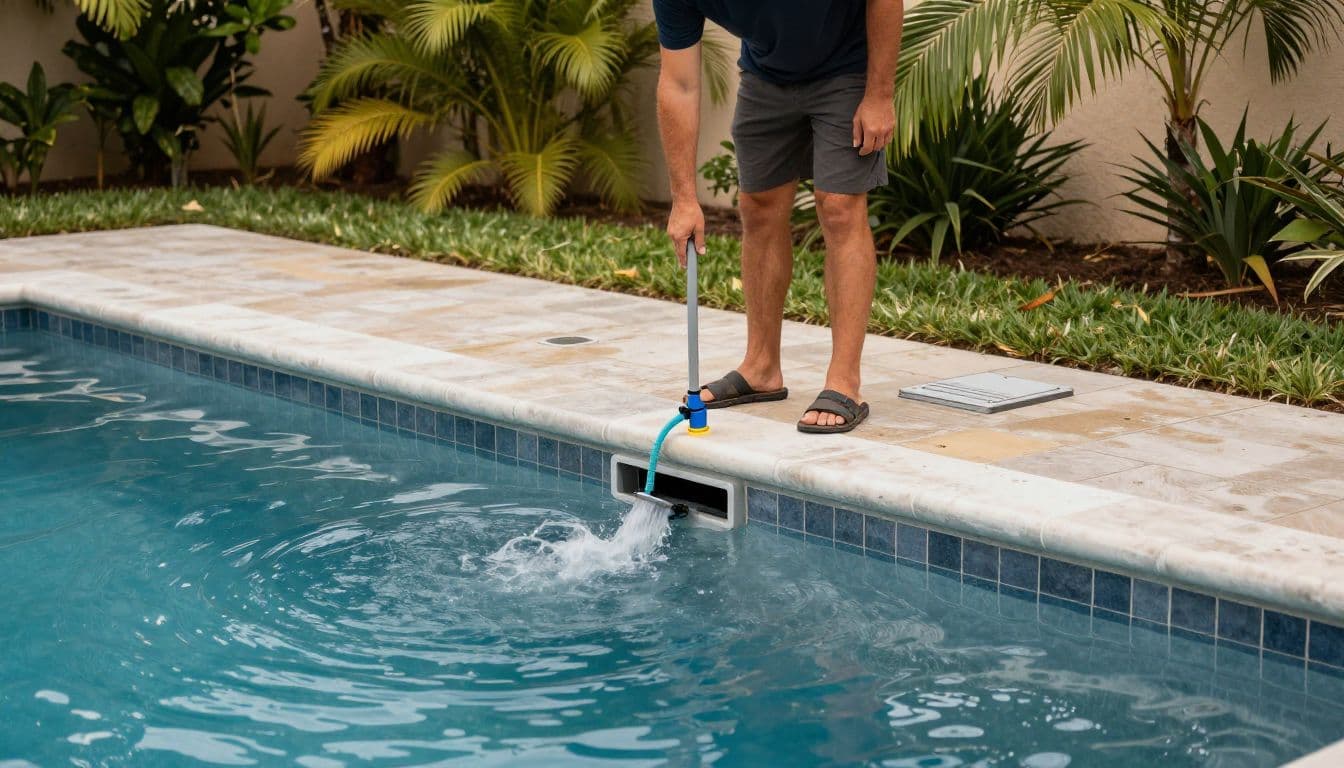
Reliable pool autofill systems need room for inspection. The lid, float, sensor, valve, and supply shutoff should remain easy to reach without moving heavy planters or removing deck sections.
A neat equipment area also makes leaks easier to spot. If the valve, plumbing, or canister is buried behind dense plants, a small problem can go unnoticed longer than it should.
Add simple checks to regular pool care
Check the autofill setup monthly and after major storms. Small habits can prevent a stuck float or slow plumbing leak from becoming a larger repair.
- Clear leaves, mulch, and insects from the float canister or sensor area.
- Look for damp soil, standing water, or constant flow near the valve and plumbing.
- Watch the pool's water level during normal operation and after the system adds water.
- Compare unexpected water use with recent weather, splash-out, and pool activity.
If the system seems to add water constantly, don't assume evaporation is the cause. A leaking valve, a sensor problem, or a pool leak may be involved. Turn off the water supply if needed and have the system inspected.
A Practical Addition to a Cape Coral Gunite Pool
A well-placed autofill feature supports the steady water line that skimmers, pumps, and water features need. It also saves homeowners from daily hose filling during hot, dry stretches.
For a new build or renovation, plan the sensor, plumbing, overflow path, and service access before the deck and finishes are complete. Consistent water levels make routine pool care easier, while regular inspections keep the system working as intended.