
Why a Gunite Pool Finish Feels Rough Underfoot
A rough gunite pool finish can reflect the material's natural texture, surface deterioration, mineral deposits, or uneven repairs. The distinction is whether the surface feels consistently textured or has developed sharp, loose, or unusually abrasive areas.
Your pool should support comfortable use , especially on steps and shallow areas where feet make frequent contact. Understanding what you're feeling helps separate a finish-selection issue from a surface problem that needs professional attention.
Key Takeaways
- Gunite describes the pool's concrete shell; the interior finish determines what your feet usually touch.
- Aggregate finishes have intentional texture, but sharp patches, loose material, and scraping deserve attention.
- Roughness alone doesn't establish whether the shell needs repair or the finish needs replacement.
- An inspection should identify the condition before anyone recommends polishing, patching, or resurfacing.
What Your Feet Touch in a Gunite Pool
A gunite pool has a reinforced concrete shell beneath its interior finish. In normal use, your feet contact that finish rather than the underlying structural concrete.
That distinction matters because homeowners often describe every surface concern as a "gunite problem." However, rough plaster, exposed aggregate, and worn repair edges can involve the interior surface without establishing a structural failure.
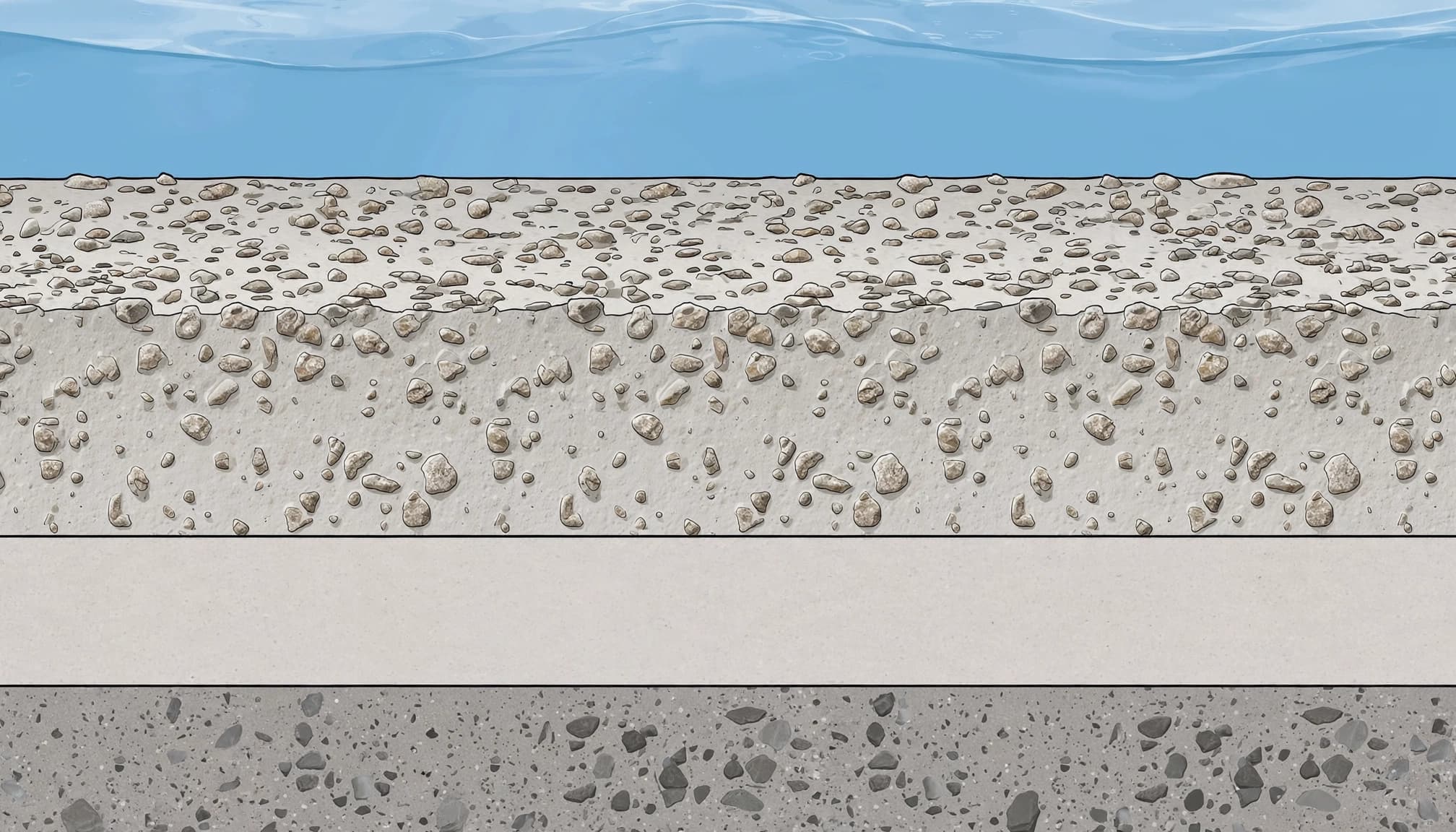
Plaster and aggregate finishes also feel different by design. A pebble surface has more pronounced texture than a relatively smooth plaster finish. Even within aggregate categories, particle size and how much material remains exposed affect the feel.
For a new pool, the useful comparison is the selected finish itself. A different pool's smoother floor doesn't automatically mean yours has a defect. Still, the selected material should meet your expectations for barefoot comfort.
Common Reasons a Pool Finish Feels Rough
The finish has intentional aggregate texture
Pebble and other exposed-aggregate finishes contain particles that create a textured surface. Depending on the material, you may feel individual grains or rounded pebbles beneath your feet.
That texture should make sense across comparable areas of the pool. A consistently pebbled floor is different from an isolated sharp ridge or a patch that catches skin. Also, a finish that feels acceptable during a quick touch may feel uncomfortable after repeated walking.
Surface deterioration has changed the feel
A deteriorated finish can become rough, faded, stained, or uneven. Where the cement-based portion of an aggregate finish deteriorates, more aggregate may become exposed.
Look beyond the roughness itself. Pitting, patchy discoloration, missing material, and irregular transitions provide useful context for an inspection. However, those clues don't identify the full repair scope on their own. The professional needs to assess both the affected surface and what lies beneath it.
Deposits and repair edges interrupt the surface
Mineral deposits can create a raised, crusty texture over an otherwise sound finish. Meanwhile, existing patches can leave noticeable transitions where repaired and original materials meet.
These conditions may feel similar underfoot but require different responses. A raised deposit isn't the same condition as missing plaster. Likewise, a repair edge doesn't reveal whether the material underneath remains sound. Avoid treating every rough spot with the same cleaning product or abrasive tool.
How to Distinguish Normal Texture From a Problem
Look for consistency and changes
Start with where the texture appears. An even texture across the same finish is more consistent with the material's intended character. A newly rough patch, sharp edge, or area that differs substantially from its surroundings warrants closer attention.
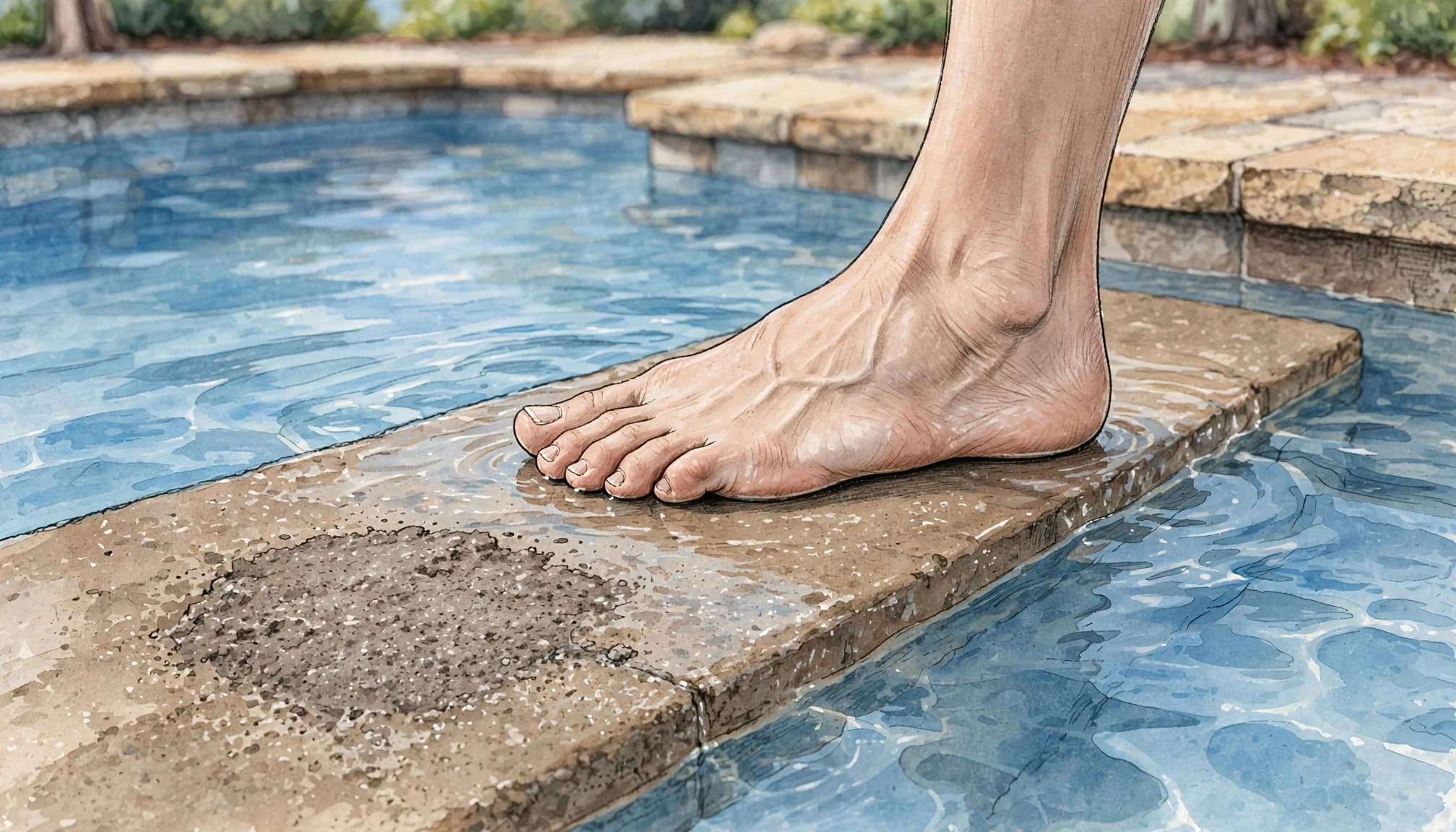
Compare similar locations rather than unrelated surfaces. For example, a textured step and smooth waterline tile aren't useful comparisons.
Photos can document whether a patch spreads or changes. Record its location, too, particularly near steps, fittings, corners, or previous repairs. These details help distinguish a localized concern from widespread surface deterioration.
Treat discomfort and loose material seriously
A finish shouldn't require you to tolerate scraped feet or avoid normal walking areas. If a surface abrades skin, stop using that area until a professional assesses it.
Loose fragments, flaking material, visible cracks, and crumbling patches also deserve attention. Don't repeatedly rub the area with your foot or hand to test how abrasive it is.
Uniform texture can be intentional. A surface that sheds material or scrapes skin needs assessment, even when the surrounding finish looks normal.
Our explanation of pool surface wear versus structural damage covers why similar-looking symptoms can lead to different renovation decisions.
Practical Next Steps for a Rough Pool Surface
Keep the first response simple and non-destructive. The goal is to preserve the surface while gathering enough information for a useful inspection.
- Keep swimmers away from sharp or abrasive areas, particularly steps and shallow play spaces.
- Photograph visible defects and note where they occur. Include nearby fittings, cracks, and older patches in the pictures.
- Record whether the roughness has always been present or appeared after a noticeable surface change.
- Arrange a professional inspection when the finish is painful, shedding material, cracking, or becoming increasingly uneven.
Meanwhile, continue routine maintenance with tools appropriate for the finish. Don't attack a stubborn patch with aggressive scraping, household abrasives, or improvised sanding equipment.
Avoid DIY acid treatments. They can damage the finish and create chemical exposure risks. A treatment that removes a deposit can also affect the material beneath it.
Don't drain the pool to inspect or sand the surface yourself, either. Groundwater pressure can damage an empty pool, so draining requires professional judgment and planning. Water shoes may provide temporary comfort, but they don't repair a deteriorating surface.
When a Pool Professional Should Inspect or Repair It
Localized roughness needs a clear diagnosis
A professional should determine whether an affected area involves deposits, a previous repair, deteriorated finish, or a deeper defect. The extent and condition of the surrounding material matter as much as the rough spot itself.
After that assessment, localized treatment or repair may be appropriate. However, polishing and patching aren't universal answers. Removing material from an already weakened surface can leave a different problem, while a patch may remain visible or feel different from adjacent areas.
Widespread deterioration changes the renovation scope
When roughness appears alongside extensive pitting, recurring loose material, or broad finish loss, resurfacing may become the practical option. The existing surface must provide a suitable foundation for the replacement finish.
Cracks, hollow areas, and deterioration near the substrate need assessment before anyone covers them. Our discussion of when pool renovation needs structural work explains why surface symptoms sometimes require a broader scope.
We offer pool resurfacing and finish options as part of our renovation work. The right recommendation depends on the condition of the pool, rather than roughness alone. A sound shell with a worn interior presents a different project than damage extending into the structure.
Choosing a Comfortable Finish for a New Pool
If you're planning a pool, evaluate texture alongside color. A finish can look appealing underwater yet feel different from what you expected.
Handle physical samples and compare the texture of plaster, quartz aggregate, and pebble options. Although a sample can't reproduce every installed condition, it provides more useful information about texture than a photograph.
Pay particular attention to how your family will use shallow areas. Sun shelves, benches, and steps create frequent skin contact. Children playing in shallow water may spend more time against the finish than adults who mainly swim laps.
Also, distinguish comfort preferences from defects. Some homeowners enjoy a pronounced pebble texture; others prefer a less textured surface. Neither preference requires accepting sharp spots or loose material.
For an existing pool, compare pool resurfacing or rebuilding options before expanding the project. Replacing a worn finish and rebuilding a pool address different needs. A rough interior doesn't automatically call for changing the shell or redesigning the entire backyard.
Frequently Asked Questions About Rough Pool Finishes
Is every gunite pool supposed to feel rough?
No. Gunite describes the structural shell, while the interior finish determines the texture swimmers usually feel. Plaster and exposed-aggregate finishes have different characteristics. A consistently textured finish may be intentional, but sharp ridges, loose fragments, and areas that scrape skin warrant professional attention.
Does a rough finish mean the pool is leaking?
Roughness alone doesn't establish a leak. Finish deterioration and structural damage are separate concerns, although an inspection may find both. If you also notice unexplained water loss or visible cracking, describe those conditions when arranging the inspection. The surface's feel can't settle the cause of water loss.
Can a rough pool finish be made smoother?
Some localized conditions may allow professional treatment or repair after assessment. A broadly deteriorated finish may need resurfacing instead. The material and remaining surface condition determine the options. Avoid sanding or chemically treating it yourself, because removing material can change the finish and leave uneven results.
Make Barefoot Comfort Part of the Decision
A rough gunite pool finish needs context: the selected material, the pattern of roughness, and any accompanying deterioration. Consistent texture may belong to the finish, while sharp or shedding areas need attention.
For a new pool or renovation, make barefoot comfort part of finish selection. For an uncomfortable existing surface, an inspection provides the basis for choosing an appropriate repair without damaging sound material.