
Pool Plaster Mottling: Causes and Next Steps
Pool plaster mottling is uneven shading in a plaster finish, and color variation alone doesn't prove that refinishing failed. The important distinction is whether you're seeing cosmetic variation or discoloration accompanied by roughness, cracking, or loose material.
After replastering, an unfamiliar patch can make the entire renovation feel uncertain. Some appearance changes relate to the finish itself, while others involve startup care or water chemistry.
Start by looking at the surface's condition before deciding how to treat its color.
Key Takeaways
- A smooth, intact finish can have visible shade variation. Color alone doesn't establish a workmanship defect.
- Startup care and balanced water help protect new plaster, but chemistry adjustments aren't a guaranteed cure for mottling.
- Roughness, flaking, blisters, or expanding cracks deserve contractor attention. Contact the plaster contractor before acid washing, draining, sanding, or attempting another aggressive treatment.
What Pool Plaster Mottling Looks Like
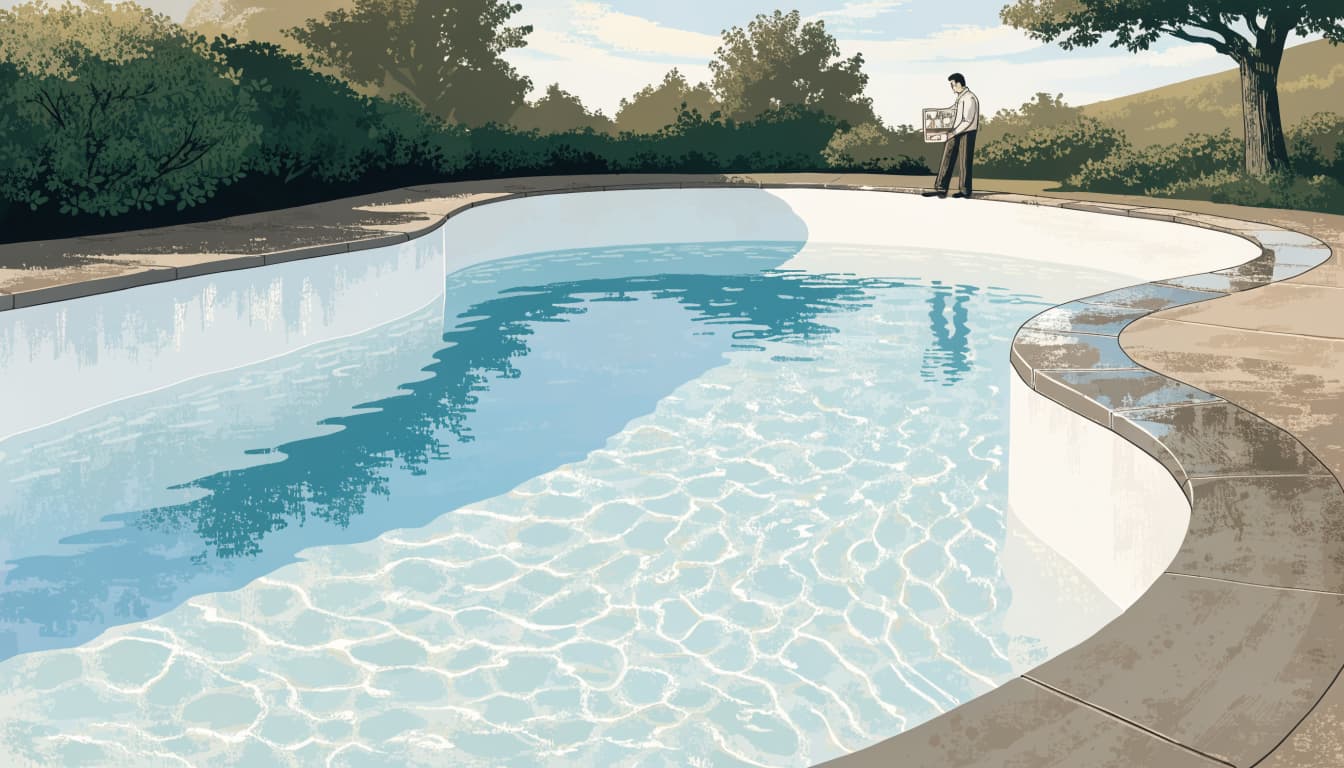
Mottling usually appears as irregular light and dark areas across the floor, walls, steps, or benches. The contrast may look cloudy or patchy rather than forming one sharply defined stain.

Shade variation in an intact finish
Cement-based pool finishes don't always have perfectly uniform color. A surface can remain intact while showing different tones across adjoining areas.
However, appearance alone can't establish whether a particular finish meets the project's agreed expectations. The selected material, finish description, and installation records all matter.
Look at the overall pattern rather than judging one isolated spot. Also note whether the difference stays within the color or includes a physical change in the surface. Those are separate concerns.
Water and lighting change the view
Water depth, reflections, and shadows affect how the finish looks. A shaded wall can appear substantially different from a sunlit step, even within the same pool.
Compare photographs from the same position under similar conditions. Otherwise, a shifting reflection can look like spreading discoloration.
Let cloudy water clear through normal startup care before drawing conclusions about the entire finish. Better visibility helps separate surface color from an effect created by the water above it.
Why New Plaster Can Look Uneven
Several issues can overlap after refinishing. Normal material variation, the finish's early appearance, and water-related surface changes may all contribute to an uneven look.
Finish type affects visible variation
Traditional white plaster has a smooth, classic appearance, but it can show mottling, staining, and etching in demanding conditions. Colored finishes can also make tonal differences easier to notice.
Quartz finishes combine plaster with quartz aggregate and offer greater durability than standard plaster while retaining a relatively smooth feel. Pebble finishes have a more textured appearance.
However, no finish eliminates the need for water care. Our comparison of pool plaster and finish options explains those material differences before a renovation.
Curing and startup need consistent care
A newly applied cement-based finish continues interacting with water during its early curing period. Startup practices help protect that surface while its initial appearance develops.
Brushing and water-balance instructions should match the selected finish. Follow the written startup plan rather than combining advice intended for different materials.
Startup records also help explain what happened after filling. Keep water-test results, chemical additions, and service dates together. If discoloration develops, those records give the contractor useful information beyond a photograph.
How Water Chemistry Affects the Finish
Poor water balance can damage plaster or create deposits that change its appearance. However, a dark patch alone doesn't identify which chemical condition caused it.
Aggressive water can attack plaster
Water that's undersaturated with calcium carbonate can dissolve material from a cement-based finish. This process, called etching, can leave texture changes as well as an uneven appearance.
Assessing that risk requires more than a pH reading. Calcium hardness, total alkalinity, temperature, and other water conditions affect saturation balance.
Keep a complete water-testing record, especially during startup. One acceptable reading today doesn't explain conditions during the preceding days. Likewise, a chemical correction can't replace material that the water has already removed.
Deposits can resemble discoloration
Calcium deposits can produce pale, cloudy, or rough-looking areas. Metals and organic material can also create stains that homeowners may initially call mottling.
Because these conditions have different causes, they need different treatment decisions. Adding acid solely because a patch looks light or dark can make the surface worse.
A color difference doesn't identify the chemical problem. Surface condition and water history need to support the diagnosis before treatment begins.
Balanced water protects the finish, but it doesn't guarantee uniform color or reverse every existing surface change.
Cosmetic Mottling or a Surface Problem?
The most useful distinction is between a change in shade and a change in the material itself. These observations can help frame the conversation with your contractor.
| Observation | What it may indicate | Practical response |
|---|---|---|
| Uneven shade with an intact surface | Cosmetic color variation | Document the pattern and maintain prescribed care |
| Pale buildup or new roughness | Deposits or a water-balance problem | Arrange water and surface assessment |
| Pitting or a visibly worn surface | Possible etching or surface damage | Contact the plaster contractor |
| Flaking, blistering, or loose areas | A possible finish or bonding problem | Request an inspection before treatment |
| Cracking with repeated water loss | A separate shell or plumbing concern | Arrange a broader inspection |
These signs aren't a diagnosis. They help distinguish a color concern from something that needs closer attention.
A finish can look uneven without being structurally compromised. Conversely, a new finish can't correct underlying movement or plumbing damage. Our guide to pool shell inspection before refinishing explains that boundary.
Practical Steps Before Treating a Mottled Pool
Preserve the surface and establish what changed before trying to remove a mark. A measured response also keeps useful evidence available if the contractor needs to assess the work.
- Photograph the pool from fixed locations. Include wide views and closer images of affected areas, using similar lighting when possible.
- Record when the discoloration appeared. Note whether it was visible during filling or developed later, along with any new roughness or loose material.
- Continue the finish-specific startup program. Keep brushing, filtration, and chemical additions within the written instructions rather than adding extra treatments.
- Send the contractor the photographs and water-care records. Describe changes in texture, cracking, or material loss as clearly as changes in color.
Don't interrupt normal water care while waiting for an assessment. At the same time, avoid spot treatments, abrasive tools, or additional chemicals intended only to make the color match.
If the pool remains smooth and intact, the immediate task is documenting its appearance and maintaining proper care. If material is separating or damage is progressing, request an inspection promptly.
Our pool renovation and remodeling services include evaluating the existing pool, planning the renovation, and reviewing operation procedures at startup. Keeping the finish choice and care instructions connected helps homeowners understand what happens after refinishing.
Contact the Contractor Before Acid Washing
Acid washing removes a thin layer of the cement-based surface. It isn't a harmless cleaning step, and it doesn't reliably eliminate every type of mottling.
Depending on the finish and existing condition, aggressive treatment can change texture, expose more aggregate, or create another uneven appearance. Sanding and abrasive cleaning also alter the surface.
Contact the plaster contractor before aggressive treatment . A discussion should address the likely cause, whether the concern is cosmetic or physical, and what a proposed treatment would change.
Keep the finish description, contract, photographs, and startup records available. These help connect the visible condition with the work performed.
Draining also needs professional judgment. Groundwater pressure can threaten an empty pool, a concern that matters in Southwest Florida. Don't drain the pool merely to get a closer look at discoloration.
If an inspection finds a deeper problem, treatment may extend beyond cleaning. Our explanation of when pool renovations need structural repairs describes why resurfacing alone can't address every condition.
Frequently Asked Questions
Will pool plaster mottling go away over time?
Some early appearance differences may become less noticeable as water clears and the finish's appearance settles. Lighting-related differences can also change throughout the day. However, permanent color variation, deposits, and etched areas don't share one predictable outcome.
There isn't a universal fading schedule. Keep dated photographs under comparable conditions rather than relying on memory. Report worsening discoloration or texture changes instead of waiting indefinitely, and continue the prescribed care without adding aggressive treatments.
Does a saltwater system cause mottling?
A saltwater system generates chlorine, but the pool still needs balanced water. Saltwater pools can develop finish problems when water chemistry encourages etching or deposits, just as traditionally chlorinated pools can.
The presence of a salt system alone doesn't establish the cause of discoloration. Its operation and startup instructions belong in the water-care record, alongside test results and chemical additions. Treat the observed condition and its cause rather than assuming salt explains every patch.
Protect the Surface Before Chasing the Color
Pool plaster mottling deserves a careful assessment, especially after you've invested in refinishing. Surface condition matters most when deciding whether uneven color is cosmetic or needs repair.
Maintain the prescribed care and document changes consistently. Contact the plaster contractor before acid washing or other aggressive treatment so a color concern doesn't become avoidable surface damage.