
Where to Place Handrails for Safer Gunite Pool Entry
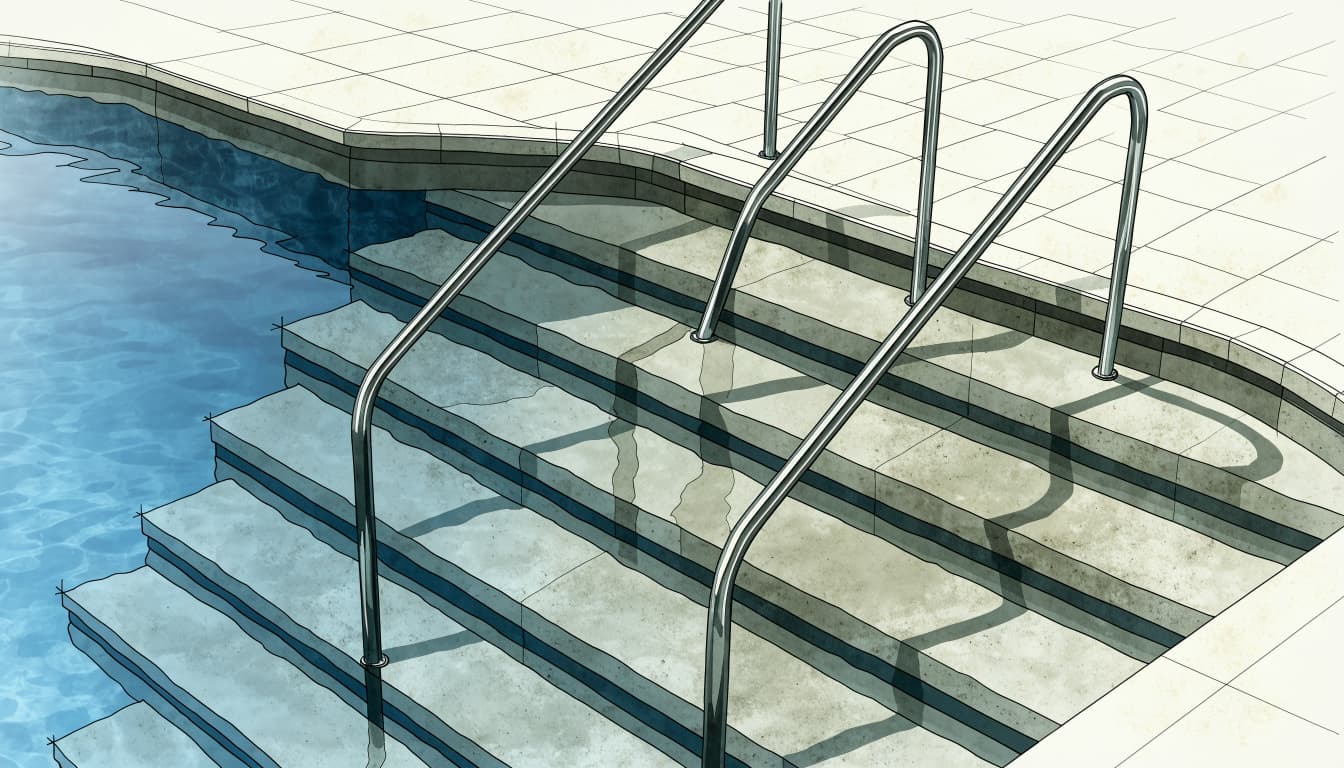
Place gunite pool handrails along the walking route through the entry steps, with support you can reach before stepping down. The gripping surface should remain available as you descend and return to the deck. Continuous support matters most where your footing changes.
A rail that looks balanced beside the pool may still require an awkward reach or interfere with the stairs. Start with how you and your guests will move through the entry, then coordinate the rail with the steps, deck, and structural support.
Key Takeaways
- Position the rail beside the path people actually walk, rather than choosing its location for appearance alone.
- Keep support within reach at the deck, along the stairs, and where the final step meets the pool floor.
- Plan grip, walking clearance, anchoring, and individual mobility needs together, whether you're building or renovating.
Place Gunite Pool Handrails Along the Stair Route
The stair layout should guide the handrail layout. A straight entry, curved corner staircase, and wide shallow-end entry each create a different walking route.
Follow the usable steps
Position the gripping section beside the route where someone can place each foot fully on a tread. The swimmer shouldn't need to lean across a step or walk along a narrow edge to hold the rail.
For curved stairs, consider how the available tread changes across the curve. A rail near the tightest corner may direct someone toward the least comfortable footing. Coordinating custom gunite pool steps with the rail helps preserve a predictable route through the water.
Separate walking space from seating
Broad pool steps often double as seating. However, the handrail should support a clear entry lane rather than pass through the middle of the preferred sitting area.
Keep that lane available when people gather on the stairs. Likewise, avoid a layout that requires someone to step around a seated guest while relying on the rail. The entry should remain useful during everyday family use, not only when the pool is empty.
Carry Support Across Both Water Transitions
The deck edge and the bottom of the staircase deserve as much attention as the submerged treads. Both are places where someone changes footing.
Begin support before the first step
A person should be able to take hold while standing securely on the deck. Reaching for support after starting downward creates an avoidable gap.
Also consider the approach. Furniture, planters, and screen-enclosure posts shouldn't force someone to approach sideways or step around an obstacle. Keep the rail accessible along the route people use between the lanai and pool, with room to pause before entering.
A handrail that becomes reachable only after the first step leaves the initial change in footing unsupported.
Continue support through the exit
At the lower end, position the usable grip so it supports the transition between the last tread and stable footing in the pool. Avoid treating the waterline as the end of the rail's purpose.
Then consider the same movement in reverse. Someone climbing out needs support while lifting onto the final tread and returning to the deck. A nearby tanning ledge or underwater bench can change this route, so each elevation change needs attention.
When Handrails on Both Sides Improve Access
Rails on both sides may help someone who prefers support from either hand or feels more comfortable with bilateral support. They can also make the entry easier to share among people with different mobility needs.
A single rail may suit someone who relies on a stronger arm. However, a rail beside the right hand during descent sits beside the left hand during ascent. That difference matters when one arm has limited strength or movement.
Two-sided support still needs enough walking space between the rails. Adding another rail shouldn't create a narrow passage or make it difficult for someone to walk alongside a helper.
For long-term planning, consider how access needs may change. Our guidance on aging-in-place pool design discusses stairs, rails, and other entry options together. If stepping becomes difficult even with support, a pool lift may provide another way into the water. Its transfer area and deck space need separate planning.
Choose a Comfortable Grip and Clear Walking Space
Good placement includes how the rail feels in your hand and how much room remains around your body. A substantial-looking rail doesn't automatically offer a comfortable grip.
Make the gripping surface easy to use
Choose a pool-rated rail with a profile that allows a secure grasp. The hand should move along the usable surface without repeated releases around decorative shapes or interruptions.
Stainless steel is common, but Southwest Florida's coastal exposure makes corrosion resistance important. The finish should also feel comfortable against wet skin, without sharp edges or deteriorated areas.
Position the rail so users can hold it with a natural arm position. A rail that requires a raised shoulder, extended reach, or sideways lean may provide less useful support.
Leave room for hands and movement
Keep clear space around the gripping section so fingers and knuckles don't rub against coping, a raised spa wall, or another surface. Decorative features shouldn't crowd the hand's path.
At foot level, rail posts and mounting bases shouldn't intrude into the intended walking line. Preserve enough room for a person to turn toward the stairs and move without twisting around the hardware.
Also account for maintenance. The surrounding steps and deck need to remain accessible for brushing and cleaning, because slippery buildup can undermine an otherwise thoughtful entry.
Anchor the Rail to Structural Support
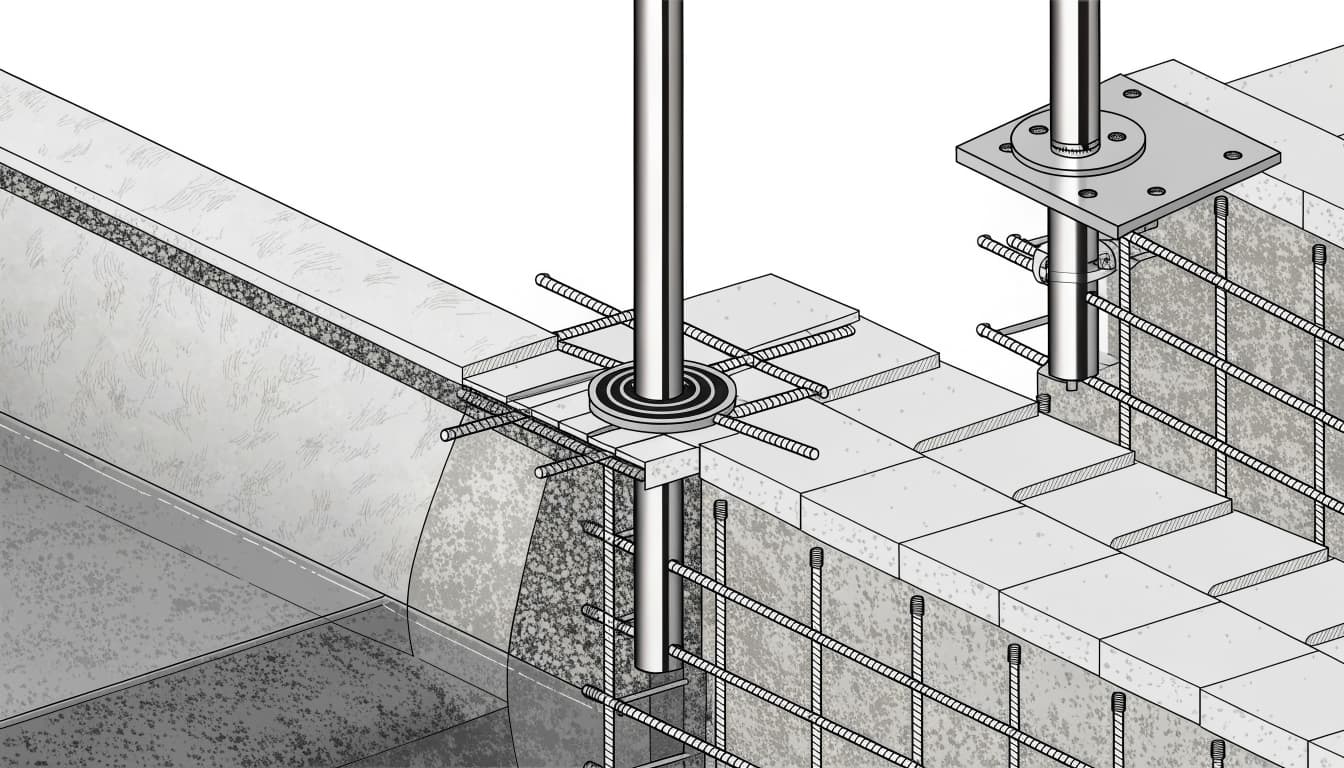
A handrail transfers force into its mounting points whenever someone pulls against it or uses it for balance. The connection therefore needs structural support, not just an attractive surface around the base.
Gunite pool handrails may connect to structural concrete associated with the pool or deck, depending on the design. Coping, tile, thin finishes, and individual pavers aren't substitutes for that structural connection.
The installation must account for the rail's mounting arrangement, the supporting concrete, and nearby edges. Existing cracks or deteriorated material also affect the work. A qualified pool professional should handle the installation rather than treating it as a simple decorative addition.
Metal components may also require electrical bonding as part of the pool's safety system. That work belongs with qualified professionals.
Once installed, unexpected movement, a loose base, or corrosion around the connection warrants professional attention. Don't continue relying on a rail that shifts when you load it.
Plan Differently for New Pools and Retrofits
New construction offers more freedom to coordinate the stairs and rail. A retrofit starts with an existing structure, so hidden conditions can limit placement.
Include rails in the original design
During new pool construction, we can consider the entry alongside the pool shape, deck layout, and surrounding features.
Show the intended walking route and rail locations before the structural and deck work proceeds. This allows the design to coordinate support, reinforcement, plumbing, and electrical bonding before those areas become difficult to access.
Also account for the finished surfaces. Coping thickness, deck elevation, and the stair finish influence the final relationship between the grip and the swimmer's feet. Planning around unfinished concrete alone can overlook those differences.
Treat retrofits as structural work
Adding a rail to an existing pool requires more than selecting an open patch of deck. Buried plumbing, reinforcing steel, electrical components, and the condition of the concrete all affect installation.
A professional assessment determines where a secure connection can go and whether surrounding work is necessary. If the steps themselves are awkward or damaged, a rail alone won't correct the entry.
Our pool renovation and remodeling services allow access improvements to be considered alongside changes to coping, finishes, and other existing features. Combining related work can avoid disturbing newly finished surfaces later.
Support the Rail With Visible, Slip-Resistant Steps
Handrails work best when the surrounding entry also provides dependable footing. Consistent step rises and usable treads help people move without unexpected changes.
Choose pool-rated surfaces suited to wet, barefoot use. Smooth materials can become slippery with sunscreen or algae, while an excessively abrasive finish can make the steps uncomfortable.
Visibility matters, too. Contrasting stair edges can help distinguish one level from the next, especially when glare or a dark interior finish makes the floor harder to read. Lighting should reveal the entry without creating distracting glare.
On the deck, drainage should move rainwater and splash away from the approach. Keep that route clear of furniture and loose items. These details support the handrail's purpose by reducing the chances that someone loses footing before reaching it.
Frequently Asked Questions
Can one rail support both the steps and a tanning ledge?
It can when the rail's position follows the actual walking route and provides useful support through both transitions. However, a nearby ledge doesn't automatically fall within reach. Its elevation and connection to the stairs determine whether the same rail can help.
Does a handrail replace other pool safety features?
No. A handrail helps with balance and access, while barriers, alarms, and controlled access address different risks. Florida's residential pool safety framework doesn't replace individual access planning.
Our guidance on pool safety features covers the broader design considerations. Clear sightlines, supervision, and secure access remain important even when the entry has well-positioned rails.
Make the Entry Easier to Use
The most useful handrail follows your movement through the entire entry. It offers a comfortable grip before the first step and remains helpful as you return to the deck.
Plan placement and anchoring together , while keeping the walking route open. Whether you're building a new gunite pool or improving an existing one, that coordination helps create an entry people can use with greater confidence.