Why Does an Attached Spa Drain Back Into the Pool?
An attached spa can drain back into the pool when a water-level difference pushes water through an open or leaking plumbing path. A check valve that doesn't seal is one possible cause, but valve positions and shared circulation arrangements also matter.
The most useful clue is when the water drops , especially whether the pump is running or stopped. Start by separating an intentional spillover from water moving through plumbing after shutdown.
Key Takeaways
- A raised spa needs plumbing controls that prevent unwanted water movement toward the lower pool.
- A leaking check valve, diverter valve, or unsuitable plumbing arrangement can allow water transfer.
- A brief settling at the spillway differs from a spa that repeatedly loses substantial depth.
Why Water Can Move Between the Spa and Pool
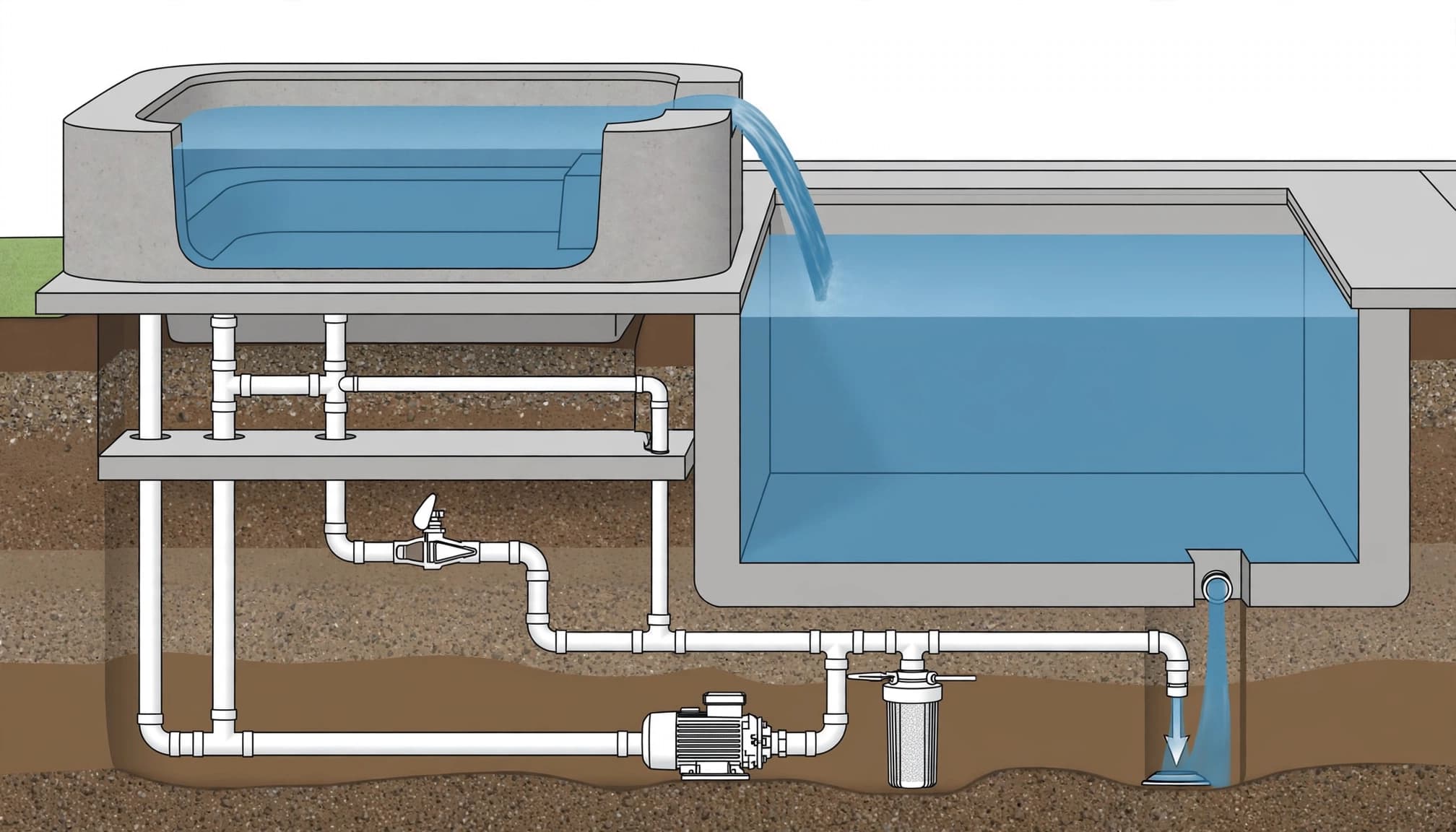
An attached spa's appearance doesn't reveal its entire circulation system. Some spas share equipment and water with the pool, while others have more independent plumbing. Our guide to attached spa plumbing and circulation explains these differences.
Elevation Creates a Reason for Water to Move
A raised spa holds water above the pool's surface. If connected plumbing provides an unrestricted route, gravity can move water toward the lower pool after circulation stops.
The amount of drain-back depends on the plumbing route and where water can enter or leave it. Therefore, the stopping point provides useful information, but it doesn't identify a failed component by itself.
A spa built level with the pool has different hydraulic conditions, even when both designs share equipment.
Valves Control the Available Path
A check valve allows flow in one direction and closes against reverse flow. Debris, a damaged seal, or a worn internal component can prevent it from sealing.
Diverter valves control which body of water supplies the pump and receives returning water. A leaking internal seal or an actuator that doesn't reach its intended position can leave an unwanted connection open.
Likewise, missing or incorrectly arranged backflow control can allow drain-back. These are possible explanations, not a diagnosis based only on a falling waterline.
Normal Spillover Versus Drain-Back That Needs Attention
During spillover operation, the system sends water into the spa, and excess water crosses the spillway into the pool. When the pump stops, water above the spillway crest can finish flowing over before settling.
The following patterns help separate expected movement from a concern.
| What you observe | What it suggests |
|---|---|
| Water crosses the spillway during its scheduled operation. | Intended circulation or a water-feature cycle. |
| Flow briefly continues after shutdown, then stops at the spillway. | Water settling to the spillway crest. |
| The spa keeps dropping below the spillway after shutdown. | Another water path deserves inspection. |
| The spa drops while the pump runs. | Suction, return routing, or controls may need attention. |
Repeated loss below the intended resting level deserves investigation, especially when the spa refills every time circulation restarts. Evaporation doesn't usually explain a drop closely tied to pump shutdown.
Narrow Down the Cause Without Opening Equipment
Observations can help a technician distinguish drain-back from active water loss. Keep swimmers out during troubleshooting, and don't experiment with unfamiliar valves.
Compare Pump-On and Pump-Off Behavior
Photograph the spa waterline against a fixed tile or grout line during normal operation. Then observe it after the system completes its normal shutdown.
Record whether water visibly crosses the spillway or disappears without surface overflow. Note whether the drop begins after shutdown, during spa mode, or after the controls switch back to pool mode.
If the spa loses water while running, the system may be drawing more water from the spa than it returns. That pattern points toward routing or valve operation rather than reverse flow alone.
Look Beyond the Spa Waterline
Watch the pool level too. A falling spa accompanied by water appearing in the pool supports transfer between the two, although a large pool may show little visible rise.
If both water levels fall, consider evaporation, splash-out, or a leak. An automatic fill system can hide losses by replacing water, so frequent filling is another useful observation.
Never open a pressurized valve housing or filter. Don't let the pump run dry or block suction outlets. A pool professional can inspect valve seals, actuator movement, and plumbing safely.
Prevent Drain-Back Through Better Plumbing Planning
For a new pool or renovation, plan how the spa fills, circulates, heats, spills over, and holds water when equipment stops. The plumbing must support each operating mode.
Our guide to pool and spa plumbing layout covers how suction lines, returns, valves, and equipment work together. Pipe sizing also needs to account for elevation changes, line length, and required flow.
Keep valves and actuators accessible for service. During startup, operation should include transitions between pool and spa modes and observation after shutdown. Those checks help reveal unwanted water movement before routine use begins.
Frequently Asked Questions
Does Every Attached Spa Share Water With the Pool?
No. Physical attachment doesn't determine the hydraulic arrangement. Some attached spas share circulation equipment and exchange water, while others use separate circulation paths and controls. The plumbing plan determines how the system operates.
Will Running the Pump Longer Fix Spa Drain-Back?
Longer operation may keep the spa full while water returns to it, but it doesn't repair a leaking valve or correct an unwanted plumbing connection. The same drop may return after shutdown.
Keep the Focus on the Water's Path
A spa draining into the pool needs a closer look at its water path and operating cycle . The timing helps distinguish normal spillover settling from unwanted transfer through the circulation system.
Record the pattern before changing settings. Then have a pool professional address the identified valve, control, or plumbing issue rather than repeatedly refilling the spa.