
Pool Safety Features for a New Cape Coral Gunite Pool
An attractive pool can still create a dangerous path between the house, deck, and water. For Cape Coral homeowners, the right pool safety features protect children, pets, and guests while fitting naturally into a custom gunite design.
New construction gives you more control than a retrofit. You can plan the barrier, gates, alarms, lighting, drainage, deck, and screen enclosure before concrete and finishes make changes expensive. Start with the safety decisions that affect the pool shell and property layout.
Plan Pool Safety Features Before Gunite Construction
Safety shouldn't arrive as a last-minute item on the construction checklist. The barrier location, access points, deck height, drainage, electrical work, and equipment area all affect the completed pool.
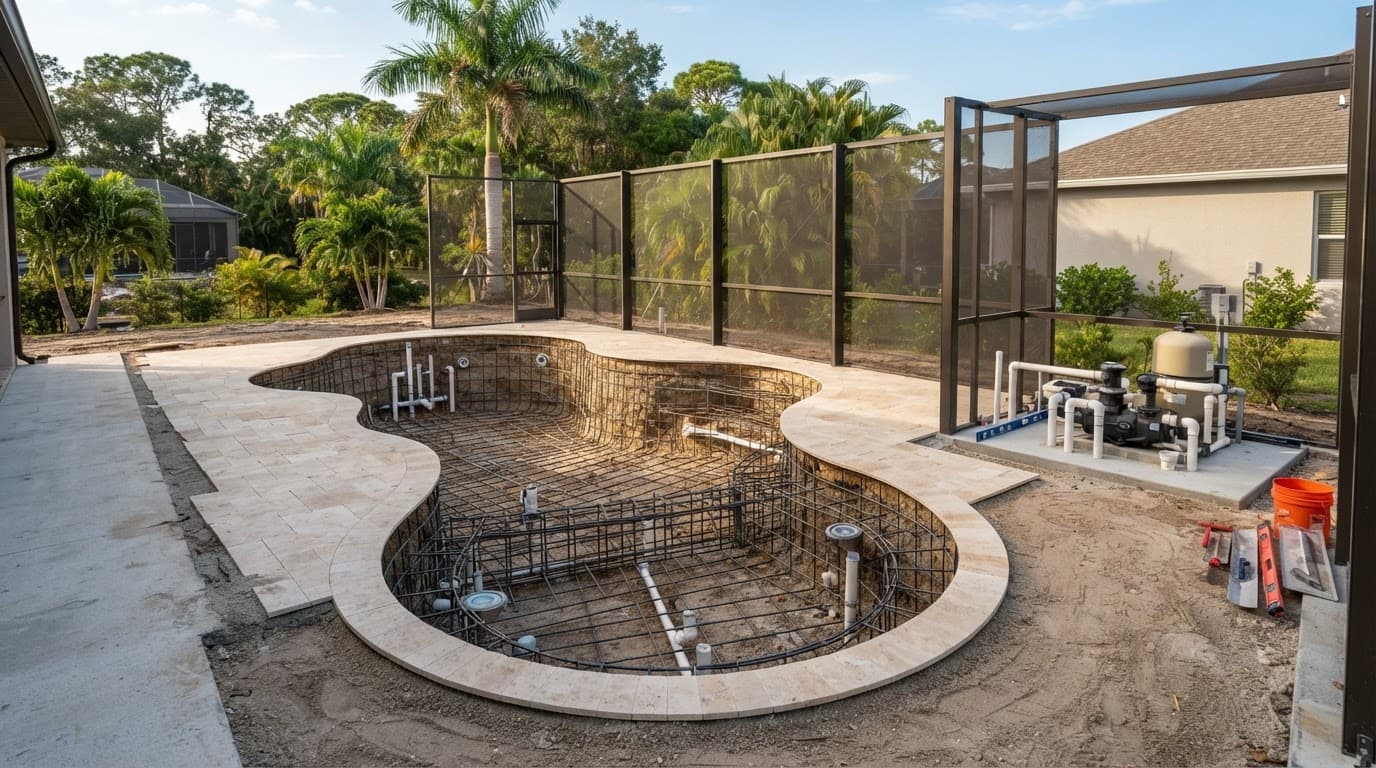
Set the barrier and gate location early
Draw the pool perimeter and required barrier on the site plan before excavation. This helps the builder account for the waterline, deck, screen cage, yard fence, doors, and walking routes.
A four-sided barrier should limit direct access from the house and yard. The gate location also matters. A gate beside a busy outdoor kitchen or patio may remain open more often than one placed on a less-used route.
Plan for a self-closing, self-latching gate that opens away from the pool. Keep furniture, planters, toys, grills, and other climbable objects away from the barrier. These decisions cost little during design but can be difficult after the deck is poured.
Coordinate the shell, deck, lights, and equipment
Gunite pool construction includes excavation, steel reinforcement, plumbing, concrete application, deck work, electrical installation, and interior finishes. A late safety change may affect several of those stages.
For example, adding a barrier after the deck is finished could require deck cuts or a different fence line. Moving a light later can affect conduit and electrical work. Changing the equipment location may alter chemical storage, access, and protection from children.
Review the pool construction process with your contractor and ask where each safety component appears in the plan.
Separate Florida Code Compliance from Best Practices
Florida's Residential Swimming Pool Safety Act establishes the state baseline for new residential pools. Cape Coral homeowners should treat that baseline as the starting point, not the complete safety plan.
What Florida law requires
Under Florida Statutes Chapter 515, Section 515.27, a new residential pool must have at least one approved safety feature option before final inspection and a certificate of completion. Options include a compliant barrier, an approved safety pool cover, exit alarms on direct-access doors and windows, qualifying self-closing and self-latching doors, or a pool alarm certified to ASTM F2208.
Exit alarms must produce at least 85 dBA at 10 feet. For the door option, the release mechanism must be at least 54 inches above the floor. A wearable alarm attached to a child doesn't replace one of the statutory options.
Barrier details in Section 515.29 include a minimum outside height of four feet. The barrier must not have openings or features that allow a young child to crawl underneath, squeeze through, or climb over. The gate must open outward, close automatically, and latch securely.
Florida law may allow one approved option, but families often need several layers because doors, gates, and supervision fail in different ways.
How Cape Coral review affects your plan
Cape Coral's inspection quick reference identifies screening the pool area, or enclosing the pool or entire backyard with a four-foot fence, in its residential pool guidance. It also refers to approved and operational barriers and alarms that protect the yard and house.
The city's materials cite CC Ordinance 14-90 and R4501.17. Local documents and state requirements work together, but a screened enclosure isn't automatically a substitute for every statutory safety function.
Ask your qualified local pool contractor or Cape Coral building official how the proposed barrier, screen enclosure, access doors, and alarms will be documented for the current permit and inspection. Requirements and interpretations can change.
How to Choose Pool Safety Features for a New Gunite Pool
The best choice depends on your lot, home layout, family routines, and how the pool area will function. Many Cape Coral homes use a screened lanai, but the enclosure still needs careful access planning.
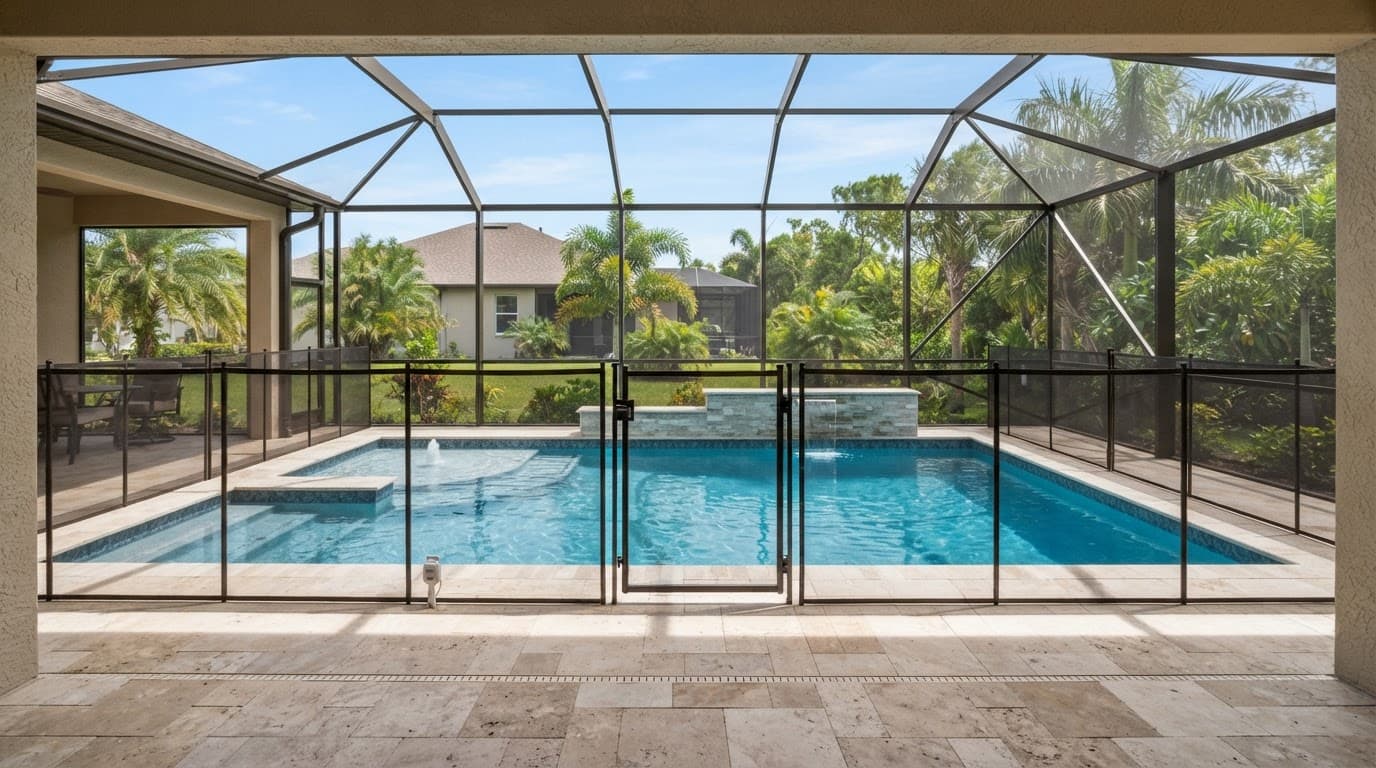
Compare a four-sided fence with a screen enclosure
A dedicated fence around the pool creates a clear separation between water and the rest of the backyard. It can work well when children or pets use the yard, or when several doors lead outside.
The fence should follow the required perimeter rules, maintain the correct height, and avoid gaps or climbable details. Glass, aluminum, and other materials each have different cleaning, corrosion, visibility, and cost considerations. A transparent barrier preserves sightlines, while a more solid design can provide privacy.
A screen enclosure helps reduce leaves, insects, and casual access to the pool. It also offers shade and protects some furniture from weather. However, screen mesh can tear during storms, and a large screen door can become a weak point if the closer or latch fails.
Design the enclosure as part of the barrier plan
Don't treat the screen cage as a separate item that gets added after the pool. Map its posts, doors, thresholds, and connection to the deck during the initial design.
Confirm whether the enclosure itself, a fence inside it, or a combination of barriers meets the applicable requirements. Screen doors should close and latch every time. Inspect the mesh, door hardware, and lower edges after strong wind.
A screen enclosure improves daily control, but it doesn't replace supervision. Young children can move through an open door quickly, even when the pool is only a few steps away.
Add Layers with Alarms, Covers, and Door Controls
Alarms and covers can protect access points that a barrier doesn't address. They work best when homeowners understand their limits and test them regularly.
Protect direct access from the house
Every door or window with direct access to the pool needs attention. Florida's exit-alarm option applies to those access points, and the alarm must meet the required sound rating. A self-closing, self-latching door with a release at least 54 inches high is another statutory option.
Even when a homeowner selects a barrier as the legal option, door alarms can add useful backup. Test them according to the manufacturer's instructions and replace batteries before they fail. Keep sliding doors, pet doors, and frequently used lanai doors in the discussion with your contractor.
A pool alarm certified to ASTM F2208 may detect surface movement or another type of entry event. Confirm the certification before buying. A general motion sensor or wearable child device isn't the same thing.
Understand safety cover trade-offs
An approved safety pool cover may be an option under Florida law, but a floating solar blanket is not the same as an approved safety cover. Ask which cover type qualifies for the intended application and how it will be installed.
Covers require routine cleaning, correct tension or track care, and attention to standing water. Automatic covers also need reliable power and equipment access. A cover that remains open during normal use provides no protection at that moment.
For a frequently used family pool, a barrier plus door alarms may be more practical than relying on a cover alone. Your contractor can compare access patterns, storage, maintenance, and the pool's shape before construction.
Design for Children and Pets
A custom gunite pool gives you control over steps, benches, shelves, lighting, handrails, and sightlines. Those details influence how easily someone can find an exit and how quickly an adult can see activity in the water.
Make entries visible and easy to find
Place steps where they remain visible from the main seating area and the home. A broad entry can make it easier for swimmers to regain footing, while a handrail can help older adults enter and exit with more control.
Sunshelves and shallow ledges need clear boundaries in the design. Shallow water still requires supervision, especially for toddlers who can lose balance. Avoid placing decorative features where they block views of the deepest area or entry steps.
Pool lighting should reduce dark spots on the steps, deck, and waterline. It is a visibility aid, not a replacement for barriers, alarms, or an attentive adult.
Include pets in the access plan
Florida's pool statute focuses on human safety, so pet protection is a best-practice issue rather than a stated statutory requirement. A self-latching gate and intact barrier can reduce the chance of a dog entering the pool without supervision.
If a dog will use the pool, discuss a visible exit feature, such as broad steps or a pet ramp designed for the pool. Keep the water entry clear and avoid storing toys near the barrier. Pool chemicals should stay secured in a dry, ventilated area that children and animals can't reach.
Handle Cape Coral Sun, Rain, and Storms
Cape Coral's intense sun, heavy summer rain, and hurricane exposure affect daily pool safety. These concerns belong in the design conversation alongside code requirements.
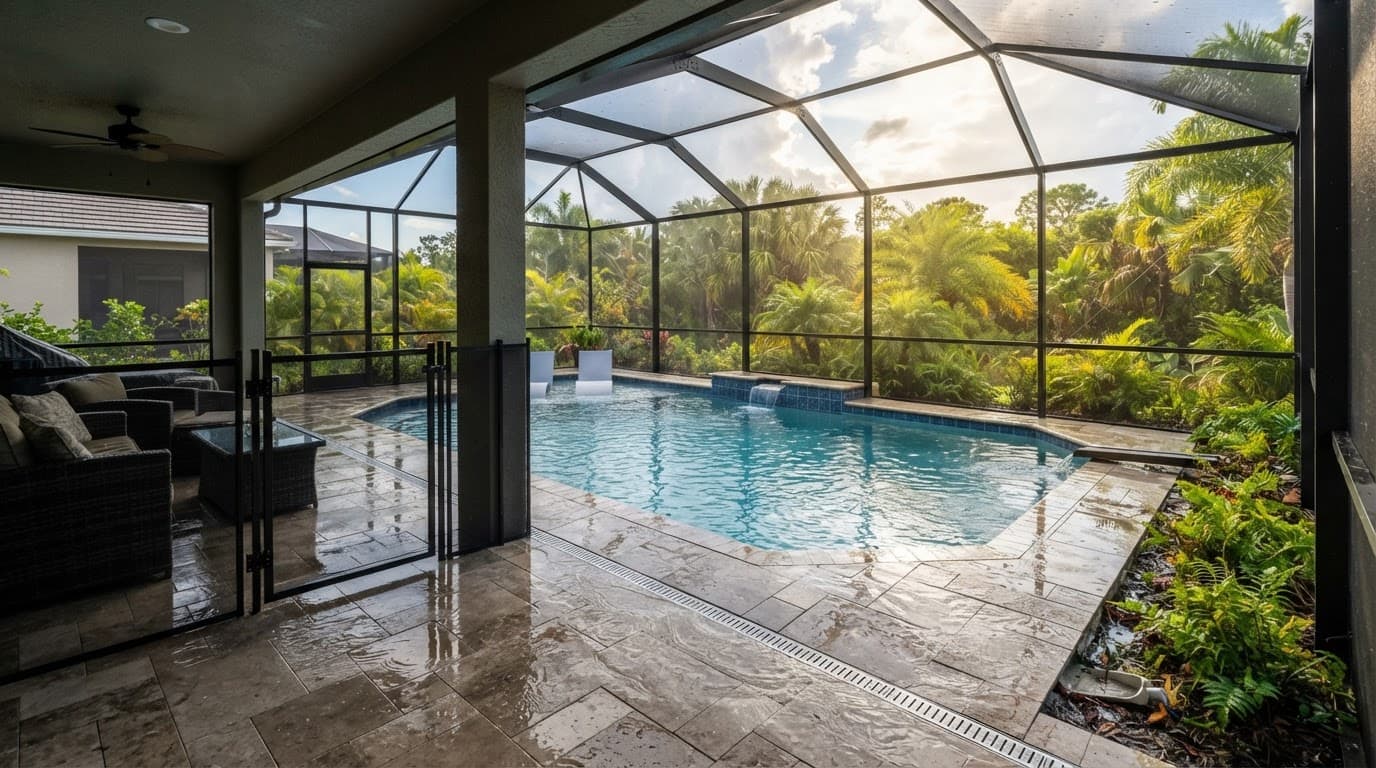
Reduce heat, glare, and wet-deck risks
Add shade over part of the deck so swimmers have a cooler place to sit. A covered area also gives children and older adults a break from direct sun. Keep pump and filter equipment shaded when practical, but leave enough airflow around it.
Choose a deck finish with suitable wet traction. Highly polished surfaces can become difficult to walk on after rain or splashing. Keep metal handrails and other surfaces comfortable to touch, since direct sun can heat them quickly.
Plan lighting, shade structures, and water features together. A waterfall or deck jet should add enjoyment without creating a slick route between the house and the pool.
Plan for heavy rain and hurricanes
Deck drainage should move water away from doors, electrical equipment, and the main walking path. Ask how overflow and stormwater will move during a heavy downpour, particularly if the pool sits near the home or property lines.
After a storm, inspect the screen cage, gate, fence, alarms, lights, and deck drains. Clear debris before swimmers return. Test the water and adjust chemistry after heavy rain because rainfall can dilute the pool water and add debris.
For hurricane preparation, common pool-care guidance recommends keeping a gunite pool full rather than draining it. If your contractor recommends a buffer, the water may be lowered only about 1 to 2 inches below the skimmer. Follow the builder's instructions for equipment and power, and remove loose furniture, umbrellas, toys, and decorations before high winds.
A Practical Pre-Construction Safety Checklist
Use this table during design meetings and permit preparation.
| Feature | Plan before construction | Maintenance focus |
|---|---|---|
| Pool barrier and gate | Show the exact perimeter, height, gate swing, and latch location. | Check gaps, hinges, closers, and latches. |
| House access | Identify every direct-access door and window. | Test alarms and door hardware as directed. |
| Pool alarm or cover | Confirm ASTM F2208 certification or approved cover status. | Check batteries, sensors, tracks, and cover condition. |
| Screen enclosure | Coordinate posts, doors, thresholds, and fence lines. | Inspect mesh and hardware after storms. |
| Deck and drainage | Select wet-traction finishes and a clear runoff path. | Keep drains open and remove slippery buildup. |
| Steps and lighting | Keep entries visible from common seating areas. | Replace failed lights and keep steps clear. |
| Pets and chemicals | Plan a visible exit and secure chemical storage. | Keep gates shut and containers locked. |
Before excavation, confirm the safety option selected for the permit, how the enclosure fits the barrier plan, where direct-access alarms will go, and how rainwater will leave the deck. Get those details in writing from the contractor and confirm current requirements with the building official.
Conclusion
The strongest pool safety plan begins before the gunite shell is formed. A compliant barrier or alarm may satisfy the state baseline, while added layers such as door alarms, visible steps, secure gates, drainage, and a maintained screen enclosure provide more dependable daily protection.
For Cape Coral homeowners, pool safety features should fit the way the household actually uses the yard. Plan them with the pool, deck, equipment, and enclosure instead of treating them as last-minute accessories.