
When Heavy Rain Floods a Pool Excavation in Cape Coral
Heavy rain can fill a pool excavation, wash soil into the hole, soften its edges, and interrupt construction. Pool excavation flooding doesn't automatically mean your future pool is damaged, but the site needs a professional assessment before work continues.
In Cape Coral, rising groundwater can complicate the cleanup because water may enter through the ground as well as over the surface. Your first priorities are keeping people away and coordinating with your pool contractor before pumping or entering the excavation.
The right response starts with understanding what changed during the storm.
Key Takeaways
- Keep children, pets, and visitors away from the excavation and its surrounding edges.
- Don't enter the hole or start pumping without coordinating with your pool contractor.
- Rainwater, groundwater, and eroded soil can require different responses.
- Construction can resume only when access, excavation conditions, and the next work stage are suitable.
Standing water alone doesn't reveal how much work is needed. A muddy excavation may need cleanup, while soil movement can require restoring the pool's shape and support.
Immediate Safety Risks Around a Flooded Excavation
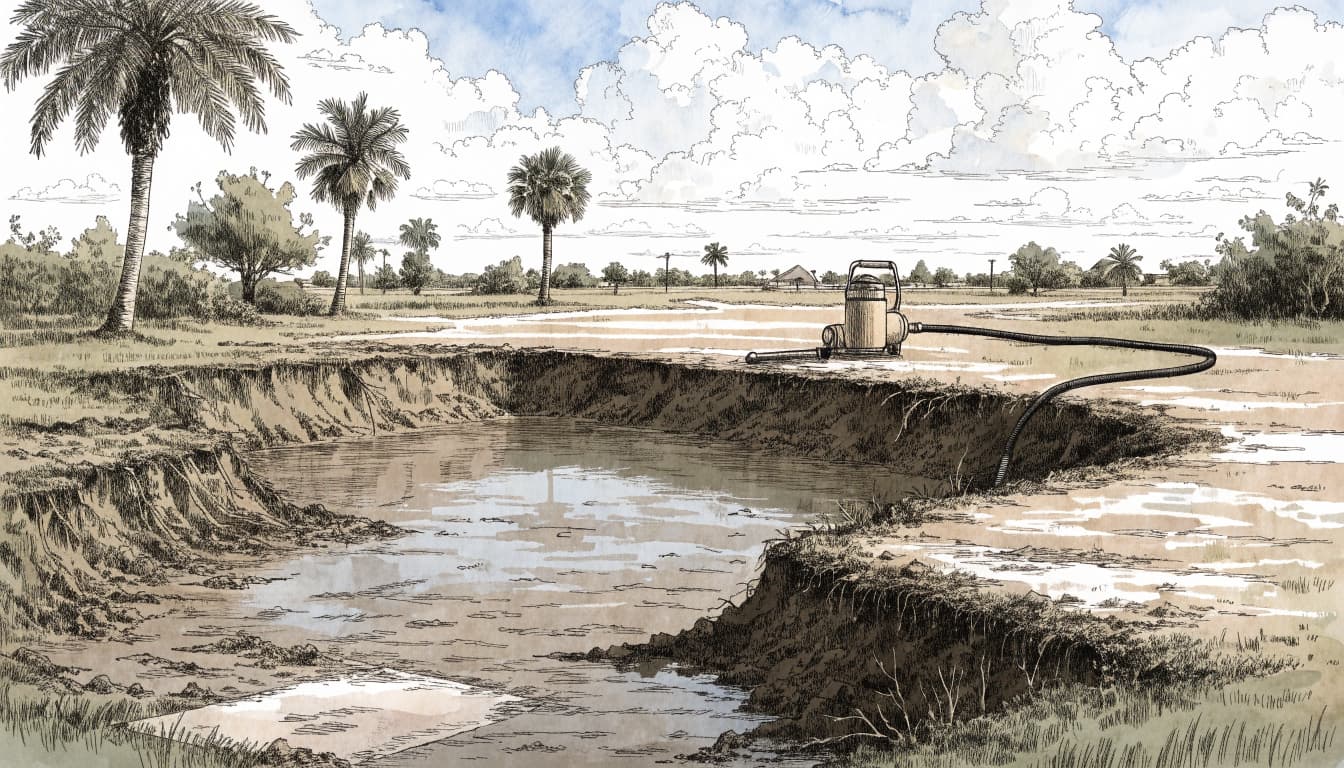
A flooded dig can resemble a pond, but it remains an unfinished construction site. Water can hide changes in depth, loose soil, reinforcing steel, plumbing, and debris.
Stay away from the edges and keep access restricted
Saturated ground can lose stability, including areas that looked firm before the storm. An edge may also be undercut beneath the surface, so its appearance doesn't establish that it's safe.
Don't approach the lip to measure the water or retrieve equipment. Keep people away from the surrounding work area, too. If temporary fencing or another barrier has fallen, notify your contractor without entering the hazard area to repair it.
There's no universal safe standing distance for every flooded excavation. Soil conditions, depth, nearby loads, and visible movement all affect the assessment.
Treat electrical equipment and submerged materials cautiously
Water near temporary power, cords, or electrical equipment adds another hazard. Don't step into standing water to unplug equipment, move a pump, or retrieve a tool.
Instead, report the location of any affected equipment from a safe place. Electrical hazards require qualified help. If someone falls into the excavation or faces immediate danger, call 911 rather than entering the hole yourself.
What Pool Excavation Flooding Can Do to the Ground
The effects depend on the soil, runoff, water level, and construction stage. A single storm can leave several different conditions across one backyard.
Runoff can carry soil into the pool area
Rain flowing across disturbed ground can transport sand, loose fill, and debris into the excavation. That material may cover the bottom, steps, or other shaped areas.
Although the water may eventually recede, deposited sediment doesn't disappear with it. The contractor needs to assess whether cleanup or reshaping is necessary before the next construction stage.
Roof runoff, low spots, and soil piles can influence where water travels. However, changing those drainage paths without coordination can move the problem toward the home or a neighboring property.
Excavation walls and supporting soil can change
Wet excavation sides can shed material, a process often called sloughing. More substantial movement can alter the intended pool dimensions or undermine nearby ground.
Meanwhile, softened areas at the bottom may no longer provide the conditions expected for construction. Removing visible mud alone doesn't establish that the underlying support is suitable.
A dry-looking excavation isn't proof that its sides and bottom are ready for construction.
Depending on the findings, the response may include removing loose material, restoring the excavation profile, or obtaining engineering input. Flooding doesn't automatically require redesign, but changed conditions deserve attention.
Why Cape Coral Groundwater Changes the Response
Cape Coral properties can have different drainage conditions even along the same street. Elevation, soil density, and placed fill all influence how a backyard responds to prolonged rain.
Water may enter from more than one direction
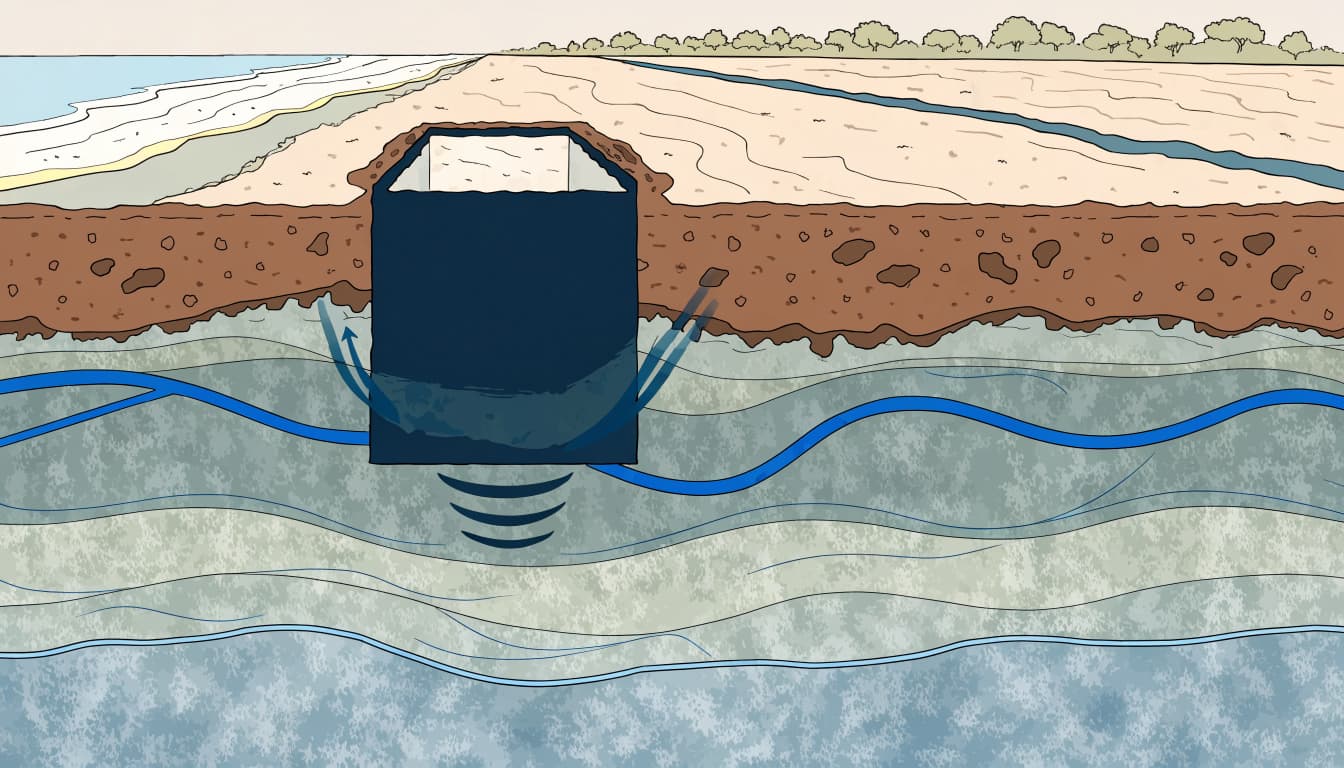
Some flooding comes from rain landing directly in the excavation or running across the yard. Groundwater can also seep through the sides and bottom.
As a result, water may continue entering after the rain stops. A pump that removes surface water doesn't necessarily resolve groundwater entering the excavation.
Our explanation of Cape Coral water tables and gunite pool design covers how those conditions influence excavation and structural planning.
The construction stage affects the concerns
An open soil excavation presents different issues than a site with steel, plumbing, or a completed gunite shell. Before concrete placement, the crew needs suitable excavation conditions and properly positioned construction components.
If the shell already exists, groundwater pressure around and beneath it also matters. An empty shell can face upward pressure when surrounding groundwater is high.
Reinforcement helps a shell carry its designed loads, but it doesn't replace water management. Drainage, dewatering, and any structural response must fit the site and approved design.
Pumping and Drainage Need a Site-Specific Plan
Renting a pump may look like the fastest solution. However, water removal involves more than selecting equipment and placing a hose.
The contractor needs to assess how water removal affects the soil
Pumping changes water conditions inside the excavation. Depending on the soil and groundwater, uncontrolled water movement can carry soil particles or contribute to instability.
The contractor must consider where the water originates, whether more water is entering, and what surrounds the excavation. Nearby foundations, utilities, and other structures can affect that decision.
A crew may need temporary drainage or a dewatering arrangement rather than simply pumping out standing water. There isn't one pumping method that suits every Cape Coral backyard.
Coordinate before pumping , including when someone offers to help with privately owned equipment.
Discharge location matters as much as removal
Pumped water needs a suitable destination. Sending it onto an unstable edge can cause erosion or allow it to flow straight back into the hole.
Likewise, directing water toward a neighbor, the house, or an unsuitable drainage area can create another problem. Water carrying sediment may also require controls.
Don't assume a nearby street drain or canal is an acceptable discharge point. The contractor's drainage plan needs to address the receiving area, sediment, and applicable restrictions.
Also, don't move or shut off an existing contractor-installed pump without coordination. It may be managing groundwater even when the excavation appears relatively dry.
What Homeowners Can Do After the Storm
You can help without taking over excavation or drainage work. Keep your observations focused on what you can see safely.
- Contact your pool contractor and describe when the flooding appeared, whether rain continues, and any visible changes.
- Take photos from a safe, accessible location. Include the wider yard, damaged barriers, and runoff paths without approaching the excavation edge.
- Report water near the house, fallen fencing, exposed equipment, or obvious soil movement promptly.
- Keep other trades, deliveries, and visitors out of the affected work area until the contractor assesses access.
If we're building your pool, send us those observations before arranging independent pumping or cleanup. That keeps decisions about water, soil, and the next construction stage coordinated.
Avoid adding fill, digging a drainage trench, or redirecting downspouts toward another part of the property on your own. Those changes can affect excavation support and drainage beyond the flooded area.
Keep photos and written communications together so everyone works from the same information.
How Flooding Can Affect Your Construction Schedule
A weather interruption and a site-recovery delay aren't always the same thing. Rain may stop work immediately, while saturated ground or damaged excavation areas can extend the interruption afterward.
Before restarting, the contractor needs to assess access routes, excavation shape, supporting soil, and any installed work. Muddy side yards may prevent equipment access even after water leaves the hole.
Then the project must fit back into its construction sequence. Excavation cleanup, steel preparation, inspections, and concrete placement depend on earlier work being ready. Our Cape Coral gunite pool construction timeline explains those stages.
Some gaps also belong to normal construction, including curing and inspections. A quiet jobsite doesn't, by itself, show that flooding caused damage.
A useful update identifies the next milestone, what must happen first, and whether the completion outlook has changed. The condition of the site provides a better basis than an automatic restart date.
Broader storm preparation for pool construction also matters when additional heavy rain or wind is approaching.
Frequently Asked Questions
Does a flooded excavation mean the pool must be rebuilt?
Flooding alone doesn't establish that rebuilding is necessary. Before the shell exists, the work may involve water management, sediment removal, and restoring disturbed areas. If concrete or other components are already installed, the contractor needs to assess their condition separately. The construction stage and actual damage determine the response.
Can construction resume as soon as the hole is empty?
Water removal is only one part of recovery. The excavation still needs suitable soil conditions, correct dimensions, safe access, and properly prepared components for the next stage. Water may also return if groundwater remains high. The contractor's assessment determines whether the site is ready.
Will every rainstorm flood an open pool excavation?
No. Rainfall, lot elevation, runoff patterns, groundwater, and existing site controls influence the outcome. Two nearby properties can respond differently. However, even a storm that leaves little standing water can soften access routes or move loose soil, so water depth isn't the only concern.
Keep the Response Coordinated Before Work Restarts
A flooded pool excavation needs controlled recovery based on the ground, water source, and construction stage. Standing water doesn't automatically mean lasting damage, but clearing it doesn't automatically make the site ready.
Keep people away and coordinate with your pool contractor before anyone pumps or enters the excavation. Restoring suitable conditions before work continues protects both the construction process and the pool you're building.