
Hurricane Season Pool Construction in Southwest Florida
A pool project in Cape Coral or Fort Myers doesn't stop when June arrives, but hurricane season pool construction requires a more careful schedule. Heavy rain, strong wind, saturated soil, inspection closures, and delayed deliveries can affect nearly every active jobsite.
That doesn't mean you need to postpone your backyard plans until winter. A local builder can help you choose realistic milestones, protect unfinished work, and adjust the construction sequence when conditions change. The right plan begins with understanding how storms affect each phase.
Why Southwest Florida's Storm Season Affects Pool Schedules
The Atlantic hurricane season runs from June 1 through November 30. Southwest Florida often sees its most unsettled weather during the summer and early fall, although tropical systems can affect the region outside the busiest months.
A storm doesn't need to make landfall in Cape Coral or Fort Myers to disrupt construction. A system moving through the Gulf can bring several days of rain, high wind, lightning, storm surge concerns, and flooded roads. Those conditions affect both safety and the quality of the work.
Rain is often the most common source of delay. Excavated soil can become soft and difficult to access. Standing water may collect inside the pool excavation, while runoff can wash soil into trenches or across the future deck area. Crews may need to pump water, stabilize the site, or wait for the ground to dry before continuing.
Wind creates separate problems. Concrete placement, screen enclosure work, paver installation, deliveries, and equipment handling all require safe working conditions. Crews may also need to secure loose materials before a storm, then inspect the property after it passes.
Inspections and permitting can add another layer. County offices may close, inspectors may reschedule appointments, and roads may become unsafe for travel. A delay at one stage can affect later trades because pool construction follows a set sequence.
A weather delay protects the project when conditions could affect safety, soil stability, concrete work, or finished materials.
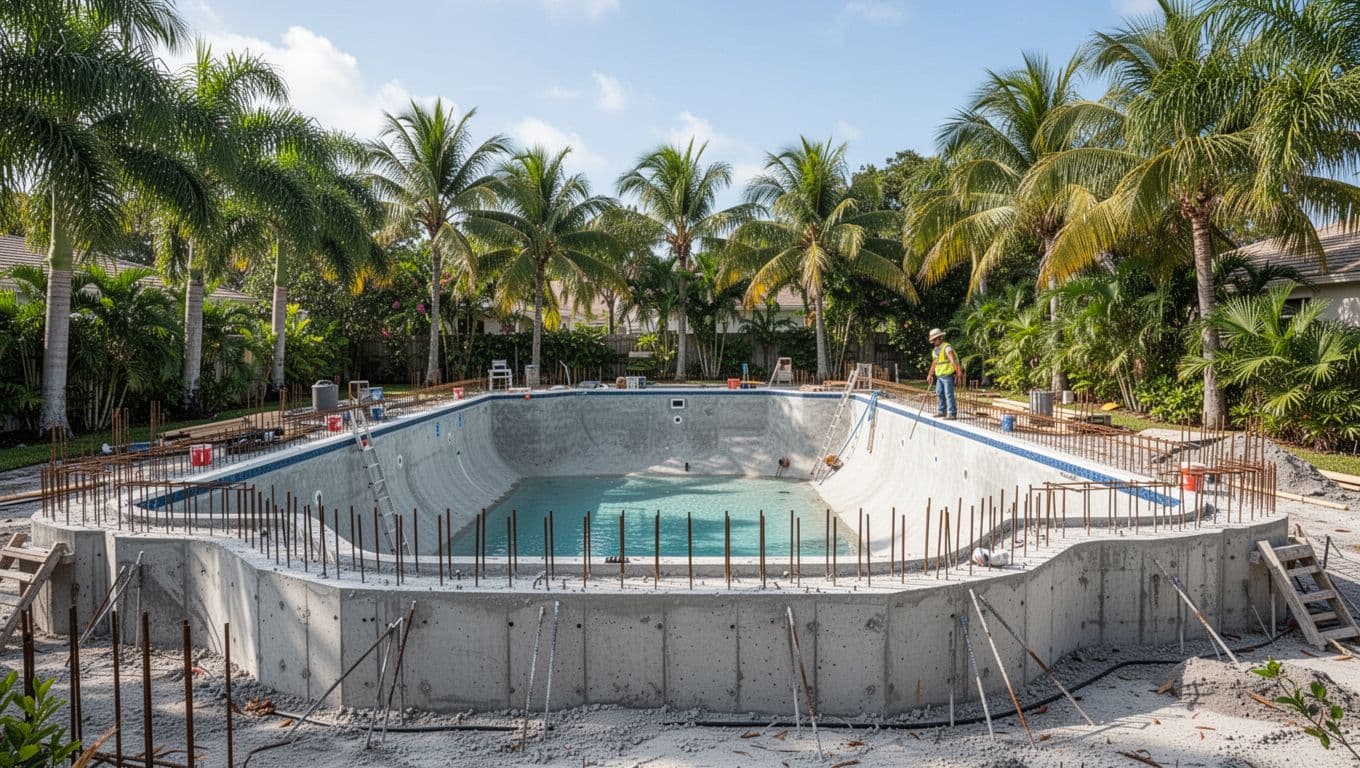
How hurricane season pool construction affects each stage
Every phase responds differently to tropical weather. The table below shows where homeowners are most likely to see schedule changes.
| Construction stage | Weather concern | Possible effect |
|---|---|---|
| Design and permits | Office closures or inspection changes | Approvals and inspections may move |
| Excavation | Saturated soil, flooding, and erosion | Work may pause while the site is drained or stabilized |
| Steel and plumbing | Unsafe access and standing water | Crews may wait before entering the excavation |
| Concrete shell | Rain, lightning, and poor site conditions | Placement or finishing may be rescheduled |
| Deck, tile, and screen | Wet bases and high wind | Installation may happen in a different order |
| Equipment and finishes | Delivery delays, power issues, and cleanup | Final work may shift after storm inspection |
The excavation phase usually carries the greatest storm exposure. An open hole can collect water quickly, and heavy runoff can erode the sides or soften the soil around the work area. Your builder may need to remove water and inspect the excavation before steel, plumbing, or concrete work resumes.
The steel and plumbing stages also depend on safe access. Workers shouldn't enter an unstable, flooded, or muddy excavation. Rebar, pipe, fittings, and other materials may need protection or repositioning if a storm approaches.
Concrete work requires careful timing. Pool shells are commonly formed with reinforced concrete, and the builder needs suitable conditions for placement, finishing, and early curing. Rain or lightning during a scheduled pour can create safety and quality concerns. If conditions change, postponing the pour is usually better than rushing it.
Decking, tile, coping, and screen enclosure work can face different problems. Wet soil can affect the base below a deck. Wind can make screen installation unsafe. Mortar, grout, adhesives, and other finish materials may also need dry conditions.
The project may not stop completely during a weather delay. While one outdoor task waits, the builder may review materials, coordinate inspections, prepare equipment, or schedule the next available crew. However, the sequence can change, and completion dates should remain flexible.
Protecting an active pool construction jobsite before a storm
Your pool builder should lead the storm preparation plan, but homeowners still have an important role. Ask how the crew will secure the property before severe weather and who will check the site afterward.
Loose materials are a major concern. Boards, pipe, packaging, tools, temporary fencing, and other items can become hazards in high wind. Depending on the stage of construction, the crew may secure, relocate, or remove those materials.
An active excavation needs special attention. Never enter the hole yourself, even if the water appears shallow. The sides may be unstable, and hidden electrical or plumbing hazards could be present. Keep children, pets, and visitors away from the work area.
Before construction begins, ask your builder how stormwater will be managed. Gutters, downspouts, temporary drainage, pumps, and access routes may all matter during a period of heavy rain. Don't move pumps, barriers, machinery, or protective materials without speaking with the crew.
Homeowners can also take a few practical steps:
- Save your builder's office number and after-hours contact information before a storm forms.
- Ask whether you should remove patio furniture, planters, umbrellas, or decorations near the construction area.
- Photograph the site and visible materials before severe weather, especially if the project is in excavation or concrete work.
- Keep vehicles away from muddy access areas unless the builder approves entry.
- Follow county emergency instructions and stay away from the property until officials and the builder say access is safe.
- Report standing water, erosion, damaged fencing, exposed wiring, or fallen branches instead of attempting repairs yourself.
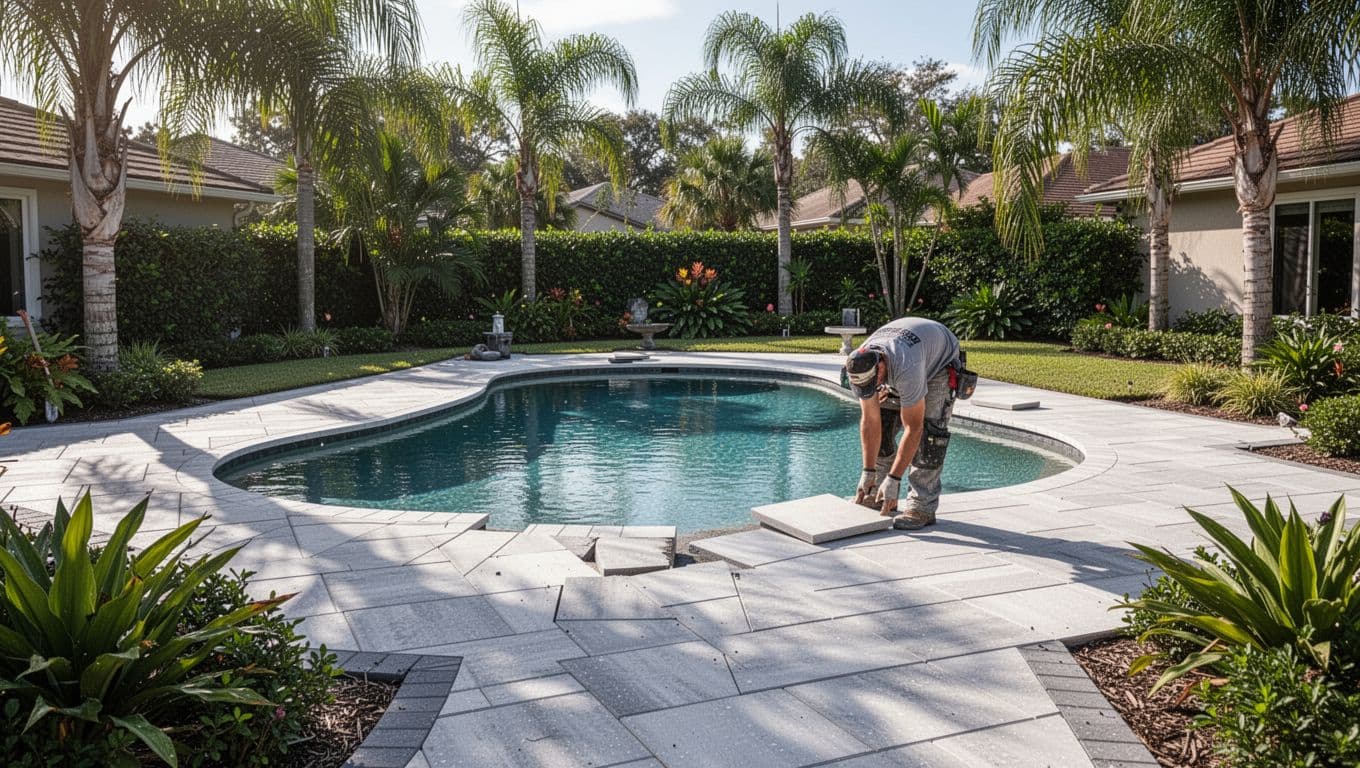
After a storm, the site may need cleanup before construction resumes. The builder should inspect the excavation, shell, plumbing, deck base, equipment, and surrounding property. A short inspection delay can prevent larger problems caused by working over unstable soil or damaged materials.
Planning a realistic construction schedule
The best time to discuss hurricane planning is before the contract is signed. Ask your builder which milestones depend on dry weather, which steps require inspections, and how the company handles storm-related schedule changes.
Avoid treating a projected completion date as a guarantee during hurricane season. Construction schedules depend on permitting, material availability, crew scheduling, inspections, weather, and the condition of the property after a storm. A builder who gives you clear milestones is more useful than one who promises an exact finish date without discussing these variables.
A useful schedule may include target windows for excavation, steel and plumbing, concrete, decking, screen installation, equipment, interior finish, and startup. It should also identify decisions you need to make before each stage. Late changes to the pool shape, finish, deck material, or features can affect ordering and scheduling.
Communication matters just as much as the calendar. Ask how often you'll receive updates and how the builder will notify you about weather holds, inspection changes, or material issues. Confirm who will contact you if the crew needs access after a storm.
You can review the typical sequence in San Juan Custom Pools & Spas' custom pool construction process, which includes planning, permits, excavation, steel, concrete, backfill, deck work, screening, equipment, electrical work, interior finish, and startup. Knowing the order helps you understand why a delay in one phase may affect several later tasks.
Design decisions also deserve attention before the busiest part of the season. Confirm your pool shape, water features, tanning ledge, deck, finish, equipment, and screen enclosure details early. San Juan's custom pool and spa services include options such as waterfalls, deck jets, paver decks, spas, automation, and salt chlorination.
Questions to ask your Southwest Florida pool builder
A good planning conversation should cover more than the estimated finish date. Ask these questions before work begins:
- What is the storm preparation plan for my specific construction stage?
- Who secures loose materials and checks the property after severe weather?
- What conditions would pause excavation, concrete placement, decking, or screen work?
- How will you notify me about a weather delay or inspection reschedule?
- What should I remove from my yard before a storm?
- Who handles pumping, cleanup, and damage assessment after heavy rain?
- How will storm damage affect the scope, cost, insurance, or warranty?
- What must be inspected before the crew can safely return?
The answers should match the actual stage of your project. A plan for an open excavation won't look the same as a plan for a nearly finished pool with installed equipment and a screen enclosure.
Keep communication in writing when a storm affects the schedule. A short email or text can confirm the current stage, site condition, next inspection, and expected update. Photos can also help the builder assess visible conditions without asking you to enter an unsafe area.
Homeowners should also understand the difference between a normal weather delay and property damage. Rain that pauses work may be part of normal scheduling. Flooding, erosion, fallen trees, damaged materials, or damage caused by outside conditions may require a separate review.
Conclusion
Hurricane season pool construction in Southwest Florida requires flexibility, clear communication, and careful site management. Rain and wind can delay excavation, concrete, inspections, decking, screens, and final equipment work, but a storm-aware plan helps protect the project.
Ask your builder about weather-sensitive milestones, jobsite preparation, storm inspections, and restart conditions before construction begins. When the schedule leaves room for changing conditions, your new pool has a better chance of reaching completion with the quality and care your backyard deserves.