How Cape Coral Water Tables Shape Gunite Pool Design
Cape Coral backyards can look ready for a pool until the first cut into the soil. Then the ground starts telling a different story, and gunite pool design has to answer it.
High groundwater matters before excavation because it changes what a builder can safely dig, how the shell gets supported, and how the finished pool will behave after heavy rain. In Southwest Florida, that planning step is not a detail. It is part of the foundation.
Key Takeaways
- Cape Coral's water table can rise close to the surface, which affects excavation, drainage, and shell stability.
- A gunite pool needs more than a shape and a finish, it needs a plan for groundwater pressure and soil movement.
- Builders often use drainage, dewatering, structural reinforcement, and smart grading to keep the pool stable.
- Ignoring the water table can lead to cracking, shifting, deck separation, and costly repairs.
- Homeowners should ask direct questions about site conditions, drainage, and engineering before signing a contract.
Why Cape Coral's Groundwater Changes the Job
Cape Coral sits in a place where water is never far away. That can be a plus for the view, but it complicates pool construction. After a stretch of rain, the water under a yard may rise fast, and a site that looked dry can turn soggy in a day.
A gunite pool shell is strong, but it still depends on the ground below it. If that ground stays saturated, the soil can soften, settle, or push back in ways that affect the shell later. That is why a good gunite pool design starts with site conditions, not with the shape of the pool.
Local yards also vary more than many homeowners expect. Two lots on the same street can drain differently because of elevation, soil density, or how the lot was filled years ago. A builder who understands Cape Coral has to read those clues before the first excavator bucket drops.
What High Water Does During Excavation
Excavation is where groundwater problems show up first. A hole that should stay open can start filling with water, and then the sides of the excavation can slough off or collapse. That slows the job and can change the final shape of the pool if the site keeps moving.
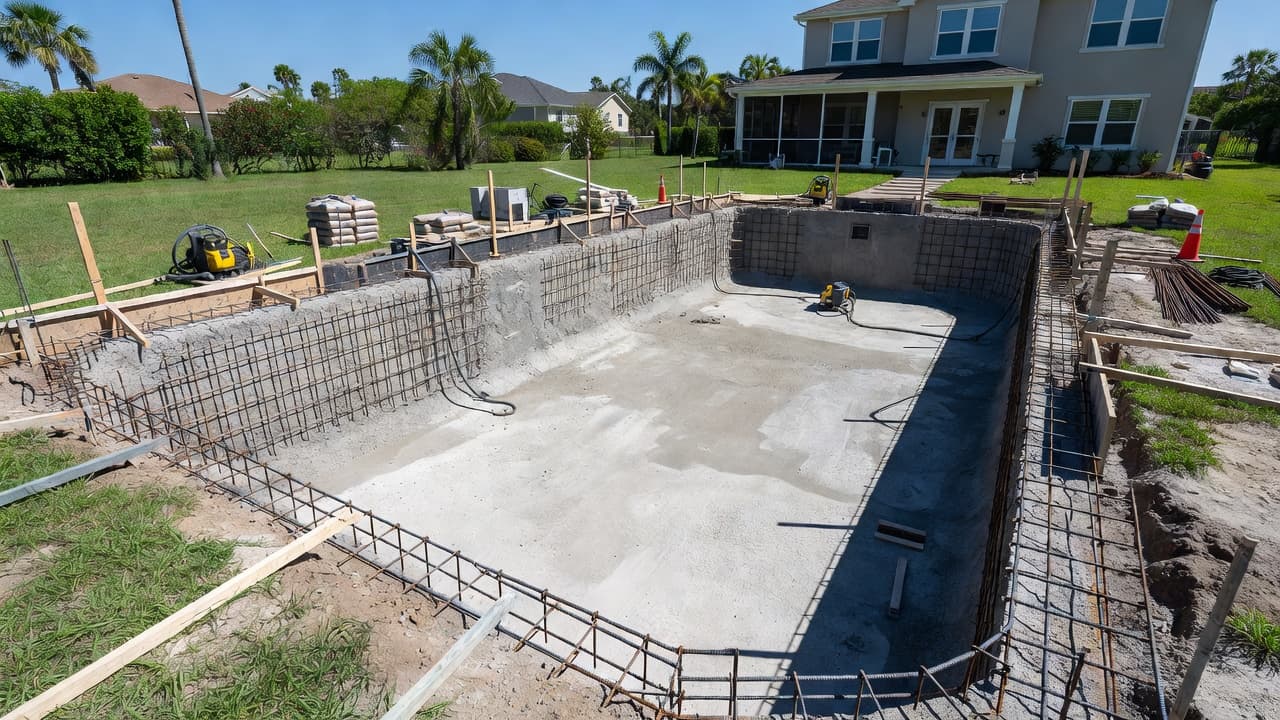
A strong pool builder plans for that early. The work often moves in stages, from layout to steel to concrete, and each stage gives the team a better chance to manage wet soil and keep the shell true. You can see how those steps fit together in the swimming pool build phases, which is the kind of sequence that matters when the ground is already wet.
A shell can look perfect the day it is shot, then move later if the ground below it stays wet.
That is why dewatering matters. Builders may use pumps, temporary drainage, or other site controls to keep groundwater down while they dig and form the pool. The goal is simple, a clean excavation that does not keep collapsing or collecting muddy water.
Design Choices That Help Gunite Pools Hold Up
High groundwater does not mean you should skip a gunite pool. It means the design needs to be smarter. The right choices can help the pool resist pressure, drain properly, and stay in place after storms.
Structural choices that matter
The shell itself needs attention first. Engineers and builders may specify heavier steel reinforcement, proper rebar placement, and a concrete shell built for the site conditions. Those details are not visible once the pool is finished, but they affect how the structure holds up over time.
Shell depth matters too. Deeper sections, raised spas, and special features put different loads on the structure. A pool with a tanning ledge or a raised wall has to account for those forces, especially when the soil below stays wet for long periods.
Drainage details that are easy to miss
Drainage is the other half of the equation. A pool should not trap water around the shell or around the deck. Builders may use underdrains, gravel zones, or other drainage details to help move water away from the structure.
Hydrostatic relief also comes into play. In plain terms, that means giving underground water a safer path so it does not push hard against the bottom of the shell. If that pressure has nowhere to go, it can become a real problem after heavy rain or during a long wet season.
Backfill needs care as well. Loose fill around the shell can settle later, which may leave dips near the coping or deck. Good compaction helps keep the pool edges stable and makes the finished space feel solid underfoot.
Pool height and yard grading
The finished pool should sit well within the yard, not fight the yard. That means the builder has to think about grade, deck slope, and where runoff will go after a storm. In Cape Coral, a deck that slopes the wrong way can send water toward the pool instead of away from it.
This is where local experience matters. A contractor who works in Southwest Florida knows that design and drainage belong in the same conversation. If those pieces get split apart, the pool may look fine on opening day and still cause trouble later.
What Happens When Builders Ignore the Water Table
When groundwater is ignored, the problems often show up after the excitement fades. The pool may not fail right away, but stress builds under the surface. Then the first rainy season, or the first long stretch of wet weather, exposes the weak spots.
Cracking is one of the most obvious risks. Movement in the soil can stress the shell, the deck, or the tile line. In some cases, coping separates from the deck or small gaps appear where the pool meets the surrounding surface.
Floating is another concern. If underground water pressure gets high enough, it can push against the pool shell from below. That does not happen every day, but when it does, the repair can be expensive and disruptive.
Plumbing can suffer too. Pipes may shift if the backfill settles unevenly, and that can create leaks or circulation problems. Once water keeps moving where it should not, the whole system becomes harder to manage.
The worst part is that many of these issues do not show up on the first inspection. They show up months later, after weather and soil have had time to work on the structure. That is why the design stage matters so much.
Questions to Ask Before You Sign
A homeowner does not need to be a builder to ask smart questions. In fact, the best time to ask them is before the contract is signed. A few clear answers can tell you whether the company has real experience with Cape Coral soil and groundwater.
Ask these questions:
- How do you check the water table on my lot before excavation?
- What do you do if groundwater enters the dig during construction?
- Will the shell design be adjusted for my site conditions?
- How do you handle drainage around the pool and deck?
- What backfill and compaction methods do you use?
- How do you protect against settling after the pool is finished?
- Who reviews the engineering, and what permits are part of the job?
The answers should sound specific, not vague. A builder who works with wet sites will talk about drainage, shell reinforcement, excavation timing, and grading without hesitation. If the answers stay general, keep asking until the plan is clear.
You can also ask to see examples of similar projects in Cape Coral or nearby Fort Myers. A finished pool on a dry lot is useful, but a completed pool on a tricky site tells you much more about the builder's process.
Conclusion
Cape Coral's high water table does not rule out a beautiful gunite pool. It does mean the project has to respect the ground before it can impress anyone above it.
When the gunite pool design accounts for groundwater, drainage, and soil movement, the pool has a much better chance of staying level, watertight, and comfortable for years. That starts with honest questions, careful site work, and a builder who treats the yard as part of the structure, not just the backdrop.