
What Is Gunite Rebound, and Why Remove It?
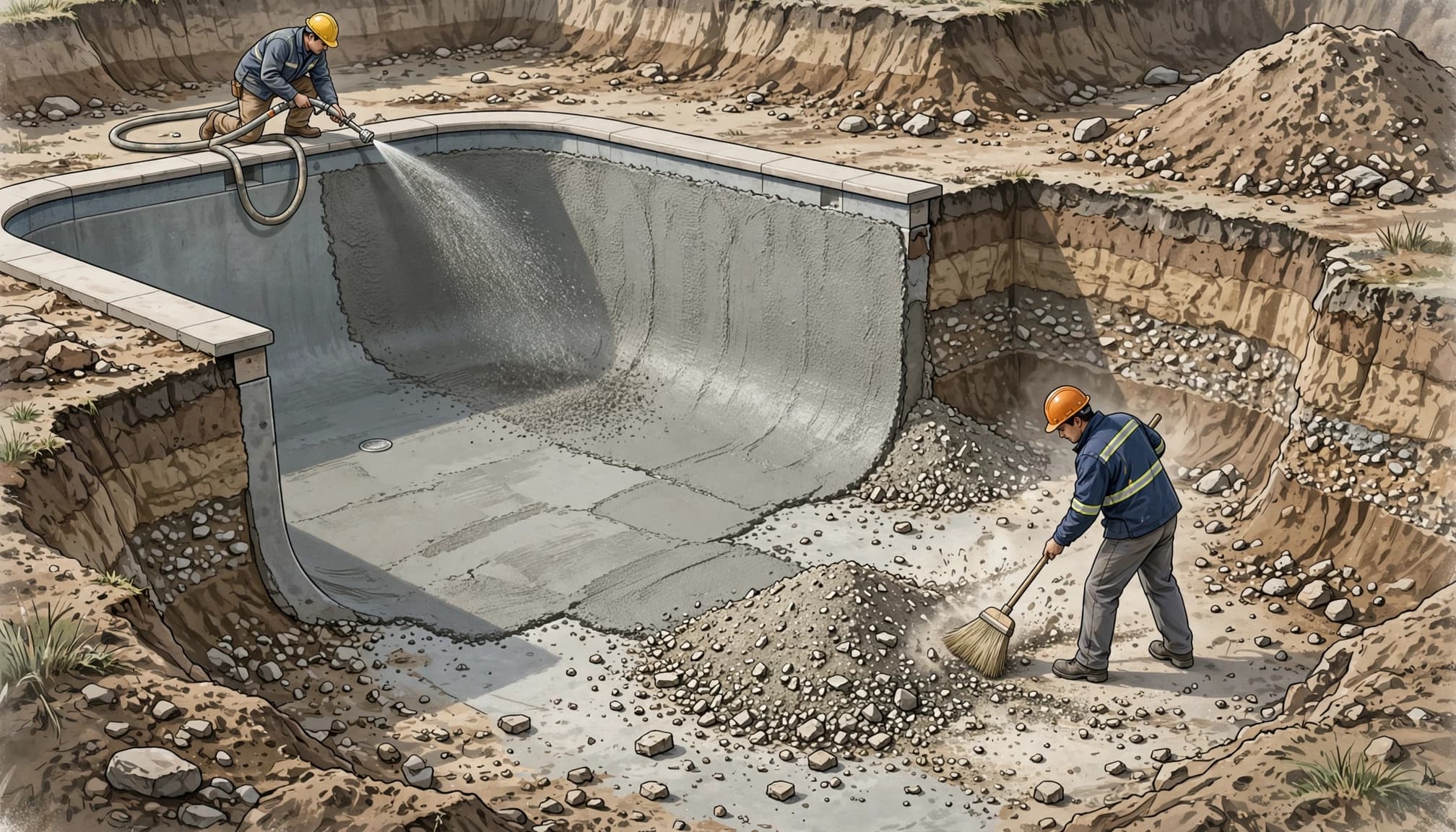
Gunite rebound is material that bounces away during pool shell application instead of becoming part of the concrete structure. Crews remove it rather than bury it in the walls, floor, or features.
A little loose material in the excavation can be a normal part of the process. What matters is how the crew handles it while building your pool's structural shell .
Understanding that distinction can help you make sense of what happens on gunite day.
How Gunite Rebound Forms
Gunite is a dry-mix concrete application method. Cement and aggregate travel through a hose, and the nozzle operator adds water as the material exits. The mixture hits the prepared pool area at high velocity, forming the shell around the steel reinforcement.
Some material bounces away instead of becoming part of the placed concrete. That loose material is called rebound.
Where You Might See Rebound
Rebound can collect in the work area as the crew sprays the pool. You may notice loose material near the floor or other surfaces below the application area.
Its presence alone doesn't mean the crew has done something wrong. Gunite application involves material striking a surface at speed, so the crew must account for what bounces away as it works.
Gunite and Wet-Mix Shotcrete
Both gunite and wet-mix shotcrete are used to build concrete pool shells. With wet-mix shotcrete, water is added before the concrete reaches the hose. The term shotcrete can also refer broadly to pneumatically applied concrete.
Wet-mix application may produce less rebound in some circumstances, but the amount depends on the crew, equipment, nozzle angle, and surface conditions. Our guide to wet-mix shotcrete and dry-mix gunite explains the difference between the two methods.
Why Rebound Doesn't Belong in the Pool Shell
A pool shell is designed around properly placed concrete and steel reinforcement. The material that bounces away hasn't become part of that placed concrete, so crews remove it rather than treat it as shell material.
That distinction matters even when loose material looks similar to the gunite on the wall. The goal is to build the pool to its specified shape and thickness with material placed for that purpose.
Bond and Shell Strength
Gunite placement depends on the material reaching the intended surface and becoming part of the concrete shell. Areas around steel, plumbing penetrations, corners, and steps need particular attention because the crew must achieve full coverage there.
Loose rebound doesn't provide the same basis for a bond as properly placed material. Removing it keeps the crew focused on building the shell with concrete intended to meet the project's structural requirements.
The strength of a pool shell also depends on more than cleanup. Reinforcement, concrete quality, placement, shell geometry, and curing all play a part.
The Surface Beneath the Finish
The gunite shell is the structure beneath your pool's interior finish. Plaster, quartz, pebble, or another finish is applied later, after the shell and other construction stages are ready.
A finish needs a suitable surface beneath it. Removing loose rebound is part of keeping that distinction clear: the crew builds the shell with placed concrete, then prepares the shell for the selected finish.
A rough pool finish doesn't, by itself, establish a shell problem. The material's intended texture, surface wear, and other conditions can affect how a gunite pool finish feels.
When Crews Clear Gunite Rebound
Rebound must be addressed during shell placement , rather than left to become enclosed as work continues. The important distinction for a homeowner is between material the crew removes and material it intentionally places as part of the shell.
This applies throughout the pool, including areas with details such as benches, steps, and fittings. Those features have to be formed as part of the planned shell, not built around loose material that has bounced away.
Seeing some loose material while work is underway isn't the same as seeing it left inside the completed structure. Gunite placement is an active process, and the work area can look different at different stages of the day.
What Happens Before and After Gunite Placement
Before gunite application, the pool's excavation has to be prepared for the structural shell. Crews install the reinforcing steel, plumbing, and any forms needed for the design. The steel follows the pool's planned walls and floor, along with features such as steps or a spa.
That preparation gives the placement crew a framework for building the shell. Our guide to pool excavation before steel and gunite covers the earlier stages.
After placement, the concrete shell needs time to cure. Tile, coping, equipment, decking, and the interior finish are separate stages that may follow. The exact sequence depends on the project.
Gunite day is therefore a major construction milestone, but it isn't the day your pool is ready to fill and use. The finished surface and startup work still lie ahead.
What Homeowners Should Understand About Cleanup
A gunite crew's job involves more than spraying enough material to cover the excavation. The operator must build the pool to the planned dimensions while paying attention to steel, plumbing, and changes in shape.
Rebound removal belongs in that process. It keeps loose material separate from the concrete intended for the shell and helps the crew maintain the planned placement around features.
For a homeowner, the useful takeaway is simple: loose material during application can be expected, but it shouldn't be incorporated into the structure. A tidy-looking pool after placement also doesn't tell the whole story. Shell quality depends on the preparation, concrete application, and curing that happen throughout construction.
A Strong Shell Starts With Proper Placement
Gunite rebound is material that bounced away from the application surface. Crews remove it so the pool shell is built with properly placed concrete rather than loose material.
The finished pool will eventually cover that shell, but the work beneath the surface still matters. Careful placement and rebound removal are part of building the foundation for the finish you'll see and use.