
What Causes Calcium Nodules on a Gunite Pool Finish?
Calcium nodules are raised mineral deposits that can appear on a gunite pool's interior finish. They may be linked to water chemistry, moisture moving through the pool structure, or conditions within the finish.
The cause isn't always visible from the surface. For homeowners planning a new pool or considering a renovation, understanding the difference between a deposit and an underlying finish problem can help guide the right repair.
How Calcium Nodules Differ From Pool Scale
Gunite forms the pool's concrete shell. The surface you touch is a separate interior finish, such as plaster, quartz, or pebble.
Both nodules and ordinary calcium scale can leave a pool feeling rough. Their patterns offer clues, although appearance alone can't establish a diagnosis.
What nodules look like
Calcium nodules often appear as small, raised white or light-colored bumps on the finish. They may feel sharp underfoot or appear in isolated areas rather than across the entire pool.
A deposit near a crack, fitting, or damaged patch deserves closer attention because moisture may have a pathway through that area. Still, a bump doesn't automatically mean the shell has failed or the pool is leaking.
What ordinary scale looks like
Calcium scale often forms as a broader coating on surfaces exposed to pool water. You may notice a chalky or crusty buildup at the waterline, on tile, or on equipment.
Other conditions can also cause rough pool surfaces and mineral deposits. A professional can assess whether the roughness is a deposit, exposed aggregate, a damaged finish, or another condition.
How Pool Water Chemistry Contributes
Calcium is present in pool water as part of its hardness. When the water's balance favors mineral precipitation, calcium carbonate can collect on surfaces.
Several measurements affect that balance, including pH, total alkalinity, calcium hardness, and water temperature. High pH or excessive calcium hardness can contribute to scaling conditions. On the other hand, water that tends to dissolve calcium can affect cement-based materials.
Water chemistry matters, but a test result alone won't identify the cause of a particular nodule. The pool's finish and any paths for moisture also deserve attention.
Fill water is part of the picture. For example, well water chemistry and gunite pool finishes deserve special consideration because hardness and other characteristics can vary by source.
How Moisture Can Move Through the Pool Structure
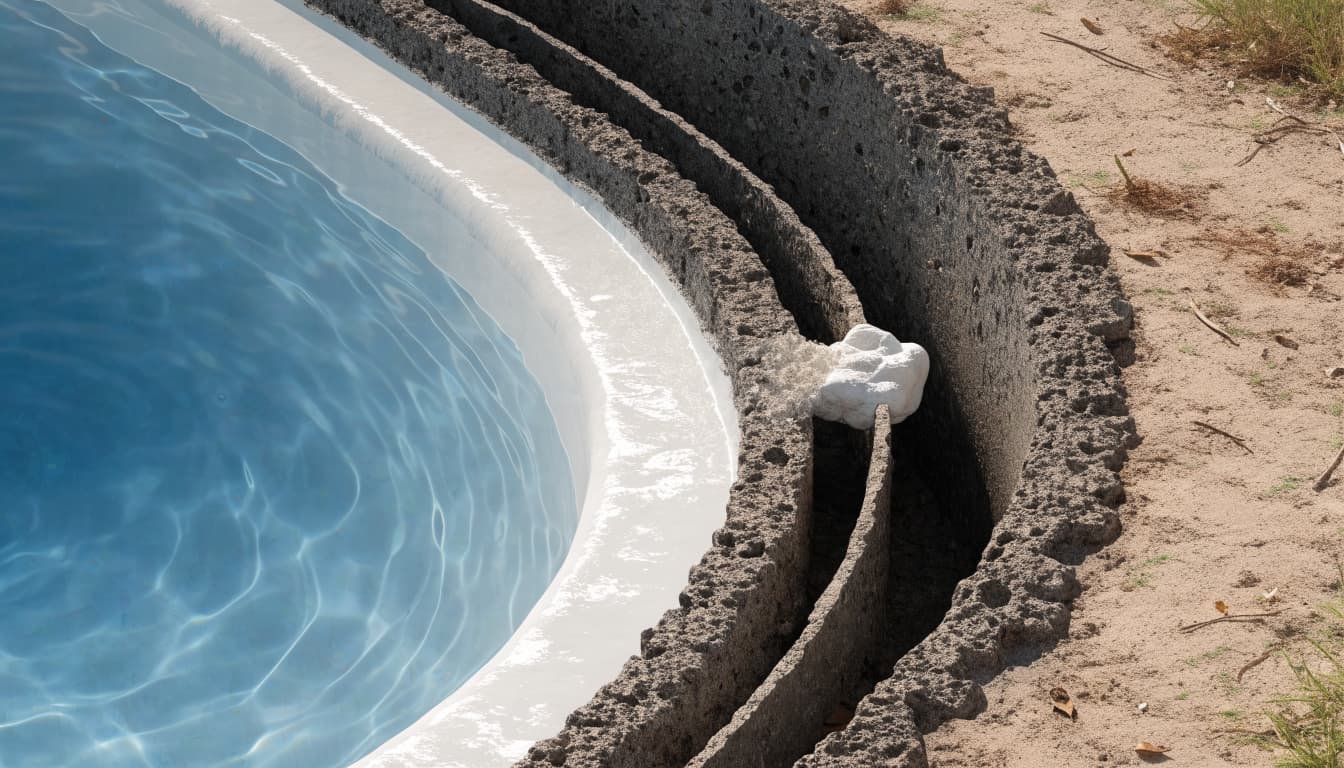
Concrete contains pores, and water can also move through cracks, joints, plumbing penetrations, or poorly bonded areas. When moisture carries dissolved minerals through cement-based material, deposits can form where that moisture reaches a surface.
Groundwater outside the shell
In Southwest Florida, seasonal rain and shallow groundwater can leave soil around a pool wet. Outside moisture may reach a vulnerable area of the shell or finish, particularly where a crack or penetration provides a pathway.
Groundwater conditions vary by property. A nodule by itself doesn't establish that groundwater is entering the pool.
Pool water behind the finish
Pool water may also reach areas behind a finish through a crack or another opening. A hollow-sounding area, loose material, or a recurring deposit near the same spot can give a contractor useful clues about where to inspect.
If you also notice unexplained water loss, a leak test may help distinguish a shell or plumbing issue from normal evaporation. Our guide to gunite pool shell waterproofing options covers conditions that can affect the repair plan.
How the Shell and Finish Affect Deposits
A finish can have a small crack without the structural shell being damaged. It can also have an area that hasn't bonded well to the material beneath it. Either condition deserves assessment when deposits keep returning.
The shell itself needs proper design, concrete placement, and curing. Cracks or defects around fittings and joints can create potential paths for water. A contractor may need to determine whether a visible crack stops at the finish or extends into the shell.
For a new pool, the finish installation and startup matter too. Cement-based finishes can release dust and affect pH as they cure. Follow the written instructions for filling, brushing, circulation, and chemical additions.
Ways to Help Prevent Calcium Deposits
Regular water testing helps you catch changes before scale becomes obvious. Keep pH, alkalinity, calcium hardness, and sanitizer within the ranges recommended for your finish, and account for the mineral content of your fill water.
For a new build, ask how the pool's design addresses site drainage, shell construction, and details around fittings. A finish may protect the interior surface, but it isn't automatically a complete waterproofing system.
If you're renovating, address cracks, loose areas, and possible water intrusion before installing a new finish. Covering a damaged area without addressing the condition beneath it can leave the same moisture pathway in place.
Repair Options for Calcium Nodules
The repair depends on what's causing the deposit and how much of the surrounding surface remains sound. A pool professional may remove or treat a localized deposit when the finish beneath it is in good condition.
A damaged finish may need a localized repair. That can involve removing loose material, preparing the area, and applying a compatible patch. Matching an older finish's color and texture can be difficult, so a repair may remain visible.
If cracking extends into the shell, the pool may need structural repair or waterproofing before finish work. A broadly worn or damaged interior may be a better candidate for resurfacing.
Avoid sanding, aggressive scraping, or acid treatments yourself. These can damage the finish or create chemical exposure risks. Don't drain the pool yourself , either. Groundwater pressure can damage an empty shell, so draining requires professional assessment.
Choose a Repair That Addresses the Cause
Calcium nodules can be a surface concern or a clue that moisture has reached material beneath the finish. Their appearance gives you a starting point, not a complete diagnosis.
An assessment of the deposit, nearby finish, water chemistry, and signs of water loss can help identify the right next step. That approach gives a repair a better chance of lasting than removing the visible bump alone.