Pool Shell Waterproofing for Florida Gunite Pools
Southwest Florida's heavy rain and high water tables can test a gunite pool shell long after the concrete is placed. The right pool shell waterproofing system depends on the shell condition, planned finish, groundwater, moisture levels, and manufacturer specifications.
A coating can limit water movement through sound concrete, but it can't repair structural cracks or solve hydrostatic pressure by itself. Homeowners in Cape Coral, Fort Myers, and nearby communities should evaluate those conditions before choosing a product or draining an existing pool.
Why Waterproofing Matters for Southwest Florida Gunite Pools
Gunite, also called shotcrete, creates a strong concrete structure, but concrete still contains pores. Water can move through those pores, cracks, joints, pipe penetrations, and poorly bonded areas. The interior finish helps protect the surface, yet it isn't automatically a complete waterproofing system.
Southwest Florida adds several factors to the decision. Seasonal downpours can saturate the soil around a pool. Many properties also have shallow groundwater, canal frontage, or drainage challenges. When water presses against the outside of an empty shell, it can push moisture through the concrete or lift a poorly bonded coating.
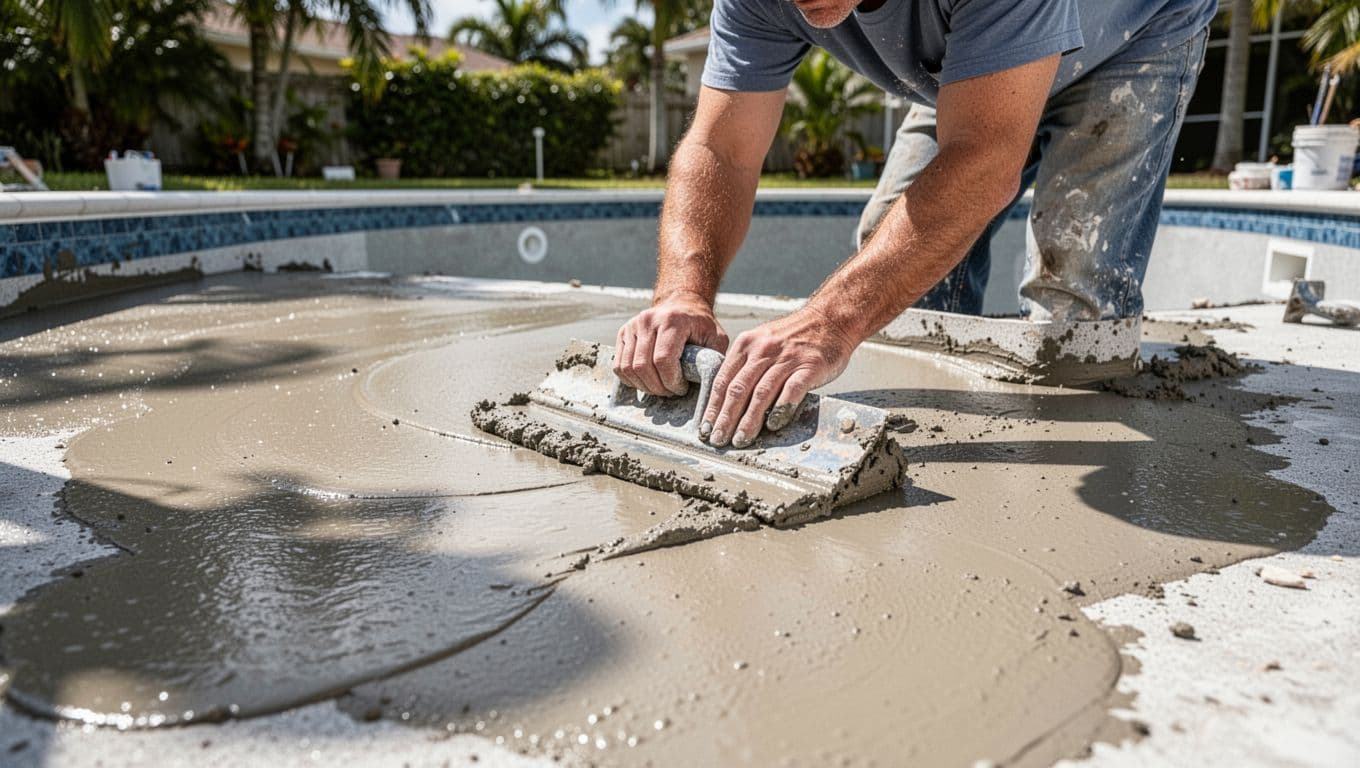
Waterproofing also can't correct a structural problem. Cracks that widen, offset, or continue through the shell need proper evaluation and repair. A flexible coating may cover a small, stable surface crack, but it won't replace structural work.
During a renovation, watch for recurring water loss, damp areas, efflorescence, hollow-sounding plaster, flaking paint, and cracks near fittings. Water loss can also come from evaporation, plumbing, or equipment, so a leak test may be needed before the shell receives any coating.
Don't drain an existing pool without considering groundwater conditions. In a high-water-table area, outside pressure can damage an empty shell. A qualified contractor can review the site, drainage, shell condition, and safe draining method first. Homeowners planning broader gunite pool repair and updates may need to address several of these conditions during the same project.
Pool Shell Waterproofing Options for Gunite Pools
No single waterproofing product fits every gunite pool. The following comparison shows where common approaches fit and where they require caution.
| Waterproofing option | Ideal use case | Key benefits | Limitations | Finish compatibility |
|---|---|---|---|---|
| Integral waterproofing admixture | New gunite construction | Reduces permeability throughout the concrete mix | Doesn't bridge active cracks; depends on correct batching and placement | Must be approved for the planned plaster, quartz, pebble, or tile system |
| Cementitious waterproof coating | Sound shell construction or renovation | Bonds well to mineral surfaces and provides a cement-based substrate | Requires careful preparation and curing; limited movement tolerance | Often suited to cementitious finishes or tile when the system is approved |
| Crystalline treatment | Sound, porous, or damp concrete | Reacts within concrete pores and helps reduce capillary water movement | Doesn't repair moving cracks or every joint; may need a compatible finish layer | Usually requires written approval before plaster, pebble, quartz, or tile |
| Flexible elastomeric membrane | Stable hairline cracks or limited surface movement | Provides flexibility and crack-bridging ability | Can blister, trap moisture, or suffer damage if incompatible with the finish | Use only a permanent-immersion product approved beneath the chosen finish |
| Epoxy pool coating | Sound shell with an exposed coating finish | Creates a dense, chemical-resistant surface | Sensitive to moisture and preparation; not a universal base for plaster or pebble | Generally used with its own approved coating system, not beneath every finish |
The table's main takeaway is simple: finish compatibility matters as much as waterproofing performance . A product that works well as an exposed pool coating may fail if covered with plaster. Likewise, a cementitious base may suit a mineral finish but require different preparation for tile.
Match the System to the Shell, Moisture, and Finish
New gunite construction
New pool construction usually offers the widest range of options because the waterproofing plan can be coordinated with the shotcrete mix, plumbing, interior finish, and drainage design.
An integral admixture may reduce concrete permeability, but it isn't a substitute for proper shell thickness, reinforcement, curing, and construction around fittings. The builder should also identify how the waterproofing layer will meet light niches, skimmers, drains, return lines, and other penetrations.
A cementitious coating may be specified when the finish system calls for an additional waterproof layer. However, the shotcrete contractor, waterproofing manufacturer, and finish manufacturer must agree on the sequence. Surface profile, cure time, moisture content, and bonding requirements all affect the result.
Renovating an existing shell
Renovation requires more investigation because the original shell may have several layers on top of it. Old plaster, paint, epoxy, patching materials, and previous waterproofing products can affect adhesion.
The contractor may need to remove unsound finish material, clean the concrete, open and repair cracks, and expose a stable substrate. A surface coating won't bond reliably to dust, loose plaster, grease, curing compounds, or a failing old coating.
The new finish also changes the recommendation. White plaster, quartz, and pebble finishes are cement-based systems. Tile may require a different surface profile and setting material. An epoxy coating may be appropriate as the exposed finish, but it usually isn't a universal underlayment for a new plaster or pebble surface.
Groundwater and moisture conditions
Moisture must be evaluated on both sides of the shell. Water inside the pool affects the interior surface, while groundwater outside can create pressure behind the waterproofing system. A coating applied to the inside won't stop groundwater from pushing against the exterior.
If a pool has drainage problems, the project may require improvements outside the shell. Depending on the property, that can include better surface drainage, sump pumping during construction, or approved hydrostatic relief measures. The right solution depends on the site, shell design, and local conditions.
Manufacturers also set limits for substrate moisture, temperature, application thickness, curing, and immersion. Those instructions aren't minor details. They determine whether the selected product can bond and perform under the planned finish.
What Proper Waterproofing Work Should Include
A reliable pool shell waterproofing installation starts with preparation, not with opening a bucket of coating.
- The contractor evaluates the site before draining the pool. The review should include groundwater, drainage, shell movement, visible cracking, plumbing penetrations, and the condition of the existing finish.
- Unsound material is removed. Loose plaster, hollow areas, flaking paint, laitance, dust, and contaminants can prevent adhesion. The surface must meet the waterproofing manufacturer's preparation requirements.
- Cracks and penetrations receive the correct repair. Stable hairline cracks may accept a compatible treatment. Structural cracks, joints, leaks around fittings, and movement require materials designed for those conditions.
- The substrate is prepared to the required profile and moisture level. Some cementitious products need a dampened mineral surface. Others require a different moisture range. Standing water and trapped moisture can cause failure.
- The waterproofing system is applied at the specified thickness. Thin spots, missed corners, rough transitions, and poorly sealed penetrations create weak points. The contractor should pay close attention to steps, benches, coves, drains, skimmers, and light niches.
- The coating cures before the finish is installed. Plaster, quartz, pebble, tile, or a topcoat should follow the product's required waiting period. Filling the pool too soon can damage the system or trap moisture.
A written scope should identify the product or system, preparation method, crack repairs, number of coats, cure periods, planned finish, and any drainage work. It should also state what the waterproofing warranty covers and what conditions may fall outside it.
Questions to Ask Before Choosing a System
Ask your pool contractor these questions before approving the work:
- Is the shell structurally sound, or does it need crack and leak repairs first?
- What groundwater and drainage conditions were found around the pool?
- Will the pool be finished with plaster, quartz, pebble, tile, or an exposed coating?
- Does the waterproofing manufacturer approve that exact finish system?
- How will the contractor prepare old plaster, paint, epoxy, or patching material?
- What moisture, temperature, thickness, and cure requirements apply?
- Which areas around fittings and joints receive additional treatment?
- How will the pool be drained and protected during construction?
A contractor should be able to answer these questions without relying on a generic product label. The specification needs to fit the pool being built or renovated.
Conclusion
The best pool shell waterproofing choice for a Southwest Florida gunite pool depends on the actual shell, the surrounding groundwater, the moisture condition, and the finish that will cover or expose the system. Integral admixtures, cementitious coatings, crystalline treatments, flexible membranes, and epoxy coatings each have a specific place.
A durable result begins with a sound shell and careful preparation. Before selecting a product, have the pool evaluated, confirm finish compatibility, and address drainage or hydrostatic pressure that could undermine the work. That approach protects the investment beneath the waterline, where problems are hardest to see and most expensive to correct.