
Solar Pool Heating for Fort Myers Gunite Pools
A sunny backyard doesn't automatically mean comfortable swimming water. For Fort Myers homeowners, solar pool heating can add warmth to a gunite pool, but the result depends on sun exposure, equipment design, and heat loss.
The strongest plan treats heating as part of the whole pool system , including circulation, controls, and the pool's exposed surface. Your swimming schedule also matters, especially if you want an attached spa ready at a particular time.
Start with how the system moves water and collects heat before deciding where it belongs in your project.
Key Takeaways for Fort Myers Homeowners
Solar heating needs suitable collector space and a plumbing layout that works with your pool equipment. The gunite shell itself doesn't prevent installation.
- Solar collectors transfer heat into circulating pool water; they don't generate electricity like photovoltaic panels.
- Collector placement, shade, water circulation, and heat loss all affect the system's usefulness.
- For new construction or renovation, plan heating alongside the pump, filter, controls, and equipment-pad access.
A cover can help retain collected heat, while another heater can provide more control over when heat is available. Those choices should follow how you expect to use your pool.
How Solar Pool Heating Works
Most residential solar pool systems circulate pool water through collectors that absorb heat from sunlight. Many use unglazed polymer collectors rather than glass-covered panels or rooftop electrical modules.
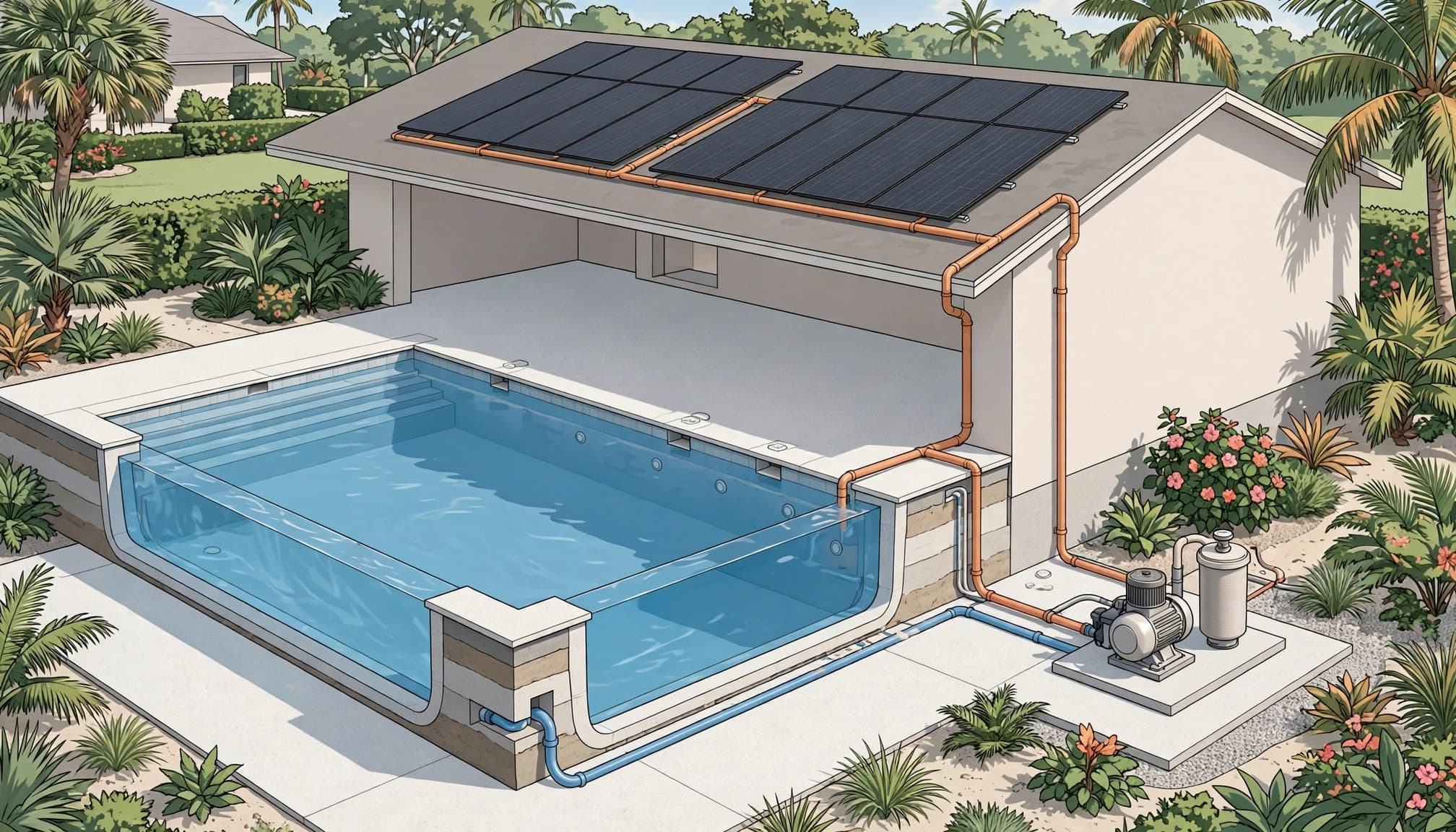
The collector loop uses the pool's circulation system
Water typically passes through the filter before entering the solar loop. A valve directs flow through the collectors, where absorbed solar energy warms the water. The return plumbing then carries it back to the pool.
The pump must support the required flow through both the pool plumbing and the collector circuit. Pipe length, fittings, and equipment restrictions all influence that requirement.
Our guide to gunite pool plumbing basics covers how pumps, valves, heaters, and other components fit together.
Controls decide when water should reach the collectors
An automated solar controller compares pool-water temperature with conditions at the collector sensor. It can direct water through the array when heating conditions are useful and bypass it when they aren't.
This avoids sending water through collectors simply because the pump is running. However, control settings still need to match the collector system's operating requirements.
Solar thermal heating doesn't remove the pump's electricity use. It also doesn't replace filtration, sanitation, or the normal circulation needs of your pool.
Why Solar Heating Works With Gunite Pools
Gunite describes the pool's concrete shell construction. Solar heating connects to the water-circulation system, so compatibility depends primarily on plumbing and equipment rather than the shell material.
Pool shape still matters because a custom design can include a large sunshelf, an attached spa, or separate water-feature circuits.
New construction allows coordinated planning
For a new pool, include heating in the equipment layout before construction advances. That gives the plumbing plan room for bypass valves, collector connections, sensors, and any future backup heater.
Our pool construction process includes engineering, plumbing, equipment installation, and electrical work. Heating decisions belong alongside those stages rather than after the equipment pad fills up.
An attached spa deserves its own heating discussion. Its intended use and temperature requirements differ from those of a swimming pool.
Existing gunite pools need an equipment review
Adding solar collectors usually centers on the equipment pad and the route between it and the collectors. It generally doesn't require changing the gunite shell.
Still, an older pump, crowded valves, or restrictive plumbing can complicate the installation. A system designed around the existing equipment must account for those conditions.
We include heating and equipment updates in our pool renovation and remodeling services. Coordinating related upgrades can avoid replacing plumbing twice when a larger renovation is already planned.
Fort Myers Weather and Pool Heat Loss
Fort Myers has a humid subtropical climate, but local conditions aren't uniform across every backyard. Clouds interrupt direct sunlight, while trees and neighboring buildings can shade collectors even on clear days.
Wind exposure also matters. Moving air above the water encourages evaporation, which carries heat away. A pool near an open waterfront can have different exposure than one sheltered by buildings.
Screen enclosures, landscaping, and privacy structures belong in the site assessment. Their shadows may fall across the water or proposed collector location at different times of day.
Water features create another consideration. Running deck jets, fountains, or waterfalls increases water's contact with air and can increase evaporative heat loss. Their operating schedules therefore belong in the heating plan.
A collector can add heat while the pool loses heat at the surface. Retaining that warmth matters alongside collecting it.
A suitable pool cover helps reduce evaporation when the pool isn't in use. Choose one that fits the pool's shape and remains practical to deploy. A heating cover doesn't replace required pool safety barriers.
Sizing and Placing Solar Collectors
Collector sizing needs more than the pool's gallon capacity. A useful design considers water surface area, desired swimming conditions, available sunlight, and whether you regularly cover the pool.
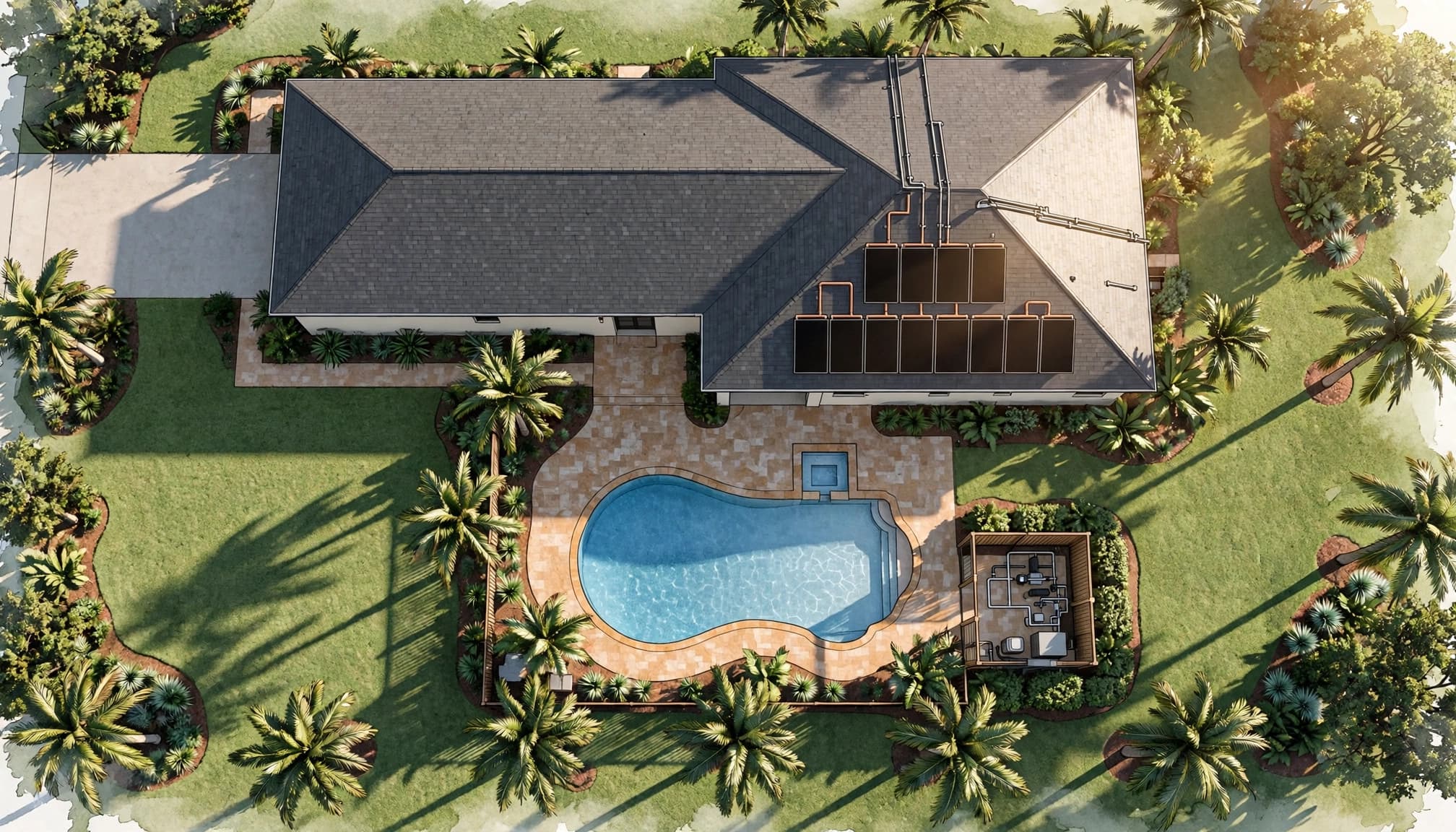
Pool dimensions and intended use shape the design
A larger exposed surface creates more opportunity for heat loss. Greater water volume also requires more energy to raise the water temperature.
Custom gunite features can make simple comparisons misleading. A broad sunshelf adds exposed water area, while a deep section increases volume without adding the same amount of surface.
The design should account for the pool and spa separately where their circulation and heating requirements differ. It should also identify whether solar will provide the main heat source or supplement another heater.
Placement must work for the roof and plumbing
Usable collector space needs adequate sunlight without persistent obstruction. The assessment should account for shadows across the day, surrounding trees, roof geometry, and access for future service.
Roof-mounted systems also need mounting methods suited to the roofing material and attachment details designed for the site's wind exposure. Roof condition matters because future reroofing may require removing and reinstalling collectors.
Meanwhile, the plumbing route affects installation complexity and circulation requirements. Long routes and numerous fittings add resistance.
Our guidance on equipment-pad layout and access explains why valves and major components need service space.
Installation Costs and Other Heating Options
Solar heating is an installed system, not simply a set of panels. Its project cost includes the components and work needed to connect the collectors to your particular pool.
The complete installation has several cost components
Collectors, mounting hardware, supply and return plumbing, valves, and controls all contribute to the installation cost. Roof access and the distance to the equipment pad also affect the work involved.
An equipment change may add another expense when the existing pump or plumbing cannot support the planned system. Electrical connections for controls can also be part of the project.
Operating expenses include pump electricity and routine maintenance. If solar operation requires a different pump schedule or speed, that changes the system's electrical use.
Future roof work deserves attention as well. Collector removal and reinstallation are separate tasks from replacing the roofing beneath them.
Heat pumps and gas heaters offer different control
A heat pump draws heat from surrounding air and transfers it into pool water. A gas heater produces heat by burning fuel.
These systems can provide heating without relying on direct sunlight at the collectors. However, their installation requires suitable electrical capacity or gas supply, along with equipment clearances.
Our heat pump and gas heater comparison covers those installation differences. A combined system needs controls that coordinate the heat sources rather than operate them without a clear plan.
Maintaining the Collectors and Pool Equipment
Solar collectors add outdoor plumbing and roof-mounted components to your maintenance responsibilities. Keeping the filter and circulation system in good condition remains important because restricted flow affects the collector loop.
At ground level, visible leaks, unusual air bubbles at the returns, or unexpected changes in system pressure deserve attention. These symptoms can have several causes, so they don't identify a solar-panel problem by themselves.
Periodically inspect accessible pipe supports and valve connections for damage. Roof-mounted collectors, fasteners, and penetrations require professional attention when inspection or repair involves climbing.
After severe weather, look for visible displacement or damaged exterior piping from a safe location. A qualified professional should assess suspected roof or collector damage.
Pool-water chemistry also remains part of equipment care. Keep water within the operating limits of the installed components, including collectors, seals, and any additional heater.
Finally, the collector loop needs the drainage or freeze-protection arrangement required by its design. Don't assume a warm-climate installation eliminates that requirement.
Documenting the equipment layout and control settings helps make later service more straightforward. It also keeps a future roof or equipment project from overlooking the solar connections.
Frequently Asked Questions
Is solar pool heating compatible with a saltwater gunite pool?
Yes, when the collectors and other components are suitable for the pool's sanitation system. A salt chlorine generator doesn't change the basic heating process. Material compatibility, water chemistry, and the equipment's specified plumbing arrangement still matter.
Does adding solar require resurfacing the pool?
Usually, solar installation connects at the equipment pad and doesn't require resurfacing the gunite interior. Resurfacing is a separate renovation decision. Existing plumbing limitations or a larger remodeling project may change the overall scope, but collector installation alone doesn't require a new finish.
Can solar heat an attached spa?
Solar can contribute heat when the equipment and controls support spa operation. However, a spa intended for on-demand hot-water use needs a plan that addresses timing and temperature independently of sunlight. A dedicated heater or coordinated backup system can address that requirement.
Plan Heating Around the Way You'll Swim
Comfortable water starts with a coordinated design. For a Fort Myers gunite pool, that means matching collectors to the site and connecting them to suitable plumbing and controls.
The strongest decision also accounts for heat retention and your swimming schedule. Plan those needs alongside new construction or renovation so the heating system fits the pool you intend to use.