
Pool Automation Features to Plan Before Gunite
An automation system is easiest to install while the pool plan still consists of drawings, pipes, and steel. Choosing pool automation features after the shell, deck, and equipment pad are complete can limit your options and create disruptive rework.
For a new gunite pool, early decisions affect conduit routes, plumbing runs, electrical capacity, equipment-pad space, and service access. The right plan also leaves room for features you may add later, although every controller won't work with every pump, heater, light, or chemical system. Begin with the infrastructure, then match the controls to the way your household will use the pool.
Plan the Infrastructure Before Gunite
Gunite establishes the pool shell, but the build sequence also determines where many utilities can go. Once plumbing is buried or the deck is poured, adding a line may require demolition.
Review the custom pool construction process with your builder before work starts. Plumbing, equipment, and electrical work happen at different stages, so automation decisions need to be part of the initial plan.
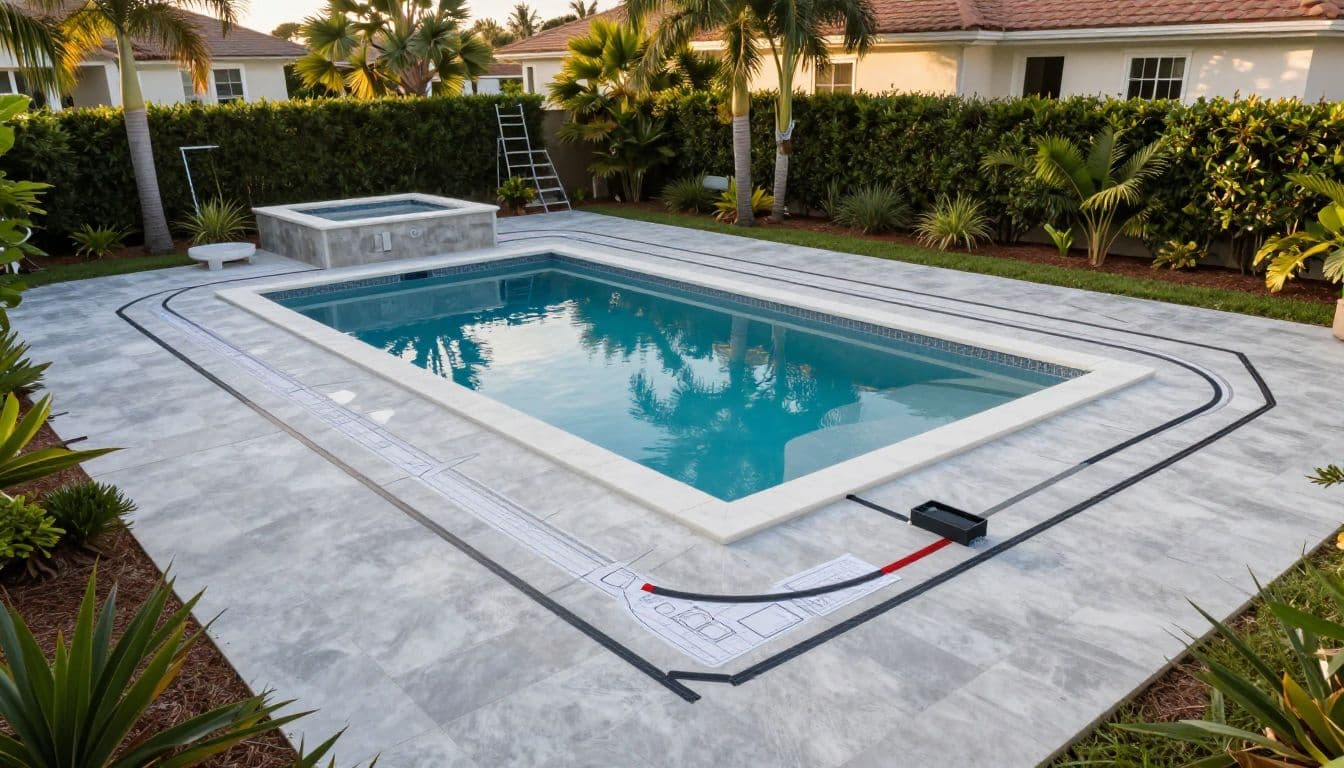
Map Conduit Routes Before Deck Work
Conduit carries power and communication wiring to pool lights, valve actuators, sensors, heaters, and other equipment. Your builder and licensed electrician should map these routes before concrete, pavers, landscaping, or a screen enclosure restrict access.
Ask where the automation panel, transformers, junction points, and light connections will sit. Some systems may require separate pathways for different types of wiring. Local electrical codes and the selected equipment determine the correct arrangement.
Reserve an extra conduit for future low-voltage or communication wiring when the layout allows it. Have each unused pathway capped, protected, and documented. A photo record of buried conduits can save time during a future upgrade.
Match Plumbing to the Features You Want
Automation can open a valve, change a pump schedule, or start a water feature, but it can't create a plumbing path that was never installed. Waterfalls, bubblers, deck jets, spa spillovers, and tanning ledge features may need dedicated suction or return lines.
Discuss the planned feature list before the plumbing layout is finalized. The number and placement of lines affect valve assemblies, pump selection, water flow, and the space required at the equipment pad.
An autofill system also needs a planned water connection, sensor location, shutoff, and drainage approach. Fire bowls require a properly designed fuel supply rather than a pool-water line. A licensed professional must review fuel work and local requirements.
Pool Automation Features Worth Choosing During Design
Your daily routine should drive the controls. A family that swims year-round may prioritize heating and circulation schedules, while a household that entertains may care more about lighting, spa operation, and water features.
When your builder also handles pool equipment and spa feature installation, ask the same team to confirm how each selected feature connects to the control system.
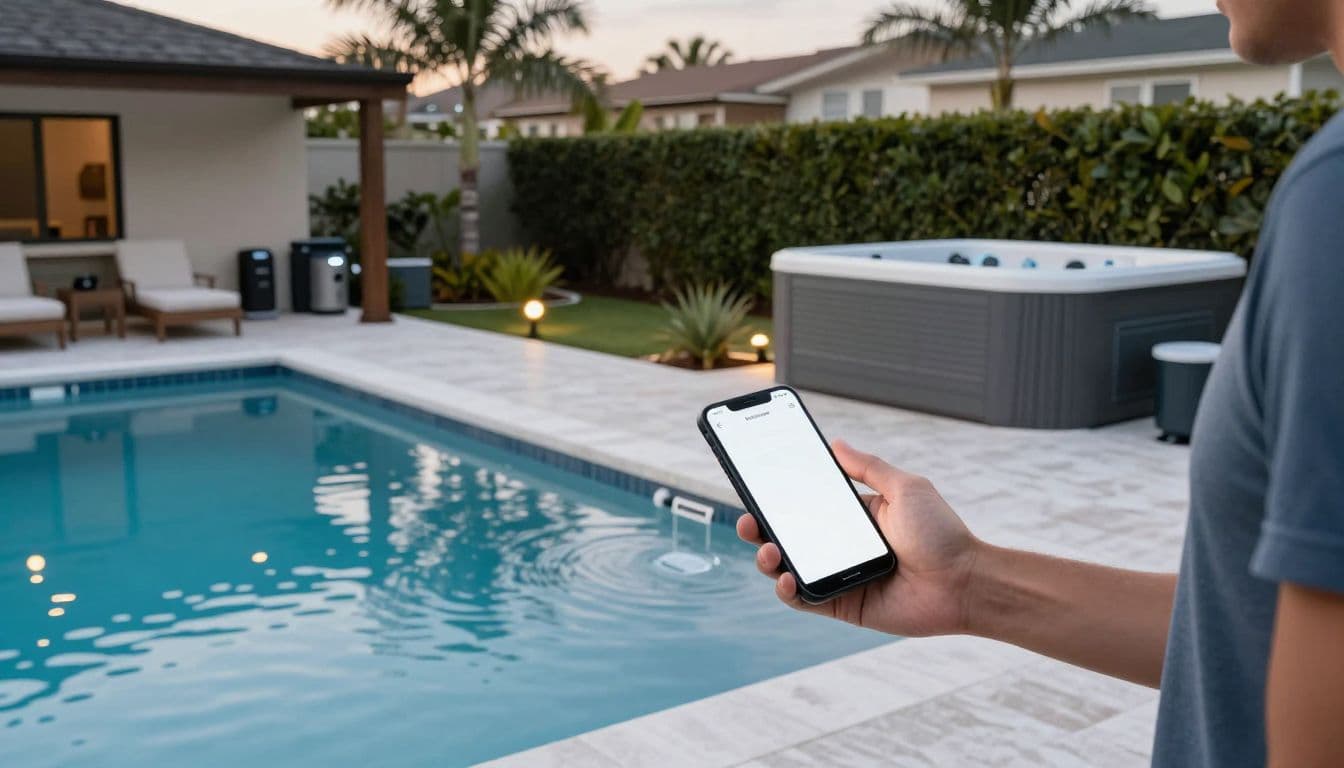
Automate Pump Scheduling and Spa Modes
A variable-speed circulation pump can run at different speeds for filtration, heating, cleaning, and water features when the equipment and controller support those functions. Automation can also coordinate a spa mode that changes valve positions, raises the set temperature, and adjusts circulation.
Ask how the system handles pump schedules, manual overrides, service mode, and alerts. A control panel should make routine operation easier without preventing a technician from operating equipment manually.
If you plan to use a heater, heat pump, salt chlorinator, booster pump, or automatic cleaner, confirm the complete equipment group before choosing the controller. Compatibility depends on the brands, communication methods, wiring, and installation requirements involved.
Coordinate Lights, Heating, Water, and Chemistry
Pool lighting is easier to control when the niches, transformers, circuits, and conduit routes are included in the original design. The same applies to spa jets, bubblers, waterfalls, and deck jets. Each feature should have a clear valve and equipment strategy.
Heating controls may allow temperature settings and schedules, but the system still needs the correct heater type, gas or electrical service, plumbing, and clearances. Heat pumps also require suitable airflow around the unit.
Salt chlorination can automate chlorine production, while chemical monitoring or dosing equipment may provide additional control. These products have different requirements, so ask your builder which combinations are supported and how they will be serviced.
Size the Equipment Pad and Electrical System Early
The equipment pad is part of the pool design, not leftover space beside it. Its location affects noise, heat, drainage, wiring length, plumbing efficiency, maintenance, and access for future replacement.
Leave Room Around Every Major Component
Draw the pad with the planned pump, filter, heater or heat pump, salt cell, automation panel, transformers, chemical equipment, and valve assemblies in place. Follow manufacturer clearances and leave enough room for a technician to remove lids, open panels, replace filters, and reach shutoffs.
Avoid placing equipment where a fence, wall, screen frame, gate, or property boundary will block service access. A compact layout may look tidy at first, but crowded equipment can make ordinary maintenance harder.
In Cape Coral, Fort Myers, and nearby Southwest Florida communities, drainage, lot layout, permitting requirements, and access conditions can affect pad placement. Your builder should review those conditions before finalizing the location.
Have a Licensed Electrician Review Capacity
Automation adds more than a control panel. The electrical plan may include pumps, heaters, heat pumps, lights, transformers, salt systems, outlets, communication equipment, and future circuits. A licensed electrician should review the home's available service and determine whether the pool needs a new circuit arrangement or other electrical work.
The electrician also needs to address grounding, bonding, disconnects, protection devices, weather exposure, and separation between wiring systems according to local code. Don't assume an existing panel has enough capacity because the pool equipment will operate on a schedule.
Ask for an equipment schedule that lists the expected loads and connection points. If the equipment changes later, update the electrical plan before installation rather than relying on a last-minute substitution.
Protect Options for Future Expansion
Many homeowners start with a basic automation package and add features after they use the pool. Planning for expansion doesn't mean buying every option now. It means protecting the parts of the installation that become difficult to change later.
Reserve Pathways for Later Upgrades
An empty conduit can support a future light, sensor, communication cable, or control connection. However, conduit alone won't support a future water feature if the pool has no plumbing line, valve position, pump capacity, or electrical circuit for it.
Before gunite, identify realistic additions such as a second water feature, extra lighting, heating equipment, a salt system, or a spa upgrade. Ask which items need plumbing, which need power, and which need both.
A spare conduit helps only when the equipment pad, electrical service, and plumbing plan can support the future device.
Keep a copy of the final conduit map, plumbing diagram, equipment schedule, and photographs taken before backfill. Those records give future technicians a clearer picture of what is buried and where it runs.
Plan Internet Access and Manual Control
Many modern systems use a phone app or remote connection. The equipment pad may not receive a reliable Wi-Fi signal, especially when it sits behind a house, screen enclosure, masonry wall, or distant gate. Ask whether the design should include a communication conduit, network connection, or another approved method.
Also confirm how the system works when the internet is unavailable. Local controls should still support basic operation, service access, and emergency shutoff procedures. Remote access is useful, but it shouldn't be the only way to operate the pool.
Coordinate the Builder, Electrician, and Equipment Team
Automation works best when one person has a complete view of the pool design. A pool builder, licensed electrician, plumbing professional, and fuel contractor may each handle different parts of the installation. Their plans need to agree before work reaches the point of no return.
Settle the Equipment Schedule Before Construction
Before excavation or gunite, confirm the pool's circulation equipment, heating method, lighting plan, water features, chemical system, autofill approach, and automation platform. Products such as Hayward OmniLogic, Pentair IntelliCenter, and Jandy AquaLink have different equipment relationships and installation requirements. Your builder should recommend a system based on the selected equipment and available local service support.
Ask who will supply each component and who will connect it. Clarify whether the automation panel includes the required relays, actuators, sensors, transformers, and communication modules, or whether some parts are separate.
A written plan should show the equipment pad, major plumbing lines, conduit paths, circuit needs, and future provisions. Local codes, permitting decisions, property conditions, and manufacturer instructions may change the final arrangement.
Test Every Feature Before the Project Is Complete
After installation, test each pump schedule, valve position, light circuit, heater connection, water feature, autofill sensor, and chemical system. Run the pool in normal mode and service mode. Check that the display, app, and local controls show the same operating status when the system supports remote monitoring.
Ask for a walkthrough before final payment or project closeout. Learn how to start spa mode, adjust temperatures, control lights, shut down equipment, clean filters, and respond to alerts. Save model numbers, warranty information, and service contacts in one location.
Small details also matter. Confirm that access gates open fully, equipment doors can swing clear, drains remain unobstructed, and the pad stays protected from routine yard traffic. A well-planned system should be convenient for your household and practical for the professionals who maintain it.
Conclusion
The best time to plan pool automation features is before gunite, backfill, decking, and final equipment connections. Early decisions protect conduit routes, plumbing capacity, electrical service, pad space, access, and future choices.
Start with the features you expect to use, then review the complete plan with your pool builder and licensed electrician. When infrastructure and controls are designed together, your new gunite pool has a stronger foundation for reliable operation, easier maintenance, and later upgrades.