
Why Pool Decks Settle Along Gunite Pool Edges
Pool deck settling can show up as a crack, a change in height, or an uneven line beside the coping. That visible change matters, but its location alone doesn't reveal what moved or why.
A gunite pool and its surrounding deck are built in stages, so the edge is where several parts of the project meet. Knowing what to observe, and what requires a professional assessment, helps you respond without guessing at the cause.
Key Takeaways
- A change along the pool edge is a visible symptom, not a diagnosis. It doesn't establish whether the deck, coping, or another part has shifted.
- Cracks, uneven surfaces, and changes near drainage features are useful to document. None proves a specific cause on its own.
- Note where a change appears and whether it grows or spreads. Avoid lifting materials or trying to test the pool structure yourself.
- Contact a pool professional or qualified contractor when movement progresses, creates a hazard, or appears alongside changes to the coping or pool.
Why the Edge of a Gunite Pool Draws Attention
The pool edge is a visible transition between the pool assembly and the surrounding deck. When a line becomes uneven or a crack appears nearby, it can be tempting to identify the deck as the source. The appearance alone can't confirm which part changed.
A boundary between different parts of the project
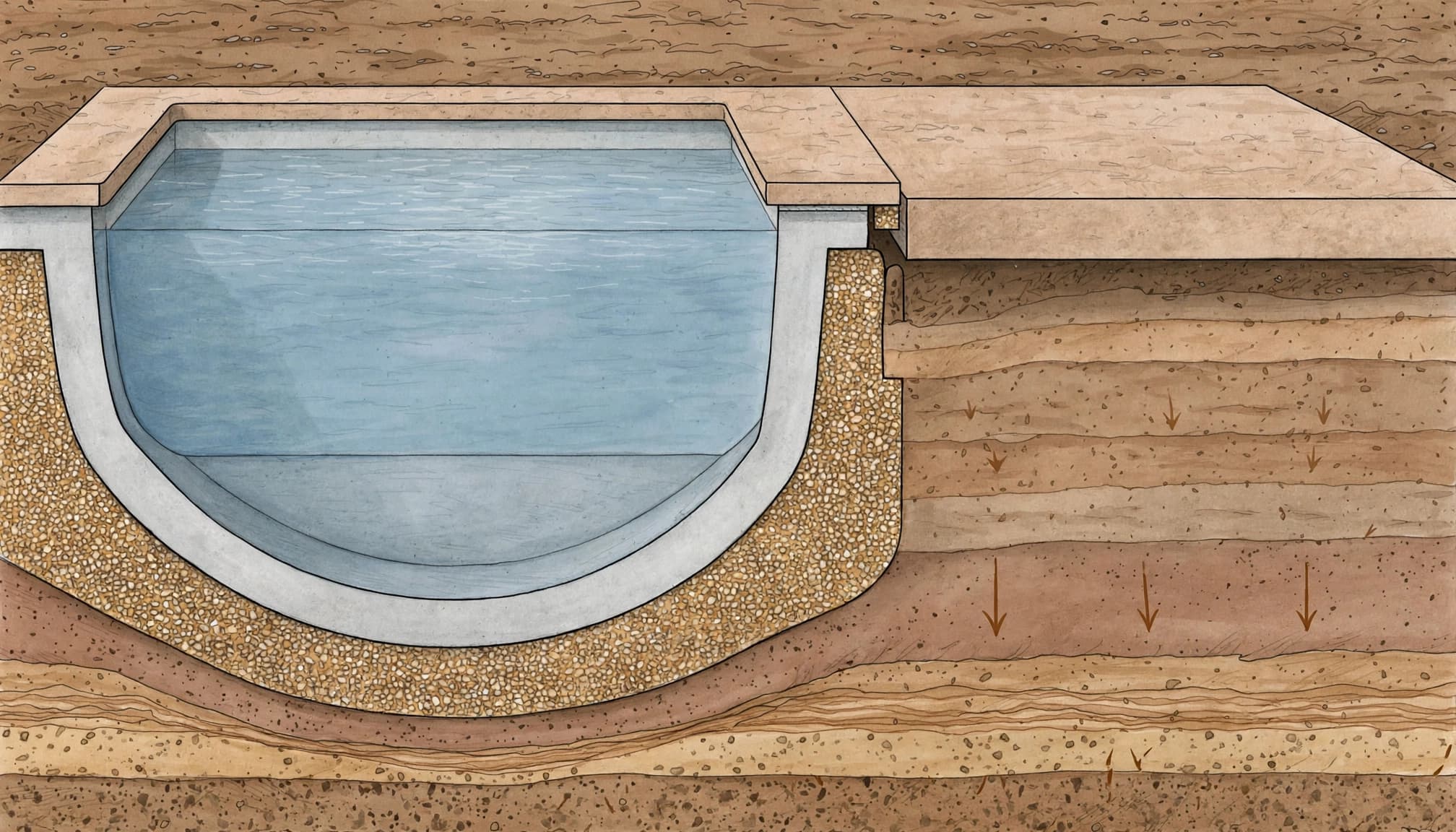
Gunite pools are built through distinct construction stages. The pool shell is formed with steel reinforcement and gunite. Plumbing and electrical work follow, then tile, coping, and deck installation. The pool and deck meet at a perimeter, but they aren't installed at the same point in the process.
That sequence helps explain why a change may be most noticeable at the edge. It doesn't, by itself, establish the reason for that change.
What "settling" describes
Homeowners often use settling to describe a deck that appears lower, tilted, cracked, or separated near the pool. It is a convenient word for the visible condition, not a conclusion about what happened below the surface.
A small crack may have a different significance from a growing height difference or a change that reaches the coping. A qualified professional needs to assess the actual condition before identifying a cause or repair.
What the Construction Sequence Can Tell You
The construction stages offer useful context, especially for people planning a new pool. They show that the pool shell, coping, and deck are installed at different points. They don't determine why a particular deck has moved.
Shell, coping, and deck are separate stages
Our custom gunite pool construction includes excavation, steel reinforcement and gunite shell construction, plumbing and electrical installation, and later tile, coping, and deck installation. The order matters because it makes clear that the deck is not simply another finish applied at the same time as the shell.
For a homeowner, this is a reason to describe exactly where a change appears. A line at the deck edge, a visible gap beside coping, and a crack farther out on the patio are different observations, even if they occur in the same area.
Construction records provide context
If you're dealing with an older pool, notes or photos from the original build or later work can help a contractor understand what has changed. Keep those materials if you have them, but don't treat them as a diagnosis. A new crack or uneven edge still needs to be assessed in its current condition.
For new projects, understanding our pool construction process gives you a clearer picture of the stages involved. Ask questions about how the pool, coping, and deck fit into the project plan before construction begins.
Warning Signs Homeowners Can Observe
You don't need to determine why a change occurred to notice that something has changed. A clear record of the visible condition can help a pool professional or qualified contractor assess it.
Look for changes in the surface
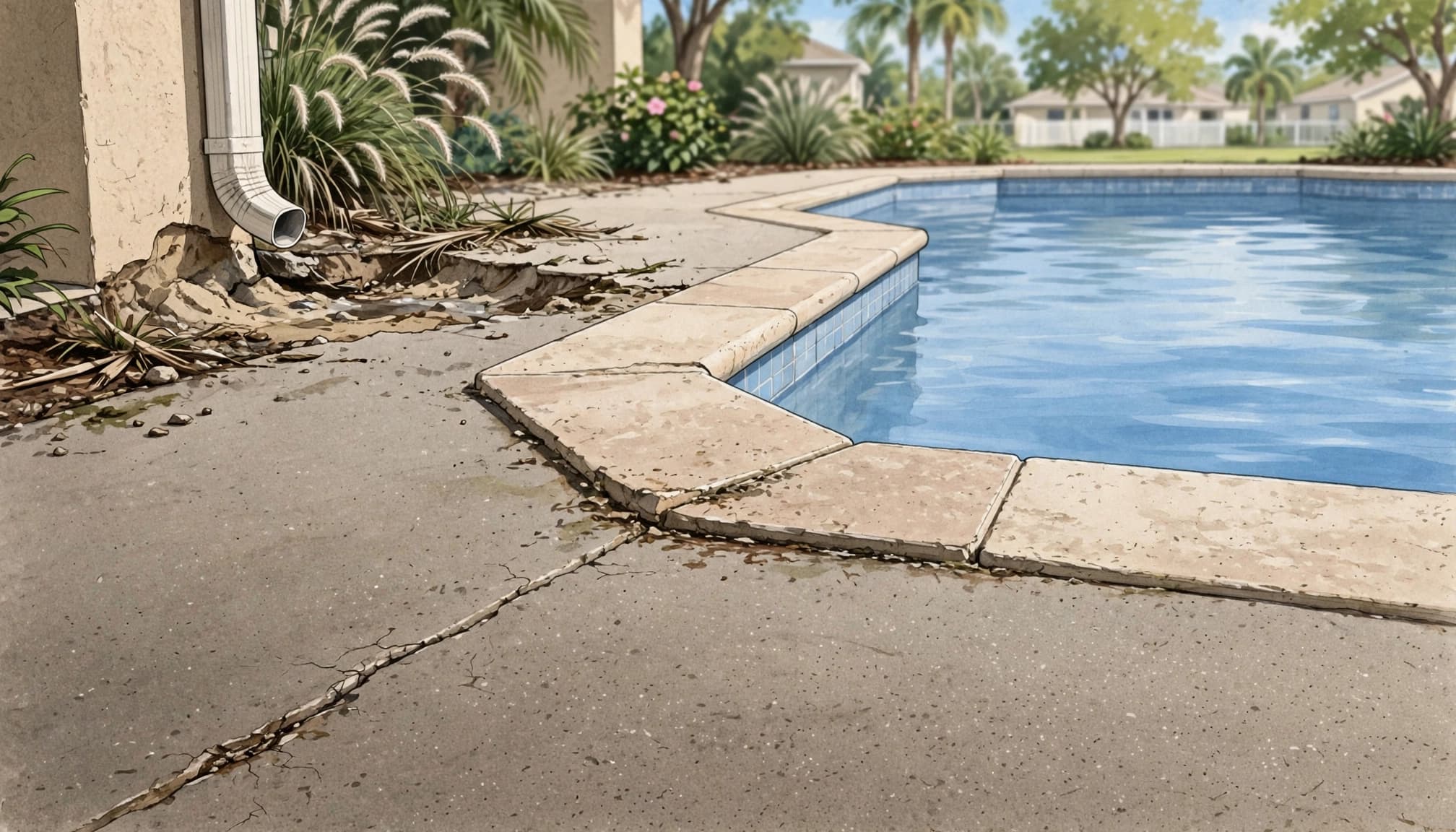
Walk the area normally and look for cracks, newly uneven sections, or a deck edge that seems higher or lower than the adjoining surface. Note whether the change is near the coping, farther out on the deck, or in more than one location.
A crack's presence doesn't prove that the pool shell has moved. Likewise, a surface that looks uneven doesn't tell you how deep the condition extends. Record what you can see without trying to pry, lift, or shift the material.
Notice nearby changes, too
Pay attention to whether the coping line looks different, whether a gap has appeared, or whether water seems to collect in a new place after rain or pool use. These observations can help describe the setting, but they don't confirm a cause.
A condition that changes over time deserves more attention than an unchanged mark. If you're uncertain whether a surface is changing, take dated photos from the same spot and angle rather than relying on memory.
How to Assess the Situation Without Diagnosing It
A homeowner can gather useful observations without deciding whether the deck, coping, or pool is structurally affected. Keep the process simple and stay on surfaces that are safe to walk on.
Record location, appearance, and timing
Take a few clear photos that show both the detail and its position relative to the pool. Include a wider view, then a closer image of the crack or uneven area. Write down when you first noticed it and whether it has visibly changed since then.
If the condition appears after a particular event, such as heavy rain or nearby work, include that timing in your notes. Treat it as context, not proof that the event caused the change.
Avoid tests that could make matters worse
Don't remove coping, dig beside the pool, inject material into a crack, or attempt to lift a deck section. Those actions can affect the area and make a professional evaluation harder. Avoid walking across any section that feels unstable or creates a clear trip hazard.
Instead, describe the visible condition in plain terms. "The deck looks lower beside the corner" is more useful than a guess about what has shifted.
When to Contact a Pool Professional or Contractor
Contact a pool professional or qualified contractor when the change is progressing, extends across multiple areas, or affects how you can safely use the deck. A prompt assessment is also sensible if the coping line appears to have changed or the deck and pool edge no longer meet as they did before.
Act promptly around hazards
A raised edge, sudden height difference, or unstable-feeling surface can create a trip or fall risk. Keep people away from the affected area until it has been assessed, especially children and anyone who may not notice the change.
If you see a rapid change or damage that appears to affect the pool edge, contact a qualified professional rather than attempting a repair. The right person can evaluate the visible condition and decide whether further assessment is needed.
Choose the right kind of help
A pool professional can assess how the condition relates to the pool, coping, and surrounding deck. A qualified contractor may also be appropriate when the concern is limited to the deck surface. If you're unsure which type of professional to call, begin with a pool contractor familiar with gunite pools and describe what you see.
In Southwest Florida, we build and renovate pools throughout Cape Coral, Fort Myers, Estero, Bonita Springs, Punta Gorda, Port Charlotte, and nearby communities. Our pool renovation and remodeling services include an initial evaluation and planning for existing pools.
What a Professional Assessment Can Establish
A site visit lets a professional view the deck and pool edge together, rather than relying on a single photo or a homeowner's description. They can review the visible surfaces, note where changes occur, and determine what additional evaluation may be appropriate.
The goal is to understand the scope of the issue before recommending work. A crack that looks minor in a close-up may be part of a broader pattern, while a visible mark may not indicate a structural problem. Neither conclusion should be drawn from appearance alone.
A professional may ask when you first noticed the change, whether it has progressed, and whether you have photos or records from earlier work. Share what you know, and separate direct observations from assumptions. That gives the assessment a clearer starting point.
If the pool is older or has undergone previous work, tell the contractor what renovations or deck changes you know about. The history can help frame the evaluation, but the current condition still needs to guide any recommendation.
Planning a New Pool or Renovation
If you're building a pool, discuss the relationship between the shell, coping, and deck during design and construction planning. Ask how these elements fit into the sequence and who will address questions about their transitions. Clear communication helps you understand what is being installed at each stage.
San Juan Custom Pools & Spas has been building residential pools and spas since 1984. Our work includes custom inground gunite pools, pool renovations, and deck and water features. For an existing pool, a renovation consultation can help establish what work belongs in the project scope after the condition has been assessed.
During a renovation, make sure the visible deck concern is included in the conversation rather than treated as a separate cosmetic detail by default. The professional can evaluate whether the pool edge and deck need attention together or whether the work should focus on another part of the project.
Frequently Asked Questions
Does a crack beside the coping mean the pool shell is damaged?
No. A crack is a visible condition, but it doesn't establish that the shell is damaged or identify what moved. A professional assessment is needed to understand its significance.
Can I tell whether the deck is still settling?
You can document whether the visible condition appears to change, using dated photos taken from the same position. That record can show a pattern, but it can't identify the cause or confirm structural movement.
Should I repair the crack before calling a contractor?
Avoid filling or covering a crack before the area has been assessed, particularly if it is changing or near the coping. A temporary patch can obscure the original condition. Contact a pool professional or qualified contractor for guidance on the next step.
A Clear View of Pool Deck Settling
A change along a gunite pool's edge is worth noticing, but it doesn't explain itself. Document what you see, keep track of changes, and avoid treating a surface symptom as a diagnosis.
The most useful next step is a professional assessment when movement progresses, affects safe use, or involves the coping or pool edge. Careful observation helps you share the facts without guessing at the cause.