
Pool Overflow Lines in Cape Coral: Where Rainwater Goes
A pool overflow line gives excess water a way out when rain raises the pool level. In Cape Coral, its destination depends on the pool's plumbing plan and approved discharge point, so it shouldn't be assumed to connect to the city stormwater system.
The overflow line is also separate from the pool's main drain, which serves the circulation system near the bottom of the pool. Knowing how those parts differ can help you plan a new pool, spot drainage trouble, and understand what heavy rain can and can't do.
What a pool overflow line does
A separate outlet for high water
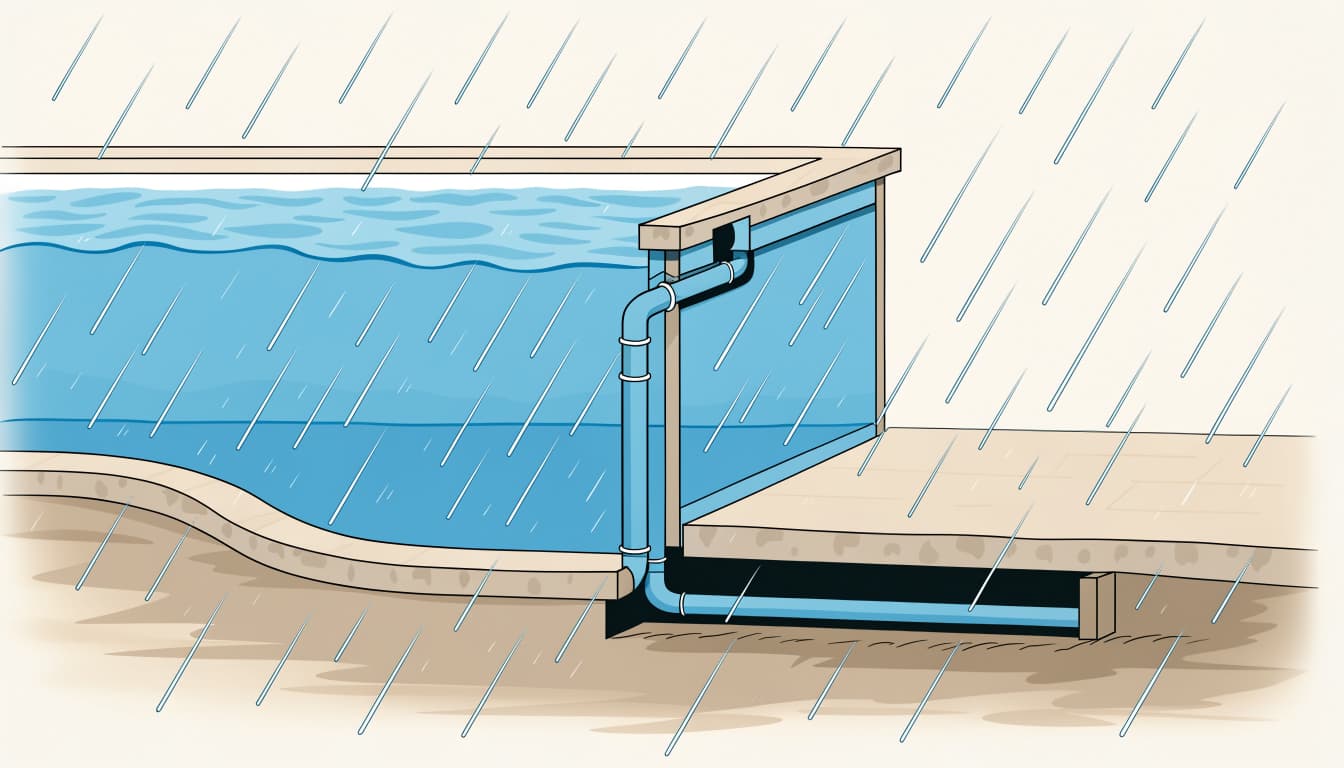
An overflow line is intended to carry water away when the pool rises above its usual operating level. Depending on the design, the opening may sit near the waterline or connect to a gutter or other overflow feature. When the water reaches that opening, it can flow through a separate pipe toward a designated discharge point.
The line helps limit routine overfilling, including after rain or when too much water enters during filling. It doesn't remove every drop of rainwater or guarantee that the surrounding yard will stay dry. Its performance depends on the line remaining open and the receiving point being able to accept the flow.
How it differs from the main drain
The main drain, also called a main outlet, is near the pool's deepest point. It works with the pool's circulation equipment and can be involved in emptying the pool. The 2023 Florida Building Code describes the main outlet as being at or near the deepest part of the pool for emptying or circulation.
An overflow line handles water at the pool's upper level. It isn't a substitute for the main drain, and the main drain isn't a rainwater outlet. Treating them as interchangeable can lead to incorrect assumptions about where water travels or which pipe needs attention.
Where excess rainwater may go
The pool's route depends on its design
A pool overflow line carries water to the discharge point selected for that pool's plumbing design. There isn't one route that applies to every home in Cape Coral. A line's location and destination should be considered alongside the pool, deck, property grading, and nearby drainage features.
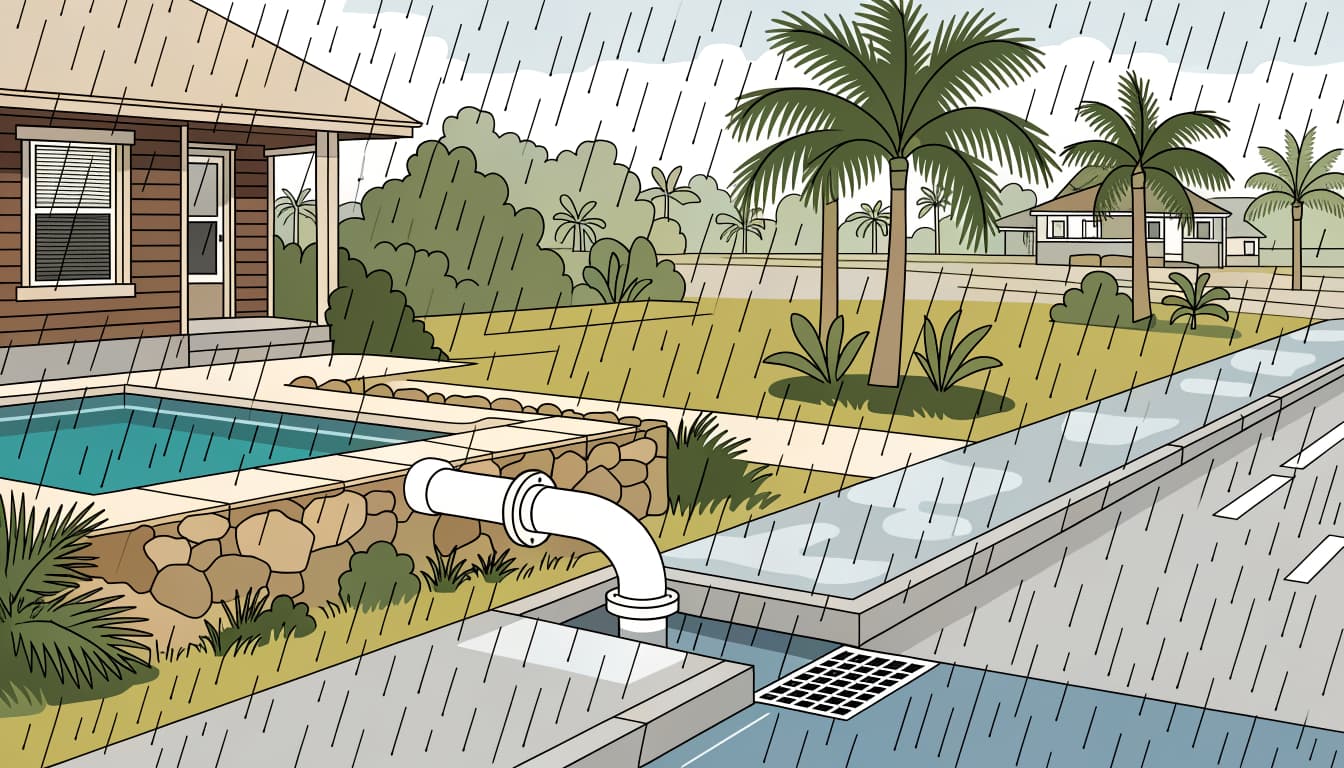
The City of Cape Coral's pool-plan requirements call for plans to show autofill and/or overflow locations when applicable. That document doesn't prescribe one standard destination for every overflow pipe. As a result, it's important to distinguish a pool's private plumbing from public stormwater infrastructure rather than assuming the line empties into a street inlet or canal.
Yard runoff follows a different path
Rain also lands on the roof, deck, driveway, and lawn. That water moves across surfaces according to their slope, then may enter a swale, catch basin, or other drainage feature. These surface flows are separate from the water inside the pool and its overflow plumbing.
For a backyard pool, the deck's slope and the yard's drainage plan affect where rain collects. Our guide to pool deck drainage options for Southwest Florida covers ways to manage runoff around the pool area. It's useful to consider the entire lot, not just the point where the overflow pipe leaves the pool.
What Cape Coral's published rules say
Pool plans show the overflow location
Cape Coral's Master Pool Site-Specific Document Requirements, dated September 9, 2024, state that plans must show autofill and/or overflow locations, as applicable. That requirement helps identify the features in the proposed pool layout, but it does not set one routine overflow destination for all properties.
The 2023 Florida Building Code also sets requirements for certain drainage piping. For example, piping for gravity overflow gutters and deck drains must have a continuous grade to its discharge point. The code says pool-connected lines can't connect directly or indirectly to storm drains, sewers, drainage systems, seepage pits, underground leaching pits, or subsoil drainage lines unless the administrative authority approves the connection. These rules make the designed route and approvals important.
Emptying a pool is a separate issue
Routine overflow after rain is different from intentionally draining or emptying a pool. Cape Coral's code limits pool water discharged to waste to no more than 250 gallons per minute. It must go to an approved storm sewer or another approved drain or outlet. Discharging pool water to a sanitary sewer is prohibited, as is draining it onto another person's property.
Those emptying rules don't establish where a routine overflow line goes. They address a different activity and should not be read as permission for every pool overflow pipe to connect to public stormwater infrastructure. The Florida Building Code's approval language for connections to drainage systems still matters.
Why heavy rain can still cause drainage problems
The pool and yard respond differently
A pool with little freeboard, meaning little space between the waterline and the coping, can reach its overflow opening quickly during heavy rainfall. If the line is blocked or the outlet can't accept water, the level may continue rising. Water can then spill onto the deck, where it becomes part of the yard's surface runoff.
Meanwhile, rain falling across a large roof or paved area can send substantial runoff toward the pool deck or low spots in the yard. When grading directs that water toward the pool, the overflow line may be asked to handle water it wasn't designed to receive. That's why pool plumbing and deck drainage need separate routes that work together.
Public drainage has its own limits
Cape Coral's Stormwater Division maintains public infrastructure such as swales, drainage pipes, catch basins, and canals. The City notes that prolonged heavy rain or clogged pipes can overwhelm parts of the stormwater system. Even when public drains are working, they don't automatically serve as an outlet for a private pool's overflow pipe.
Canal conditions also vary by location. The City describes freshwater canals as collecting runoff for gradual transfer to tidal canals, while some areas with saltwater canals drain runoff directly toward the tide. A property's grading and nearby water table also matter when planning a pool; see how Cape Coral water tables affect pool design.
Signs a pool overflow line may be blocked
Watch the water level after rain
If the pool level stays unusually high after rain, the overflow opening or pipe may be obstructed, or the receiving point may not be draining as expected. Water repeatedly spilling over the coping or pooling on the deck can also point to a problem. A blocked line is one possible cause, but surface grading and limited drainage capacity can contribute too.
Look for leaves, insects, or other visible debris at the overflow opening. A single storm may not reveal much, so pay attention to whether the same issue repeats. If the waterline remains high after conditions improve, it's worth having the overflow path assessed rather than assuming the pool's main drain will lower the level.
Notice changes around the discharge area
A persistently wet or soggy patch near a known discharge point can indicate that water is not moving away as intended. In some cases, it may mean the outlet is obstructed, the line has a problem, or the ground cannot absorb the discharge. The location alone doesn't identify the cause, but a recurring pattern deserves attention.
Unexpected water loss is a different clue. A falling pool level may result from evaporation, splash-out, a leak, or other causes, so it doesn't prove the overflow line is malfunctioning. If the level changes when there hasn't been heavy rain or water added, a pool professional can help distinguish a plumbing issue from normal variation.
Maintenance and planning for a new pool
Keep the visible opening clear
As part of routine pool care, check the visible overflow opening for leaves and debris. Remove material you can reach safely without pushing it deeper into the pipe. Avoid forcing metal rods or high-pressure water into an unknown line, since that can damage plumbing or push a blockage farther along.
After a major storm, note whether the pool level returns toward its normal range and whether water drains away from the deck. If the overflow keeps backing up, ask a qualified pool professional to inspect the line and its outlet. A persistent drainage issue may involve more than the pool-side opening.
Coordinate plumbing with the site plan
For a new pool or renovation, consider the overflow route while the layout and yard grading are being planned. The pool shell, deck, house, property boundaries, utilities, and drainage features all influence where lines can run. Underground drainage pipes should be identified before excavation; our article on planning pool construction around drainage pipes discusses why their location matters.
A clear plan helps keep the pool's overflow line distinct from deck drains and public drainage infrastructure. It also gives the project team a chance to account for local soil and water conditions, instead of treating overflow as an afterthought once the pool is built.
Key takeaways
- A pool overflow line carries high water away from the pool; the main drain supports circulation and emptying near the pool's deepest point.
- Cape Coral requires applicable pool plans to show autofill and/or overflow locations, but its plan document doesn't specify one standard destination for routine overflow.
- Public stormwater features manage runoff from streets and properties. A pool overflow line isn't automatically connected to that system.
- Persistent high water, deck spillover, or a recurring wet area near a discharge point can signal a problem worth assessing.
Frequently asked questions
Does a pool overflow line go to a storm drain?
Not necessarily. The destination depends on the pool's design and applicable approvals. Cape Coral's pool-plan requirements call for the overflow location to be shown when applicable, but they don't define one universal destination. The Florida Building Code also requires approval for certain connections between pool-connected lines and drainage systems.
Is the overflow line the same as the pool's main drain?
No. The main outlet is near the pool's deepest point and serves circulation or emptying. The overflow line is located to carry off excess water at a higher level. They have different purposes and shouldn't be treated as the same pipe.
Can I drain my pool into the street or onto a neighbor's property?
Cape Coral's pool-emptying provisions require water discharged to waste to go to an approved storm sewer or another approved drain or outlet. The City prohibits discharging pool water to a sanitary sewer or onto another person's property. These rules concern emptying a pool, not the routine rain overflow route.
Should I lower the pool before a storm?
A pool's water level should follow its intended operating range, and the overflow line should remain clear. Lowering a pool without a specific reason can create other concerns, particularly in areas with high groundwater. If the pool regularly reaches the coping during rain, address the overflow line and yard drainage rather than relying on frequent draining.
Plan for the water's path
A pool overflow line, the main drain, yard grading, and Cape Coral's public stormwater network each handle different water paths. The clearest plan identifies those paths before construction and keeps them separate where required. When the pool and site drainage are designed together, heavy rain is easier to manage and overflow problems are easier to diagnose.