
Buried Concrete During Pool Excavation: What Happens Next?
Finding buried concrete during pool excavation can stop work before the pool's shape is fully dug. The crew needs to understand what the material is, where it sits, and whether it conflicts with the approved pool plan before deciding what to do.
Depending on the site, the concrete may be removed, or the design may need to change. Either choice can affect the project's cost and schedule, so homeowners should get the condition, proposed work, and price in writing before the crew proceeds.
What buried concrete can mean for your pool project
Concrete underground could be part of an old patio, driveway, foundation, walkway, or other improvement. It might be one slab or a mix of concrete and rubble. Its history may be unknown, especially if the property has changed hands or had earlier construction.
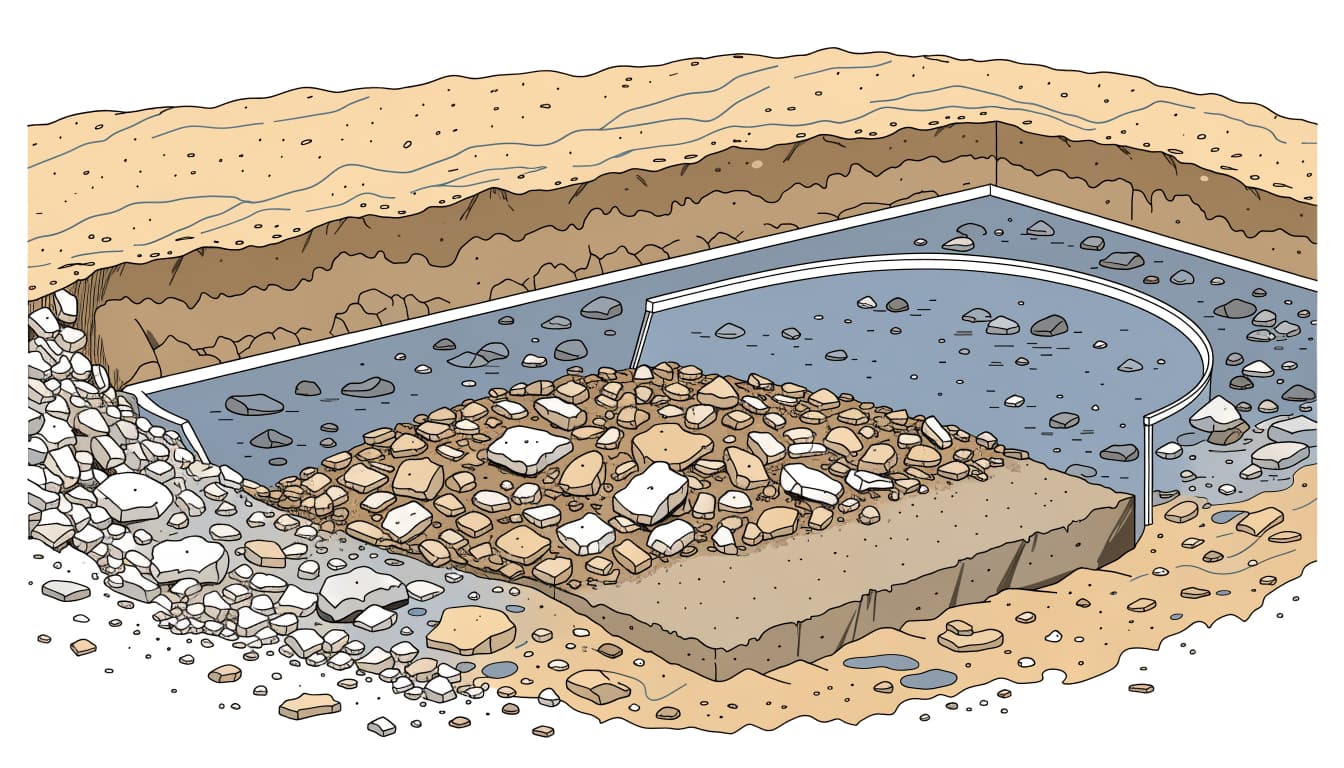
The location matters as much as the amount. A piece outside the planned pool area may have little effect. Concrete within the pool's excavation limits can interfere with digging to the required depth and shaping the floor, walls, steps, or other features.
In gunite construction, excavation follows the approved design before the crew installs steel reinforcement and applies gunite to form the shell. A buried obstruction can therefore affect the work before the pool structure takes shape. See the new pool construction process for how excavation fits into the larger build.
How the crew assesses the concrete
Work pauses while the obstruction is examined
A professional crew should stop and assess an unexpected obstruction rather than force equipment through it. That pause gives the team a chance to understand what is in the ground and how it relates to the excavation.
The crew may expose enough of the concrete to judge its location and extent. They can compare what they find with the pool layout and identify whether it lies beneath the planned shell, near its edge, or outside the work area. The goal is to make a decision based on the actual site condition, not guess from a small visible fragment.
The approved plan guides the next decision
Assessment should consider the pool's planned depth and footprint, along with access for equipment and soil removal. The crew also needs to consider nearby structures and site features that could be affected by the work.
In Southwest Florida, excavation conditions can include groundwater, buried debris, irrigation, and other hidden obstacles. Each site is different, so the response depends on the property and the approved design. Our guide to dealing with buried obstacles during excavation covers why crews pause to evaluate unexpected conditions.
What happens after the discovery
Once the obstruction is assessed, the builder can discuss practical options with you. The decision should account for the pool's structure and layout as well as the work required to address the concrete.
If the obstruction sits directly in the planned excavation, the crew may recommend removing it. If removal is not a workable choice for the site, the builder may consider whether a design adjustment can avoid it. In some cases, the concrete may not affect the pool plan at all.
The crew should explain what they found, how it affects the original scope, and what they propose to do next. Ask for photographs or a clear description of the affected area, along with a revised drawing if the pool layout may change. Keep the work area clear while the crew evaluates the condition, and keep children and pets away from active equipment and excavation.
When concrete removal may be the right option
Removal may preserve the approved layout
Removing the concrete may make sense when it blocks the planned shell and the pool can still be built in the approved location. The proposal should describe the extra work required, how it changes the construction scope, and whether it affects soil handling or access.
Removal is not an automatic choice. The crew needs to consider the concrete's position and the surrounding conditions before recommending it. A slab near the pool's planned edge or close to another structure may present different considerations than concrete in the center of the excavation.
The scope should identify what the added work covers
A change to the excavation plan can involve more than the act of breaking up or moving concrete. Depending on the site, it may also affect soil removal, access, or work needed to return the area to the planned condition. The builder's written proposal should distinguish included work from added work rather than grouping the change under a vague description.
Don't assume the original excavation price includes every concealed condition. Instead, ask which parts of the removal are covered, how added work will be priced, and whether the change affects later construction stages. Those details help you compare the proposed solution with redesign.
When redesign may be the better option
A revised layout could avoid the obstruction
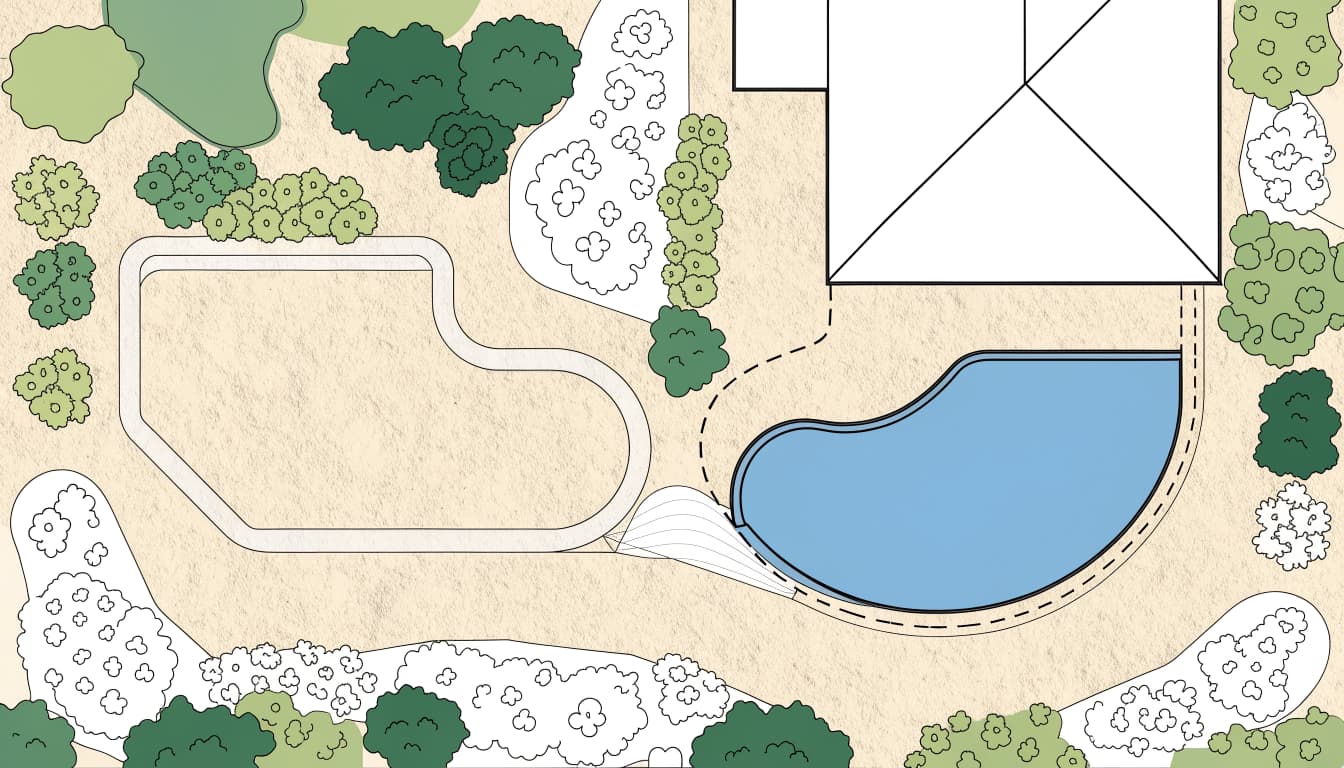
If the pool can move or change shape without creating a problem elsewhere, a redesign may be an alternative to removing the concrete. The adjustment could affect the pool footprint, its position in the yard, or connected features such as the deck and equipment area.
However, moving the pool is not just a visual change. The revised plan needs to work with the property's available space, construction access, drainage, and any relevant easements or utility corridors. A design that avoids the concrete still needs to fit the site and remain buildable.
Compare the revised plan with the original
Before approving a layout change, review a revised plan that shows the pool's position and shape in relation to the home and yard. Consider how the change affects the deck, walking space, pool features, and access to equipment. A smaller or shifted pool may also require different arrangements for steps, a sun shelf, or a spa.
Redesign may reduce the need for removal work, but it can bring its own changes to the project scope. Ask the builder to describe what changes in the plan and what stays the same. That makes it easier to compare the removal option and the redesign option on equal terms.
How buried concrete can affect cost and schedule
The price depends on the revised scope
There is no single removal price that applies to every buried concrete discovery. The amount and location of concrete, access for equipment, and the work needed to keep construction aligned with the pool plan can all affect the scope.
A site condition can lead to a change order when the original proposal did not include that work. The written change should describe the condition, the proposed work, the price, and the effect on the schedule. Our article on planning for excavation surprises in Estero explains how concealed conditions can change a project's scope after excavation begins.
Schedule changes depend on what the crew must do
Work may pause while the crew assesses the obstruction and agrees on the next step. If the plan changes, the builder may need to revise drawings or coordinate the updated work before construction continues. Later stages, including steel and gunite, depend on having an excavation that matches the approved design.
The length of any delay depends on the chosen response and site conditions. Weather, groundwater, access, and coordination with other crews can also affect the broader schedule. For a general view of construction sequencing, see the gunite pool construction timeline.
How to clarify responsibilities with your contractor
Review what the contract says about hidden conditions
Before excavation starts, look for language about concealed site conditions, extra excavation, concrete or debris removal, soil disposal, and change orders. The contract should make clear how the builder will document unexpected work and when you need to approve a price change.
If those details are not clear, discuss them before work begins. Ask who determines that a condition falls outside the original scope, what information the contractor will provide, and whether written approval is required before added work starts. Clear answers reduce the chance of confusion when the crew is on site.
Put the decision and approval in writing
When buried concrete appears, request a written description of the discovery and the proposed solution. It should identify the extra work, its price, the schedule effect, and any revision to the pool plan. If redesign is proposed, the updated drawing should show the changed layout.
Keep signed change orders, revised plans, and project messages together. A verbal conversation may help clarify the issue, but written records make it easier for everyone to follow the same scope. For more help with a detailed proposal, see avoiding pool construction change orders.
Key takeaways
- Buried concrete does not automatically mean the pool must move or that the concrete must be removed.
- The crew should pause, assess where the obstruction sits, and compare it with the approved excavation plan.
- Removal and redesign are both possible approaches, but each can change the project scope.
- Get the proposed work, price, schedule effect, and any revised plan in writing before approving a change.
Frequently asked questions
Does buried concrete always need to be removed?
No. If it does not interfere with the planned excavation, it may not require removal. When it does conflict with the pool plan, the builder can assess whether removal or a design adjustment is more appropriate for the site.
Will finding concrete delay the pool build?
It can affect the schedule because work may pause while the crew evaluates the obstruction and agrees on a solution. The amount of delay depends on the site condition, the chosen response, and any changes needed to the plans or work sequence.
Should I approve extra work based on a verbal estimate?
Ask for the proposed change in writing before approving added work. The written description should state what was found, what the contractor plans to do, the price, and any schedule impact. That gives you a clear record of the decision.
Make the next step clear
Buried concrete is an unexpected site condition, not a decision with one answer for every pool project. The right response depends on where the material sits and whether removal or a revised layout best fits the approved design.
A clear assessment and written change approval help keep the work understandable. Before excavation resumes, make sure you and your contractor agree on the proposed scope, cost, and schedule.