
Pool Deck Drainage Options for Southwest Florida Homes
Good pool deck drainage does more than remove puddles after a storm. It directs water away from the pool, home foundation, outdoor living areas, and neighboring properties before runoff creates damage or disputes.
Southwest Florida homeowners face flat lots, intense rain, tropical storms, and soil conditions that can slow drainage. A design that works in one Cape Coral backyard may fail in Fort Myers or Naples. The right solution depends on the pool layout, deck material, property elevations, available discharge points, and local requirements.
Why Southwest Florida Pool Decks Need Careful Drainage Design
A pool deck has several water sources to manage. Rain lands on the deck, splash-out collects around the pool, and hose water can move across the patio. During a summer downpour, all of that water may reach low areas within minutes.
Many Southwest Florida properties have limited elevation change. That leaves little room for water to flow naturally away from the pool. A deck that looks level may still send runoff toward the house, screen enclosure, or a neighbor's yard.
The goal is controlled movement. Water should leave the deck through planned slopes, drains, piping, or a permitted discharge route. It shouldn't collect beside the pool shell or sit against the foundation.
Poor drainage can cause several problems:
- Standing water can stain pavers and create slippery surfaces.
- Saturated soil can contribute to settlement beneath the deck.
- Runoff can carry dirt, mulch, and pool chemicals into unwanted areas.
- Water against the home can increase the risk of moisture intrusion.
- Concentrated discharge can erode landscaping or affect a neighboring property.
Pool coping and deck elevation also need to work together. If the deck sits too high or slopes toward the pool, heavy rain can push debris and dirty water into the basin. If the deck slopes toward the house, the foundation may receive runoff that the original site grading cannot handle.
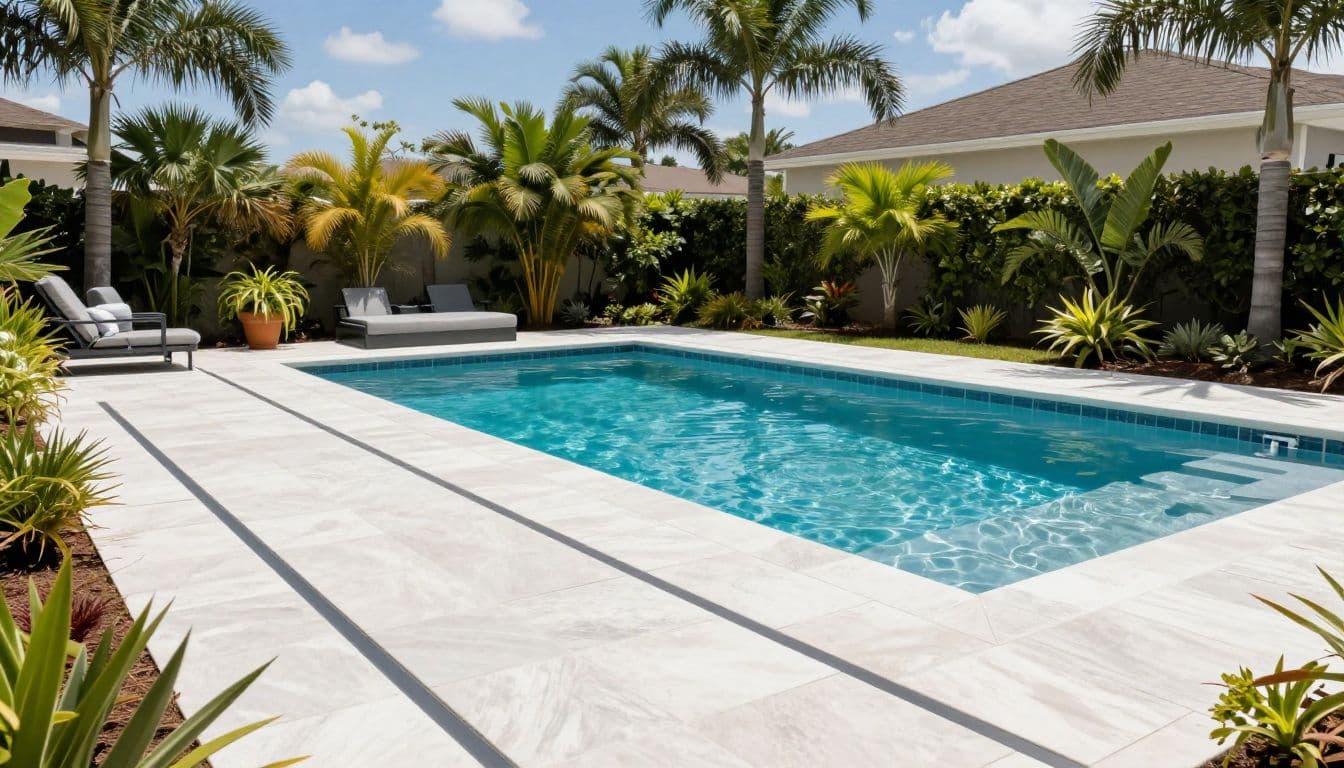
A drainage plan should account for the entire backyard, not one isolated low spot. That includes the pool, deck, house, screen enclosure, landscaping, fences, easements, and neighboring lots.
Pool Deck Drainage Options for Florida Backyards
No single drainage method fits every property. Most successful projects combine surface grading with one or more collection or discharge systems.
Sloped surface drainage
The simplest option is a properly graded deck. The finished surface directs water toward a lawn area, swale, drain, or other approved outlet. This approach works well when the yard has enough space and elevation difference for runoff to move safely.
Concrete, pavers, and other deck materials need consistent grades. Paver installations also require a stable base, accurate edge restraints, and careful attention to joints. A low section near the pool can hold water even when the rest of the deck drains correctly.
Surface grading is often easiest to plan during new pool construction. The builder can coordinate the pool shell, coping, deck elevations, screen enclosure footings, and yard drainage before materials are installed. Existing pools may need selective demolition or regrading if the current deck slopes in the wrong direction.
Linear trench and channel drains
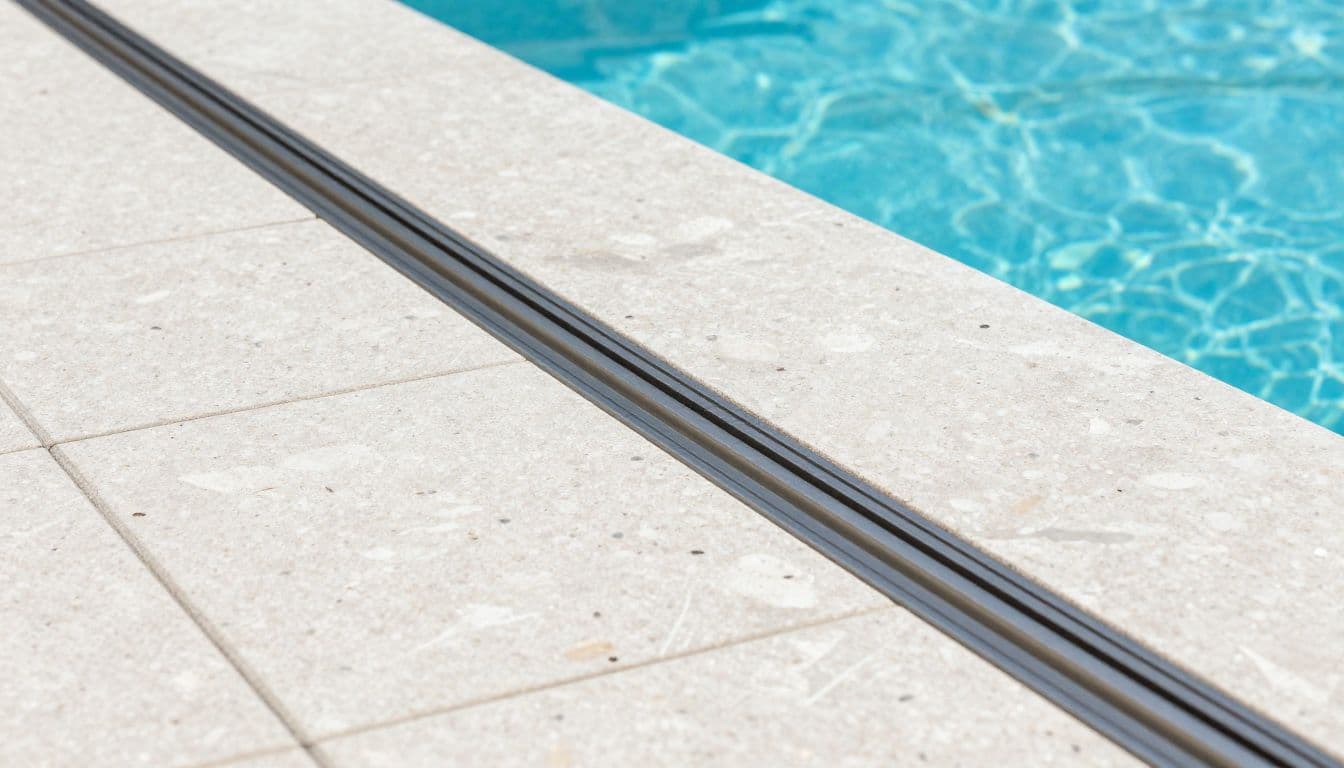
Linear drains collect water along a long edge. They work well beside a pool, at the transition between a deck and lawn, or across a patio where a broad area needs collection.
A trench drain includes a narrow channel beneath a grate or slot. The channel connects to a pipe that carries water toward an approved outlet. Some systems use a visible grate, while slot drains create a more discreet line in the deck.
These drains need precise installation. The trench must sit at the correct elevation, connect to properly sized piping, and remain accessible for cleaning. Pavers or concrete must also meet the drain edge without creating a lip that catches water or becomes a trip hazard.
Catch basins and point drains
Catch basins collect water at specific low points. A grate at the surface allows runoff to enter a buried basin and connected pipe. This option can help when the deck has a defined low area or when several drainage lines meet at one collection point.
Point drains may work near outdoor kitchens, steps, gates, or narrow sections of patio. However, placement matters. A drain positioned slightly above the true low point won't collect all the water. A basin surrounded by poorly compacted soil can also settle and create a new depression.
Leaves, mulch, and debris can block grates, so homeowners need access for routine cleaning. The system must also have a suitable outlet. A catch basin that ends in saturated soil won't solve the problem during a major storm.
French drains and subsurface collection
A French drain uses a perforated pipe surrounded by drainage stone or another filtering material. It collects water below the surface and moves it toward a discharge point. Contractors may use this approach along the edge of a deck, behind a retaining feature, or in a landscaped area.
French drains require careful soil and water evaluation. Southwest Florida yards can stay saturated during wet periods, which limits how much water the surrounding ground can absorb. A buried system without enough fall or a legal outlet may perform poorly.
Dry wells and infiltration areas also need site-specific review. They aren't automatically suitable for every lot, especially where the water table is high or stormwater rules limit infiltration. A professional should confirm whether subsurface drainage makes sense before excavation begins.
Permeable pavers and drainage-friendly surfaces
Permeable pavers allow water to pass through open joints into a prepared base. They can reduce surface runoff in suitable areas and pair well with grading, edge drains, or collection piping.
They still need proper construction. The base must match the site conditions, and the surface needs maintenance to prevent joint material and debris from restricting flow. Permeable pavers also aren't a substitute for directing water away from the home and neighboring lots.
For a quick comparison, each option has a different role:
| Drainage option | Best fit | Main planning concern |
|---|---|---|
| Sloped deck | Lots with usable elevation and an approved discharge area | Correct finished elevations |
| Linear trench drain | Pool edges, patio transitions, and broad collection lines | Drain height, outlet, and cleaning access |
| Catch basin | Defined low spots and concentrated runoff | Accurate placement and pipe capacity |
| French drain | Subsurface collection beside decks or landscaped areas | Soil saturation and legal discharge |
| Permeable pavers | Areas where infiltration is allowed and practical | Base preparation and maintenance |
The most dependable design often combines two or more methods instead of asking one drain to handle the entire backyard.
How to Choose the Right Pool Deck Drainage Design
Start with the water path, not the drain product. A professional should review existing elevations, the pool location, the house slab, property lines, fences, screen enclosure, landscaping, and nearby drainage features.
For a new pool, drainage belongs in the early layout. The pool shell and deck should be positioned with the finished yard elevations in mind. This is also the time to coordinate plumbing sleeves, drain lines, electrical work, deck edges, and screen enclosure details.
San Juan Custom Pools & Spas outlines its custom pool planning and construction stages, including engineering and permits, plumbing, deck formation, and final installation. Coordinating these steps early can prevent a finished deck from blocking the route for a later drainage line.
Existing pools require a different review. The current deck may need testing during rain or inspection with elevation tools. Cracked sections, settled pavers, blocked drains, and old downspout outlets can reveal why water collects.
A drainage professional should also ask where collected water will go. Possible outlets may include an approved stormwater system, swale, drainage easement, or another location allowed by the site plan. Sending water into the street, toward a neighbor, or against the foundation can create a new problem.
Material choice matters, too. Large-format pavers, travertine, concrete, and spray-deck finishes have different installation details. A narrow slot drain may suit a clean modern patio, while a grated channel may provide easier access in a high-debris area.
Permits, Stormwater Rules, Easements, and HOA Requirements
Drainage work can affect more than your pool deck. Local permitting, stormwater rules, utility corridors, drainage easements, and HOA requirements may apply in Southwest Florida communities.
An easement can restrict where you excavate, place structures, or discharge water. A neighborhood may also have approved drainage patterns that a new pool or deck must preserve. HOA rules can address deck materials, visible grates, setbacks, screen enclosures, and changes to the backyard grade.
Permit requirements vary by location and project scope. A pool construction or deck renovation may require plans that show finished elevations, drainage routes, setbacks, and other site details. Your contractor should identify the applicable requirements before construction starts.
Never assume that a neighbor's drain, roadside swale, or nearby canal is an acceptable outlet. The discharge point must follow the approved design and local rules. Your contractor may need to coordinate with the appropriate city or county department, property records, and the HOA.
San Juan Custom Pools & Spas provides custom pool renovation services, including deck remodels with pavers or spray-deck finishes. For an existing backyard, drainage changes may be part of a larger deck renovation rather than a separate repair.
Questions to Ask Before Construction
A site-specific conversation can reveal problems before they become expensive corrections. Ask your pool or drainage contractor:
- Where will rainwater and splash-out flow during a major storm?
- Will water move away from the pool and home foundation?
- Could any discharge affect a neighboring property?
- What happens if the soil is already saturated?
- Where will cleanouts and drain grates be located?
- Which elevations will the plans show?
- Are permits, easements, stormwater rules, or HOA approvals involved?
- How will the drainage system be maintained after installation?
Request a plan that shows the pool, deck, home, property lines, drainage structures, pipes, and discharge points. Clear drawings make it easier to compare options and spot conflicts with landscaping, utilities, or future additions.
Conclusion
Effective pool deck drainage in Southwest Florida starts with the whole site. The deck must direct water away from the pool, foundation, and neighboring properties, while the collection system needs a suitable outlet and access for maintenance.
Sloped surfaces, trench drains, catch basins, French drains, and permeable pavers can each work in the right conditions. A qualified local pool and deck drainage professional can match the system to your elevations, soil, property rules, and backyard plans. When drainage is designed before the deck is finished, heavy rain has a clear path instead of becoming a recurring problem.