
Pool Heater Sizing for Southwest Florida Gunite Pools
Pool heater sizing starts with your pool's surface area, water volume, desired temperature, and how quickly you want the water to warm. In Southwest Florida, sun exposure, wind, and whether you use a cover also affect the amount of heat your pool needs.
A custom gunite pool can include shallow shelves, an attached spa, or water features that change the calculation. The right heater fits the whole design , not just the pool's gallon count.
Start with the shape of the water and the way you plan to use it.
How Pool Shape Affects Heater Sizing
Gunite gives you flexibility in pool shape and depth, but that flexibility makes a simple size label less useful. Two pools can hold similar amounts of water while exposing different amounts of surface to the air.
Surface area affects heat loss
The water's surface is where much of its heat escapes, especially through evaporation. A broad pool can lose more heat than a compact pool with a similar volume.
A sun shelf adds to that exposed area, even though it holds less water than a deeper swimming section. Freeform edges, built-in seating, and other custom features also affect the finished surface. The heater selection should use the actual water surface in the design.
Water volume affects heating time
Volume matters when you want to raise the temperature. More water requires more heat for the same temperature change, so a deeper pool generally takes longer to warm than a shallower pool with the same surface area and heater output.
For a new pool, the design's dimensions and depth changes provide the starting point for estimating volume. An existing pool may have a construction plan with that information. Either way, surface area and volume answer different questions, so neither should stand alone in a sizing recommendation.
Account for Southwest Florida Heat Loss
Southwest Florida's warm weather can make pool heating practical for much of the year. Still, comfortable air doesn't always mean comfortable water, particularly after a cool night or a stretch of cloudy weather.
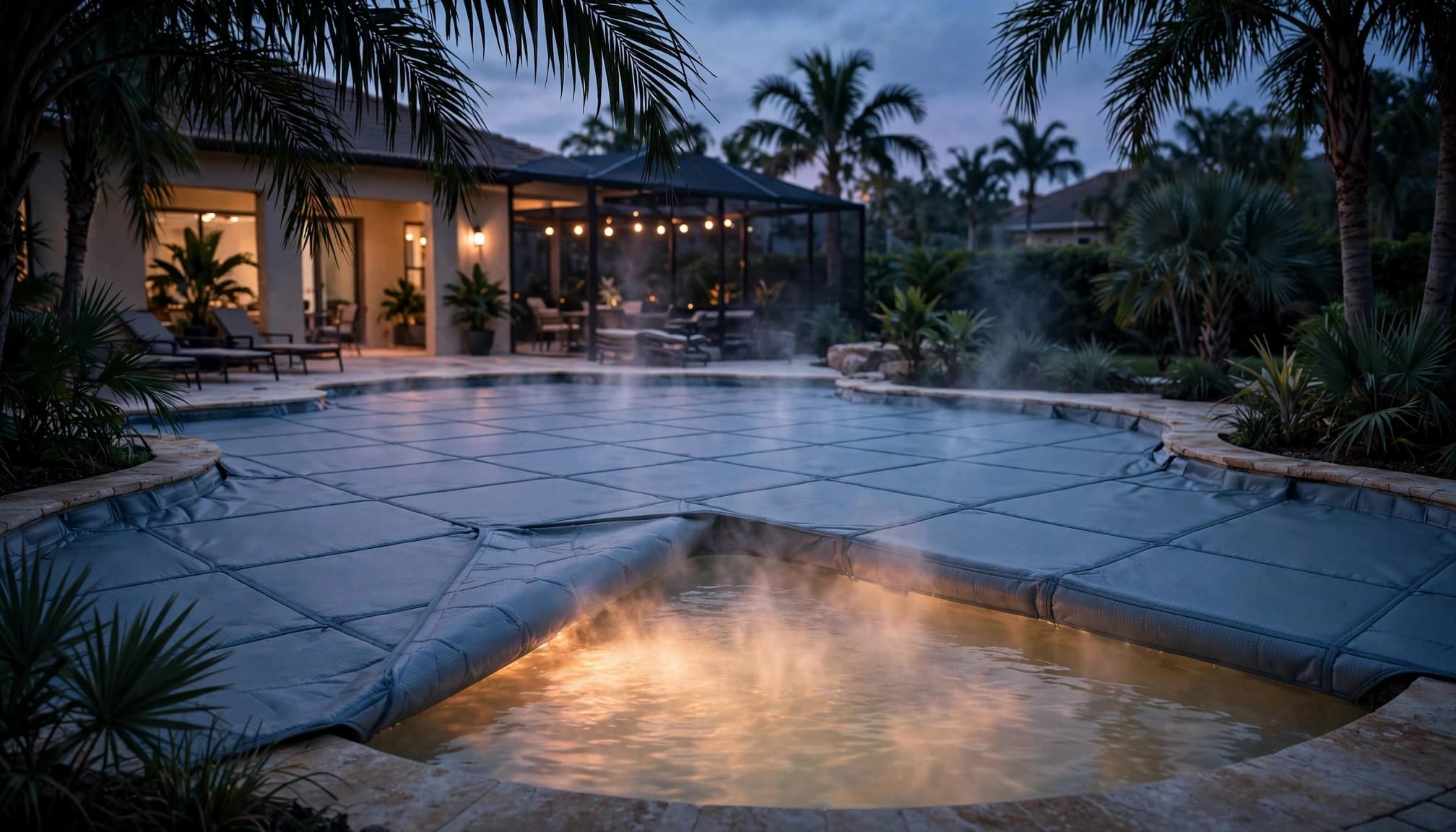
Sun, shade, and wind change the load
Direct sunlight can add warmth during the day. A house, trees, or a covered lanai can shade the water, and those shadows change with the seasons. A pool that receives ample summer sun may spend more time in shade during winter.
Wind matters because moving air encourages evaporation. An exposed pool deck and a sheltered backyard can therefore have different heating needs, even when their pools are similar.
Rainfall and cooler overnight temperatures also affect water temperature. A useful recommendation considers the conditions when you expect to swim, rather than assuming every day will be warm and sunny.
A cover changes the calculation
A fitted pool cover limits evaporation when the pool isn't in use. That helps retain heat overnight and during periods of wind. The benefit applies to both gas heaters and heat pumps.
Plan the cover strategy alongside the heater. A system sized with regular cover use in mind may perform differently if the pool stays uncovered. Also consider where the cover will be stored and how easily it can be removed.
Choose a Heat Pump or Gas Heater
The type of heater affects how the system delivers heat. Your swimming schedule is a starting point for choosing between a heat pump and a gas heater.
Heat pumps suit steady temperatures
A pool heat pump draws heat from outdoor air and transfers it to the water. It uses electricity to operate its fan and compressor. In Southwest Florida's warmer conditions, that approach can suit households that swim regularly and prefer to maintain a consistent temperature.
Heat pumps add heat gradually. When outdoor air gets cooler, their output can fall and heating can take longer. They also need room for air to move around the unit.
Gas heaters suit faster heating
A gas heater burns natural gas or propane to heat pool water. Its high output makes it a useful choice for occasional swimming or an attached spa that you want to warm before use.
Gas equipment needs an appropriate fuel supply and exhaust clearances. If natural gas isn't available at the property, propane requires storage and delivery. The choice should account for those installation needs as well as your preferred heating schedule.
Match Heating Speed to Your Routine
A pool that's kept near a comfortable temperature has a different heating job from one that cools down between visits. Decide how you expect to use the water before settling on equipment.
Maintaining warmth takes ongoing heat
When a heater maintains a set temperature, it replaces heat the pool loses to its surroundings. Surface area, weather, cover use, and water features all influence that ongoing demand.
For a family that swims several times a week, a steady setting can make the pool ready more often. A larger heater alone won't stop heat loss, though. A cover and a sheltered setting can help retain the warmth already in the water.
Warming a cool pool takes additional time
If you prefer to heat the pool before a weekend or gathering, the system must raise the temperature as well as replace heat lost along the way. The amount of water and the temperature increase both matter.
When comparing equipment, look at heat output , not only the largest number in a product description. Gas heater input and heat delivered to the water aren't the same figure. Heat pump output also depends on the air and water conditions used for the rating.
A realistic expectation includes changing weather. A unit won't necessarily warm the pool at the same rate on a cool, windy evening as it does on a warm afternoon.
Include the Spa and Water Features
An attached spa can change the equipment decision because spa water is often kept warmer than pool water. The system also needs to support how you switch between pool and spa operation.
An attached spa has its own heating pattern
A spa contains less water than the pool, but you may want it ready shortly before use. A gas heater's faster heating can fit that schedule. Some households prefer a system that supports steady pool warmth and a separate approach for occasional spa use.
Valves, controls, and plumbing determine how water moves when the system changes modes. A raised spa also adds equipment and construction considerations. Those details belong in the design conversation, not after the pool is finished.
Our guide to questions for a pool design consultation covers other ways features affect the project.
Moving water can lose more heat
Waterfalls, fountains, deck jets, and spillover features expose more water to the air while they run. That can increase evaporation and cooling.
If you plan to use a waterfall every evening, its effect belongs in the heating plan. If it's an occasional feature, the calculation can reflect that schedule instead. Turning features off while warming the pool can also limit extra heat loss.
Plan the Plumbing and Equipment Pad
A heater is one part of a circulation system. The pump must move water through the equipment at a flow rate the heater can accept, and the plumbing layout affects how that water reaches the pool and spa.
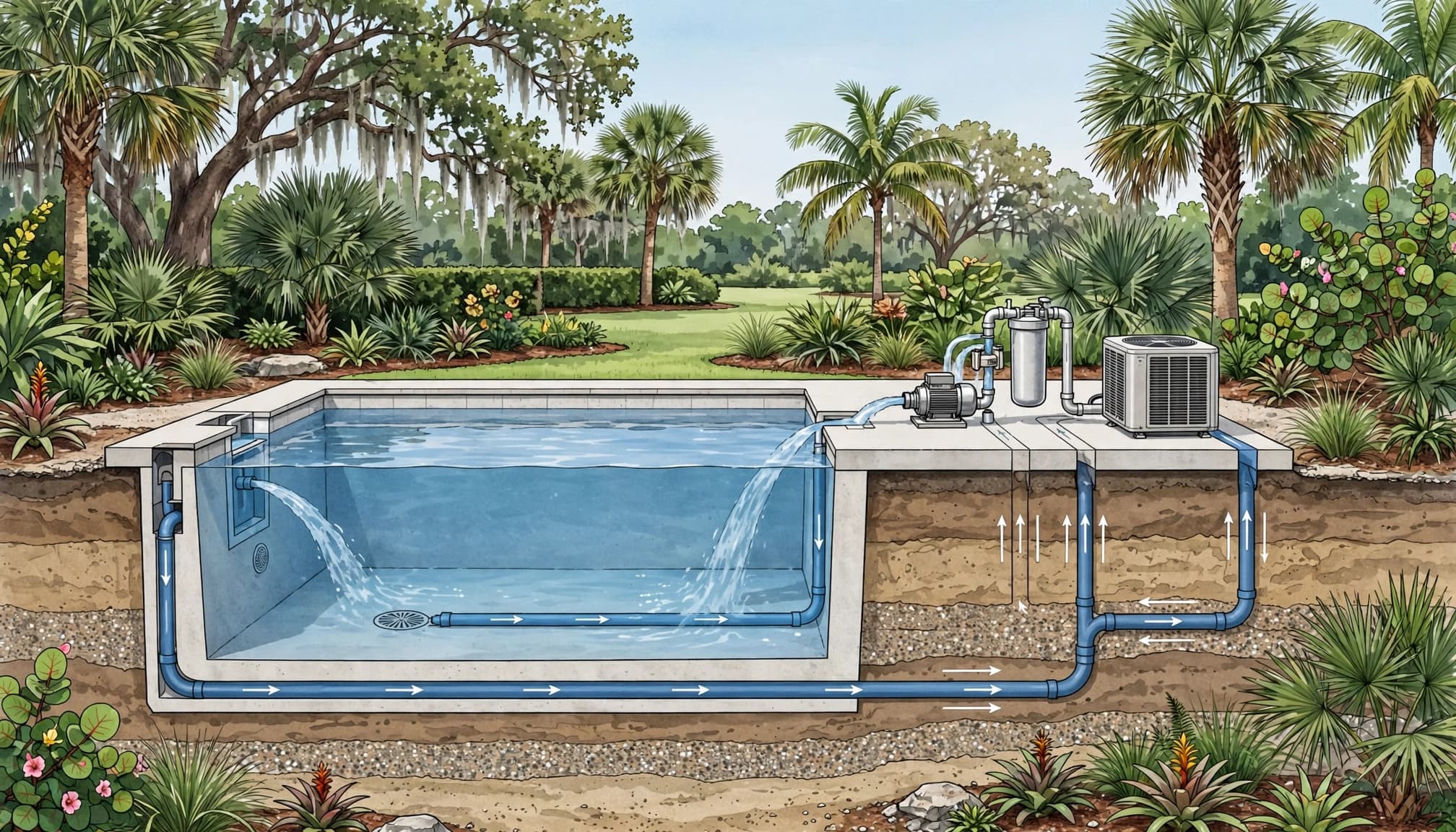
Flow and controls affect operation
A heater needs compatible circulation to transfer heat to the water. With a variable-speed pump, the speed used during heating must provide enough flow for the selected equipment.
The system may also need valves and controls for an attached spa or water features. Our guide to gunite pool plumbing basics explains how the pipes connect circulation, heating, and other functions.
Leave room for air and service
A heat pump needs open airflow. A wall, fence, hedge, or enclosure placed too close can restrict performance. The equipment pad also needs enough access for maintenance and repairs.
Gas heaters require suitable exhaust clearance and a properly sized gas supply. Both heater types have electrical needs, including controls and circulation equipment. Licensed professionals should handle the electrical and gas work associated with the installation.
Make Heating Decisions Before Construction
During a new build, the heater affects more than the equipment purchase. It can influence the location of the pad, pipe routes, electrical planning, and space available for future service.
Deciding early is especially helpful when your gunite design includes a spa, automation, or several water features. Once the deck and landscaping are in place, changes can become more disruptive.
Our custom gunite pool construction process brings those design choices together before installation. If you're renovating, an existing equipment pad and plumbing layout may shape the available options.
Give controls a place in the plan
Compatible automation can coordinate heating with the circulation pump and manage pool and spa settings. Controls are most useful when they're selected around the equipment and functions you intend to use.
Planning conduit and control locations early can also make the finished system easier to service. Our guide to pool automation before gunite covers the infrastructure decisions that come before the shell and deck.
Allow for future use
Your current plan may call for a pool alone, while a future spa or water feature could change the heating demand. Early planning can reserve space and consider how those additions would connect.
That doesn't mean buying a larger heater for every possible future project. It means making the equipment area and layout part of the conversation while changes are easier to accommodate.
What a Useful Heater Recommendation Includes
A useful recommendation connects the selected equipment to the pool design and your routine. It should describe the water surface and volume, expected swimming season, desired warmth, and whether you plan to use a cover.
It should also account for shade, wind exposure, and any spa or moving-water features. For a heat pump, outdoor conditions affect the output available. For gas, the fuel supply and installation layout are part of the decision.
The heating expectation matters as much as the equipment choice. A recommendation for maintaining a steady temperature should be clear about that purpose. If you want to warm a cool pool before a visit, the plan should address that different job.
For an existing pool, the circulation system and equipment pad also affect what can be installed. A replacement heater should fit the actual pool and how you use it today, rather than simply matching the old unit.
Size the Heater Around Your Pool
A custom gunite pool deserves a heating plan based on its actual shape and your swimming habits. Surface area helps determine heat loss, while water volume affects how much heat it takes to raise the temperature.
At San Juan Custom Pools & Spas, we plan pool features and equipment as part of the overall design. With the heater, cover, spa, and plumbing considered together, your pool is better prepared for the way you want to enjoy it.