Pool Design Consultation: 12 Questions to Ask First
A pool design consultation can turn a backyard idea into a realistic project plan, but only if you arrive prepared. The right questions help you understand your options, costs, property limits, and the work involved before construction begins.
Homeowners in Cape Coral, Fort Myers, and nearby Southwest Florida communities also need to discuss permitting, drainage, storms, equipment, and local site conditions. Use these questions to make your pool design consultation more productive and to choose a builder with a clear, detailed process.
Key Takeaways
- Ask how your property, permits, easements, and HOA rules will affect the design.
- Request a complete project budget that includes construction, decking, features, permits, and upgrades.
- Discuss pool size, depth, safety, equipment, maintenance, and long-term operating costs.
- Confirm the construction schedule, contract terms, warranty coverage, and communication plan.
12 Questions to Ask During a Pool Design Consultation
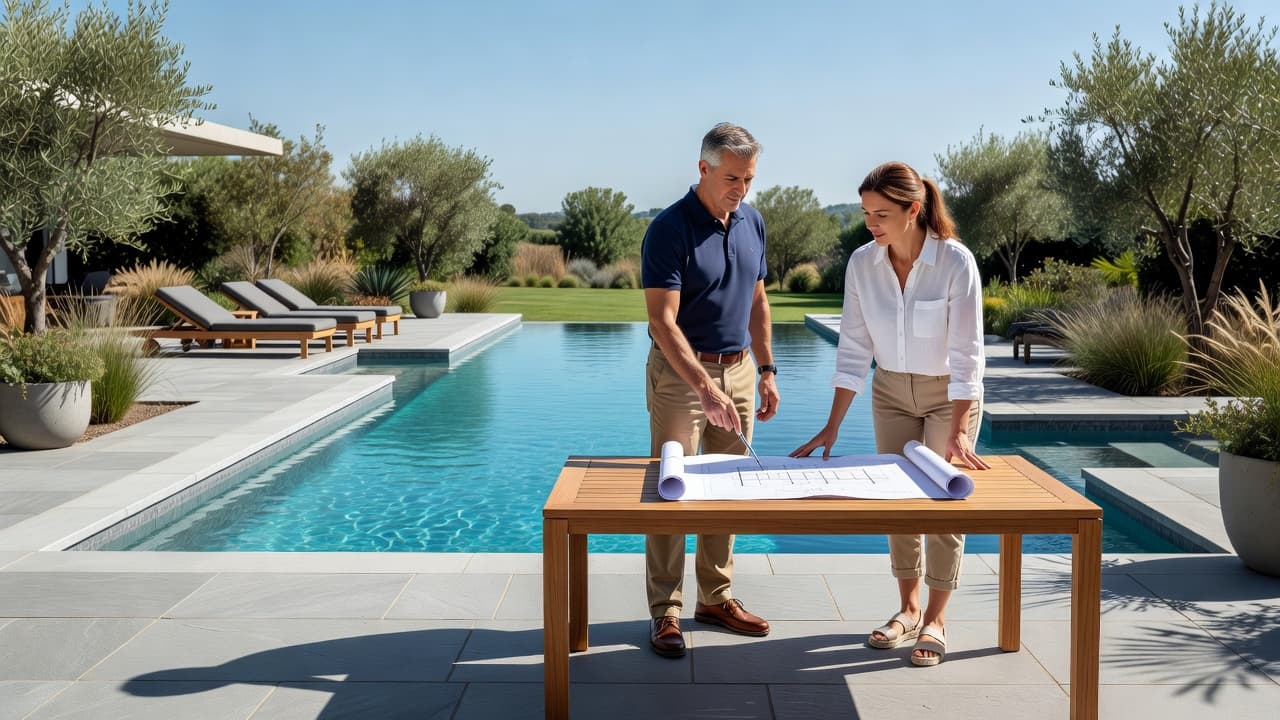
A good consultation should feel like a working conversation, not a sales presentation. Your pool professional should listen to how you use your yard, inspect the property, explain tradeoffs, and provide answers you can review later.
1. What property details will affect my pool design?
Every backyard has limits. The builder should review property lines, easements, setbacks, existing structures, access points, utility locations, septic systems, and elevation changes before finalizing a layout.
Ask whether the team will verify these details through a property survey, site measurements, utility markings, or other documents. In Southwest Florida, drainage and access for construction equipment can also affect where the pool, deck, and equipment pad fit.
A helpful answer will identify the known constraints and explain which items still need verification. The builder should also show how those conditions may change the pool's shape, location, or available features.
2. Which permits and approvals will I need?
Pool construction often requires local permits, inspections, and approval for related work. If your neighborhood has an HOA, its architectural review process may add another step.
Ask who prepares and submits the permit documents, who schedules inspections, and whether permit fees appear in your proposal. You should also ask how the builder handles revisions if the local authority requests a change.
A professional contractor should describe the permitting process in plain language. San Juan Custom Pools & Spas provides custom pool and spa services, including design and construction support for homeowners in the Cape Coral and Fort Myers area.
3. What is the complete project budget?
A pool quote should cover more than the shell and excavation. Ask for an itemized budget that includes the pool structure, interior finish, coping, decking, plumbing, electrical work, equipment, permits, access preparation, and cleanup.
Then ask which features are included and which are upgrades. Waterfalls, fire bowls, deck jets, sun shelves, automation, spa heaters, lighting, and expanded decking can change the final price.
A helpful answer will separate the base construction cost from allowances and optional features. It should also identify possible additional charges, such as difficult access, unexpected soil conditions, drainage work, or changes made after approval.
4. How long will design, permitting, and construction take?
The full schedule includes more than the days spent digging. Design revisions, engineering, permit review, inspections, material ordering, excavation, plumbing, electrical work, decking, and finish installation all affect the timeline.
Ask for an estimated schedule with major milestones. Find out what could delay the project and how the builder will communicate schedule changes. Weather, material availability, inspection timing, and site access can affect construction in Southwest Florida.
A trustworthy answer won't promise an exact completion date before the plans and permits are ready. Instead, the builder should give you a reasonable range and explain the conditions that could move it.
Questions About Pool Layout, Features, and Finishes
Once you understand the property and budget, focus on how the pool should function. A beautiful design still needs to fit your household, furniture, entertaining habits, and maintenance preferences.
5. How will my family use the pool?
Start with daily use rather than copying a photo. Will you swim laps, host gatherings, supervise young children, relax in shallow water, or use the pool mainly for cooling off?
Your answer helps the designer plan circulation, seating, entry points, swim lanes, and depth changes. A family that entertains often may need wider steps and more deck space. A homeowner who wants exercise may prefer a longer, simpler pool shape.
A useful consultation should connect your routine to design decisions. Ask the builder to explain where people will sit, enter, move through the yard, and gather when the pool isn't in use.
6. What pool size, shape, and depth fit my yard?
Pool dimensions affect construction cost, water volume, heating, cleaning, and usable deck area. A larger pool isn't always more functional if it leaves little room for seating or blocks access around the home.
Ask how the proposed dimensions relate to your lot and intended use. Discuss shallow entry areas, tanning ledges, steps, deeper swimming zones, and whether a spa should connect to the pool or sit separately.
The professional should show you a scaled plan or clear rendering. That plan should include the house, property boundaries, screen enclosure, equipment area, existing trees, and planned decking so you can judge the proportions.
7. Which features add value for the way I plan to use the pool?
Features should support a purpose, not fill empty space on a design. A sun shelf can provide shallow lounging water. A spa can add year-round relaxation. Waterfalls, fountains, deck jets, and fire bowls can add movement and sound around an entertaining area.
Ask how each feature affects cost, plumbing, maintenance, energy use, and space. For example, a raised spa may create a stronger visual focal point, but it also adds structure and equipment requirements.
A helpful pool designer will recommend features that suit your yard and priorities. They should also tell you when a feature may not be worth the added expense or upkeep.
8. Which interior finish, coping, and decking should I choose?
Interior finishes affect appearance, texture, cleaning, and how the water looks in different light. Coping creates the edge between the pool and deck, while decking affects walking comfort, drainage, heat, and the overall style of the yard.
Ask to see real samples instead of relying only on digital images. Discuss how materials perform in direct Florida sun, around saltwater systems, and during heavy rain. You should also ask how repairs or replacements work if a finish becomes damaged.
A strong answer will compare practical differences between options such as pebble finishes, tile, concrete, and pavers. It should explain maintenance requirements without pushing you toward the most expensive selection.
Questions About Safety, Equipment, and Construction
The final group covers the parts that affect ownership after installation. Good planning can reduce surprises during construction and make the pool easier to operate for years.
9. What equipment and automation will the pool need?
Your equipment plan may include pumps, filters, heaters, sanitizing systems, lighting transformers, automation controls, and an autofill system. Ask where the equipment will sit, how much noise it may produce, and how technicians will access it.
Discuss salt chlorination, variable-speed pumps, heat pumps, solar heating, and remote controls if they fit your needs. The right choice depends on pool size, use, climate, budget, and your comfort with regular maintenance.
A helpful answer will explain operating costs, expected service needs, and the purpose of each component. Ask for equipment model numbers and warranties so you can compare proposals accurately.
10. What safety features should we include?
Safety planning should cover the pool's layout and the surrounding yard. Ask about barrier requirements, self-closing gates, door alarms, safety covers, compliant drains, non-slip surfaces, visibility from the house, and safe entry points.
If children or pets use the yard, discuss how a tanning ledge, steps, water depth, and furniture placement affect supervision. Also ask how lighting will improve visibility after sunset without creating glare.
A qualified pool professional should explain which safety measures local codes require and which are optional additions. They should never treat safety as an afterthought or leave you to interpret technical requirements alone.
11. How will the design handle drainage, decking, and landscaping?
Pool construction changes how water moves across the property. Ask where rainwater, splash-out, and deck runoff will go. Discuss deck slope, drains, swales, grading, retaining features, and the relationship between the pool and screen enclosure.
The builder should also clarify what happens to existing landscaping, irrigation lines, fences, and outdoor structures. If you plan to add plants, lighting, a grill, or a covered patio, include those plans before the pool layout is finalized.
A complete answer will show how the pool area connects to the rest of the yard. It should also identify work handled by the pool contractor and work that requires a separate landscape or outdoor living professional.
12. What does the contract include, and how will the project be managed?
Before signing, ask for the construction agreement, payment schedule, change-order policy, warranty terms, cleanup responsibilities, and final inspection process. Confirm whether the proposal lists materials, equipment, finishes, decking, features, and allowances in enough detail.
Ask who your main contact will be and how often you'll receive updates. You should know how design changes are approved and how questions are handled during excavation or installation.
A helpful answer will give you written documents, clear responsibilities, and a defined process. Review the builder's pool design and construction process so you understand what happens after the plans receive approval.
How to Prepare for Your Consultation
Bring a simple list of priorities, even if your ideas are still developing. Note how many people will use the pool, whether you want a spa, how often you entertain, and which features matter most.
Photos of your yard can help, especially pictures that show the house, existing deck, trees, fences, screen enclosure, and access from the street. You can also bring examples of pool shapes, finishes, or outdoor spaces you like.
Set a budget range before the meeting, then keep some room for decisions that arise during design. Ask for a written proposal and take time to compare details, not only the headline price.
Finally, pay attention to how the builder communicates. A professional should answer clearly, explain limitations, and ask thoughtful questions about your property and routine. If the consultation feels rushed, vague, or focused only on closing a sale, keep looking.
Conclusion
The right questions turn a pool design consultation into a practical planning session. You should leave with a clearer understanding of your property's limits, the project's full cost, the expected schedule, and the choices that affect long-term care.
A custom pool should fit your yard and the way you live in it. When a builder explains each recommendation in writing and addresses concerns before construction starts, you're in a much better position to approve a design with confidence.