
Pool Deck Slip Resistance: Comparing Surface Finishes
Pool deck slip resistance depends on more than the material you choose. Texture, drainage, cleaning, and even the sealer can change how a surface feels under wet feet.
For Southwest Florida homeowners, the choice also has to stand up to sun, rain, and frequent use. The goal is reliable footing without a deck that feels too rough or becomes difficult to maintain.
Start by comparing the finish as a complete surface, including its texture and any coating applied over it.
What Affects Pool Deck Slip Resistance?
A pool deck gets wet from splashing, rain, and routine cleaning. The surface needs to provide traction in those conditions, especially along the route between the house and the water.
Texture and wet footing
Texture gives feet more to grip than a smooth, polished surface. Broom marks, exposed stone, and textured pavers create different surface patterns, so their feel and traction can vary.
More texture isn't always better. A coarse surface can scrape bare feet or make it harder to brush away dirt. Look for a finish that feels secure without causing discomfort during normal use.
The condition of the surface
A textured deck can become slick if algae, dirt, sunscreen residue, or a worn coating covers the finish. Standing water can make those conditions harder to manage.
The final sealer matters, too. A glossy coating can change the feel of the material underneath it. Compare samples with the same finish and sealer planned for the deck, rather than judging an unsealed material alone.
Comparing Common Pool Deck Finishes
Each option can work around a pool, but installation and finish details affect its performance. This table offers a starting point for comparing them.
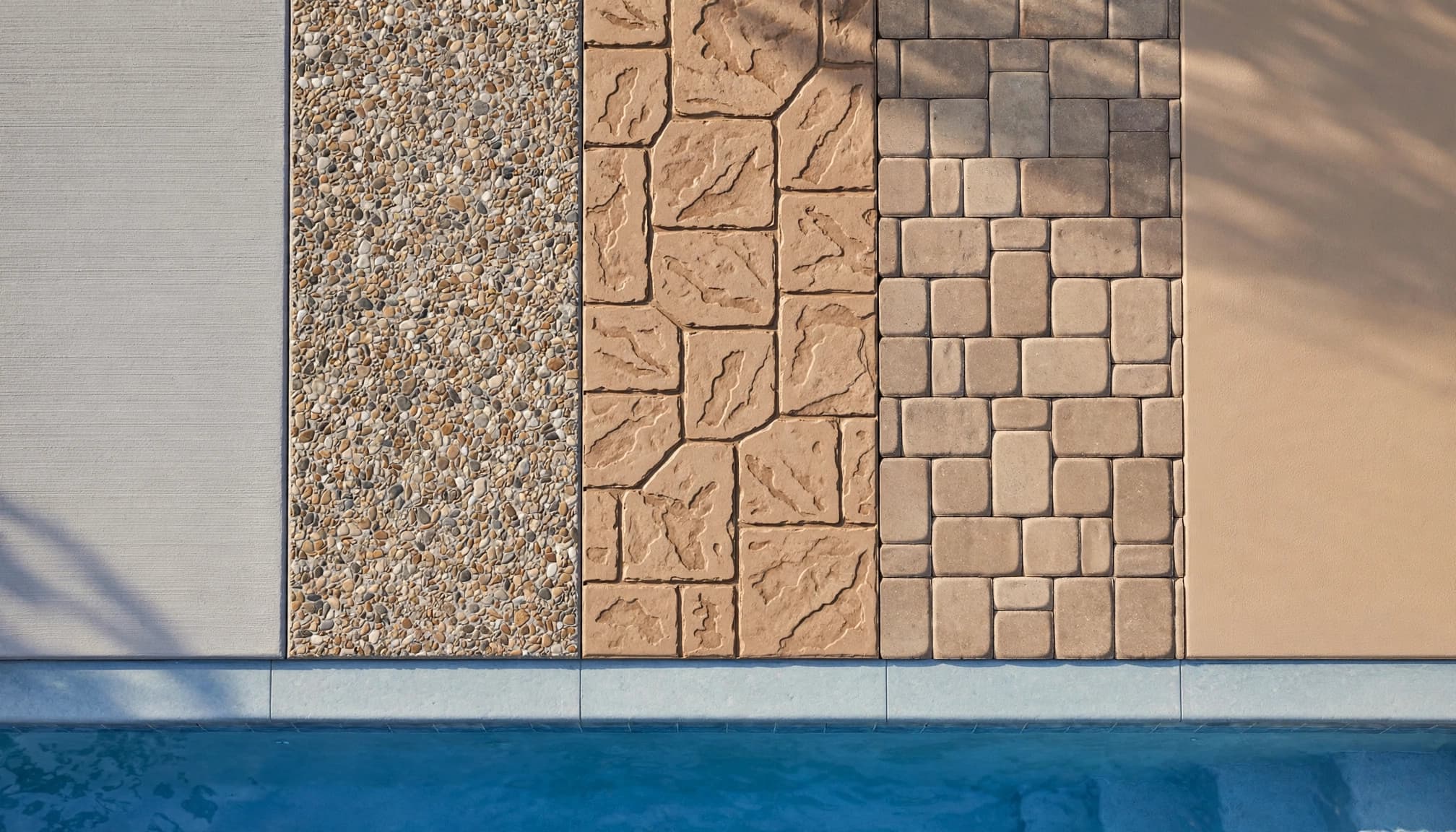
| Finish | Wet footing and comfort | Main cost consideration |
|---|---|---|
| Broom-finished concrete | Directional texture can provide grip; depth affects comfort | Often a straightforward concrete finish |
| Exposed aggregate | Exposed stone adds texture; coarse stone can feel rough | Decorative finishing adds labor |
| Textured or stamped concrete | Traction varies with the pattern, texture, and sealer | Patterns and coloring can increase labor |
| Pavers | Surface texture varies; joints and edges affect walking comfort | Individual units and base preparation add to the project |
| Applied coatings | Grip depends on the coating and any added texture | Existing-deck preparation and future recoating affect cost |
None of these names guarantees a particular result. The sample, installation, and maintenance plan matter more than the category alone.
Concrete Finishes: Broom, Aggregate, and Stamped
Concrete offers several ways to create texture without using separate paving units. The differences are noticeable under bare feet.
Broom-finished concrete
A broom finish leaves shallow lines in fresh concrete. Those lines can improve footing compared with a smooth finish, while a moderate texture can remain comfortable for everyday walking.
It is often a practical choice when you want a simpler-looking deck. As with other poured surfaces, cracking can occur over time. Repairs may remain visible, and the deck still needs proper grading because the finish itself doesn't drain water.
Exposed aggregate
Exposed aggregate reveals small stones in the concrete surface. The size, shape, and amount of exposed stone affect both grip and comfort.
Rounded, smaller stones may feel different from a coarse mix with more pronounced aggregate. A physical sample is especially helpful if children will play on the deck or anyone expects to sit at the pool edge.
Decorative exposure takes additional finishing work. Over time, cleaning may require attention around the textured surface, and a damaged patch can be difficult to match.
Textured and stamped concrete
Stamped concrete uses patterns that can resemble stone or other paving materials. The texture underfoot depends on the pattern and the finish applied over it.
A deep-looking pattern doesn't always mean the walking surface has useful texture. In addition, a sealer can alter the final feel. Detailed patterns and coloring can add labor, while cracks or repairs may interrupt the design.
Pavers and Applied Coatings
Pavers and coatings offer different ways to approach a new deck or renovation. One uses individual units; the other adds a finish over a prepared surface.
Concrete and natural stone pavers
Concrete pavers come in consistent shapes and a range of textures. Travertine provides natural variation, with finishes such as tumbled stone offering a different feel from a smoother surface.
Individual pavers can be replaced when damaged, although a replacement may look different from surrounding material. Joints can collect debris, and an unstable base can lead to uneven areas that create trip points.
Pavers generally involve material and base-preparation costs as well as installation labor. Our guide to pool pavers versus travertine covers more of the differences between those materials.
Applied coatings
An applied coating can change the look and texture of an existing concrete deck without replacing the whole surface. Some systems use added texture to improve wet footing.
The coating is only part of the system. Loose material, cracks, or drainage problems beneath it need attention first. Preparation adds to the initial project cost, and wear may mean future repairs or recoating.
A coating sample should show the intended texture and topcoat together. That gives you a better sense of both barefoot comfort and how the finished surface will feel when wet.
Plan Drainage Along With the Finish
A textured surface helps with footing, but it can't correct a low spot that holds water. Pool splash-out, hose water, and heavy rain all need a planned path off the deck.
Where water should go
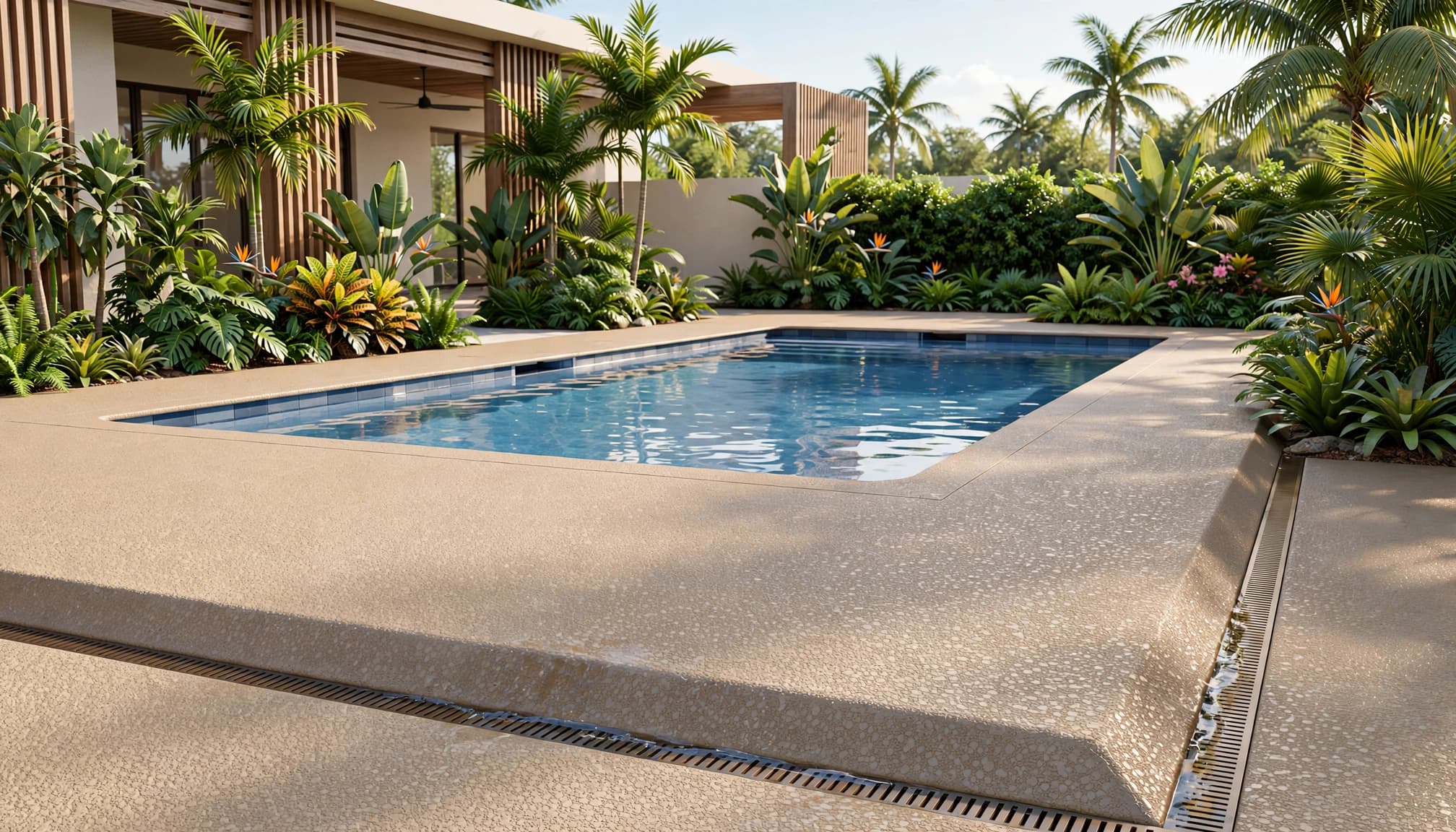
Deck grading should direct water away from the home and toward the planned drainage system. Depending on the layout, that may include surface slopes, channel drains, or other collection points.
For a new pool, planning elevations early makes it easier to coordinate the deck with the pool edge, screen enclosure, and yard. An existing deck with poor grading may need more than a new surface finish.
How paver joints affect drainage
Water can enter the joints between pavers, but ordinary pavers and joints shouldn't be assumed to handle all runoff. A permeable system depends on its base and the conditions beneath it.
Our guide to pool deck drainage options explains how slopes and collection methods can work together.
Balance Barefoot Comfort, Heat, and Access
Wet traction matters most where people walk, but the surface also needs to feel comfortable throughout the day. Rough aggregate may provide a textured feel that one homeowner likes and another finds unpleasant.
Color makes a difference in Southwest Florida sun. Light-colored materials can feel cooler than dark surfaces, although bright finishes may produce glare. Shade can make frequently used sitting areas more comfortable regardless of the deck material.
Pay attention to the route between the home, pool, and spa. Raised edges, uneven pavers, and crowded furniture can create trip hazards even when the deck has good traction. Clear paths and visible changes in elevation are also useful parts of aging-in-place pool design.
Maintenance Changes How a Deck Performs
A finish that feels comfortable on installation day still needs routine care. Leaves, dirt, and organic growth can collect in shaded or damp areas, especially around drains and along deck edges.
Coarser textures may take more effort to clean because debris settles into recesses. Paver joints need attention, while coatings and sealers can wear in heavily traveled areas. Use cleaning methods suited to the installed material so the surface isn't damaged during upkeep.
Watch for changes in the deck itself. Loose aggregate, peeling coating, cracks, or uneven pavers can affect both comfort and footing. A professional can assess the condition and recommend a repair that fits the material.
Compare the Full Project Cost
The finish is only one part of a pool deck budget. Pavers require a prepared base, while decorative concrete can involve extra patterning or color work. A coating may cost less to apply than a full replacement, but the existing surface must be suitable for it.
For a renovation, include demolition or surface preparation, drainage corrections, and repairs in the comparison. Future maintenance matters as well. A lower initial cost may come with recoating or more visible patching later.
Our pool deck renovation options include pavers, decorative concrete, and natural stone, so the deck can be considered alongside other pool updates.
Key Takeaways: A Pool Deck Comparison Checklist
Use the same conditions to compare each option. A photograph can show color and pattern, but a physical sample gives you more useful information about texture.
- Compare the finished samples. Include the intended sealer, coating, and texture, since each can change the surface feel.
- Wet the samples and walk on them carefully with bare feet. Place them on a stable surface and use support if needed.
- View the materials outdoors in sun and shade. Notice both surface temperature and glare.
- Consider the busiest routes, including the pool edge, spa approach, and path back to the house.
- Include drainage and base work in the comparison. Neither texture nor attractive paving corrects poor grading.
- Weigh cleaning, repair, and future refinishing alongside the initial project cost.
Frequently Asked Questions
Is the roughest pool deck finish the safest?
Not necessarily. Texture can help with wet footing, but excessive roughness can be uncomfortable and difficult to clean. Drainage, surface condition, and the final sealer also affect performance.
Can an existing slippery deck be resurfaced?
An applied coating or another renovation option may improve the surface, depending on its condition. Cracks, loose areas, and drainage problems need assessment before a new finish goes over the deck.
Choose the Finish Your Family Can Use Comfortably
A good pool deck balances wet footing with barefoot comfort and practical upkeep. The right choice depends on the installed texture, the way water leaves the deck, and how your family uses the space.
Compare finished samples outdoors before making the decision. That small step makes it easier to choose a surface that feels right around your pool.