
Pavers vs Travertine for Southwest Florida Pools
The right pool deck affects more than curb appeal. In Southwest Florida, the surface must handle intense sun, heavy rain, pool chemicals, salt air, and constant bare-foot traffic while you enjoy your outdoor living space. That makes evaluating pavers vs travertine a practical decision, not only a design preference.
When designing your pool area, premium travertine pavers and standard concrete pavers both stand out as top choices for pool deck pavers. Natural travertine brings a distinct stone appearance and often feels cooler under the Florida sun, while concrete pavers offer flexible colors, patterns, and easier repairs. Your pool type, drainage plan, budget, and maintenance expectations should guide the final choice between pavers vs travertine.
Key Takeaways
- Natural travertine pavers are a limestone product with a soft, high-end appearance and naturally porous surface.
- Concrete pavers provide more design choices, predictable sizing, and simple replacement when individual pieces are damaged.
- Southwest Florida's intense heat, rain, salt air, and pool chemistry create challenging weather conditions that affect both materials.
- Saltwater pools and screened lanais require careful attention to drainage, sealing, cleaning, and surface texture.
- A qualified pool contractor should evaluate the entire deck system, including the base, slope, coping, joints, and drainage to ensure professional installation.
Pavers vs Travertine: What Each Material Really Is
The term "pavers" usually refers to manufactured concrete pavers. Producers mold cement, aggregate, pigments, and other materials into consistent shapes. They can resemble stone, brick, or tile, but these concrete pavers are not natural stone.
Travertine is a form of limestone pavers created as natural stone pavers formed around mineral springs. Each piece has unique natural variations in color, veining, holes, and texture. Common styles include a tumbled finish, a honed finish, and chiseled edges. For pool decks, textured options or a tumbled finish are often considered because they provide the necessary slip resistance for wet patio areas.
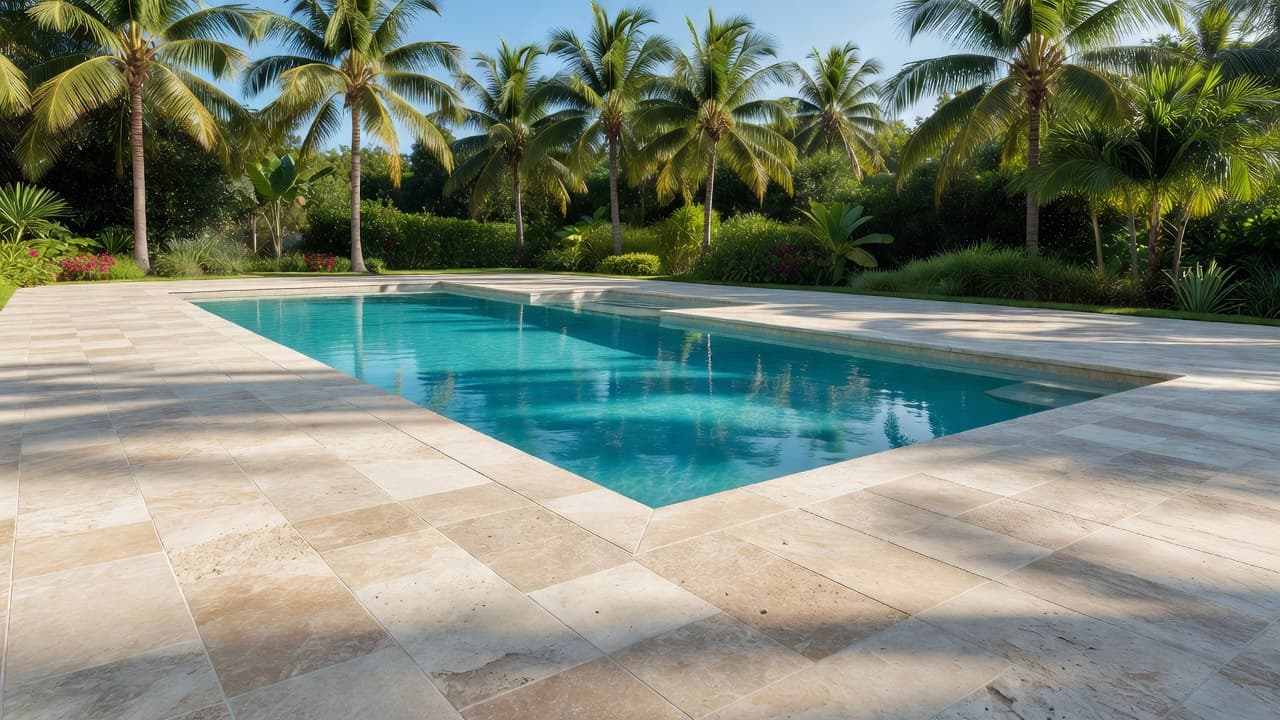
The porous surface of travertine pavers can absorb water, but the material also releases trapped heat more slowly than many dense, dark surfaces. That can manage surface heat and offer comfortable cooling underfoot during a sunny afternoon. Concrete pavers vary more in this regard. Light-colored concrete pavers may stay relatively comfortable, while dark colors can become hot after long exposure to direct sun.
Neither material automatically creates a safe pool deck. Texture, slope, drainage, installation quality, and maintenance all affect performance. A smooth travertine finish can be less suitable for wet areas, while a textured concrete paver can offer better footing.
How the Materials Compare Around a Pool
A side-by-side comparison helps separate appearance from performance.
| Feature | Natural travertine pavers | Concrete pavers |
|---|---|---|
| Material | Natural limestone | Manufactured concrete |
| Appearance | Varied color, texture, and veining | Consistent colors and patterns |
| Heat underfoot | Often cooler, depending on color and moisture | Depends on color, density, and sun exposure |
| Repairs | Matching replacement pieces can take more effort | Individual units are usually easier to replace |
| Color consistency | Natural variation is expected | More uniform, though fading can occur |
| Maintenance | Cleaning and optional sealing may be needed | Cleaning, joint care, and possible sealing |
| Durability and longevity | Withstands weathering and heavy foot traffic well | Provides long-term strength with proper base care |
Travertine pavers usually win when the goal is a natural resort-style appearance. Their unique variation gives the deck visual depth, especially beside water features, tropical planting, and light-colored pool finishes, which highlights the strong aesthetic appeal of natural stone pavers.
Concrete pavers often win when homeowners want precise patterns or a coordinated design. A project can combine large-format concrete pavers, contrasting borders, or geometric bands that match the home, offering an alternative to porcelain pavers or standard patio pavers.
Repair planning also differs. If a tree root affects one section of a concrete paver deck, a contractor can often remove and reset the affected units. Travertine pavers can also be removed and replaced, but matching the original stone may take more care because every shipment can vary.
Cost depends on the product, site access, demolition, base preparation, drainage work, coping, borders, and labor. A proper cost comparison requires looking beyond material prices alone, since those numbers will not tell you what the completed pool deck will cost. Ask for an itemized proposal that separates the deck surface from excavation, grading, reinforcement, permits, coping, and related pool work.
Southwest Florida Climate and Pool-Deck Performance
Cape Coral, Fort Myers, Naples, and nearby communities face tough Florida weather conditions that deserve attention during design. Strong sunlight can fade pigments and heat exposed surfaces, while summer storms can send large amounts of water toward the pool deck in a short period. Coastal properties also experience salt-laden air, and enclosed lanais can trap humidity and slow drying.
Concrete pavers may show efflorescence, a pale powdery deposit caused by salts moving through cement-based materials. It can appear after installation or periods of heavy moisture. Proper maintenance and care routines, along with appropriate cleaning methods that match manufacturer recommendations, help address these issues.
Travertine pavers can develop stains or surface changes if leaves, metal furniture, fertilizer, or concentrated pool chemicals remain on the stone. Because natural stone features a porous surface, acidic cleaners can easily damage limestone. Homeowners should protect their investment by avoiding masonry cleaners and choosing stone-safe options that preserve long-term durability and longevity.
Rainwater management matters more than the small differences between material types. The deck should slope away from the pool where the site allows, while drains and channels should direct runoff away from the house and pool equipment. Poor drainage can create standing water, wash out joints, stain surfaces, and place extra stress on the deck base.
In Southwest Florida, a beautiful surface can still fail when water has nowhere reliable to go.
Sealing is another site-specific decision. The process of sealing pavers can affect stain resistance, color, texture, and maintenance, but the wrong product can leave a surface slick or increase surface heat. Ask which sealer is appropriate for your specific concrete pavers or travertine pavers, how often it needs renewal, and what cleaning products are approved for ongoing maintenance and care.
How Pool Type Changes the Decision
A pool's design affects how the deck is used and maintained. A simple rectangular pool may suit either material. More detailed projects need closer coordination between the deck, coping, waterline tile, and features.
Saltwater pools
Saltwater systems still contain chlorine, and salt can remain on nearby surfaces as water evaporates. Regular rinsing helps prevent residue on both concrete pavers and travertine pavers. A saltwater pool doesn't make either material maintenance-free.
Travertine requires careful attention to chemical spills because limestone can react to acidic substances. Concrete pavers may tolerate routine outdoor use well, but joint sand, sealers, and surface color still need proper care. The contractor should select compatible materials around the coping and waterline, keeping the unique needs of travertine pavers in mind.
Screened pool enclosures
A screened lanai reduces leaves and debris, but it doesn't eliminate moisture. Water can linger after storms, especially where the deck meets enclosure posts, walls, or door thresholds. The design should include drainage paths that don't depend on evaporation alone.
Light travertine can complement a bright enclosure and tropical landscaping. Concrete pavers may offer more freedom when the homeowner wants the deck to match an existing lanai finish, an adjoining outdoor kitchen, or an extended outdoor living space.
Sun shelves, spas, and water features
Sun shelves create shallow areas where water frequently reaches the deck edge. Spas can add warm, chemically treated water and more splash-out. Waterfalls, deck jets, and raised walls increase the number of surfaces that stay wet.
These details make edge design important. Coping should have a clean transition, comfortable edges, and enough projection to limit water running directly onto the deck. San Juan Custom Pools & Spas offers pool deck remodel services, along with pool renovations and features that need to work together as one design.
Large entertaining areas
For a deck built around outdoor dining, lounge furniture, and frequent gatherings, concrete pavers can provide predictable dimensions for layout planning. These patio pavers stand up well to heavy foot traffic, whether you are hosting a large group near an outdoor kitchen or gathering around a fire pit. Travertine pavers can create a more varied setting, but natural color differences should be reviewed before installation so the finished deck matches the homeowner's expectations.
Installation Details Matter More Than the Surface Alone
A pool deck is a system. The visible paver or stone sits on a prepared base that must support heavy foot traffic, furniture, drainage, and seasonal movement. Although Southwest Florida avoids severe freeze thaw cycles, heavy rain and high humidity still require meticulous professional installation to prevent long-term shifting.
Before installation, the contractor should evaluate the existing soil, remove unsuitable material, establish finished elevations, and plan how water will move. Renovation projects may also require demolition, disposal, repairs around the pool shell, or adjustments to existing coping.
When laying pool deck pavers, concrete pavers are commonly installed over a compacted base with bedding material and joint sand. Travertine pavers depend on the selected product and site conditions. Some applications use a compacted base, while others use a concrete setting bed or another approved method. The installation plan should match the stone, drainage requirements, and local site conditions.
Joint details deserve attention. Paver joints may need periodic sand replacement, especially after pressure washing or heavy rain. Travertine pavers joints can collect dirt and organic debris, particularly under trees or inside screened enclosures. A contractor should explain how joints will be cleaned and maintained.
Pool coping also affects the finished appearance. Coping can match the deck or provide contrast around the waterline. With travertine pavers, natural edge variation may be part of the design. With concrete pavers, manufactured edge pieces can create a more uniform border.
Ask potential contractors these questions before approving the material:
- What base and drainage system will this site need?
- Which finish provides suitable texture when wet?
- How will the deck connect to the existing pool shell and coping?
- What happens if a paver or stone piece cracks later?
- Which cleaning products and guidelines for sealing pavers are approved?
- How will the design handle water from storms, splash-out, and the lanai, along with general maintenance and care?
The answers reveal more than a sample board. A quality material can perform poorly when the elevation, base, or drainage plan is wrong.
Which Pool-Deck Material Fits Your Home?
Choose natural travertine pavers when you prefer organic variation, a stone-focused appearance, and a deck that feels at home beside tropical landscaping while helping boost your property value. Review actual samples outdoors because indoor lighting can hide differences in color and texture, especially when you are evaluating unique natural variations in the stone.
Choose concrete pavers when you want broad pattern choices, consistent sizing, easier individual replacement, or a design that matches existing hardscape features like patio pavers or nearby driveway pavers. Ask to see completed installations, not only manufacturer samples, since these materials are frequently used across various outdoor projects. Color can look different across a small sample and a large sunlit deck.
Your decision should also account for lifestyle. Families with heavy foot traffic may value easy repairs. Homeowners focused on a natural appearance may accept more variation and stone-specific maintenance. A shaded pool deck, a sunny southern exposure, and a covered lanai can produce different comfort levels with the same material.
The strongest answer in the pavers vs travertine discussion often comes from the whole property. Consider the home's exterior, screen enclosure, pool finish, coping, landscaping, furniture, drainage, and long-term maintenance together to maximize aesthetic appeal. A professional design review can prevent a surface choice that looks good in isolation but feels disconnected after construction.
Frequently Asked Questions
Which material stays cooler under the Florida sun?
Natural travertine pavers often feel cooler underfoot than many concrete pavers because they release absorbed heat more slowly. However, concrete pavers can also remain comfortable if you choose lighter colors and avoid dark shades that trap heat during long sun exposure.
Are travertine pavers slippery around the pool?
Travertine can be slippery when wet if it has a smooth or honed finish. Selecting a textured or tumbled finish provides the necessary slip resistance for safe walking areas around your pool.
Which material is easier to repair if it gets damaged?
Concrete pavers are generally easier to replace individually if a single unit cracks or shifts. Travertine pavers can also be replaced, but matching the exact color and veining of the original natural stone requires more care.
Conclusion
The pavers vs travertine decision comes down to priorities. Premium travertine pavers deliver luxury as natural stone pavers that can feel comfortable around a sunny pool, while versatile concrete pavers or modern porcelain pavers offer structural flexibility for long-lasting pool deck pavers.
Southwest Florida conditions make installation details just as important as the material itself. Confirm the finish, drainage, base preparation, coping connection, cleaning plan, and sealing requirements before work begins. The best pool deck is the one that fits your home's design, your pool's features, and the way you plan to use the space.