Cold Joints in a Gunite Pool Shell: What They Mean
A cold joint in a gunite pool shell is a boundary between separate concrete placements where the bond may be weaker than the surrounding shell. The concern is the connection between the concrete sections , especially if it allows water to travel through the shell or affects how the structure carries loads.
For a homeowner planning a pool or spa, it helps to understand where the joint fits within the finished structure. The shell, reinforcement, and interior finish each have different jobs.
What Is a Cold Joint in a Gunite Pool?
A gunite pool shell is built around a steel reinforcement cage. During construction, the crew applies concrete to form the floor, walls, steps, and other features. A cold joint is an interface within that concrete where adjoining placements meet.
The presence of an interface doesn't automatically mean a pool will leak or suffer structural failure. Its significance depends on the condition of the bond and where the joint sits in the shell.
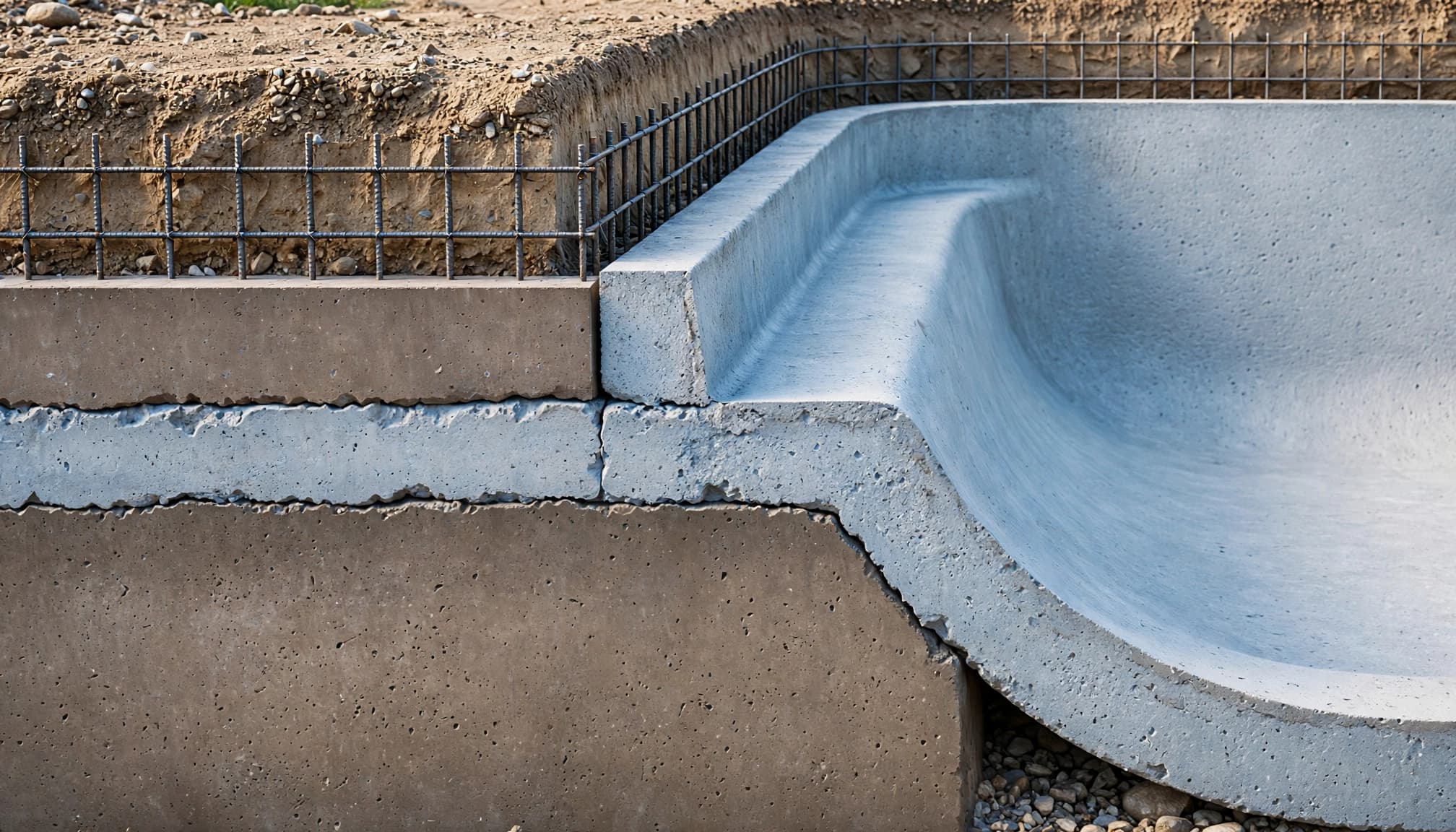
A cold joint also differs from a deliberately designed construction joint. A designed joint is part of the construction plan, with details suited to its location and purpose. Pool designs can include transitions that need special attention without implying that every transition is defective.
How Gunite Forms a Pool Shell
Gunite and wet-mix shotcrete are both methods for applying concrete through a hose. The distinction is where water enters the mixture.
Gunite Uses a Dry Mix
With gunite, dry cement and aggregate travel through the hose. The nozzle operator adds water at the nozzle as the material is applied over the reinforcement.
The crew builds the concrete to the thickness shown in the pool design. The shell can include curved walls, benches, steps, and other features that make a custom pool fit its site.
Wet-Mix Shotcrete Arrives With Water Added
Wet-mix shotcrete contains water before it reaches the pump. The crew then pumps and sprays the material into place around the steel cage.
Both methods can produce a concrete pool shell. Each requires a suitable mix, properly placed reinforcement, skilled application, and controlled curing. Our comparison of gunite and shotcrete pool construction explains how the two methods differ.
Why the Connection Matters to Shell Integrity
A pool shell must handle more than the weight of the water inside it. Soil presses against the outside walls, and groundwater can exert pressure on the shell as well. The pool's shape, depth, and site conditions influence the structural design.
Steel reinforcement helps the concrete act as a connected structure. It also helps hold concrete together when small cracks form. However, steel doesn't make concrete waterproof or guarantee that a pool will remain crack-free.
At a weak interface, the connection between adjacent sections may not perform like the surrounding concrete. Its effect depends on the location and condition of the joint and the loads acting on the shell. A structural concern calls for evaluation by a qualified pool professional or engineer rather than an assumption based on the joint's name alone.
Reinforcement, concrete, and waterproofing have different jobs. None is a substitute for the others.
Cold Joints and Water Movement
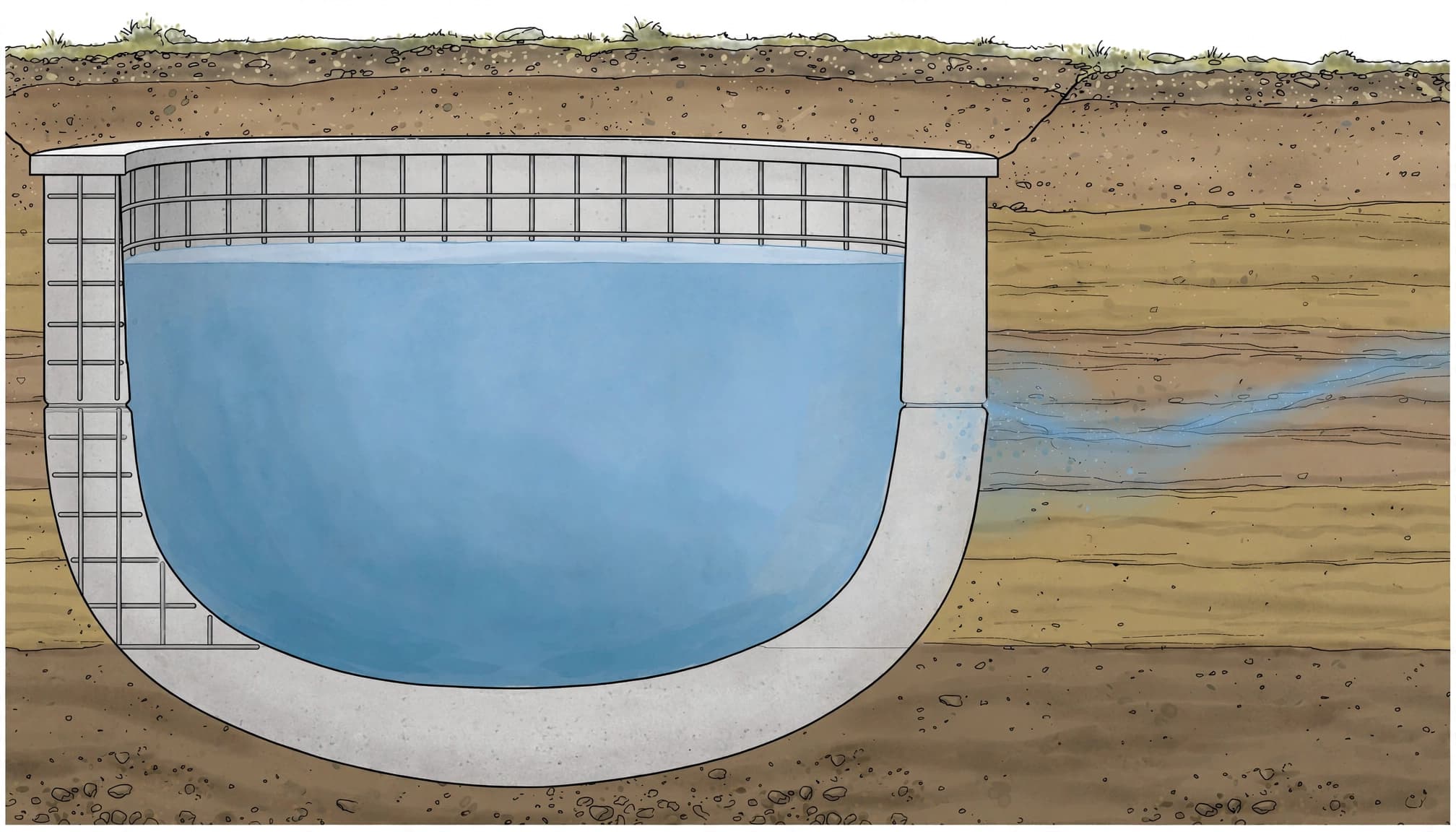
Concrete contains pores, and water can also travel through cracks, joints, and areas around plumbing penetrations. A poorly bonded interface can provide another potential route for moisture.
Water Can Reach the Shell From Either Side
Pool water contacts the interior surface. Outside the pool, wet soil and groundwater can also place moisture against the shell. Southwest Florida properties may have shallow groundwater or drainage challenges, so the surrounding site matters when considering how a shell handles water.
An existing pool also needs care before draining. Pressure from groundwater outside an empty pool can damage the shell. A qualified contractor can assess the site and determine a safe approach.
The Interior Finish Has a Separate Role
Plaster, quartz, pebble, and other finishes form the visible interior of many concrete pools. The selected finish affects the pool's appearance and the system used to complete the interior.
A finish isn't automatically a complete waterproofing system, and a coating can't correct a structural problem. Our guide to waterproofing a gunite pool shell covers how shell condition, groundwater, and finish compatibility affect that decision.
What Happens After the Shell Is Applied
Gunite placement creates the structural shell, but a new pool still has several stages ahead. Depending on the project, those stages include inspections, backfill, tile, coping, deck work, equipment installation, and the interior finish.
The concrete also needs moisture control as it gains strength. The curing plan depends on the concrete system and project specifications. If your builder gives you instructions for keeping the shell moist, follow that schedule before later work proceeds.
The final surface and fill come closer to the end of construction. A newly finished pool may need careful brushing and water-chemistry management during startup. Our guide to what happens after a gunite shell is sprayed describes the steps between shell placement and swimming.
A Sound Shell Starts With the Whole Design
A cold joint is one part of a larger pool structure. Its importance depends on the bond at the interface, its location, and the demands on the shell.
The strongest approach considers the concrete shell as a system , with reinforcement, site conditions, and waterproofing each accounted for in the pool's design.