
Attached Spa vs Separate Spa for Fort Myers Backyards
The attached spa vs separate spa decision affects your backyard layout, daily use, equipment plan, and long-term flexibility. Both options can create a comfortable place to relax, but they support different ways of using a pool and outdoor living area.
Fort Myers homeowners also need to consider intense sun, heavy rain, drainage, available deck space, and the practical details of servicing equipment. Comparing the two designs early helps you choose a spa that fits your yard instead of forcing the yard to fit the spa.
Attached Spa vs Separate Spa: What the Difference Means
An attached spa connects directly to the pool structure. Many designs use a raised spa with a spillover that sends water into the pool. The result is one unified feature with shared visual lines, coordinated tile, and a continuous deck area.
A separate spa sits apart from the pool, although it can still be built as a permanent in-ground feature. It may share the same general patio or equipment area, but the spa has its own location and can have a more independent plumbing and heating setup.
The physical connection is easy to see. The plumbing arrangement requires closer attention.
Some attached spas share water with the pool, while others use separate circulation paths and controls. A standalone spa may also connect to common equipment, depending on the design. Ask the builder to explain the complete hydraulic plan instead of assuming that the visual layout tells the whole story.
| Factor | Attached spa | Separate spa |
|---|---|---|
| Appearance | Creates one coordinated pool and spa feature | Gives the spa its own visual identity |
| Space use | Often fits efficiently beside or within the pool shape | Requires a distinct location and access path |
| Movement | Offers quick access from the pool | Can provide a quieter, more private retreat |
| Equipment | May share some systems or use dedicated components | Often allows more independent operation |
| Design flexibility | Works best when planned with the pool | Can offer more freedom in placement and future planning |
| Construction needs | Must coordinate pool, spa, plumbing, and deck work | May involve separate excavation, plumbing, equipment, and decking |
Neither choice is automatically better. The right design depends on whether you value a unified entertaining area or greater separation and independence.
When an Attached Spa Fits a Fort Myers Backyard
An attached spa works well when you want the pool and spa to function as one backyard centerpiece. A raised spa with a spillover can add height and movement without requiring another structure elsewhere on the property.
This layout also supports easy movement. You can step from the pool into the spa area without crossing a large patio or walking around landscaping. Families often appreciate that arrangement during gatherings, especially when adults want to use the spa while staying close to children in the pool.
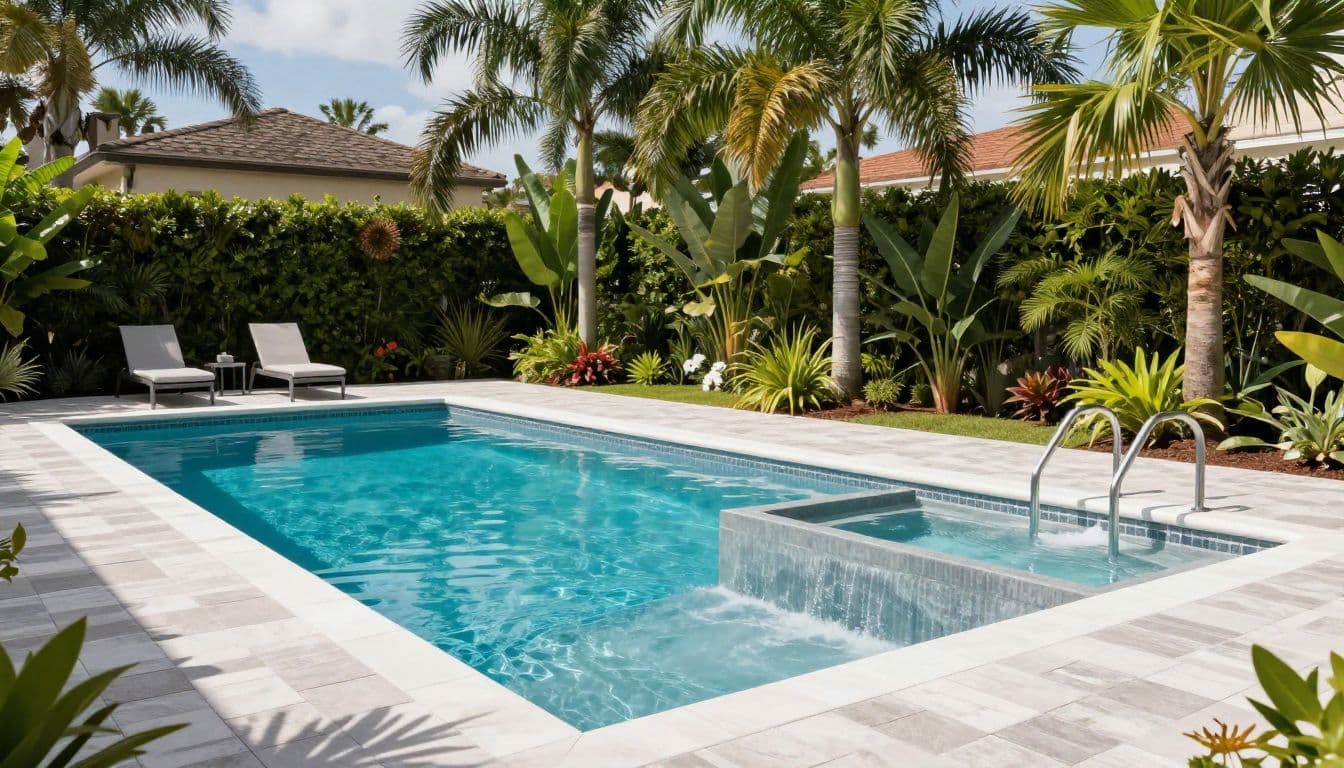
The connected design can make a compact backyard feel more organized. Instead of treating the pool and spa as separate destinations, the builder can shape them around the same deck, seating area, screen enclosure, and outdoor kitchen plan.
A unified structure also makes it easier to coordinate finishes. Coping, waterline tile, interior surfaces, spillover details, and deck materials can follow one design direction. Features such as a sun shelf, water wall, fountain, deck jets, or fire bowls can also be planned around the pool and spa relationship.
However, an attached spa needs careful engineering. The builder should explain how the spa fills, drains, filters, and heats. If the spa shares water with the pool, ask how the system changes between pool circulation and spa use. If it has dedicated plumbing and heating, ask where the equipment will go and how technicians will access it.
A raised spillover can also create sound. Some homeowners enjoy the soft water noise, while others prefer a quieter sitting area. Visit completed projects or review design renderings that show the spa from the main seating areas before committing to the feature.
You can review the available custom pool and spa services when comparing features, equipment, and construction options for a connected design.
When a Separate Spa Makes More Sense
A separate spa gives you more control over location. You might place it near a covered lanai, away from the busiest pool entry, or beside a seating area that feels more private at night.
That separation can improve how different parts of the family use the yard. One person may want a quiet soak while others swim or entertain near the pool. A standalone spa can also work well for homeowners who plan to use heated water more often than they use the pool.
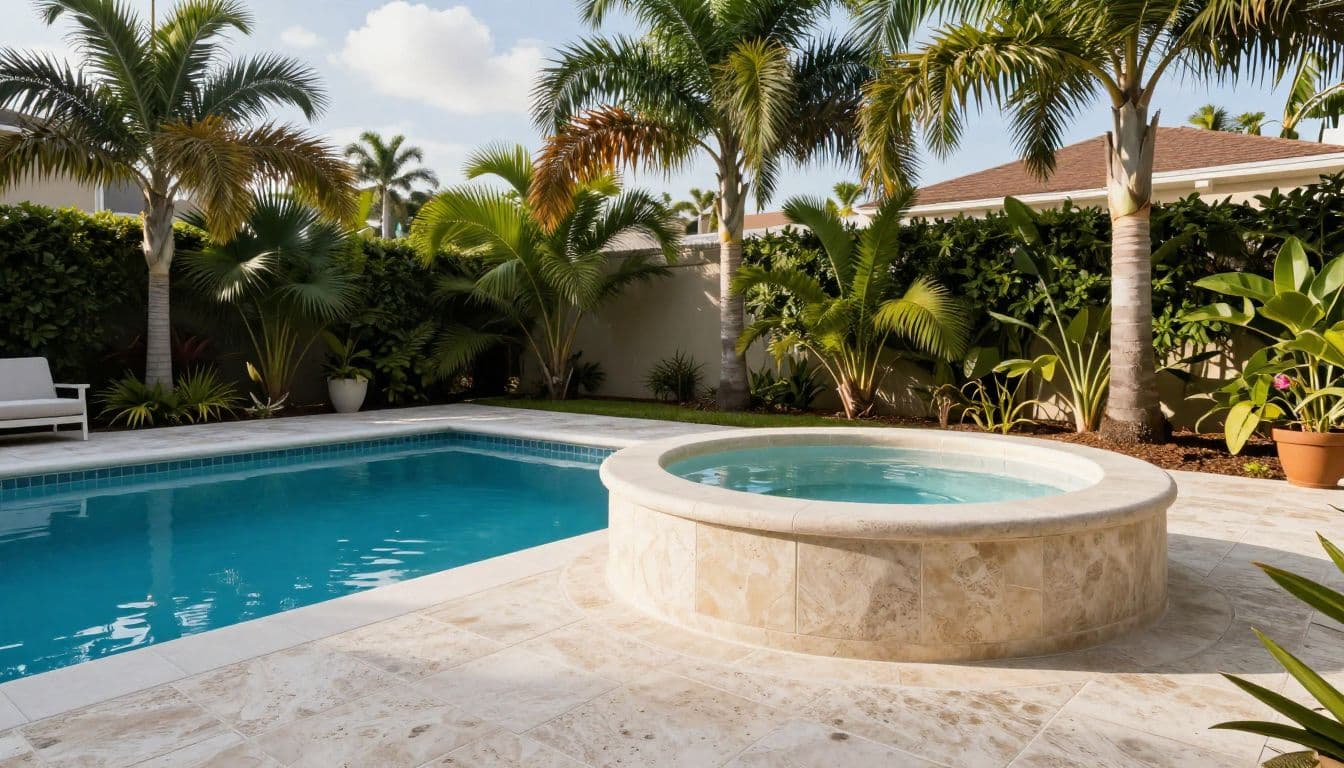
Placement flexibility matters on irregular Fort Myers lots. A separate spa may fit a corner that would not work for a raised connection. It can also preserve a particular pool shape, protect an existing tree, or create room for a larger deck between the pool and the house.
A standalone design may provide more independence in operation. The pool and spa can have separate controls, circulation schedules, and heating settings when the equipment plan supports those functions. That arrangement can be helpful when you want to heat the spa without changing how the pool operates.
The trade-off is that the spa needs its own visual and physical relationship with the rest of the yard. You will need to plan the path between the pool, spa, house, and seating areas. A distant spa may feel private, but poor placement can make it inconvenient during rain or late-night use.
Construction can also involve more separate work. The scope may include additional excavation, plumbing, equipment, electrical planning, decking, drainage, and access for service. Costs and timelines depend on the lot, soil, groundwater, access for machinery, finishes, and the relationship between the pool and spa. A builder should provide a project-specific scope rather than a generic allowance.
Compare the Factors That Matter Most in Fort Myers
Space, access, and backyard flow
Start with a scaled site plan, not a rough visual idea. The plan should show the house, property lines, existing structures, screen enclosure or lanai, utilities, trees, drainage areas, and the proposed pool and spa.
An attached spa may preserve more open patio area because it shares the pool's footprint. A separate spa may take more room, but it can improve the layout if the pool shape would otherwise become too crowded.
Walk through the proposed design in your mind. Where will wet swimmers enter the house? Can someone reach the spa without crossing a slippery route? Is there enough space for lounge chairs, shade, storage, and service access?
Fort Myers weather makes these questions practical. A covered route may matter during a sudden rainstorm, while shade can make a major difference during summer afternoons. The design should also account for water runoff and the way heavy rain moves across the property.
Heating, circulation, and controls
A spa is most useful when the heating and circulation plan matches your habits. Ask whether the spa has a dedicated heater, shared equipment, separate valves, or automation that lets you select pool and spa modes.
The water connection also affects the experience. A spillover creates a visible water feature, but the builder should explain how it operates during heating and normal circulation. Make sure you understand whether the spa can maintain its intended temperature without unnecessary movement between the two bodies of water.
Controls matter after construction. Ask how you will adjust temperature, jets, lighting, and water features. Find out where the equipment sits, how much clearance it needs, and how a technician will reach pumps, filters, heaters, and valves.
Privacy, noise, and everyday use
An attached spa puts the relaxing area close to the pool's activity. That is convenient for parties and family use. It may be less appealing if you want a calm space away from conversations, splashing, or outdoor speakers.
A separate spa can create a private retreat, but landscaping and lighting need to support that goal. Palms, privacy screens, low-glare lighting, and a nearby seating area can help define the space without making it feel disconnected.
Consider when you will use the spa most often. If you picture short evening sessions after work, a location near the house may matter more than a dramatic poolside centerpiece. If entertaining is your priority, an attached spa may keep everyone in one social area.
Questions to Ask Your Pool Builder Before Choosing
Bring these questions to the design meeting:
- Will the attached spa share water with the pool, or will it have separate circulation?
- Which components will be shared, and which will have dedicated controls?
- How will the spa heat when the pool is operating normally?
- Where will pumps, filters, heaters, valves, and automation equipment sit?
- What service clearance does the equipment need?
- How will the layout handle drainage during heavy rain?
- Could soil, groundwater, access, or existing utilities change the design?
- How will the pool and spa connect to the deck, screen enclosure, lanai, and house?
- What features are included in the written scope, and which are allowances?
- Who coordinates design, permitting, inspections, and construction scheduling?
- What maintenance access will remain after landscaping and hardscaping are complete?
- Can you show examples of attached and separate spas built on similar lots?
Ask for drawings that show the spa from the kitchen, living room, pool deck, and primary seating area. A design that looks excellent in a top-down plan may feel too exposed, too distant, or too crowded from the places where you spend time.
A clear project process also helps. Review the builder's custom pool design process so you know when site conditions, equipment, finishes, and construction details receive attention.
Conclusion: Choose the Spa That Matches Your Yard
The attached spa vs separate spa choice comes down to how you want the backyard to work. An attached design creates a unified focal point with convenient pool access and coordinated finishes. A separate spa offers more freedom in placement, privacy, and independent use.
Fort Myers site conditions should guide the final decision. Review the lot layout, drainage, equipment access, heating plan, deck design, and daily routine with a qualified pool builder before selecting a shape.
The best spa is the one you will use comfortably and maintain easily. A thoughtful plan can make either configuration feel like a natural part of your backyard.