
When to Replace Waterline Tile in Cape Coral
A few missing pool tiles in a swimming pool can look like a small repair, but the pattern of damage matters more than the number. Waterline tile replacement makes sense when sections of the pool waterline tile are cracked, loose, or repeatedly failing, especially during a planned renovation.
However, a white crust or dull finish along the water line may need cleaning rather than a new tile. The first step is separating surface buildup from damage, then checking whether the wall beneath the tile needs attention.
That distinction helps you choose the right repair and schedule it before new finishes go in.
Key Takeaways
- Clean mineral buildup before deciding to replace tile; cracks, missing pieces, loose tiles, or repeated grout failure may require repair or replacement.
- Investigate the substrate and cause of failure before installing new tile, especially when damage spans several tiles or appears near coping or a suspected leak.
- Coordinate tile work with shell repairs, coping, and nearby finishes so demolition doesn't damage completed renovation work.
- Choose tile and installation products approved for pool use, and confirm the quote, water-management plan, repairs, and startup requirements before work begins.
Signs That Call for Waterline Tile Replacement
The pool waterline tile gives pool tiles a washable surface where deposits and oils collect. Inspect this band before deciding how much to replace.
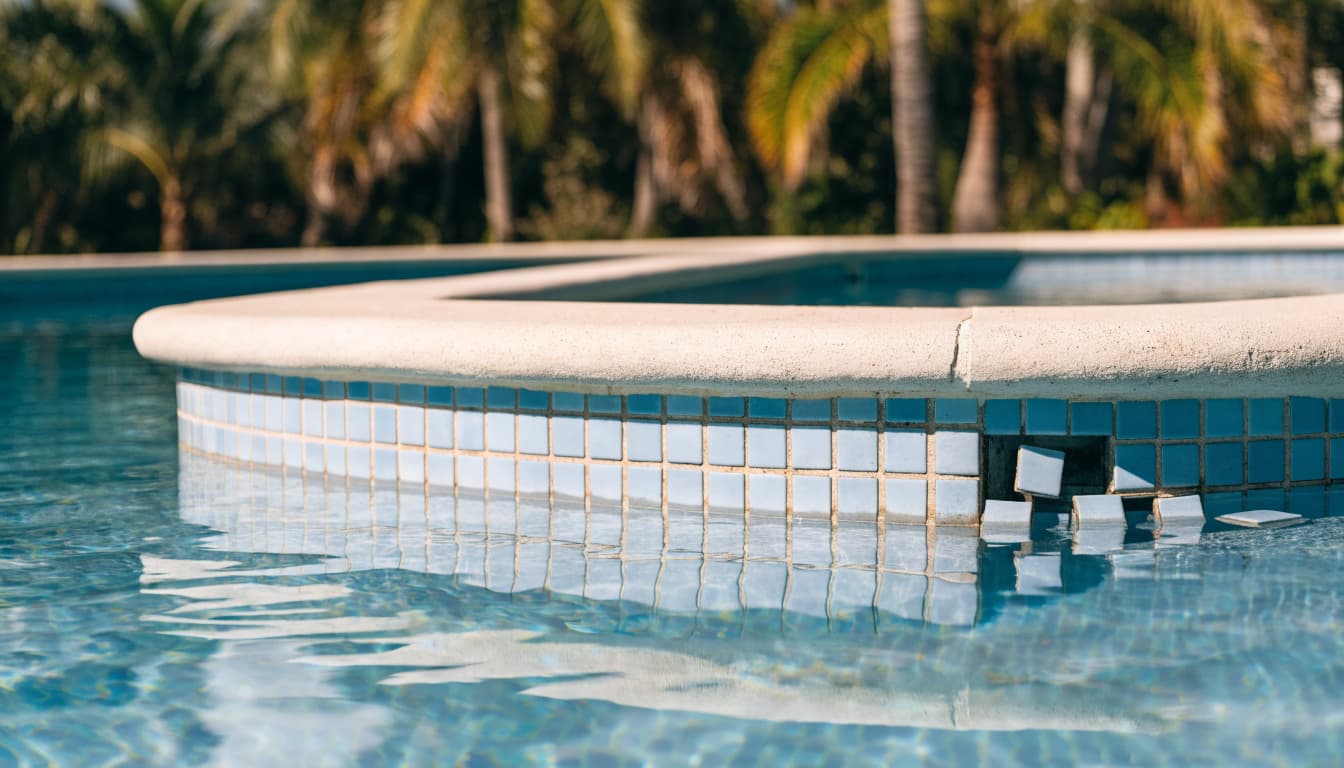
Separate deposits from damaged tile
White, chalky material along the waterline often indicates mineral buildup. Greasy discoloration can come from sunscreen, body oils, or other residue.
Start with a small cleaning test using a product and method approved for your tile. Avoid scraping with metal tools or applying strong acid without professional guidance. Both can damage the tile, grout, or nearby finishes.
If cleaning reveals an intact surface, replacement may be unnecessary. Discoloration that remains could involve surface wear or damage. Have the tile assessed before committing to a full replacement.
Look for failure that cleaning cannot fix
Broken tiles, including missing pieces, sharp chips, or visible cracks, deserve attention. Keep swimmers away from damaged edges until they're repaired.
Also watch for grout that repeatedly breaks out or patches that fail again after repair. These patterns warrant more investigation than an isolated cosmetic defect.
Age alone doesn't determine whether tile needs replacement. Older tile can remain serviceable, while newer tile can fail because of poor bonding or movement. The condition of the installation matters more than its birthday.
Check Whether the Problem Extends Behind the Tile
Loose tiles don't, by themselves, establish structural damage. Checking the substrate and cause of failure should be part of the replacement process, since setting new tile without that review can leave the original problem unresolved.
Assess isolated failures before replacing everything
One damaged tile may result from an impact or a localized bonding problem. If surrounding tiles and grout remain sound, a targeted repair may be reasonable.
A contractor should examine what remains behind the failed tile. Crumbling mortar, contamination, or an uneven setting surface can affect the next installation.
Ask whether the proposed repair addresses the cause or simply covers the exposed spot. Also document where previous repairs occurred. Repeated failure in the same location can help the contractor identify a pattern that isn't obvious during one inspection.
Treat connected damage as a reason for deeper inspection
A crack continuing through several tiles, adjacent grout joints, and coping deserves closer evaluation. So does tile failure beside displaced coping or a suspected leak.
These observations don't establish a diagnosis. They tell the contractor where to investigate the pool shell, bond beam, joints, and surrounding materials.
In Cape Coral, sun exposure and changing temperatures are practical considerations for outdoor finishes. However, don't assume local weather explains every failure. Installation quality, material compatibility, and movement may also matter. A repair should follow the findings, rather than a guess about the climate.
Why Renovation Timing Matters
Waterline tile replacement is easier to coordinate before neighboring finishes are completed. Demolition for pool waterline tile work after resurfacing or deck work can damage surfaces you just paid to improve.
Schedule tile after necessary shell repairs
The usual renovation sequence places tile and coping after shell and beam repairs are ready, but before most deck work. This helps finished edges and adjoining surfaces meet correctly.
Discuss the full pool renovation project sequence before work begins, and map out the replacement process. Confirm when demolition, repairs, tile installation, deck work, and interior finishing will happen.
If you're adding a spa, changing coping, or altering the pool edge, finalize those details first. Tile dimensions and transitions need to suit the finished design.
Decide whether keeping existing tile is worthwhile
Sound tile doesn't automatically need replacement when the pool interior is resurfaced. Keeping sound old tiles may suit your budget and preserve a finish you like.
However, replacement deserves consideration when the design looks dated, matching pieces are unavailable, or adjoining work will disturb the installation. Combining related work can prevent another demolition project later and help avoid added replacement cost.
Ask the contractor to explain how retained tile will meet the new finish. Also clarify responsibility if existing pieces loosen during construction. That conversation belongs in the scope of work, before demolition starts.
Choose Pool-Rated Tile, Not a Visual Match Alone
A tile suitable for a kitchen backsplash isn't automatically suitable for a swimming pool. Request documentation confirming approval for the intended pool application and exposure to pool water.
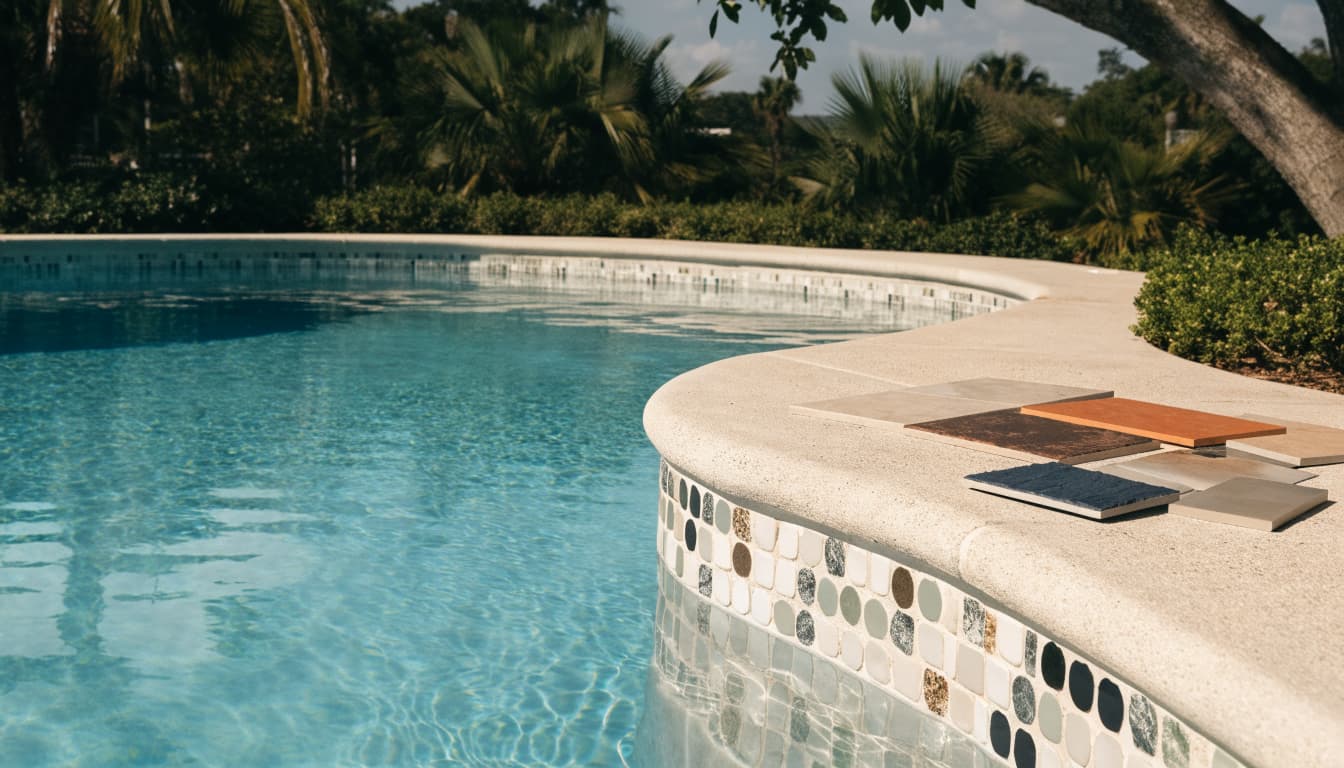
These material differences can help narrow your choices.
| Material | Practical consideration | What to confirm |
|---|---|---|
| Porcelain | Porcelain tiles come in many colors and finishes | Approval for the intended pool installation |
| Glass mosaic | Glass mosaic tiles reflect light and show variations in color | Compatible setting products, backing, and tile installation method |
| Other ceramic tile | Product performance varies | Explicit pool-use approval, rather than appearance alone |
| Natural stone | Offers natural variation and texture | Suitability for pool chemistry, required care, and frost resistance where relevant |
The product's documentation matters more than the material name alone. For ceramic tile, check whether mesh backing, coatings, or decorative finishes affect installation requirements.
View completed pool and spa projects to compare how tile looks beside coping, decking, and water. Then review physical samples outdoors. A showroom sample can look different in direct sunlight or beside a new interior finish.
Small mosaics can suit curves, but they also create more grout joints. Larger pieces may simplify the appearance, although tight curves can require additional cuts. Ask how the chosen format affects labor and the finished layout.
Can You Match Older Waterline Tile?
Matching a repair depends on more than finding the same color. Size, thickness, finish, and shade variation all affect the result.
Start by checking product codes, packaging, invoices, or leftover old tiles. Bring an original loose piece to the supplier when available. Don't remove a sound tile just to get a sample.
Even the same product can vary between manufacturing lots. During the replacement process, compare old tile samples beside the existing band, both dry and wet, before approving the repair. Online photos aren't reliable enough for this decision.
If matching pieces aren't available, a close match may still stand out. Replacing a complete visible section or the entire band may produce a more consistent result, though the replacement cost may be higher.
For a new installation, ask the contractor to confirm lot consistency and order spare pieces. Keep those extras protected, along with the product details.
What a Tile Replacement Quote Should Include
A useful estimate separates visible tile work from repairs that may only become clear after removal. Request a current, project-specific quote, and ask how the replacement cost is itemized.
Linear footage affects material and labor quantities. Curves, raised spas, spillways, corners, and access constraints can add work even when the pool itself isn't large.
When comparing Cape Coral pool renovation services, ask each contractor to price the same scope. The written estimate should clarify:
- Whether demolition, removal of old tiles and debris, and substrate preparation are included.
- Which tile, setting products, grout, and joint treatments the contractor proposes.
- How unexpected repairs will be documented, approved, and reflected in the final replacement cost.
- Who handles water-level changes, refill coordination, and startup requirements.
Also distinguish tile replacement from coping replacement and interior resurfacing. Bundled proposals should identify those components clearly.
A lower quote may exclude preparation or related repairs. Compare the work included, payment terms, and warranty coverage before choosing solely by price.
Plan Drainage, Installation, and Pool Startup
Water-level management and installation requirements belong in a waterline tile replacement plan. They shouldn't be decisions made after the crew starts removing tile.
Confirm a safe water-management plan
Some pool waterline tile projects can proceed with the water lowered below the working area. Other renovation tasks may require more extensive pool draining. Your contractor should determine the water needs for the complete project.
Groundwater conditions vary by property and weather. Because draining changes the forces acting on the shell, hydrostatic pressure needs professional assessment. Don't treat a nearby pool's draining method as suitable for yours.
Before scheduling, confirm applicable discharge requirements with the City of Cape Coral and any other responsible authority. Ask the contractor to document the approved destination and handling method for pool water. Avoid assuming it can enter a storm drain or canal.
Prepare the substrate and follow product requirements
After removing old tile, surface preparation should leave a sound, clean setting surface. Loose material and unsuitable coatings must be addressed before the new installation proceeds.
Choose tile adhesive and other setting products to suit the tile, substrate, and intended exposure. Ask for manufacturer documentation covering submerged outdoor pool use, including glass-tile and natural stone requirements, and frost resistance where applicable.
Even waterproof grout doesn't replace the pool's waterproofing or a movement joint the installation requires.
Finally, follow the selected system's curing instructions before refilling. Sealing depends on the materials used, not a universal rule. Once the pool returns to service, balanced water chemistry and approved cleaning methods help protect the finished work.
Frequently Asked Questions
Can you replace waterline tile without draining the whole pool?
For waterline tile replacement, lowering the water below the pool waterline tile work area may provide enough access. Resurfacing, substrate repairs, or other renovation tasks may require pool draining. Have the contractor establish a project-specific plan that addresses groundwater conditions and applicable discharge rules.
Will new tile stop calcium deposits?
New tile won't remove the conditions that produce buildup. Water balance, evaporation, and cleaning practices still affect deposits. After replacement, ask your pool professional to review pool chemistry and recommend a cleaning method that suits the tile and grout as part of regular pool maintenance.
Is waterline tile replacement a suitable DIY project?
This work involves more than attaching decorative pieces. Substrate assessment, compatible installation products, joints, curing, and water management all affect the result. Professional installation is the safer choice when damage recurs, surrounding materials are affected, or the project requires draining.
Replace Tile When the Condition and Timing Align
Consider waterline tile replacement for cracked or repeatedly failing tile; surface buildup may only need suitable cleaning. The strongest replacement plan addresses the cause of failure before new materials go in.
During a larger renovation, coordinate tile with shell repairs, coping, and nearby finishes. That sequence helps avoid disturbing completed work.
If you're unsure whether to repair or replace the band, request a pool remodeling consultation before choosing materials or scheduling demolition.