
Pool Rust Stains in Fort Myers: Is Rebar the Cause?
A rust-colored mark on your pool wall can leave you wondering what's happening beneath the finish. Pool rust stains in Fort Myers deserve a closer look, but stains alone don't confirm corroding shell rebar.
Before you approve stain removal or renovation work, you need a clear distinction between the visible mark and its source. Start with the stain's history, the surrounding surface, and a professional assessment of what the evidence supports.
What pool rust stains in Fort Myers can tell you
Color is a useful observation, but it isn't a diagnosis. A photograph can document a brown or orange mark without establishing whether it comes from the surface, the water, or something beneath the finish.
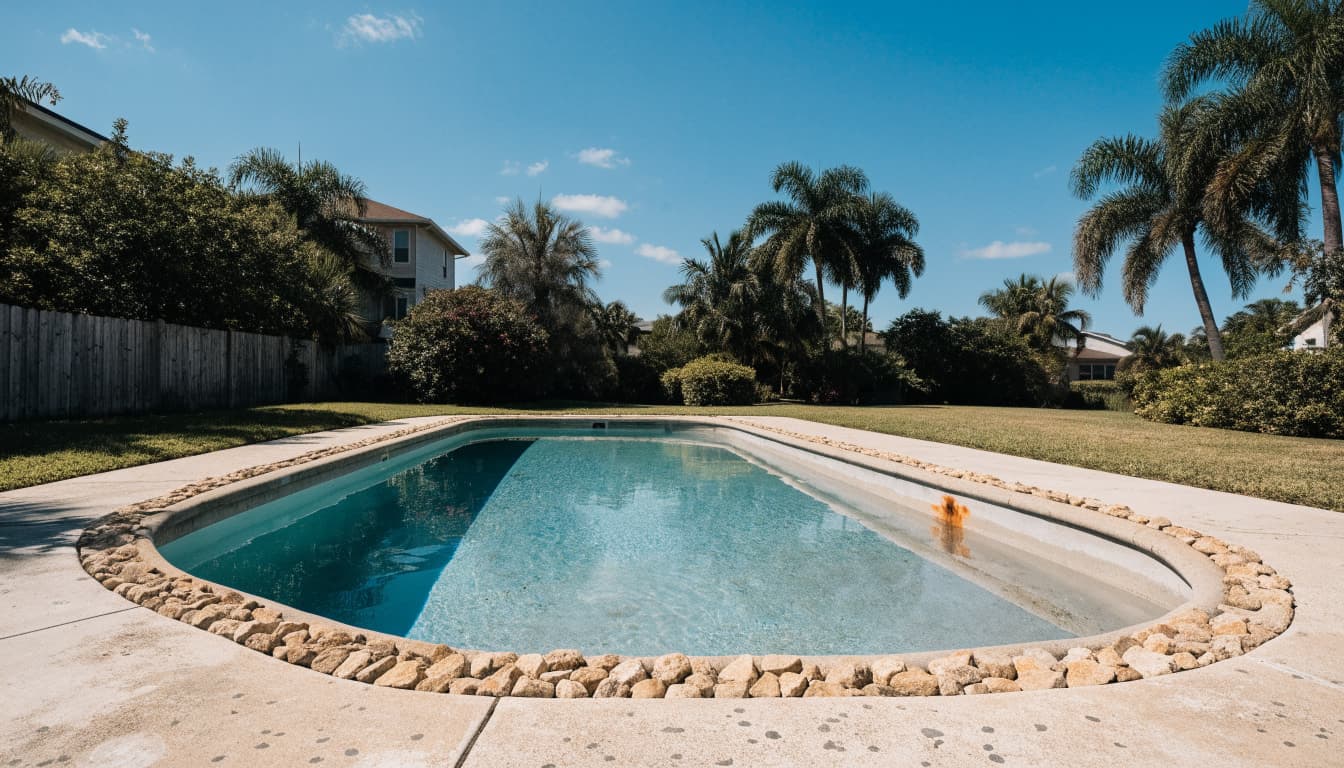
Appearance gives you a starting point
Record whether the mark is a small spot, a streak, or a broader discolored area. Its position also matters for documentation: note whether it's on a wall, floor, step, bench, or near a fitting.
However, don't interpret location as proof of the source. A mark on a concrete pool wall doesn't automatically implicate the reinforcing steel behind it.
Describe what you can see without assigning a cause. "Orange spot beside the second step" gives a contractor clearer information than "the rebar is rusting."
Stain history adds context
Tell the professional when you first noticed the discoloration and whether its appearance has changed. Also mention previous cleaning, stain treatment, resurfacing, or work in the same area.
If the mark returned after treatment, provide the dates and product names when available. That history gives the assessor something concrete to review.
A recurring mark deserves assessment, but recurrence alone still doesn't identify its source. The contractor needs to connect the visible evidence with findings from the inspection.
How shell rebar enters the diagnosis
Rebar is steel reinforcement within a concrete pool shell. Because steel can corrode, a rust-colored mark may raise a question about reinforcement beneath the interior finish.
That possibility needs investigation before anyone presents it as the answer.
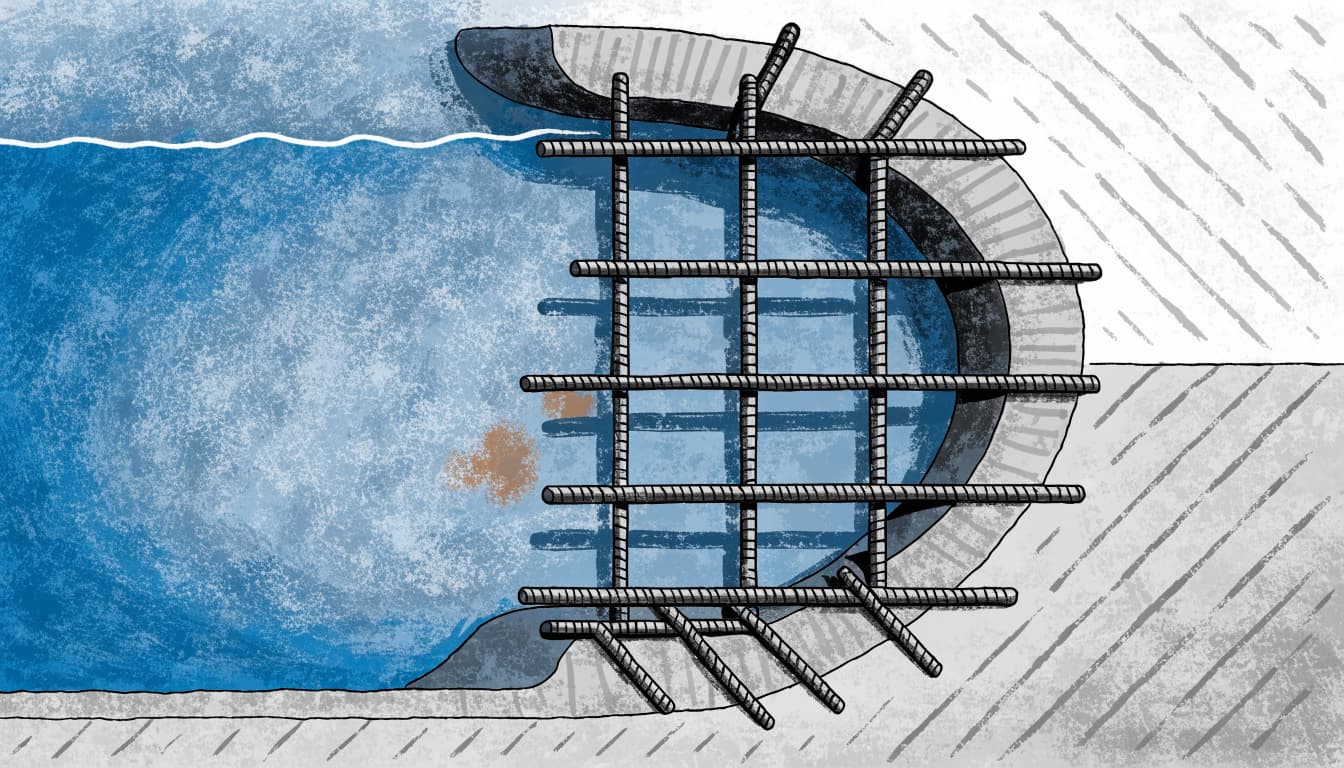
Illustrative cutaway of reinforcement beneath a pool finish.
The finish and shell are different parts
The surface you see isn't the entire pool structure. San Juan Pools & Spas' pool construction process lists form and steel work, concrete placement, and interior finishing as separate stages.
This distinction matters when discussing stains. An observation about the finish doesn't automatically establish the condition of steel inside the shell.
Similarly, a photograph of discoloration can't show how the reinforcement sits beneath that particular spot. A professional assessment must address those limits rather than treating the cutaway above as a diagnosis of your pool.
A rebar explanation needs supporting findings
Ask the contractor what supports a connection between the mark and the shell reinforcement. Also ask what remains uncertain and whether further evaluation is needed.
You should understand whether "possible rebar corrosion" is an initial concern or a supported finding. Those descriptions shouldn't mean the same thing in a proposal.
A stain can justify an assessment without justifying a confirmed rebar diagnosis. Ask which findings connect the discoloration to the reinforcement.
What else belongs in the stain assessment
A useful assessment considers more than the shell-rebar explanation. For pool rust stains in Fort Myers, ask the professional to review water history, loose metal items, equipment condition, and organic debris as possible areas of investigation.
These are questions to evaluate, not homeowner diagnoses.
Review water and maintenance history
Tell the assessor whether the pool was recently filled or topped up. Identify the water source if you know it, and share available water-test records.
Include recent chemical additions and stain treatments. Product names, application dates, and service invoices are more useful than trying to remember whether something was "a metal treatment."
Ask whether water testing could help distinguish the possibilities under consideration. The professional should explain what a result can establish, along with anything it leaves unresolved.
Check the pool's surroundings and recent activity
Mention any loose metal items found in the pool, recent equipment work, or debris that remained against the finish. Also identify nearby fittings or features the assessor may need to examine.
Don't remove fixed components or open the pool surface to investigate. Instead, show the professional where you observed each item or condition.
Ask whether the assessment should include surface staining, equipment, or another source before focusing on reinforcement. Keeping the review open helps avoid approving shell-related work on the strength of color alone.
Clues worth bringing to a professional inspection
Changes around a stain belong in the inspection record. Document any visible crack, rough patch, missing finish, or exposed material near the discoloration.
These observations warrant professional review, but they don't establish a particular cause or repair scope.
Photograph the mark and its surroundings
Take one wider photograph showing the location within the pool. Then take a closer image that captures the mark and adjacent surface.
Use the same viewing position for later photos when practical. Similar lighting and framing make comparisons easier, although photographs still have limits.
Include a recognizable reference, such as a tile joint or step edge. This helps the assessor locate the spot without relying on descriptions like "somewhere near the deep end."
Don't scrape the area to make the photograph clearer.
Record changes without interpreting them
Write down whether the spot changed size, color, or shape. If a nearby crack was already present, distinguish that history from anything newly observed.
Also report unexplained water-level changes or other pool concerns separately. Don't assume that every issue shares the stain's source.
Before the appointment, gather renovation records and previous inspection findings. If you don't know the pool's construction or finish history, say so. An accurate gap in the record is better than an estimated date presented as fact.
What to do before any stain treatment
Your next step is to preserve useful information and arrange an assessment. Avoid committing to a stain treatment or shell repair before you understand what the professional has identified.
A simple sequence keeps the conversation focused:
- Photograph the discoloration before changing its appearance. Include both a close view and a wider image of its location.
- Gather maintenance records, water-test results, treatment details, and any available construction or renovation documents.
- Contact a pool professional who can explain the limits of the initial assessment and any need for further evaluation.
- Request written findings that separate observations, suspected causes, confirmed findings, and recommended next steps.
While you wait, ask your service provider how to handle routine pool care. Don't experiment with several stain products or assume a cleaner's response identifies the source.
Also, don't drain the pool or open the finished shell to investigate on your own. If an assessment requires access beyond a visual review, the contractor should explain the proposed work first.
Before authorizing treatment, ask whether it could change evidence the assessor needs to examine. You should also know what information the treatment is expected to provide. Removing the visible mark and establishing its source are separate questions, even when both are part of the same service visit.
What to ask a Fort Myers pool contractor
The initial conversation should leave you with a clearer understanding of the stain, not an automatic repair commitment. Ask who will assess it, what that assessment includes, and how the findings will be documented.
Clarify the diagnosis and its limits
Ask whether the contractor has confirmed the source or is recommending further investigation. If reinforcement is suspected, request an explanation tied to your pool's findings.
Also establish who should evaluate any questions beyond the contractor's scope. A responsible proposal should identify unresolved issues rather than hide them behind a broad description.
For a pool rust stain assessment, photographs and a verbal opinion may be starting points. Ask what additional information is needed before choosing corrective work.
Keep proposed work tied to findings
San Juan Pools & Spas offers pool remodeling and renovation services, including interior replastering, tile and coping replacement, and equipment work. Those services are options to discuss after the pool's condition has been assessed.
Their availability doesn't establish which work your stain requires.
Request a written scope explaining what the proposal addresses. If it includes a new interior finish, ask whether the stain's source has been established and how the proposal accounts for it. Don't treat a general renovation description as a specific explanation of the discoloration.
How stains affect renovation and new-build planning
A stain assessment can shape a renovation conversation, especially when you're already considering a new finish or other upgrades. Keep the condition assessment separate from decisions about appearance and added features.
For an existing pool, establish the findings first
Before choosing an interior finish, ask the contractor to document the existing surface and any areas needing further evaluation. Make the discoloration part of that discussion rather than treating it as an incidental cosmetic detail.
If the source remains uncertain, ask how that uncertainty affects the proposed scope. You should know which decisions can proceed and which need more information.
Keep copies of the assessment, proposal, and photographs. They'll provide a useful record of the pool's condition before renovation begins, without requiring you to make your own diagnosis.
For a new pool, discuss construction details
If you're planning a pool or spa, ask your builder to explain shell construction and interior finishing as distinct stages. Review the planned inspections, project records, and maintenance handover.
San Juan Pools & Spas lists a minimum of 28 days of curing time for its pool shell. That is a stated construction-process detail, not a diagnosis of an existing stain.
Discuss how the builder documents completed work and what records you'll receive. Knowing where to find construction and maintenance information gives you a better starting point if a surface concern appears later.
Conclusion: Let the Findings Guide the Next Step
Pool rust stains in Fort Myers can raise questions about shell rebar, but appearance alone can't confirm corrosion beneath the finish. A useful assessment considers the stain's history and other possibilities before assigning a cause.
Document the mark, gather your records, and ask for findings tied to your pool before approving corrective work. The goal is a clear explanation of what the professional knows, what remains uncertain, and which next step the evidence supports.