
Pool Flow Rate vs. Turnover Rate: What to Know
Pool flow rate tells you how much water moves through the circulation system each minute. Turnover time describes how long the system takes to circulate a volume of water equal to the pool's capacity.
Both measurements matter when you're planning a pool or choosing equipment. Actual flow depends on the whole plumbing system, so a pump's advertised capacity doesn't tell you the turnover time on its own.
Understanding the distinction will help you compare equipment and plan a useful circulation schedule.
Key Takeaways
- Flow rate is measured in gallons per minute, while turnover time is measured in hours.
- Pump speed, pipe layout, filter condition, and valve settings all affect actual flow.
- A turnover is a calculated volume of circulated water, not proof that every gallon has passed through the filter.
- Your daily schedule should support filtration and any equipment that needs circulation, without exceeding component limits.
Pool Flow Rate and Turnover Time Measure Different Things
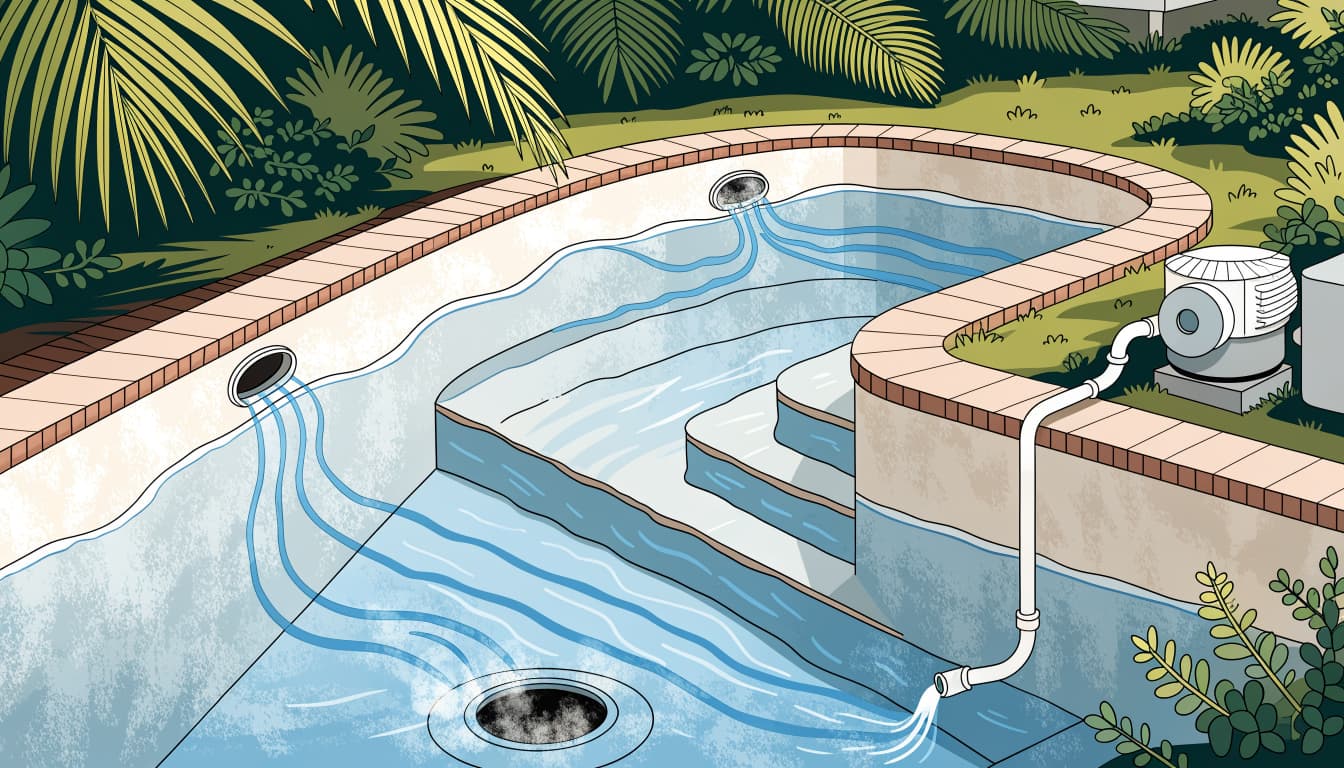
Your pool's circulation system draws water through suction outlets, sends it through equipment, and returns it to the pool. Flow and turnover describe different parts of that process.
Flow rate describes water movement
Pool flow rate is the amount of water moving through the system at a given moment, usually expressed in gallons per minute , or GPM. It can change when the pump changes speed or when valves redirect water.
The flow rate through a particular feature can differ from the flow through the main circulation system. A waterfall on a separate pump, for example, has its own flow path.
Turnover time describes an equivalent volume
Turnover time is an estimate of how long it takes the system to circulate a volume equal to the pool's water capacity. A larger pool generally takes longer to reach that volume than a smaller pool operating at the same flow.
A turnover doesn't mean every drop has visited the filter. Returning water mixes with the rest of the pool, so some water may pass through the system more than once while other water takes longer to reach an outlet.
Start With a Useful Estimate of Pool Volume
Your pool's water volume is the starting point for discussing turnover. For a new build, the design should account for the pool's shape, average depth, steps, benches, and tanning ledges.
For example, a compact 10,000-gallon pool and a 25,000-gallon pool with an attached spa have different circulation needs. The larger project may also have more plumbing and features that affect how much water the equipment must move.
An attached spa adds another detail: its water may share circulation with the pool in one operating mode and use a separate path in another. The turnover estimate should match the body of water and operating mode you're discussing.
Pool volume alone won't determine the right pump or schedule. It gives your builder a starting point for sizing a system around the complete design.
How the Pump Affects Actual Flow
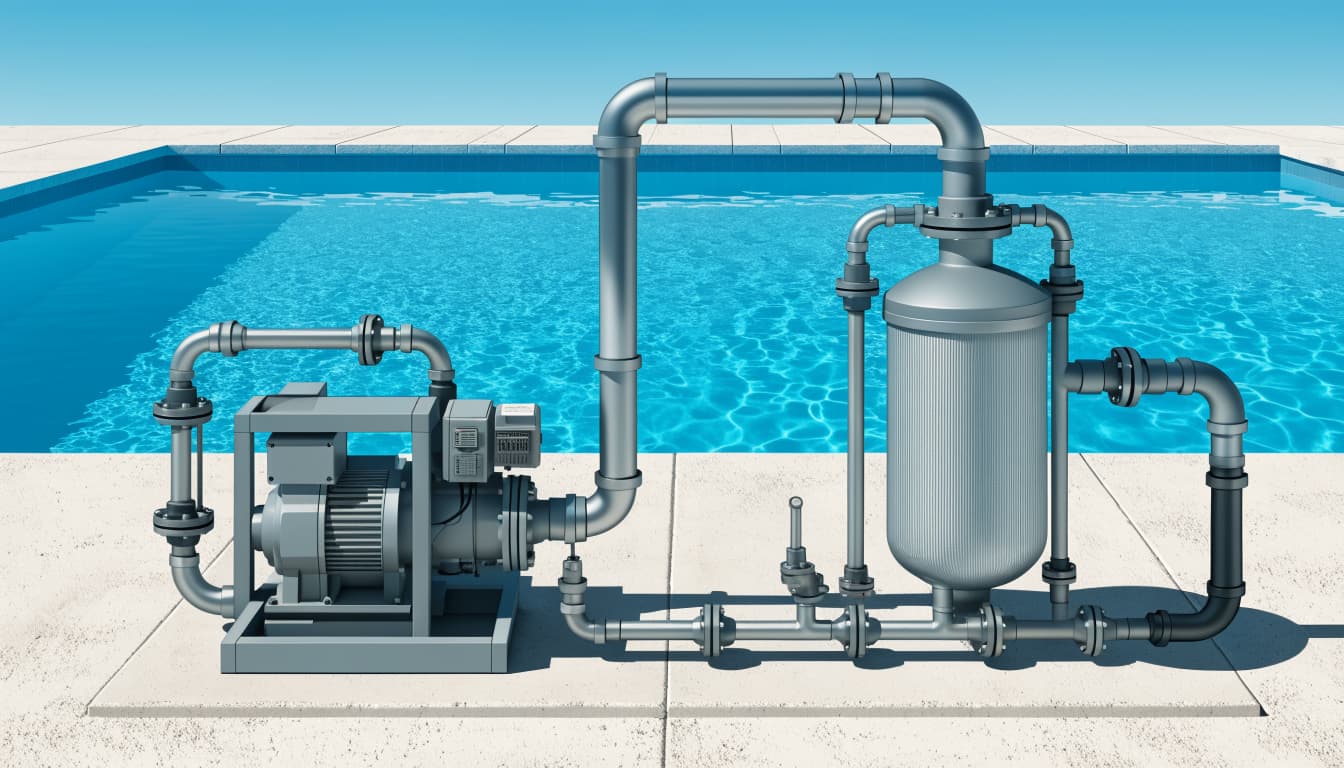
The pump supplies the force that moves water, but the amount delivered depends on the resistance of everything in its path.
A pump curve is more useful than horsepower alone
A pump curve shows how much flow a pump can produce at different levels of resistance, often described as total dynamic head. Pipes, fittings, filters, heaters, and elevation changes all contribute to that resistance.
As resistance increases, the flow a pump can deliver generally decreases. That's why the highest GPM on a product sheet isn't a reliable estimate of flow through your finished pool.
A larger pump isn't automatically a better choice. It can use more energy and may push more water than the plumbing or equipment is designed to handle.
Variable speed changes the calculation
A variable-speed pump can operate at different speeds for filtration, heating, spa jets, or water features when the system supports those modes. Lower speeds can reduce energy use, but they also change flow.
When a pump runs at more than one speed, a turnover estimate based on one flow reading won't describe the entire day. Each operating period contributes a different amount of circulated water.
Filter Capacity Sets Important Boundaries
Your filter must handle the flow the pump sends through it. Its rating is a capacity limit, not a promise that the system will always operate at that rate.
A filter that's too small for the system may need frequent cleaning and can restrict flow as debris accumulates. A generously sized filter gives debris more room to collect before cleaning is needed, though maintenance still matters.
Cartridge, sand, and diatomaceous earth, or DE, filters have different cleaning routines. Our comparison of pool filter options covers how those choices affect water use and upkeep.
In Southwest Florida, screens reduce leaves and insects, but pollen, dust, sunscreen, and body oils can still reach the water. A salt chlorine generator doesn't remove those particles either. Saltwater pools need filtration alongside sanitation.
Plumbing and Features Change the Flow
Long pipe runs, narrow sections, bends, and equipment connections add resistance. A well-planned layout balances the desired flow with suitable pipe sizes and equipment capacity.
Skimmers collect surface debris, while other suction outlets and return locations depend on the pool's design. Our guide to gunite pool plumbing explains how those lines fit together.
Features deserve attention before construction. Spa jets may need a different operating mode, while a large waterfall may need a dedicated line, valve, or pump. Otherwise, sharing a circulation path can change the flow available elsewhere.
Discuss future plans as well. If you expect to add a heater or water feature, allowing for it in the original layout can make the equipment pad and plumbing easier to adapt.
How to Read Pool Equipment Ratings
Equipment specifications describe different limits and operating conditions. Read them together rather than treating any single number as the system's actual flow.
Compare operating ranges
A pump's published curve shows performance across a range of resistance. A filter's maximum flow rating describes how much water it can accommodate. Heaters and salt chlorine generators may also have minimum or maximum flow requirements.
The normal operating flow must fit the requirements of every component in that flow path . The highest pump setting also needs to stay within the limits of the plumbing and equipment it supplies.
Keep the design details with your records
For a new pool, ask for the proposed equipment models, the expected flow in normal filtration mode, and the intended pump settings. A flow meter can provide a useful reading when installed as part of the system.
Keep the clean filter pressure reading and the operating speed recorded alongside it. Pressure is useful for spotting changes, but it doesn't directly tell you the system's GPM.
Choose a Circulation Schedule for Your Pool
There's no single schedule that suits every residential pool. Pool volume, actual flow, swimmer use, debris, sanitation equipment, and local conditions all affect the right run time.
Start with the schedule supplied for your equipment and pool. Then consider when the pool needs surface skimming, when the heater or salt system operates, and how the water responds to regular use.
Give filtration enough time
A variable-speed pump can often run at a lower speed for a longer period, provided flow remains adequate for the connected equipment. A higher-speed period may be useful for a cleaner or water feature, if the system is designed for it.
The schedule should also provide enough surface movement for skimmers to collect debris. Dividing operation into separate periods can cover more of the day, but the off periods should fit your pool's sanitation and circulation needs.
Adjust for conditions
Rain, wind, pollen, and heavy swimming can increase the amount of debris or contaminants in the water. After a storm, you may need additional cleaning and filtration, along with water testing and any needed chemical adjustment.
For a newly finished pool, follow the builder's startup schedule rather than switching immediately to a routine maintenance schedule. Fresh finishes can require extended circulation and specific water care.
Watch for Changes in Normal Operation
Once the pool is running, learn what normal return flow and filter pressure look like at each regular pump setting. Compare readings at the same speed and valve configuration, since changing either can affect pressure.
Weak returns, unusual pressure, air in the system, or a pump that struggles can point to a condition that needs attention. A dirty filter, blocked basket, air leak, or valve change may affect operation, but a single symptom doesn't establish the cause.
Never let the pump run dry. Don't open a filter tank while it's pressurized or remove a pump lid while the system is running. Follow the equipment's shutdown and pressure-relief instructions, or call a pool professional for service.
Frequently Asked Questions
Does one turnover make pool water clean?
No. Turnover describes an equivalent volume of circulated water. Filtration, sanitizer levels, brushing, and the way water moves through the pool all affect water quality.
Can a pool pump be too powerful?
Yes. A pump can exceed the flow limits of a filter or other equipment, and excessive flow can create plumbing problems. Match the pump to the complete system rather than choosing by horsepower alone.
Does a saltwater pool need the same circulation planning?
Yes. A salt generator produces chlorine, but it doesn't filter out particles. It also needs suitable flow and operating time to support its chlorine production.
Plan the System Around Your Pool
Flow rate tells you how quickly water moves. Turnover time puts that movement in the context of your pool's volume. Both are useful, but neither replaces a circulation plan that accounts for the full equipment system.
If you're planning custom pool construction in Southwest Florida, we can include circulation, equipment, and water features in the design discussion before construction begins.