
Pool Deck Expansion Joints: A Cape Coral Homeowner Guide
A narrow gap beside your pool coping can be easy to overlook until its sealant starts pulling away. For Cape Coral homeowners, pool deck expansion joints deserve attention because the deck and pool structure can move differently.
That gap has a purpose, and covering it during a renovation can interfere with the deck's ability to accommodate movement . Before you patch a joint or approve new decking, understand what it does and which changes need a professional assessment.
What pool deck expansion joints do
Pool deck expansion joints provide separation where the design needs to accommodate movement. Around a swimming pool, that often means a joint between the surrounding concrete deck and the coping, the finished edge along the pool.
The pool structure and deck can respond differently to temperature and moisture changes. A movement joint allows for that difference rather than tying the surfaces together with a rigid connection.
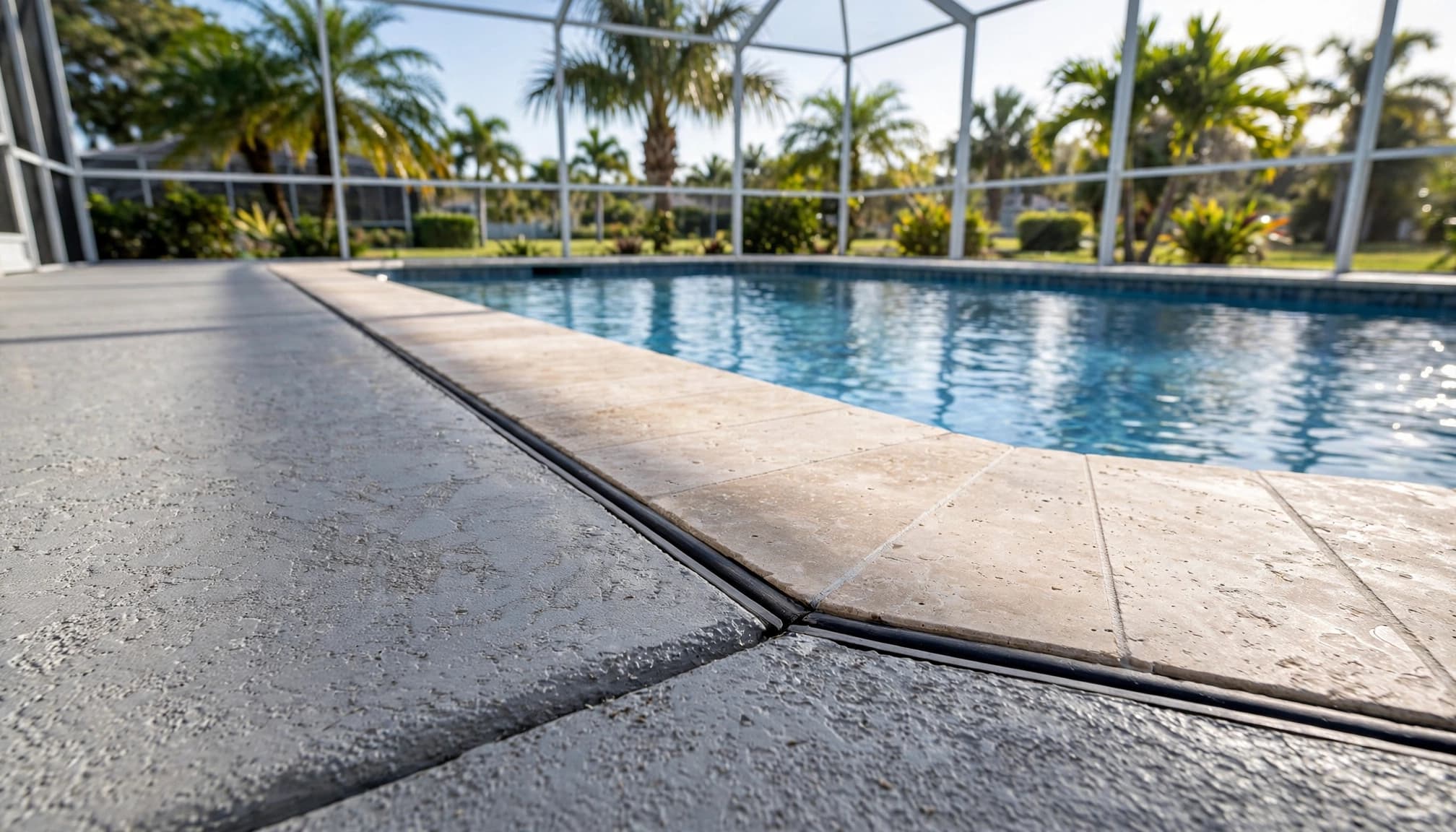
Cape Coral's sun, rainfall, and outdoor exposure make material selection and drainage relevant to deck planning. However, those conditions don't establish one universal joint detail for every backyard.
Your pool's construction, deck material, and surrounding features determine the appropriate approach. A concrete slab, a mortar-set stone surface, and pavers over a prepared base don't all need identical details.
Also, an expansion joint isn't the same as expanding your deck's footprint. Adding room for loungers or an outdoor dining area is a separate construction project, although joint planning belongs in that project too.
Expansion joints vs. control joints
Both appear in concrete decks, but they address different kinds of movement. Understanding the distinction helps you describe a concern accurately when speaking with your builder.
Expansion and isolation joints allow separation
An expansion joint accommodates movement between adjacent sections. Contractors may call separation between a deck and a fixed structure an isolation joint .
Around a pool, the terminology can vary with the design. What matters is whether the joint provides the separation the construction requires.
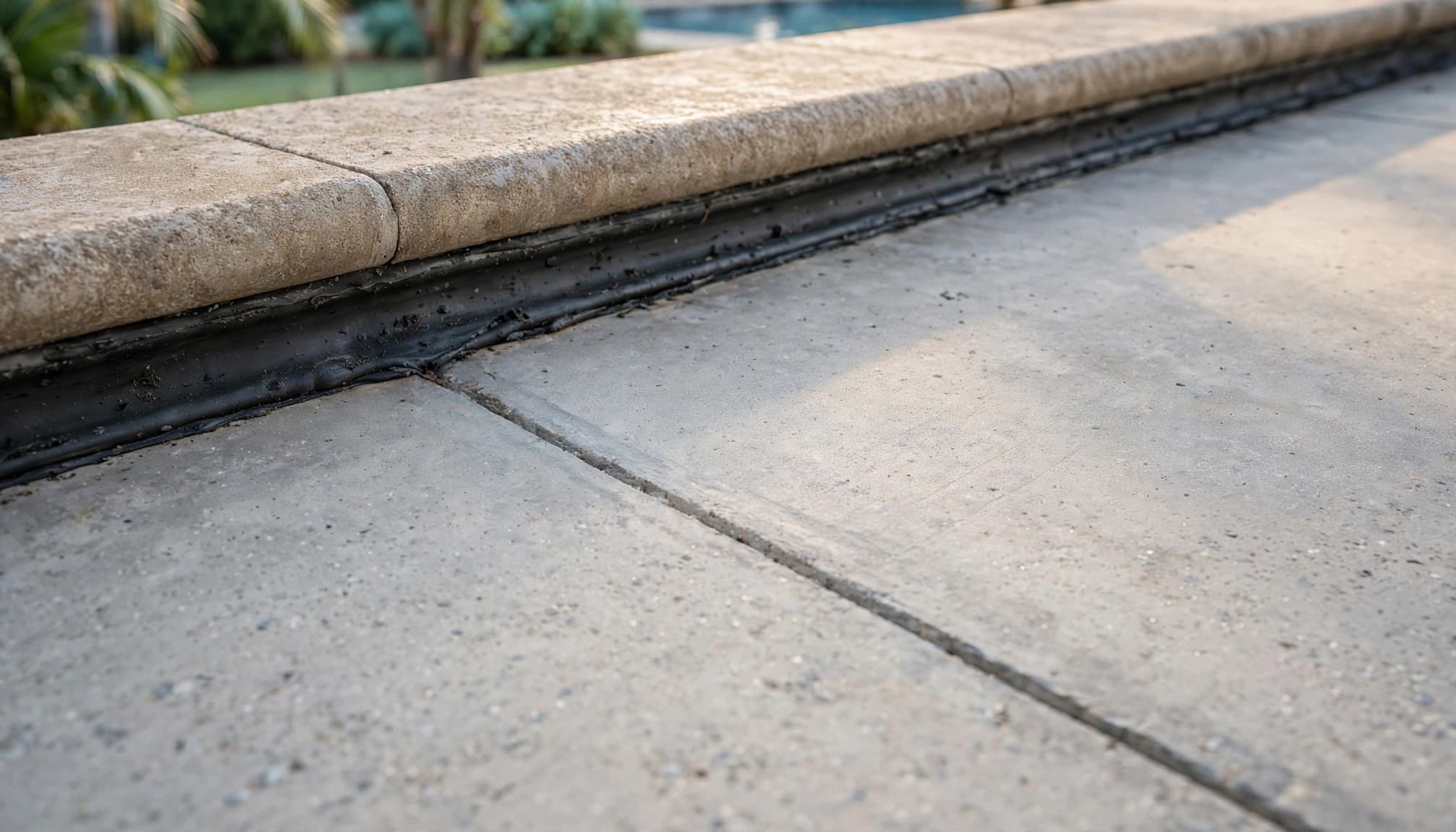
A visible sealed line doesn't tell you everything about the detail beneath it. Therefore, a contractor should assess the construction before recommending replacement, resurfacing, or changes near the pool edge.
For renovations involving the perimeter, pool coping and deck remodeling also involves checking conditions beneath the existing coping.
Control joints guide shrinkage cracking
A control joint creates a planned weak point in concrete. As concrete shrinks, the joint encourages cracking along that line rather than across an unrelated area.
Control joints commonly appear as grooves within the deck surface. Their purpose differs from the separation provided by a movement joint.
They don't eliminate every possible crack, and a surface groove doesn't replace a required isolation detail. During a remodel, ask your contractor to identify which lines are control joints and which accommodate movement between structures.
What to look for around your pool deck
You don't need to diagnose concrete movement yourself. Instead, look for visible changes and give your contractor a clear description of where they occur.
Check the joint's visible condition
Look for sealant that has split, pulled away from an edge, or disappeared in sections. Notice whether debris has accumulated in an open gap or whether a previous repair covered the joint.
These observations help identify areas needing closer attention. They don't prove that the pool structure has moved or that the entire deck needs replacement.
Photos can make a consultation more useful. Include a close view of the concern and a wider view showing nearby coping, decking, and walls.
Also, mention previous repairs. A joint that has been patched repeatedly deserves a different conversation than one with no known repair history.
Look beyond the sealed line
Check nearby coping and waterline tile for visible cracks, loose pieces, or changes in alignment. Uneven deck surfaces and persistent standing water also belong in the discussion.
A damaged joint may appear beside other problems without causing them. Settlement, drainage, material deterioration, and construction details all require separate consideration.
Failed joint sealant alone doesn't establish that your pool shell is leaking or that your deck has a structural problem.
If an area creates a trip hazard or coping feels loose, restrict access to that area until a qualified professional assesses it.
Why sealant selection needs a site-specific answer
The material visible at the top of a joint must suit the joint's purpose and surrounding surfaces. Appearance matters, but color matching doesn't answer questions about adhesion, movement, or exposure.
Concrete, travertine, and other natural stone can have different compatibility considerations. The existing joint may also contain remnants of an older material that affect the repair approach.
Because pool decks face outdoor exposure, a contractor should consider the manufacturer's requirements and the actual site conditions. Ask what material they propose and why it fits your deck.
Don't assume that a product sold as a concrete crack repair material belongs in a movement joint. Crack filling and movement accommodation are different tasks.
Likewise, a decorative coating shouldn't conceal a joint that the design requires to remain functional. Discuss those details before approving resurfacing or a new finish.
There isn't a universal sealant lifespan or replacement schedule that applies to every Cape Coral pool. Installation conditions, material compatibility, and exposure affect performance.
A qualified local professional can recommend a suitable repair and explain its care requirements. That advice should address your pool rather than rely on a generic product recommendation.
When a joint repair needs a broader assessment
Some projects concern the joint itself. Others involve the deck, coping, or supporting conditions and need a wider review before work begins.
A focused repair still needs evaluation
When the concern appears limited to deteriorated sealant, a contractor can determine whether a joint repair is appropriate. They should examine the surrounding edges and consider why the existing material failed.
Repeated failures matter because replacing the visible material may leave the underlying issue unresolved. Ask whether the proposed work addresses deterioration, movement, compatibility, or another identified condition.
You should also understand the repair's limits. A quote for joint work doesn't automatically include coping replacement, drainage corrections, or repairs beneath the deck.
Keep that distinction clear when comparing proposals.
Coping and deck damage change the scope
Cracked coping, damaged waterline tile, uneven slabs, or persistent drainage problems call for more than a color-matched sealant discussion.
Before replacing coping, the condition beneath the old material needs attention. Cracked bond beam areas, deck movement, and drainage issues may affect the work.
A local pool builder or renovation contractor can assess the visible conditions and identify whether another specialist is needed. Where structural concerns exist, an appropriately qualified engineer may need to evaluate them.
That site-specific review should guide the scope. Photographs and online advice can't establish what lies beneath your pool edge.
Plan joints before a Cape Coral deck renovation
Joint planning belongs in the design conversation, before crews install a new finish or extend the deck. Waiting until the surface is complete can leave important details unresolved.
Match the details to the deck material
San Juan Custom Pools & Spas offers pool deck replacement and renovation options including pavers, travertine, decorative concrete, natural stone, and expanded deck areas.
Those options offer different appearances and construction methods. However, changing the surface doesn't remove the need to consider movement, transitions, and drainage.
For pavers, ask how the design handles the pool perimeter and adjoining structures. For stone or decorative finishes over concrete, ask how existing movement joints will continue through the finished surface where needed.
Your contractor should explain the details for the selected system.
Coordinate the deck with the whole project
San Juan's pool construction process includes deck forming followed by pouring and finishing. That sequence makes deck decisions relevant before the final surface work begins.
During a renovation, coping replacement, deck enlargement, and screen-enclosure access can also affect the construction plan. Discuss these connections before approving separate pieces of work.
For example, replacing coping while leaving a damaged adjacent deck untouched may require additional assessment. An expanded deck also needs consideration of its connection to existing surfaces.
Ask who is responsible for coordinating these details so the proposal covers the complete project.
Questions to ask before approving the work
A useful proposal explains what the contractor found and what the work will address. You shouldn't have to guess whether the quote covers a joint repair or a larger deck renovation.
Bring these questions to your consultation:
- Which joints accommodate movement, and which are control joints?
- What visible conditions support the recommended repair?
- Will the new finish preserve the joints required by the design?
- Does the quote include coping, tile, drainage, or underlying repairs?
- What conditions could change the scope after existing materials are removed?
Price comparisons make more sense when the proposals cover the same work. Removing failed material, repairing damaged edges, replacing coping, and correcting drainage are different tasks.
Avoid treating a low joint-repair quote as a substitute for a broader assessment when other damage is visible.
Also, distinguish construction guidance from legal requirements. General advice about pool deck expansion joints isn't a statement of Cape Coral code.
Ask your contractor which permits, approvals, or engineering documents apply to your actual project. The answer should reflect the proposed work and current requirements, not a rule borrowed from another location.
Key Takeaways
Pool deck expansion joints deserve consideration during maintenance, coping replacement, and deck renovation.
- Movement joints provide separation, while control joints guide concrete shrinkage cracking.
- Split sealant or nearby damage warrants assessment, but neither establishes a diagnosis by itself.
- Joint details and repair materials should suit the pool's construction, deck surface, and site conditions.
Preserving the joint's function matters more than making every line disappear beneath a new finish.
Keep Movement Details in Your Pool Plan
That narrow gap beside your coping is part of the deck's construction, and it deserves attention before you cover or repair it. A sound plan identifies the joint's purpose and addresses surrounding damage when necessary.
For a new pool or renovation, ask a qualified local professional to review the details. You can contact San Juan Custom Pools & Spas to discuss your Cape Coral project and the conditions around your pool deck.