Bullnose vs. Square Edge: Comparing pool coping options for Gunite Pools
A pool's edge shapes its entire appearance, yet many homeowners choose coping after selecting the pool finish and deck. Comparing pool coping options early helps you avoid a border that looks disconnected, feels uncomfortable, or creates drainage problems.
Bullnose and square edge coping can both work beautifully on a gunite pool. The better choice depends on your coping material, deck design, pool style, climate, budget, and how your household uses the pool. Start with the profile, then consider the complete edge detail.
How pool coping options differ on a gunite pool
Coping is the finished cap installed around the top perimeter of a swimming pool. On a gunite pool, it covers and protects the bond beam while creating the transition between the pool shell, waterline tile, and surrounding deck.
The main difference between these two styles is the shape of the exposed edge.
Bullnose coping has a rounded front profile. The edge curves toward the water, creating a softer appearance and a more comfortable surface for swimmers who sit on the pool wall.
Square edge coping has a straight, crisp profile. The front face usually meets the top surface at a clean angle, although the exposed corner can still receive a small eased edge for comfort and safety.
The profile doesn't determine the material. You can often find either style in options such as natural stone, precast concrete, brick, or manufactured pavers. However, every material offers different color ranges, textures, thicknesses, and installation requirements.
| Feature | Bullnose coping | Square edge coping |
|---|---|---|
| Profile | Rounded and soft | Straight and defined |
| Design feel | Traditional, relaxed, welcoming | Modern, tailored, architectural |
| Seating comfort | Comfortable rounded lip | Depends on edge treatment |
| Deck transition | Blends gently with many decks | Creates a sharper border |
| Best fit | Curved pools and classic designs | Geometric pools and contemporary decks |
| Main concern | May look too traditional for some designs | May feel less comfortable with a sharp edge |
The coping profile is only one part of the decision. The material, installation quality, deck surface, and pool shape can change the final result just as much.
Bullnose coping for gunite pools
Bullnose coping is a familiar choice for homeowners who want a softer pool edge. Its rounded profile works well with freeform gunite pools, curved steps, tropical planting, and traditional backyard designs.
The curved edge can make the pool feel more inviting. It also gives swimmers a smoother place to rest their arms or sit along the perimeter. Families with children may prefer the less angular appearance, although the complete coping surface still needs a suitable texture and slip resistance.
Natural stone bullnose coping can add variation in color and grain. Precast concrete offers more predictable sizing and may provide a broader range of edge profiles. Brick coping creates a distinctive traditional look, but its color and joint pattern need to coordinate with the deck.
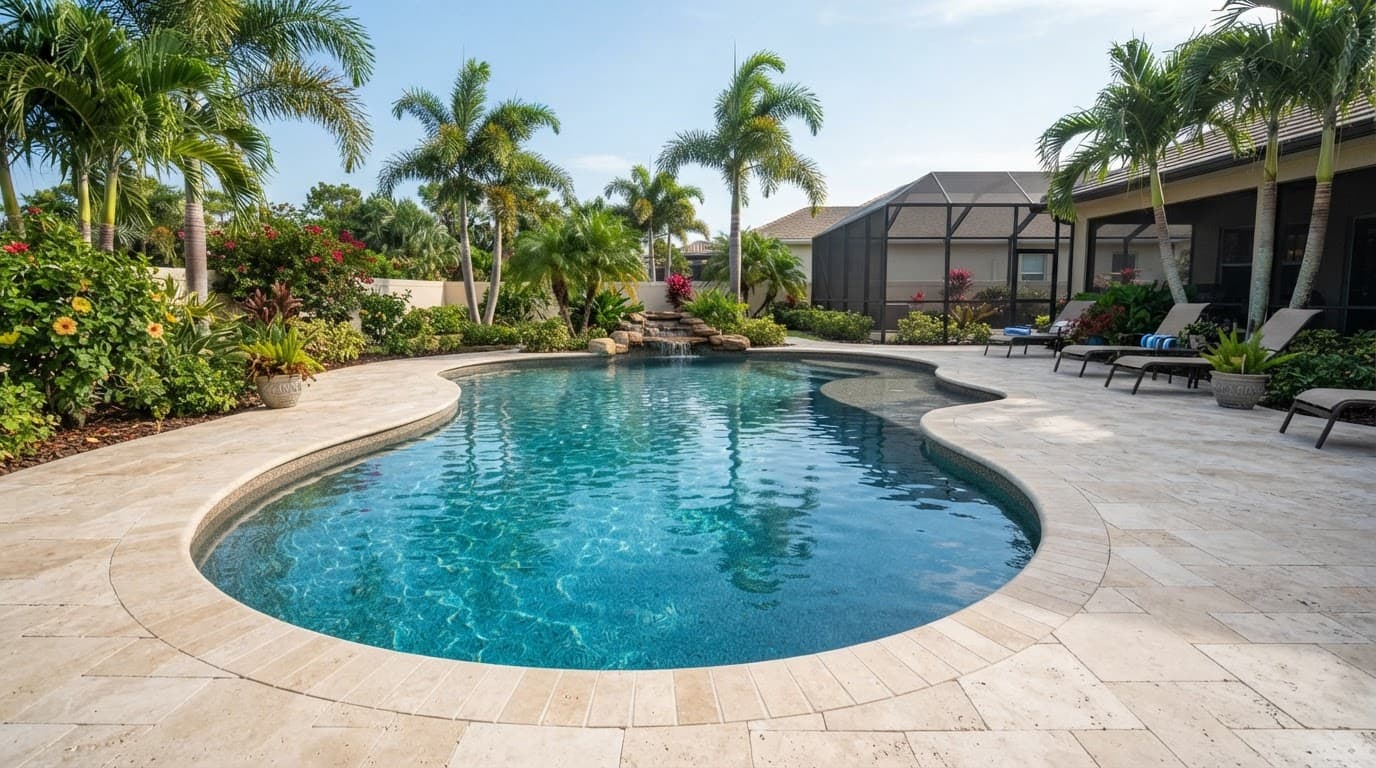
Rounded stone coping gives this gunite pool a softer edge that suits the curved design and warm outdoor setting.
Bullnose coping isn't automatically the right choice for every pool. A highly rounded profile can look out of place beside a minimalist home with large-format pavers and straight architectural lines. Some bullnose materials also require careful fabrication around tight curves, corners, spillways, and raised bond beams.
Before selecting it, look at a full-size sample beside your proposed deck material. A small color chip won't show how the rounded edge catches light or changes the visible width of the pool border.
Square edge coping for a clean, modern border
Square edge coping gives a gunite pool a more structured appearance. Its straight lines pair naturally with rectangular pools, raised spas, linear water features, modern homes, and large-format deck pavers.
The profile creates a clear visual boundary between the water and the deck. That definition can make geometric pool shapes look more precise. It also works well when the coping and deck meet at consistent lines rather than flowing through rounded curves.
A square edge can use natural stone, porcelain, precast concrete, or other compatible materials. Cut stone often produces a refined edge, while concrete coping can provide consistent dimensions around the pool. The material's surface texture matters because a perfectly straight profile doesn't make a slippery finish safer.
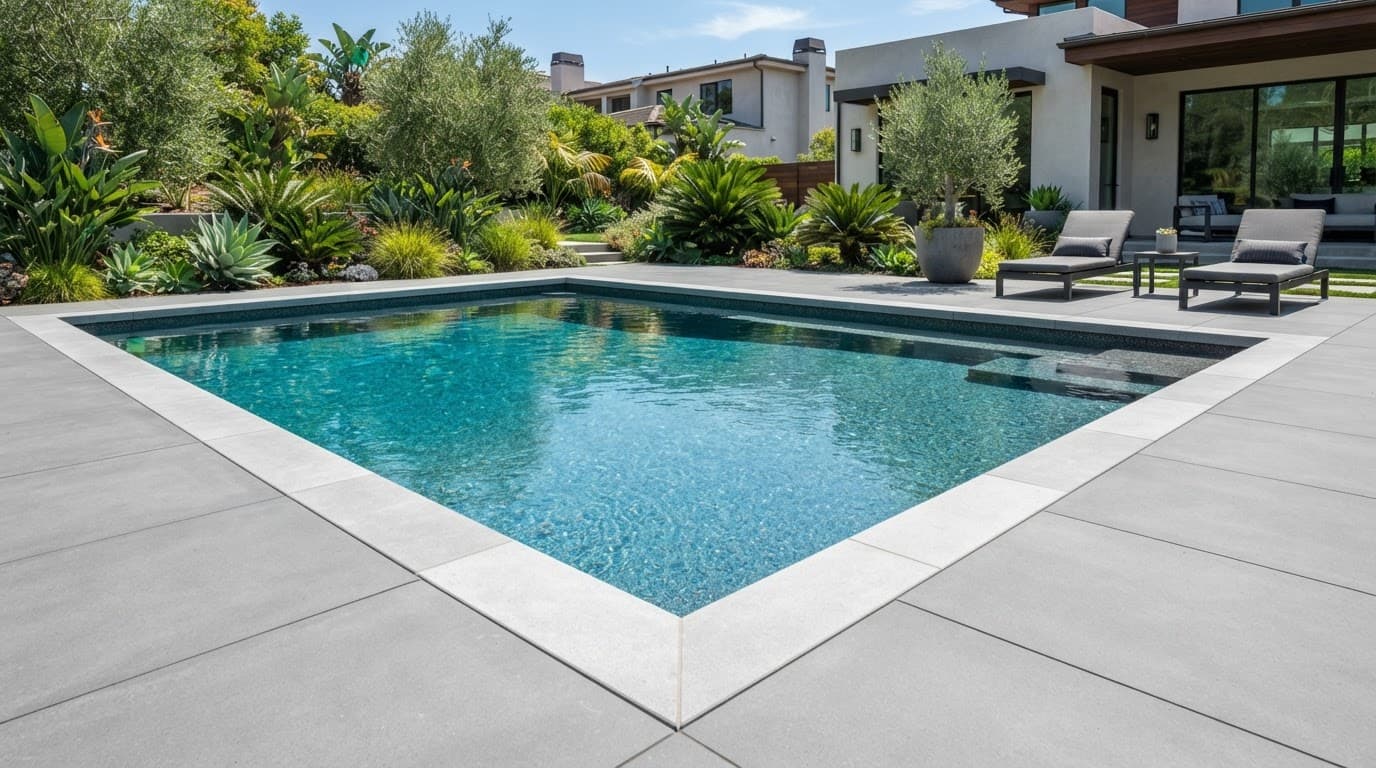
Straight coping lines reinforce the geometric shape of this contemporary pool and its surrounding paver deck.
Square edge coping can feel less comfortable when people regularly sit on the pool wall. That concern is easy to address in some designs with a lightly eased corner, a wider coping piece, or a different seating arrangement. Ask your builder to show the actual edge treatment rather than assuming every square edge will feel sharp.
This style also demands accurate layout. Small changes in joint width, alignment, or corner cuts are easier to see along long straight runs. Good planning becomes especially important around steps, tanning ledges, raised walls, and attached spas.
How to choose between the two styles
The right pool coping options should connect the pool, deck, home, and daily use into one practical design. Compare the following factors before choosing a profile.
Match the coping to the deck
Start with the deck material and layout. A rounded bullnose edge often suits textured concrete, smaller pavers, brick, and decks with curved borders. Square edge coping usually fits large-format pavers, porcelain, smooth concrete, and clean rectangular layouts.
The color relationship matters too. Matching coping and deck can make the perimeter look broad and unified. A contrasting coping color creates a clear frame around the water, but strong contrast also makes alignment and surface wear more visible.
Consider the pool's shape and style
Freeform gunite pools usually benefit from a coping profile that follows their relaxed curves. Bullnose pieces can support that look, especially when the design includes rounded steps or a natural stone finish.
Geometric pools often look sharper with square edge coping. However, the rule isn't absolute. A rectangular pool with tropical materials can still look excellent with a rounded stone edge, while a freeform pool can use square coping for a more contemporary contrast.
Use the architecture as a guide. A modern home with straight rooflines and simple materials may favor square edge coping. A Mediterranean, coastal, or traditional home may pair better with a softer border.
Think about heat, rain, and salt exposure
Southwest Florida pools face intense sun, heavy rain, humidity, and, in some locations, salt-laden air. Those conditions affect the material's color, surface temperature, cleaning needs, and long-term appearance.
Light-colored coping can feel more comfortable under strong sun than dark material, although every surface can heat up. Textured finishes can improve footing, but rough surfaces may be harder to clean. Ask how the selected material handles pool chemicals, salt systems, irrigation overspray, and repeated wetting.
Drainage deserves equal attention. Water should move away from the pool edge and toward the planned drainage system rather than collecting in joints or flowing across the deck. A good coping choice cannot correct poor grading.
Weigh comfort, budget, and maintenance
Bullnose and square edge profiles can vary widely in price. Fabrication, material availability, corner cuts, pool shape, and installation time often affect the final cost more than the profile name alone.
If people will sit along the edge, compare the actual top width and corner feel. If the pool is mainly for swimming, the visual connection with the deck may matter more than seating comfort.
Maintenance also depends on the material and installation. Look for consistent joints, stable pieces, a durable surface, and a replacement plan if a section becomes damaged. A readily available manufactured coping may be easier to match later than a limited natural stone.
Installation details that protect the pool edge
Coping must work with the gunite shell, waterline tile, deck, and drainage plan. The builder should confirm dimensions before construction because the coping thickness affects the pool's finished elevation and the deck transition.
Waterline tile and coping need a clean relationship. If their heights or joints look inconsistent, the entire perimeter can appear uneven. Pool features such as raised walls, spillways, deck jets, and attached spas add more corners and elevation changes that require careful layout.
Expansion and movement details also matter. The pool structure and surrounding deck can respond differently to temperature and moisture changes. The installation should follow appropriate construction practices for the selected materials and local conditions, with joints and sealants placed where the design requires them.
For an existing pool, the condition beneath the old coping must be checked before replacement. Damaged tile, cracked bond beam areas, deck movement, or drainage issues may need attention first. San Juan Custom Pools & Spas provides pool remodeling and coping services, including tile and coping replacement and deck remodeling.
Which coping profile fits your project?
Bullnose coping is a strong candidate when comfort, curved forms, and a relaxed style lead the design. It often suits freeform pools, traditional homes, natural stone decks, and families who use the pool edge as a place to sit.
Square edge coping is a strong candidate when straight geometry, a modern home, and clean deck lines matter most. It can frame a rectangular gunite pool and coordinate with contemporary pavers or poured concrete.
The final choice should come from a full design review, not a profile preference alone. Place coping samples beside the deck, waterline tile, exterior finishes, and planned landscaping. Then review the edge at the locations where people will enter, sit, walk, and gather.
Conclusion
Bullnose and square edge coping can both deliver a durable, attractive finish for a gunite pool. Bullnose brings a rounded, comfortable appearance, while square edge creates a sharper architectural border.
The best selection depends on the coping material, deck design, pool shape, Southwest Florida climate, budget, and how your household uses the pool. When those details work together, the coping becomes a natural part of the pool design instead of an afterthought.