
How Perimeter-Overflow Pools Manage Water at the Deck Edge
A perimeter-overflow pool keeps its waterline close to the surrounding deck by collecting water as it spills over the pool edge. The water then moves through a circulation system and returns to the pool, rather than simply draining away.
For homeowners considering this style, the edge is only the visible part of the design. A perimeter channel, collection tank, pumps, filtration and water-level controls may all play a role, depending on the pool's layout. Understanding how those pieces work together helps you ask better questions during planning.
Key Takeaways
- Perimeter overflow pools collect water around some or all of the pool's edge.
- The deck edge must direct water into a channel designed to capture it.
- Collected water is typically routed through the pool's circulation system and returned after filtration.
- A surge tank and level controls help manage changing water volume, but equipment layouts vary.
- Channel access, debris removal and equipment maintenance are part of ongoing care.
What a Perimeter-Overflow Pool Does
The waterline and the edge
In a conventional pool, the water usually sits below the coping. With a perimeter-overflow design, water reaches the edge and spills into a narrow gutter or channel. When the channel runs around the full pool, the effect can create a level sheet of water and a mirror-like surface.
An infinity or vanishing edge uses a similar visual principle, but the overflow may occur along one or more selected sides rather than around the entire pool. A perimeter overflow can be designed around the full boundary or along specified sections, depending on the concept and site.
The channel is a collection point, not a waste drain. It guides overflow water toward the rest of the circulation system, where it can be treated and returned.
The hidden collection area
The visible edge needs a concealed route for water. Depending on the design, that might include a gutter beneath a grate or a channel integrated into the deck-edge detail. The channel must capture water consistently and connect to the pool's plumbing.
This design also affects the look of the surrounding hardscape. Homeowners considering infinity-edge and vanishing-edge designs should consider how the chosen edge relates to the pool shape, deck and yard.
How Water Moves Through the System
From the pool edge to the tank
As swimmers enter the water, or water circulates through the pool, some water crosses the edge into the perimeter channel. From there, gravity or plumbing carries it to a collection reservoir, often called a surge tank or balance tank.
The tank holds a changing volume of water. That matters because the amount in the channel and pool shifts as people get in and out, waves form, and circulation continues. The tank gives the system a place to manage those changes before water reaches the pump.
Not every design uses identical components or a tank in the same arrangement. The specific layout depends on the pool's edge, volume, plumbing and equipment plan.
Through filtration and back to the pool
A circulation pump draws water from the collection side of the system and sends it through filtration. The filter removes suspended material, while any other treatment equipment is selected for the pool's overall water-care plan. Treated water then returns through the pool's return plumbing.
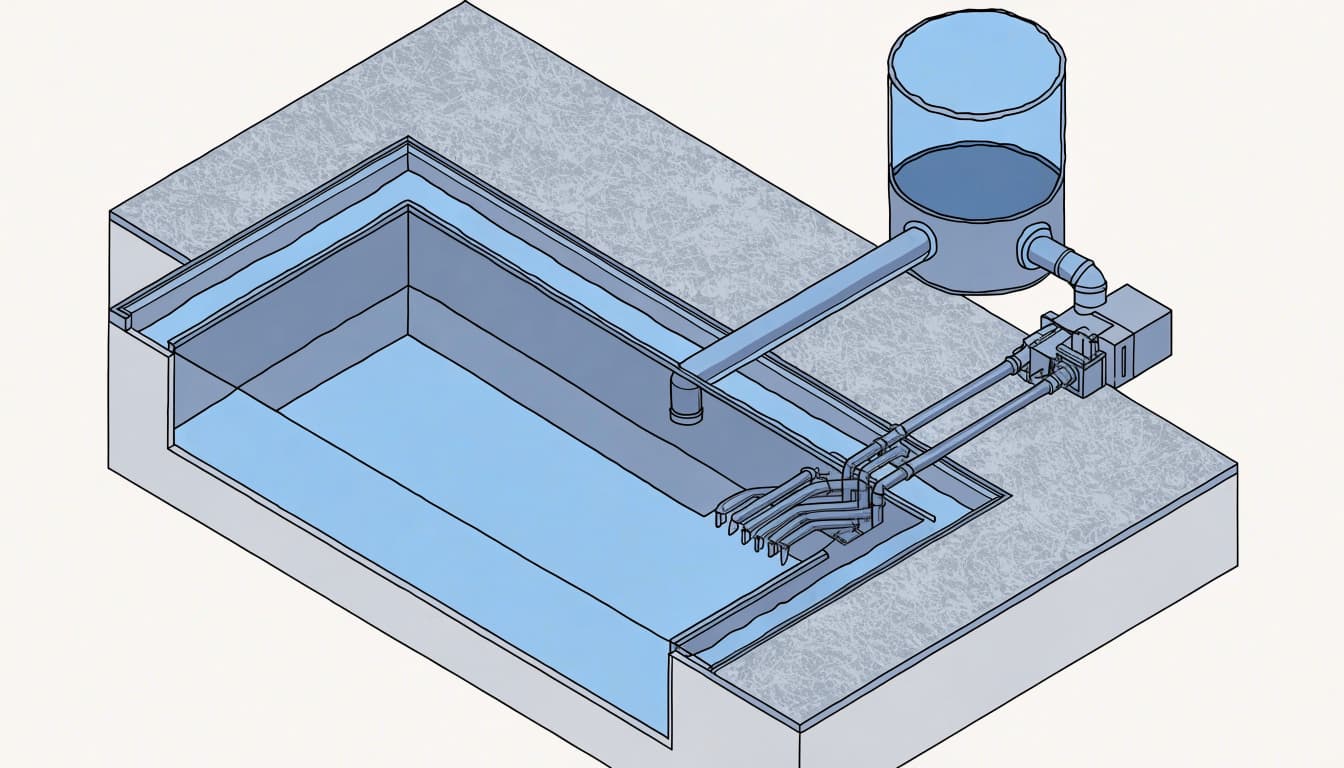
The important point is that overflow water remains part of the pool's circulation. The channel collects it; the rest of the system moves, filters and returns it. Pumps and filters must suit the design rather than being chosen as if the pool had a standard skimmer arrangement.
Why the Deck Edge Needs Careful Design
The edge must guide water
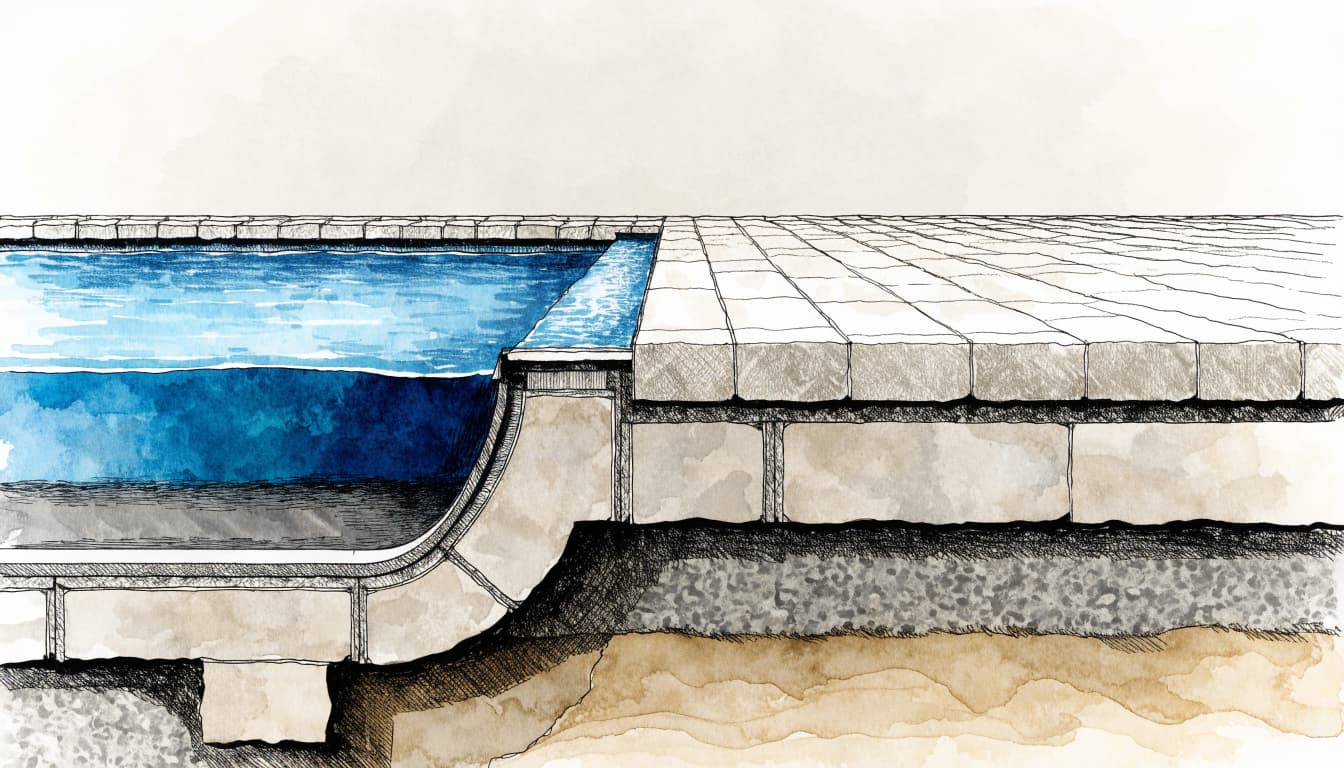
A perimeter-overflow edge has to collect water reliably. Its finished height, slope and relationship to the channel affect whether water spills evenly or gathers in certain areas. Even a small inconsistency can interrupt the clean, level appearance homeowners expect.
The deck should also direct incidental water toward suitable drainage rather than allowing it to run unpredictably across walking areas. Pool overflow and deck drainage are related design concerns, but they are not the same system. Each needs a clear route.
Coordinate finishes and access
Coping, tile, channel covers and deck materials meet at the edge, so their dimensions and installation details need to work together. A finish that looks good on a sample may need a different detail where water crosses into the gutter.
Access matters as well. If the channel uses a removable grate, the design should allow it to be lifted for cleaning. Concealed systems should still provide practical access to components that need inspection or service.
Surge Tanks, Pumps and Water-Level Controls
What the surge tank manages
When bathers enter the pool, their bodies displace water. Waves can also send more water over the edge for short periods. A surge tank provides capacity for those changing volumes, helping the circulation system operate without treating every fluctuation as a loss of water.
Tank placement and capacity are design decisions, not universal figures that apply to every pool. The pool's dimensions, edge arrangement and expected use all affect how the system should be planned.
How controls maintain the operating level
Water leaves a pool system through normal causes such as evaporation, splash-out and maintenance. A water-level control can add makeup water when the level drops. Depending on the design, this may use a float valve or an automatic sensor tied to a control system.
Controls should suit the tank and pool arrangement. A control that responds to the wrong location or level may not manage the system properly. The design needs to account for where water is measured and how the pump receives it.
Pumping and filtration need to match
Pump and filter selection should reflect the circulation path, not just the pool's appearance. The system needs to draw water from the collection area and send it through the selected filtration equipment at an appropriate rate.
Equipment placement and plumbing access are worth reviewing on the plans. Our guide to reviewing pool plans before layout approval covers why equipment locations and clearances should be considered before construction begins.
Maintenance for the Channel and Circulation System
Keep the channel clear
Leaves, dirt, insects and other debris can collect in the perimeter gutter, particularly when the pool is near landscaping. Remove debris before it builds up, and keep grates clear so water can reach the channel rather than backing up at the edge.
If a section of the edge seems to overflow differently from the rest, check for visible obstructions and note any changes in water behavior. Uneven overflow can point to a collection issue, a water-level change or a problem elsewhere in the system.
Watch the tank and equipment
The surge tank and its access points need periodic attention. Debris that enters the tank can affect water movement or reach the pump intake. Keep the tank's access area usable, and follow the care schedule for the pump, filter and any treatment equipment installed.
A perimeter system may have components that are less visible than those on a standard pool. That makes clear labeling and accessible equipment placement useful for routine service. During maintenance, make sure the channel, tank, pump and filter are treated as connected parts of one circulation system.
Maintain water balance, too
Filtration removes particles, but it does not replace testing and balancing pool water. Follow a consistent water-care routine and clean the filter as its manufacturer directs. If the pool's level changes unexpectedly or the pump loses prime, address it promptly rather than assuming the overflow edge is responsible.
Planning the System Before Construction
A well-planned perimeter overflow starts with the pool shape and edge condition, then coordinates the channel, tank, plumbing, deck and equipment. Those details need to fit the property and the intended appearance. A perimeter channel running through a complex shape may require different planning from a straight edge on a rectangular pool.
During design discussions, ask where the overflow will be collected, how water reaches the tank, where the pump and filter sit, and how makeup water is controlled. Also discuss how channel access works and where deck drainage goes. Clear answers make it easier to understand what is included in the build.
Our custom pool construction process takes a project through design, engineering, construction and equipment installation. When comparing proposals, compare gunite pool proposals by looking at the specified deck, equipment and site-work scope, not just the pool shell.
Frequently Asked Questions
Does overflow water leave the pool system?
Usually, the channel collects it for circulation. The water moves to the collection side of the system, passes through filtration and returns to the pool. The design should distinguish this circulation route from drainage for rain or deck wash-down.
Does every perimeter-overflow pool need a surge tank?
A surge or balance tank is common in these systems, but designs are not identical. The collection and circulation approach depends on the project's hydraulic layout.
Is a perimeter overflow the same as an infinity edge?
They share the idea of water crossing an edge, but they can differ in how much of the pool perimeter overflows. An infinity edge typically emphasizes one or more selected sides, while perimeter overflow can collect water around more of the pool.
What maintenance does the edge require?
Keep the channel and any grate free of debris. Also maintain the tank, pump, filter and water chemistry as part of the pool's regular care.
A Clean Edge Depends on the Whole System
The smooth waterline is the visible result of several coordinated details. The edge must guide water into a channel, and the circulation system must collect, filter and return it while controls manage changing water levels.
For homeowners planning a perimeter-overflow pool, the most useful starting point is a complete plan that addresses the deck edge and the equipment behind it. When those parts are designed together, the water effect has a clear path and the system remains practical to maintain.