
Comparing Gunite Pool Proposals in Bonita Springs
Two pool bids can show a similar total while funding very different backyards. That gap often appears after excavation starts, when allowances, site work, or feature details become real costs.
When you compare gunite pool proposals , focus on the complete scope instead of the lowest number. A clear proposal protects your budget, your design, and the long-term performance of the pool.
Start by giving every contractor the same information, then compare each line with care.
Give Every Builder the Same Backyard Brief
A proposal only has value when every builder prices the same pool. If one contractor assumes a 400-square-foot deck and another includes 700 square feet, their totals cannot tell you who offers better value.
Provide each company with the same sketch, inspiration photos, property survey, and must-have features. Include the pool's desired length, width, depth, spa, sunshelf, water features, screen enclosure needs, and preferred deck material.
Freeze the Major Design Details
The plan does not need every tile selected before bidding. However, it should show the pool shape, approximate dimensions, depth profile, spa location, deck footprint, and equipment location.
Ask each contractor to identify the drawing revision and date used for pricing. That simple detail prevents a bid from covering an older concept after the design has changed.
Also state what matters most. For example, a family may prioritize a wide tanning ledge and shallow play area. Another homeowner may want a raised spa with spillway and room for outdoor dining. Those choices affect structure, plumbing, decking, finishes, and electrical work.
Put Every Feature on Its Own Line
A single phrase such as "included upgrades" creates confusion. Request separate line items for features that can change in cost or quality.
That includes coping, waterline tile, interior finish, LED lights, automation, fire bowls, bubblers, deck jets, handrails, drainage, screen work, and landscaping restoration. Review a builder's custom pool and spa services to identify options that should appear in writing rather than as a broad promise.
Compare Gunite Pool Proposals Line by Line
A gunite pool proposal should describe the work behind the finished water. The shell is only one part of a project that may also include engineering, grading, decking, electrical work, safety features, and start-up.
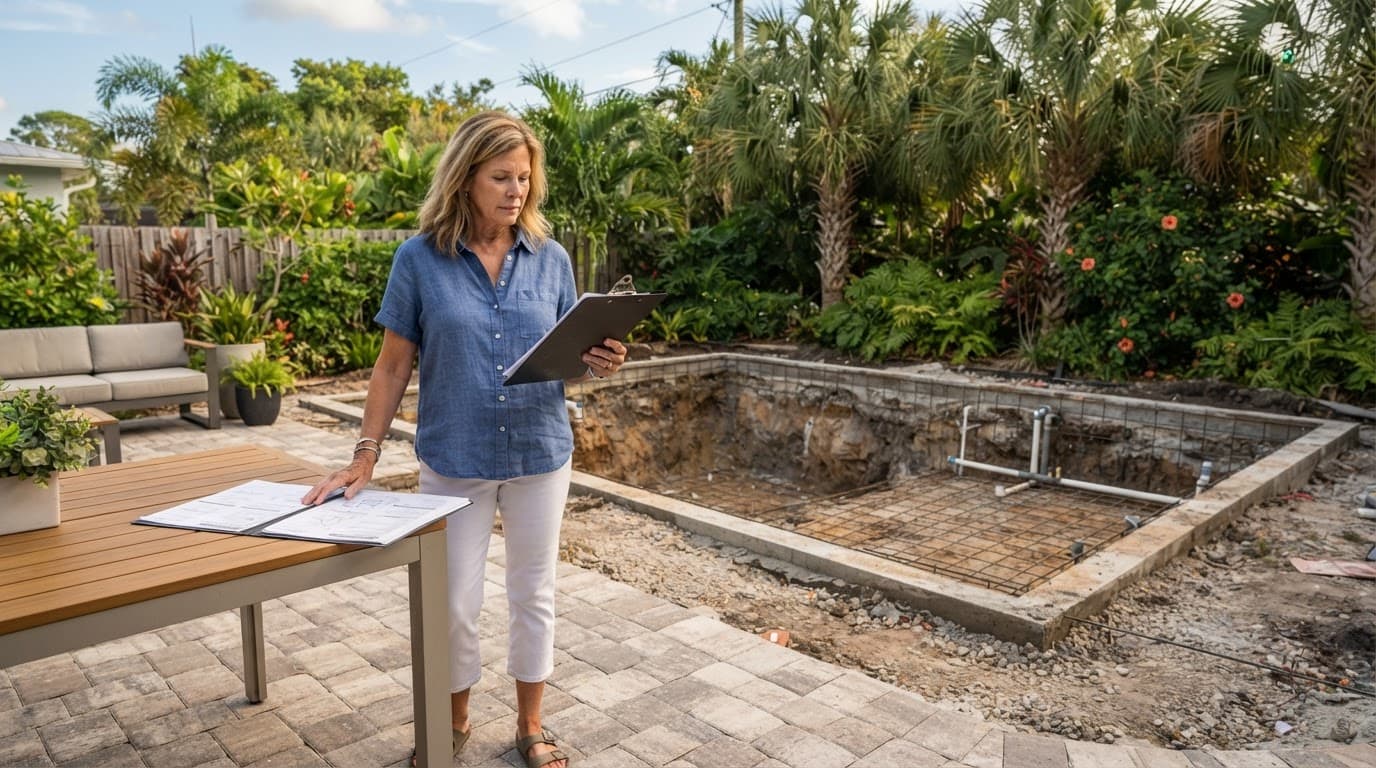
Copy the major items from each bid into one comparison sheet. Do not fill missing items with assumptions.
| Scope item | Details to compare | Why it affects value |
|---|---|---|
| Pool shell | Dimensions, depths, steps, spa, sunshelf, structural plans | The design drives concrete, steel, and labor needs. |
| Deck and coping | Square footage, material, pattern, edge details, footings | A larger or upgraded deck can change the total sharply. |
| Finishes | Tile type, coping, plaster or pebble finish, selections | Product grades vary widely within general descriptions. |
| Equipment | Pump, filter, heater, automation, sanitizer, model numbers | Equipment choices shape daily operation and service needs. |
| Site work | Excavation, fill, drainage, hauling, restoration | These costs often depend on actual site conditions. |
| Permit and safety | Plans, engineering, inspections, barrier or alarm | Required work should not sit outside the expected price. |
The comparison should reveal why two gunite pool proposals differ. A higher number may include a larger deck, better-defined equipment, or more complete grading work.
Treat a Lump Sum as a Starting Point
A one-page proposal with a single total gives you little control over the final scope. Ask for an itemized schedule that identifies what is included, what is excluded, and what remains undecided.
Watch for vague phrases such as "as needed," "per code," or "allow for." They are not automatic red flags, but they need a written explanation. Ask what triggers extra work, who approves it, and how the contractor will calculate the added cost.
Know What the Price Language Commits To
Price labels matter because they carry different levels of certainty. Read every allowance and estimate before you compare totals.
Confirmed Contract Pricing Covers Defined Work
A confirmed contract price ties a defined scope to a stated amount. It should name the pool design, included materials, equipment, labor, permit responsibilities, and payment milestones.
Ask the contractor to explain which site conditions or homeowner changes could alter that amount. Then ask how change orders work. A good change order identifies the new work, its price, schedule effect, and homeowner approval before work proceeds.
Avoid relying on sales conversations for important details. If a feature, finish, or service matters to you, place it in the contract or an attached specification.
Allowances Need Clear Rules
An allowance is a budget amount carried for an item you have not selected or that cannot yet be priced exactly. It may apply to tile, decking, electrical work, or site conditions.
For each allowance, request the product level, quantity, labor coverage, taxes, and any markup. Ask what happens if the actual cost falls below the allowance or exceeds it.
An estimate is different. It forecasts a likely cost, but it does not carry the same commitment as a defined contract line item. Treat estimates as planning figures until the contract states the final scope and price.
An allowance without a quantity, material standard, and labor coverage cannot be compared fairly with a fixed-price line item.
Inspect Construction, Site, and Safety Scope
Gunite is concrete applied pneumatically, with water mixed at the nozzle. Yet the word "gunite" alone does not describe the shell design, steel placement, plumbing layout, or finish quality.
Ask About the Shell, Plumbing, and Equipment
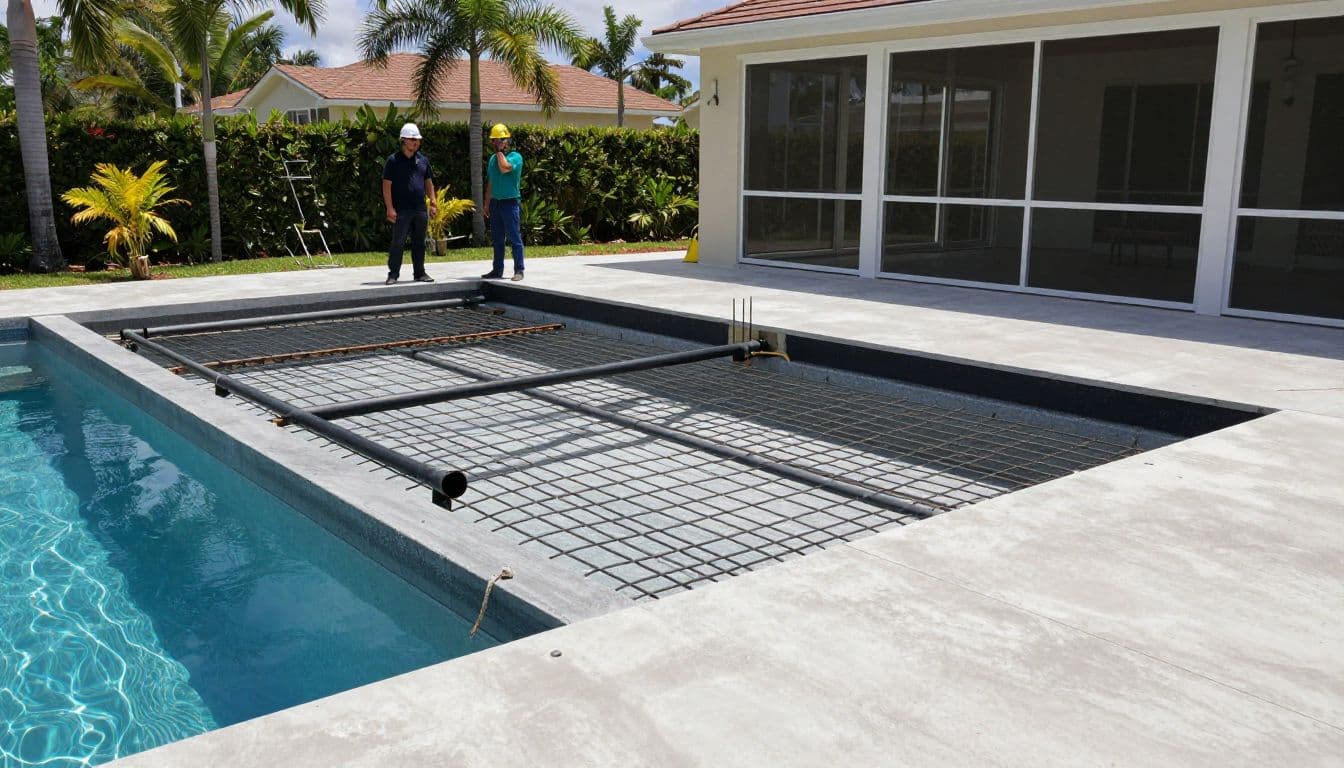
Compare the approved plans, structural engineering, steel reinforcement, bond beam, steps, spa structure, and deck footings. The bond beam is the reinforced upper edge of the pool shell that supports coping and helps tie the structure together.
Also ask for plumbing and equipment details. The proposal should identify pump, filter, heater, automation controls, valves, drains, returns, lights, and sanitation equipment. Model numbers help you compare more than a generic phrase such as "premium equipment."
A clear pool construction process should show when excavation, steel, concrete, plumbing, decking, electrical work, interior finish, and start-up occur.
Clarify Grading, Permits, and Pool Safety
Your property location and conditions affect permit requirements. Within Bonita Springs, the city's residential pool permit application calls for three sets of plans and a site fill grading plan. Ask whether the proposal includes surveys, grading-plan preparation, imported fill, drainage coordination, and final restoration.
Lee County's Pool Guide calls for in-ground pool plans that show setbacks, pool size, deck dimensions, steps, equipment location, and footing details. Confirm who handles revisions if plan review requires changes.
Florida's Residential Swimming Pool Safety Act requires at least one approved safety feature before final inspection. If the project uses a barrier, ask whether it includes compliant gates, self-closing and self-latching hardware, and all work needed for final approval.
Test How Each Contractor Will Manage the Job
A polished design cannot make up for unclear communication once construction begins. During meetings, pay attention to how directly each contractor answers questions about scope, site conditions, schedules, and change orders.
Request a Written Construction Sequence
Ask who will manage your project and who will be your day-to-day contact. Then request the expected order of work, including permitting, excavation, steel, gunite, plumbing, deck construction, electrical work, interior finish, filling, and orientation.
Construction schedules can shift because of weather, inspections, material availability, or approved changes. A reliable proposal identifies the process rather than offering a date with no detail behind it.
Review the Paper Trail Before a Deposit
Request current license and insurance documentation, then verify it through the appropriate Florida and local records. You should also receive written warranty terms for the shell, equipment, finishes, and any separate products.
Review the payment schedule beside the construction sequence. Payments should match clearly stated project stages. Before signing, confirm the cancellation terms, change-order process, exclusions, and responsibilities for cleanup, access, and damaged landscaping.
Use a Simple Decision Method Before You Sign
A calm comparison keeps the decision focused when one bid looks tempting because it is shorter or lower.
Score Each Proposal Against the Same Scope
- Create one comparison sheet using the design brief, site work, structural scope, equipment, finishes, permits, safety features, and warranty terms.
- Mark every item as included, excluded, allowance, estimate, or unclear. Request written answers for each unclear item before assigning value.
- Compare the revised totals only after each contractor has addressed the same design and scope. Then weigh communication, workmanship, project management, and warranty support with the price.
Printable Questions for Contractor Meetings
Bring these questions to each proposal review:
- Does this price match the same pool dimensions, depths, spa, and deck area shown in my design?
- Which items are fixed contract prices, and which are allowances or estimates?
- What material quantities and labor are included in every allowance?
- Are engineering, surveys, site fill, grading, drainage, and permit revisions included?
- What shell, bond beam, steel, plumbing, and deck-footing details appear on the plans?
- Which equipment brands and model numbers are included?
- Does the proposal cover electrical work, automation, heating, and start-up?
- Which safety feature will the project use for final inspection?
- What deck material, coping, tile, interior finish, and water features are included?
- Who manages the job after the contract is signed?
- How are changes documented and approved before work begins?
- What does the warranty cover, and which products have separate manufacturer warranties?
Choose the Proposal That Defines the Whole Project
The strongest proposal gives you a complete picture of the pool, the property work around it, and the decisions that could change the price. A lower bid only offers better value when it includes the same scope, materials, and responsibilities.
Clear gunite pool proposals make it easier to choose a contractor with confidence. The right comparison rewards detailed planning long before the first truck enters the driveway.